The Gaza war has accelerated cooperation between Global South behemoths resisting western-backed conflict. Together, the Russian-led BRICS and Iran-led Axis of Resistance can shape a US-free West Asia.
© The Cradle
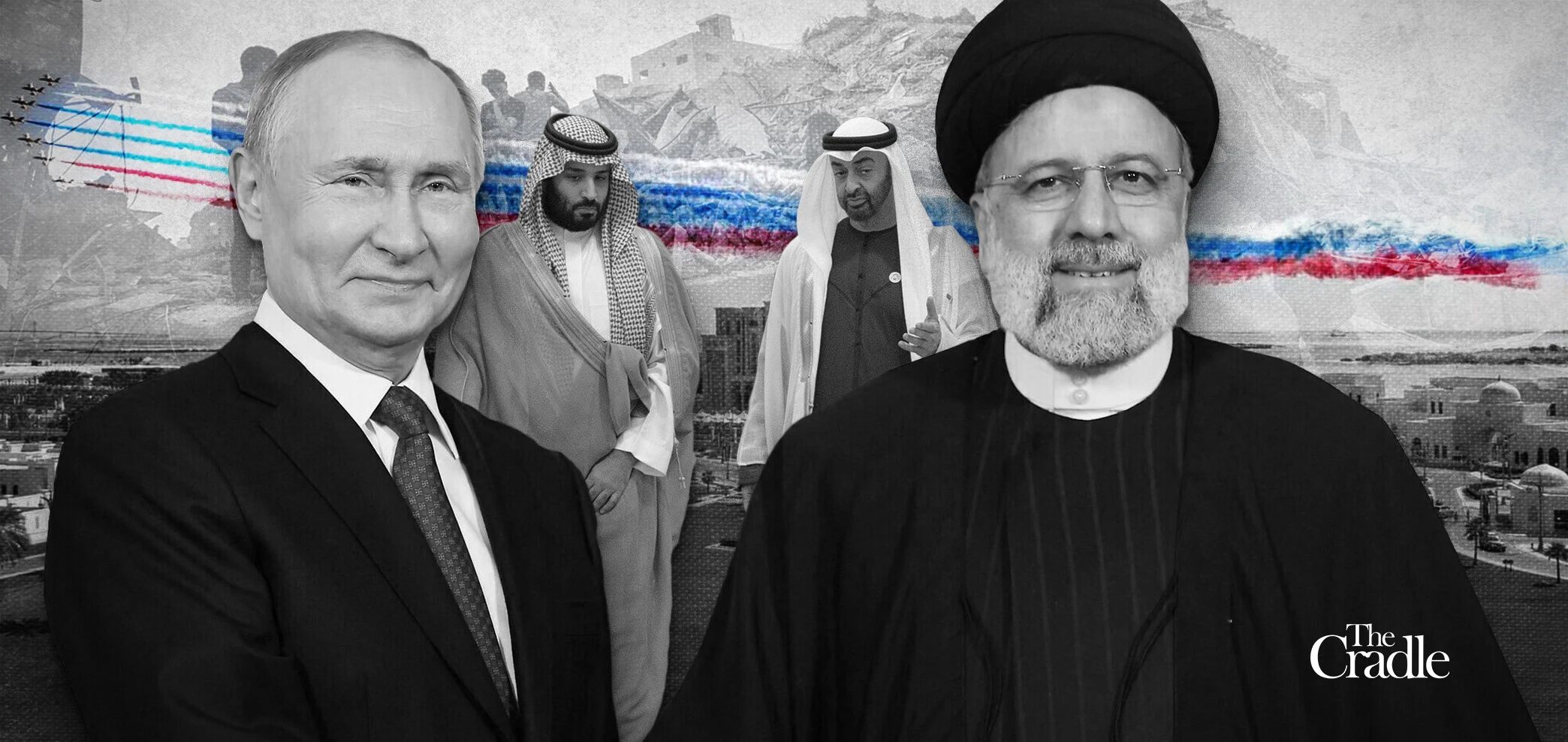
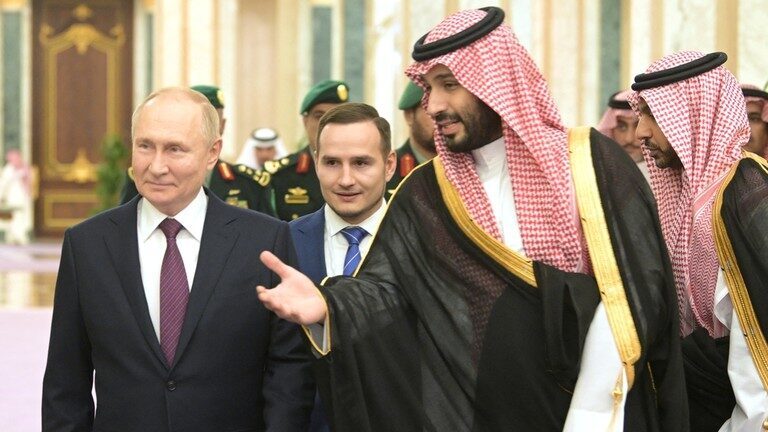
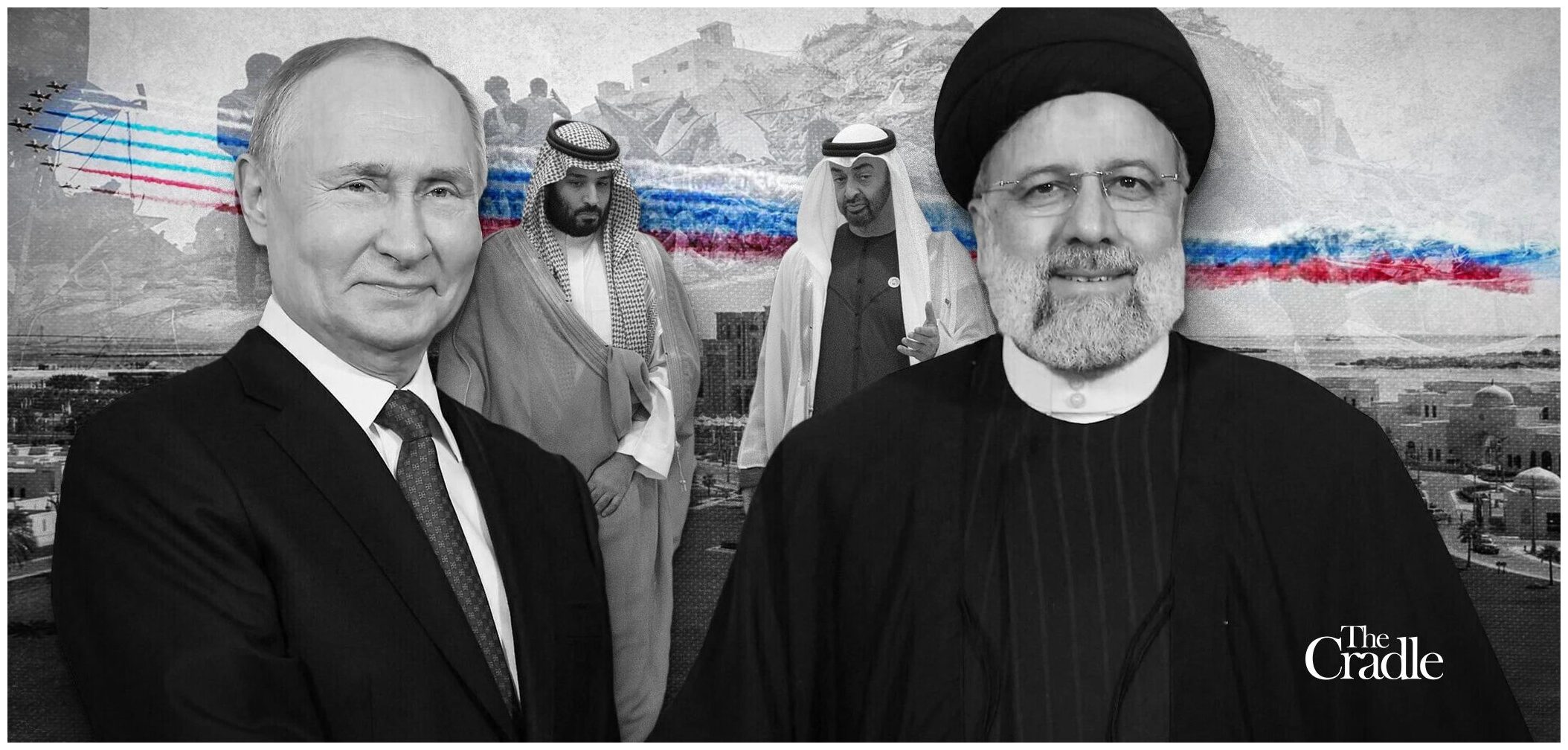
MOSCOW - Last week, Russian President Vladimir Putin made a notable pit stop in the UAE and Saudi Arabia to meet, respectively, Emirati President Mohammad bin Zayed (MbZ) and Saudi Crown Prince Mohammad bin Salman (MbS) before flying back to Moscow to meet Iranian President Ebrahim Raisi.
The three key issues in all three meetings, confirmed by diplomatic sources, were Gaza, OPEC+, and BRICS expansion. They are, of course, interlinked. The Russia-Iran strategic partnership is developing at breakneck speed, alongside Russia-Saudi Arabia (especially on OPEC+) and Russia-UAE (investments). This is already leading to stark shifts in defense interconnection across West Asia. The long-term implications for Israel, way beyond the Gaza tragedy, are stark.
Putin told Raisi something that was extraordinary on so many levels:
"When I was flying over Iran, I wanted to land in Tehran and to meet you. But I was informed that you wanted to visit Moscow. Relations between our countries are growing rapidly. Please convey my best wishes to the Supreme Leader, who supports our relations."
Putin's reference to "flying over Iran" directly connects with four armed
Sukhoi Su-35s flying in formation, escorting the presidential plane over 4,000 km (if measured as a straight line) from Moscow to Abu Dhabi, without any landing or refueling.As every
stunned military analyst remarked, an American F-35 is capable of flying at best 2,500 km without refueling. Yet the most important element is that
both MbZ and MbS authorized the Russian Su-35s escorts over their territory - which is something extremely unusual in diplomatic circles.And that leads us to the key takeaway. With a single move on the aerial chessboard, compounded with the subsequent clincher with Raisi, Moscow accomplished four tasks:
Putin proved - graphically speaking - that this is a new West Asia where the US hegemon is a secondary actor; destroyed the neocon political myth of Russian "isolation;" demonstrated ample military supremacy; and lastly, as the start of Russia's BRICS presidency approaches, showed that it retains all its crucial geopolitical and geoeconomic cards.










Comment: See also: