
© C. Mischka
The structure, discovered at the Cucuteni settlement of Stăuceni-Holm in Botoșani County, has been identified as a rare "mega-structure" - a type of oversized building believed to have played a central role in the social, political, or ritual life of prehistoric communities. Researchers argue that the discovery may also force a reassessment of the chronology of the Cucuteni culture, one of Europe's most sophisticated prehistoric societies.
The findings were published in PLOS One by a team led by Doris Mischka, Carsten Mischka, Adela Kovács, Constantin Aparaschivei and Elena Marinova.
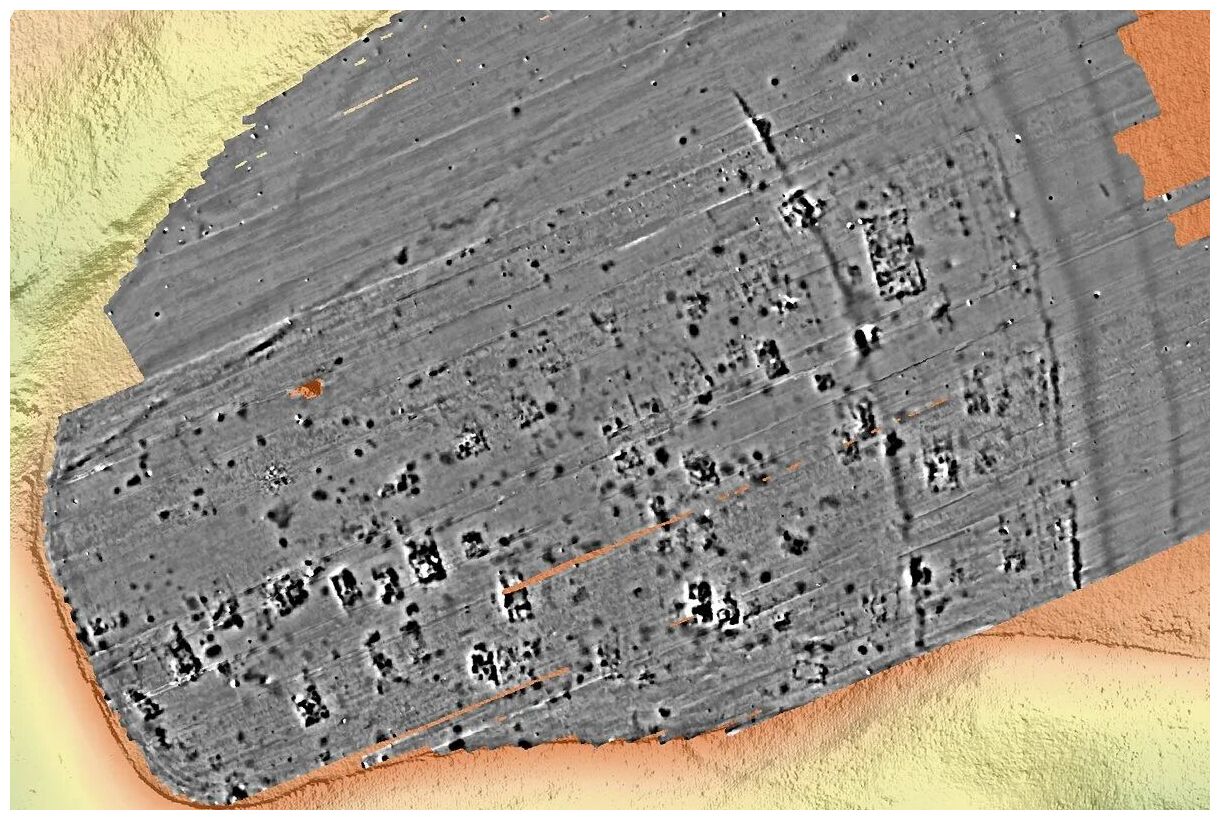
From 2021 to 2024, archaeologists conducted geophysical surveys and field investigations at the site and found around 45 houses surrounded by a series of ditches and palisades. One structure in particular, amongst the similarly sized buildings, was immediately apparent. It was about 350 square metres in size, many times larger than the average houses of the settlement and stood at the centre of what looks like the main entrance.
Such buildings are called mega-structures and have long fascinated archaeologists looking at the Cucuteni-Trypillia cultural complex, which flourished between roughly 5000 and 3000 BC in modern-day Romania, Moldova and Ukraine. These settlements are of such immense size, some so-called "mega-sites" containing thousands of houses and populations numbering in the tens of thousands. Yet for all their size, there has not been any evidence for rulers or palaces or clear social hierarchies.
© C. Mischka
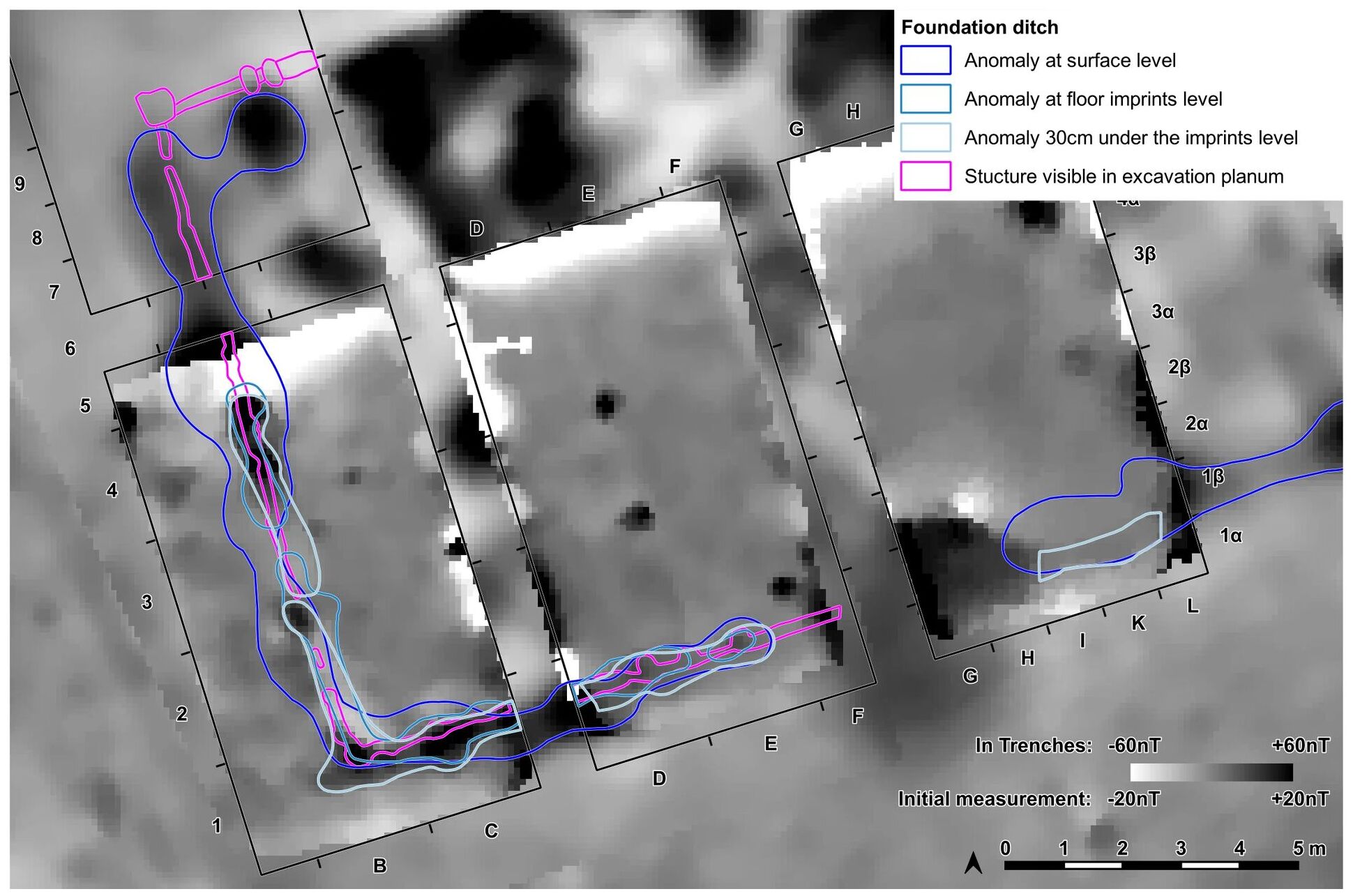
Excavations in 2023 and 2024 provided the first comprehensive look at the Stăuceni-Holm building. Archaeologists found evidence of a huge timber-and-clay construction supported by large posts set in a rectangular foundation trench. The building was clearly well-ordered and the huge structure seems to have been constructed to stand out from the surrounding houses.
But in contrast to regular Cucuteni houses, the structure produced little evidence of domestic activities. No clear hearths, ovens or any other living spaces were found in the excavated sites. Instead, the interior was littered with pottery pieces, postholes and little evidence of food consumption and craft work.
Plant remains recovered from soil samples revealed traces of cereals, gathered fruits including cornelian cherry, plum, elder and hawthorn, as well as weeds associated with crop processing. The team also identified henbane, a plant known for its medicinal and psychoactive properties, raising the possibility that ritual activities may have taken place within the structure. Tiny flint fragments suggest tool maintenance or small-scale manufacturing may also have occurred there.
Among the most notable finds were fragments of decorated pottery, ladles, zoomorphic ornaments and a clay object sometimes described as a "conical idol". One vessel featuring a bull-head protome was recovered from the building, while another finely crafted cup found within a posthole provided important chronological evidence.
The most surprising results came from radiocarbon dating.
Samples taken from plant remains preserved within the floor structure produced dates placing the building in the 40th and 39th centuries BC. These dates conflict with the accepted chronology for the Cucuteni A3 phase, to which the pottery from the site belongs. According to current archaeological models, material of this type should be significantly older.
The researchers acknowledge that such discrepancies require caution. However, because the samples were recovered from secure contexts beneath the floor and came from short-lived plants rather than old wood, they argue the dates are likely reliable. If confirmed, the results could require a revision of established timelines for the Cucuteni culture and its relationship to neighbouring Trypillia communities.
The discovery also has wider implications for understanding how prehistoric settlements were governed.
For decades, archaeologists have debated how enormous Cucuteni-Trypillia communities managed social organisation without obvious signs of political authority. Mega-structures have increasingly been viewed as communal institutions that helped coordinate large populations. The Stăuceni-Holm building is particularly significant because it lies at the southwestern edge of the mega-structure phenomenon and may represent one of its earliest examples.
If the structure is known to be among the oldest, then it might suggest that the concept originated in the Romanian Cucuteni region before spreading to the rest of the Trypillia world.
Excavations at Stăuceni-Holm are ongoing and so far only about a quarter of the structure has been studied. Further work will reveal the rest of the building and its role in the settlement.
For now, the discovery offers a rare glimpse into the institutions which might have provided support for some of Europe's largest prehistoric communities and opens up new questions about the emergence of social organisation long before the appearance of cities, states or written records.
Source: PLOS ONE - https://doi.org/10.1371/journal.pone.0343603


Reader Comments
It would be nice if these assholes would quit trying to coverup our true history, the gig is up and bullshit like this is just an insult to our intelligence.
It's a well know fact that the church and especially the Smithsonian institution where deeply involved if not created just to conceal evidence of past technically advanced civilisations and exterminated/extinct human life forms. They keep creating obstacles like UNESCO and the Antarctic Treaty as concealment and access control but the evidence is still managing to surface and their excuses continue to be senseless to anyone looking with their eyes open. They figured out it's unreliable?
I was going to make a comment but unnecessary as the above comment covers it. I will add however
Indeed let us find out how our ancestors (mankind) lived and the goings on one million years ago and from what I see longer. Plato’s Timaeus gives a hint at the immense time and that the most recent global deluge just one among many. Modern authors like Michael Cremo and Graham Hancock have turned the gatekeepers history on their heads.
The main stream narrative has everyone looking up to the heavens for answers, which leads me to believe it's beneath our feet, just waiting to be released.
As far as sky people and all the recent gubmint shite don’t trust it one iota. But then I don’t ever trust anything they say ever always up to no good. I don’t need them to fill me in on that sort of thing anyway. Tis a nefarious set up I believe for something dark.
My guess is that humanity has previously experienced the parasitic evil we are currently experiencing and recorded a clear method to identify and deal with it, or as the evidence shows that Mother Earth did it for us. My current curiosity has me wondering what lies beneath the Antarctic ice that was so compelling it required global super powers to set aside their differences and make a bullet proof treaty to conceal it. It's interesting during the height of the manufactured Cold War very little is mentioned about such cooperation at a time when Russia was deemed the evil empire, much like today.
Regarding parasites any notions or descriptions? I have ideas but open minded as to the culprit/culprits. I lean toward archons pitting us against one another as the puppets we call government do their bidding.