
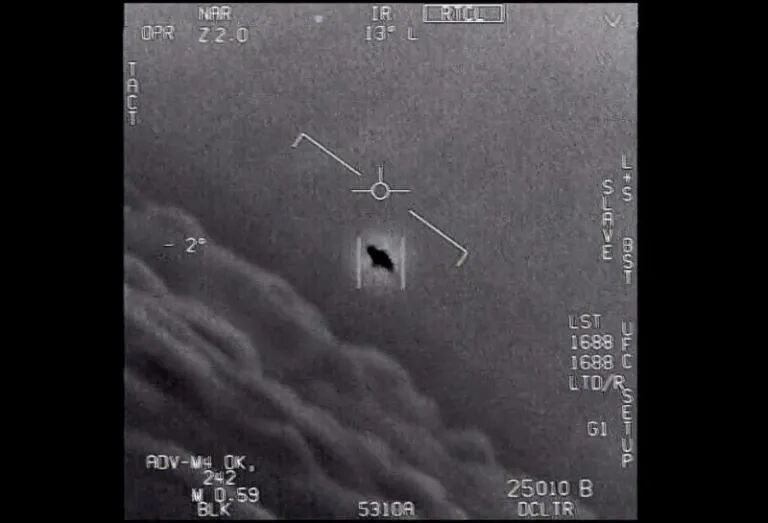
© Department of Defense via APIn this image from video provided by the Department of Defense labeled Gimbal, from 2015, an unexplained object is seen at center as it is tracked as it soars high along the clouds, traveling against the wind. “There’s a whole fleet of them,” one naval aviator tells another, though only one indistinct object is shown. “It’s rotating.”
The event, called Disclosure Forum 2026, is taking place in Washington, D.C. The theme, "Humanity at the Edge of Discovery," will guide panels, presentations, and roundtables with congressional lawmakers, as well as discussions on security, defense, and policy.
Featured speakers include U.S. Sen. Kirsten Gillibrand, D-N.Y., U.S. Rep. Eric Burlison, R-Mo., and U.S. Rep. Tim Burchett, R-Tenn.
Disclosure Foundation board members Professor Avi Loeb and Mike Gold will also speak. Both joined NewsNation to discuss this week's event.
"There are few issues that can unite humanity like UAP," Gold told NewsNation's Hena Doba on Sunday. "So, at this forum this week, you're going to see leading Republicans, leading Democrats coming together to look at this issue that, by the way, has robust bipartisan support among the public ... And the event coming up this week will be a demand for transparency, for accountability and the truth."
According to a poll conducted by the Disclosure Foundation, 89% of Republicans and 88% of Democrats want more information released about UAP.
UAP a 'national security issue,' Gold says
One issue many point to is the potential risks posed by UAP — and whether they should be viewed as emerging threats.
Comment: For more insight on this particular issue, listen to this mashup of what key whistleblowers truly think:
"UAP is not just a science issue, not just humanity — it's a national security issue," Gold said. "We must take UAP seriously, and we must get past that stigma, not just for scientific advancement, but also for national security reasons."
"If we are dealing with drones as being these orbs that were not identified," Loeb said on "NewsNation Prime" on Sunday, "then we are facing technologies that are not understood by the Pentagon, the intelligence agencies, and we need to figure it out."
Loeb was recently appointed by the White House to lead the new UAP Science Advisory Council. The team will assist the federal government in determining the nature of UAP.
"That's why resources need to be allocated to further research on the existing data, but also collecting new data that will be clearer," he said.
Not every council member is a UAP believer
Not everyone on the advisory council believes in UAP. Loeb said he intentionally included a skeptic to help avoid bias in the group's research.
"If he starts from a different view than many of us have and, by the end of the process, sides with us," Loeb said, "that would indicate we accomplished our mission and reached robust conclusions."
To show there are no hard feelings, Loeb said they even have a wager.
"I have a bet with this skeptic that by 2030 we will figure out the nature of UAP and that they might be extraterrestrial in origin," he said.
Advisory Council findings to remain unclassified
Some have questioned how much transparency the UAP Advisory Council will provide, given that it works with the Pentagon, a Defense Department entity that has been accused of withholding UAP information for decades. Loeb said the public will have access to the council's findings.
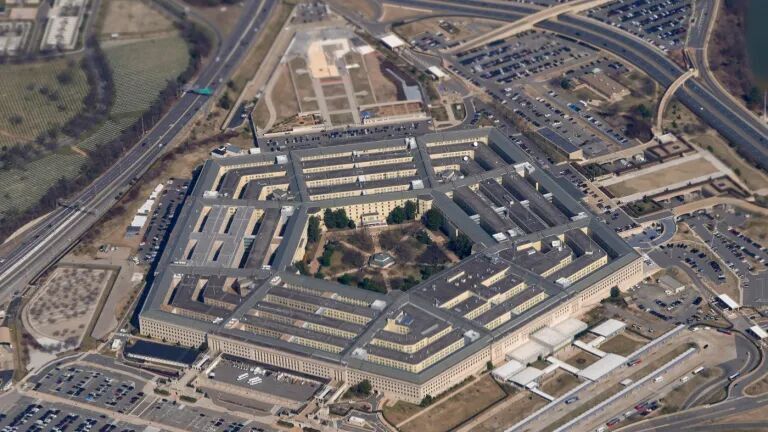
© AP Photo/Patrick Semansky, FileThe Pentagon is seen from Air Force One as it flies over Washington, March 2, 2022.


Reader Comments
to our Newsletter