
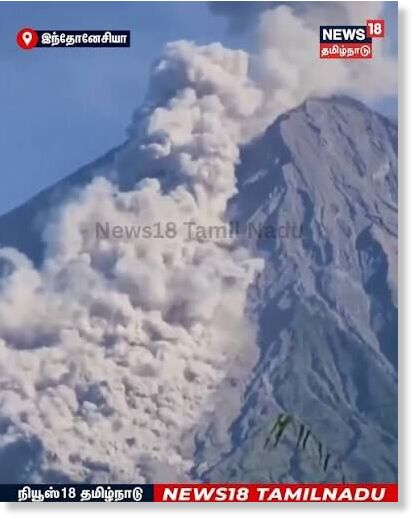
The eruption sent a towering column of ash and volcanic gases high above the summit before part of the eruptive material collapsed, producing a fast-moving pyroclastic flow that raced down Semeru's flanks through established drainage channels.
Pyroclastic flows are among the most dangerous volcanic hazards on Earth. They consist of a dense mixture of superheated gas, volcanic ash, and rock fragments that can travel at speeds exceeding 100 km/h (60 mph) while reaching temperatures of several hundred degrees Celsius.
Located in East Java, Indonesia, Semeru is the highest volcano on the island of Java and one of Indonesia's most active volcanoes. The volcano frequently produces explosive eruptions, ash plumes, lava flows, and pyroclastic density currents, making continuous monitoring essential for communities living nearby.
The distance reached by this pyroclastic flow underscores the ongoing hazards associated with Semeru's persistent activity and the importance of respecting exclusion zones established by Indonesian authorities.



Reader Comments
to our Newsletter