
The estimate for overall allergic disease prevalence in the Western world in the 1960s was roughly 1 to 10% of the population, depending on your parameters, primarily driven by hay fever and allergic rhinitis, with asthma just beginning its epidemic rise and food allergies barely on the radar. Today, by contrast, 30% have at least one allergy, illustrating the dramatic shift over the past six decades. The statistics are skyrocketing, and it's thought one in two will be affected by 2050.
So what happened? There's very good literature from mainstream sources, and with fascinating details for those who love molecular biology. For me the upshot, if you'll excuse the pun, is that COVID-19 happened. We can't blame it all on COVID, but that's because it was only the latest, loudest, example of its kind. There was already the precedent of suspected cross-contamination in vaccine programs and chronic latent infections (i.e., Gulf War Syndrome and post-infectious Chronic Fatigue Syndrome/fibromyalgia) in the past leading to the exact same problems before the COVID-19 era.
To be fair, the artificial everything in our food and environment that changes our microbiome is also a major factor. One could argue that if you are willing enough, though, you can avoid the artificial foods and exert control over your environment, to the best of your abilities anyway. However, opting out of COVID-19 was not an option for the population at large. And I'm not talking about pro-vaxxers vs anti-vaxxers. The point is, COVID-19 affected everyone - everyone had it, whether through a vaccine or not, or was exposed to it through a loved one. It just took one member of a family coming down with a COVID positive mild cold, and then several members of the same family reactivated their mononucleosis/Epstein Barr or herpes virus, or similar - the latter two being the classic ones.
In the early stages of COVID-19, there were stories from South America of doctors successfully treating patients with severe COVID-19 as if it was an allergy. Some physicians reported zero mortality by giving antihistamines and other old school drugs that calmed down the inflammatory/urticaria-like response from COVID-19. Here's why.
Mainstream version: Severe COVID-19 outcome is associated with a mast cell activation profile
And here's my down-to-earth explanation for it: What's wrong with my immune system? When connective tissue inflammation 'explains the unexplainable' - Mast cell activation syndrome (MCAS) - An inflammatory condition and immunological disease characterized by mast cell dysregulation in connective tissue.
The above explanation was written with a population of chronic fatigue/fibromyalgia/Ehler Danlos/long COVID patients in mind. It's about mastocytes and how they degranulate, releasing their inflammatory molecules, which then explains symptoms.
If you know the symptoms of Long COVID, you know symptoms for POTS, chronic fatigue/fibromyalgia, Ehlers-Danlos syndrome, and so forth. With this crude introduction, let's check out this supplement that has helped many, especially when taken at high doses.
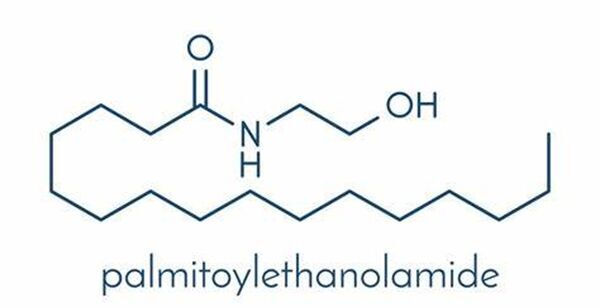
PEA (Palmitoylethanolamide)
I came upon this supplement when reading A Powerful New (and Old!) Treatment for Pain, POTS, MCAS, Lyme and Postinfectious Fibromyalgia by Jacob Teitelbaum, MD | Jan 31, 2026, Townsend Letter.
I knew I had to try it right away. Despite claims of it working only after a few months, I saw positive effects of mental clarity and less inflammation on the very same day I took it.
PEA is a natural fatty compound released by your brain whenever there's stress from chronic pain or other sources of stress.
When depleted, you see more allergies, food sensitivities, more microglial activation (brain inflammation), more pain and more dysfunction at the level of the hypothalamus, which is a key player in CFS/FMS/Long Covid/Chronic Lyme and POTS.
Its therapeutic applications include immunity, brain health, allergy, pain management, joint health, sleep and recovery.
It has analgesic, anticonvulsant, anti-microbial, immunomodulatory and neuroprotective effects, enhancing neurogenesis and improving cognitive function even in healthy people. It improves sleep and has anxiolytic effects. It helps settle down mast cells.
It works through multiple mechanisms, including modulation of central sensitization, being an alternative for those intolerant to low-dose naltrexone and/or being synergistic with it as well.
Notwithstanding some discrepancy, nowadays the efficacy of palmitoylethanolamide in controlling mast cell behavior, which likely accounts for its many anti-inflammatory, anti-angiogenic and analgesic effects, is well recognized.
It works at the level of the cannabinoid system and PPAR pathways, which are classically hard to target with drugs.
The gut-brain axis connection with palmitoylethanolamide (PEA) is one of the key mechanisms as all the inflammation goes into the brain via leaky gut, leaky blood-brain barrier, mast cell signals, microbiome activity, etc. It's not surprising that PEA would also reduce abdominal pain and improve the microbiome.
Before COVID-19, researchers where already making the connection between Mast Cells, Neuroinflammation and Pain in Fibromyalgia Syndrome.
There's an added benefit and safety of PEA in the treatment of pain in patients affected by fibromyalgia already treated by mainstream drugs such as duloxetine and pregabalin.
Ultramicronized palmitoylethanolamide treatment is very well-tolerated therapy for fibromyalgia syndrome, mostly suitable for these patients who need long-term treatments.
There's so much more literature about it, you're invited to visit pubmed or your AI provider and find out about it.
PEA Protocols
Absorption is a problem so formats that are highly absorbable are useful. However, I use a normal formula with good results. Some people combine it with other supplements to address biofilms or severe allergies or other issues. Being a natural compound, it is compatible with anything.
Effects can be seen from immediately up to 3 months at the recommended dose of 300 mg twice daily.
Jan M Keppel Hesselink and Davis J Kopsky from Institute for Neuropathic Pain (Bosch en Duin, the Netherlands) recommend the following based on experience using PEA in thousands of patients with pain:
PEA 600 mg twice a day and after one month, 1200 mg twice a day for 2 months.There should be pain relief beginning at three weeks using this higher dosing.
PEA can be taken with other pain medications and is effective in a synergistic way or when other things didn't work.
The dose can be lowered for maintaining purposes (e.g. 300 to 600 mg daily or as needed).
It's recommended to take the last dose in the early afternoon as it can have an energizing effect in some people.
Whenever I feel my brain shutting down from inflammation, I take two capsules of plasmalogens, two capsules of L-carnitine and two to four capsules of PEA, and I'm back again. The high flux oxygen does help a lot too, though.
However, as far as medications or supplements go, there's a mental clarity I don't get from antihistamines or leukotriene stabilizers. It's the PEA and the plasmalogens that really make the difference for me. It's the only time I had remarkable mental clarity and went, "Wow, this stuff is great!" And that is why I've now written separately about them. Oxygen therapy is a different story, available here as well.
Worst case scenario, it's worth a try.



Reader Comments
I'm still undecided if the author is just ignorant or a snake-oil salesman. Seeing the "Dr." title, I assume the former ...
The site explicitly states that its content is for research and educational purposes only and does not represent the views of any government or medical institution.
Dr. Gaby is identified as a countryside family medicine doctor and former heart surgeon who serves under the Hippocratic Oath.
She is based in Europe, where she practices family medicine and has written extensively on topics such as primary care, vaccination, and antibiotic safety.
Health advise from such people who remain stuck in this narrative is dangerous, no matter if deliberately or not. This fact remains.
Perfect! If all Health Experts had to try all the pharmaceuticals first before recommending them, you wouldn't have a need for Lawyers. Natural Selection would rule.
"long COVID"... Gimme a break.
Quiet... They are hunting rabbits..
" Explain It To A 6 Year Old
When you go to the doctor and they give you medicine, the medicine usually has a name on the box and it usually costs a lot of money. The reason it costs a lot of money is that the company that made it has a special permission from the government saying nobody else is allowed to sell that exact medicine for a long time. So if you want it, you have to buy it from them.
There is a rule about this special permission. You can only get it for things you invented yourself. You can’t get it for things that grew in the ground all by themselves, like an onion, a piece of ginger, a potato, a leaf from a plant, or a mineral that comes out of the sea. So nobody has the special permission for onions, for ginger, for castor oil, for comfrey, for charcoal, for milk thistle, for cayenne, for iodine, for sulphur powder, for hydrogen peroxide, or for the other simple things that used to live in everybody’s kitchen and medicine cabinet.
Before a doctor will say something is a real medicine, somebody has to do a very big and very expensive test on it. The tests cost hundreds of millions of dollars. The only people who can afford the tests are the companies that can sell the medicine afterwards and make all that money back. So the companies test the medicines they own. They don’t test onions. They can’t own onions. They can’t make their money back on onions.
The simple things, the cheap things, the things your grandma used, don’t get tested. And then the doctor says, “There’s no evidence that the onion works.” But the only reason there’s no evidence is that nobody paid to look. The onion still works. It’s just that nobody’s selling it.
That’s what this essay is about. Twelve simple, cheap things that work, and the medicines that took their place, and why."
[Link]
"Seqex aims to do this to essential ions in your body—like Calcium, Magnesium, and Potassium—making the cell walls more permeable so they can absorb nutrients and shed toxins more efficiently."
This ICR phenomenon allows the cells to become more permeable allowing toxins to be released and nutrients to be absorbed.
The absorption trait described above is similar to how DSMO performs it’s wonders, just different technique.