
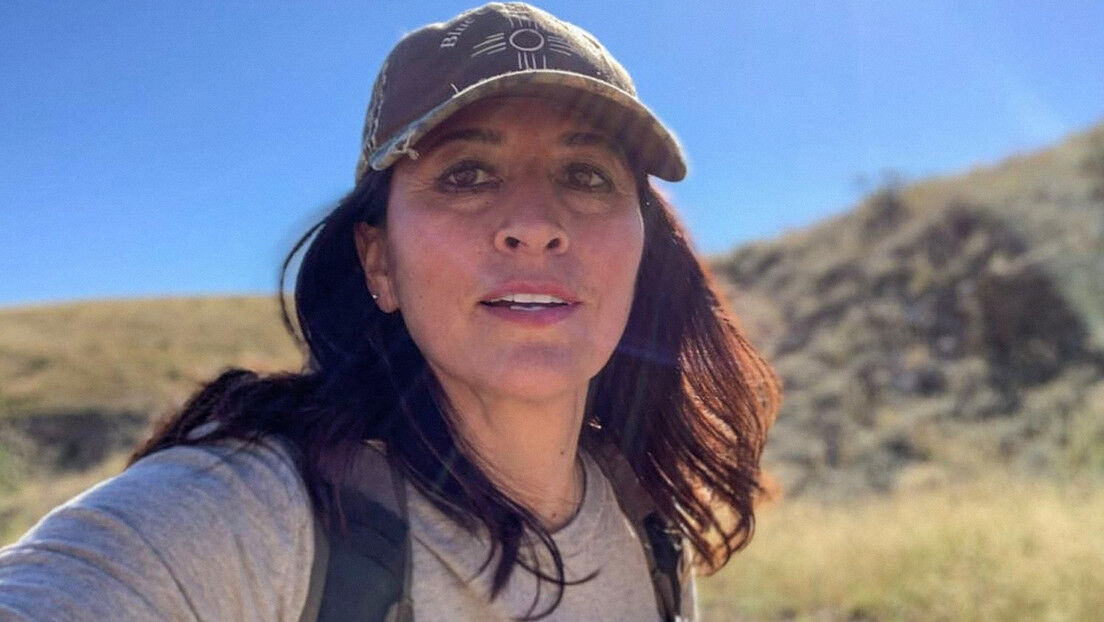
© Redes socialesMelissa Casias
Fresh reporting reveals that Melissa Casias, administrative assistant at the Los Alamos nuclear lab, left home with everyday possessions that suggest she intended to survive — not end her life — raising new questions in the widening pattern of mysterious deaths among nuclear and UFO-linked personnel.
Some have suggested that Casias committed suicide, yet new details about her final moments show that before walking out the door of her Ranchos de Taos home on June 26, 2025, Casias took her toothbrush and thyroid medication with her.
Los Angeles Magazine contributor Lauren Conlin, who has followed the case closely, told NewsNation that these are "things that might indicate you're planning to stay alive."
She also returned home to drop off both her work and personal phones — which were later found wiped clean of all data. Her skeletal remains were discovered nearly a year later next to a handgun her family has stated did not belong to her. No bullet was recovered despite reports of a gunshot wound to the head.
Investigator Morgan Wright put it plainly: "You don't get slumped up on a tree... Most of the time, in every crime scene I've worked on, there are skeletonized remains, and there's no connective tissue left. Everything's on the ground in pieces."
These elements — the survival items, the wiped phones, the unfamiliar weapon, and the scene inconsistencies — are now the focus of renewed scrutiny.
This latest angle on the Casias case arrives against the backdrop of a documented cluster of similar incidents involving scientists and support staff tied to sensitive programs.
Retired Air Force Maj. Gen. William Neil McCasland, long described as a UFO "gatekeeper," vanished just days after President Trump's full disclosure order on UAP files.
A NASA nuclear propulsion expert was found charred inside a crashed Tesla.
A NASA-linked aerospace engineer and family members died in a plane crash.
Additional cases brought the total to around 11 by mid-April 2026, many sharing traits like wiped devices and abrupt departures from normal routines.
President Trump has addressed the wider string of cases directly, telling reporters it is "pretty serious stuff" and that the administration is reviewing them. He stated that while some of the individuals were "very important people," "so far we're finding that there's not much of a connection," describing many as individual matters. He pledged a full report.
Three sets of declassified UFO/UAP files have since been released under the administration's transparency directives, with more batches expected.
Former FBI Assistant Director Chris Swecker has highlighted the risks in classified environments, noting that administrative staff in high-clearance labs "would basically be in the know on what's going on" and that it "wouldn't be the first time their administrative assistant has been targeted."
More recently, former FBI agent Ben Hansen assessed the Casias case as roughly "80 percent foul play" and raised the possibility of advanced tactics, including direct energy weapons or voice-to-skull technology, that could influence behavior without leaving conventional traces.
In an environment where America is finally forcing long-buried advanced technology files into the open, the repeated loss of personnel with access to those very secrets carries national security weight. Whether foreign actors, internal resistance to transparency, or other forces are involved, the pattern deserves unflinching examination.
The Trump administration's willingness to release the files and review these cases represents a break from past secrecy.
The public now has every right to demand the same level of transparency when it comes to why these specific individuals — and the small but telling choices they made in their final hours — keep disappearing from the picture.


Reader Comments
to our Newsletter