
The attack was in some ways unprecedented, as it represented Iran preemptively striking Israel for the first time without Israel having struck Iran first.
For the first time on the back foot, it was Israel and the US that were forced to "defensively" retaliate in kind:
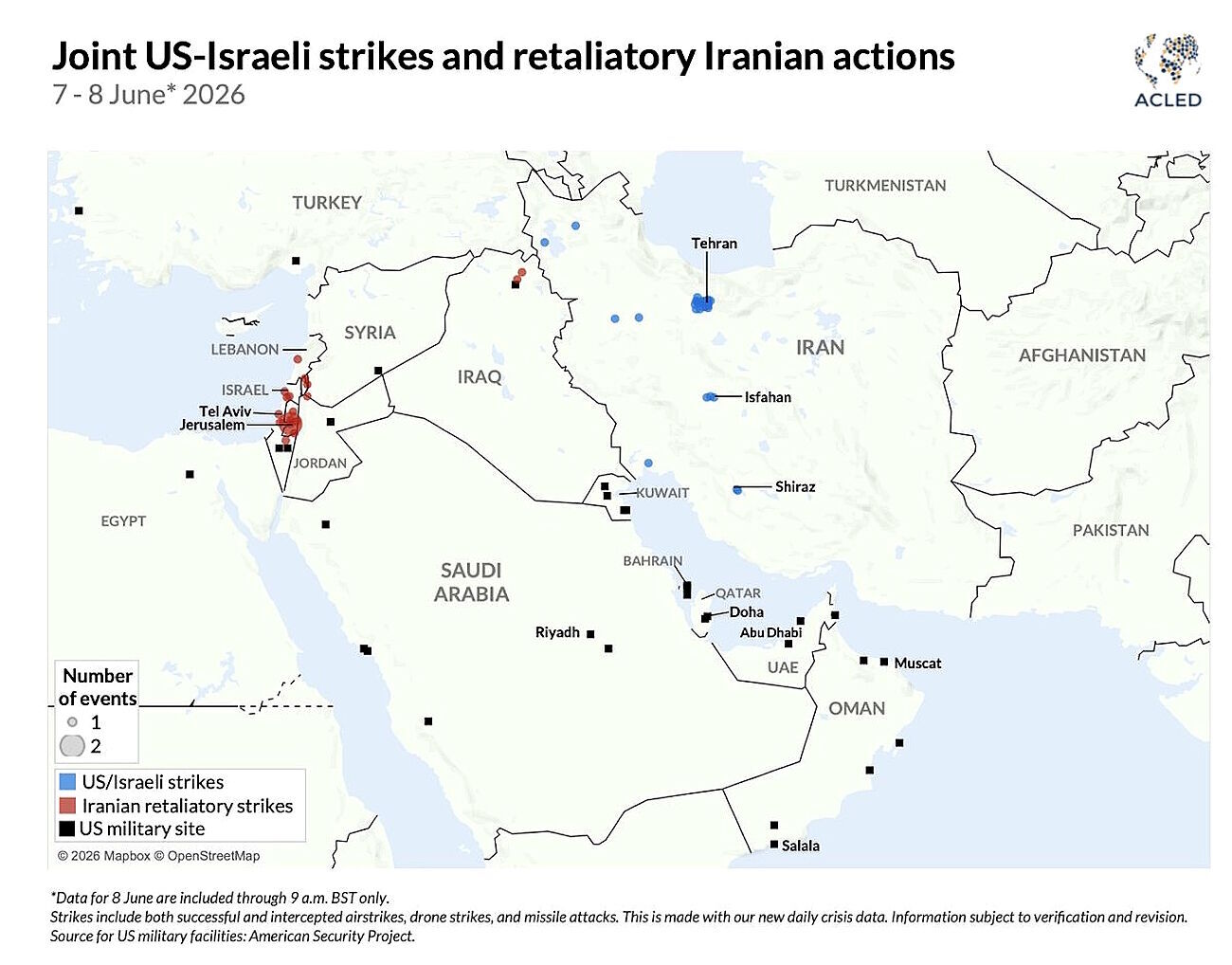
Now Iran has established total strategic dominance of the escalation ladder to the point where it can treat Israel as Israel has treated other regional countries since its founding, punitively hitting it at will for violations that no longer necessarily include direct attacks on Iran's home territory.
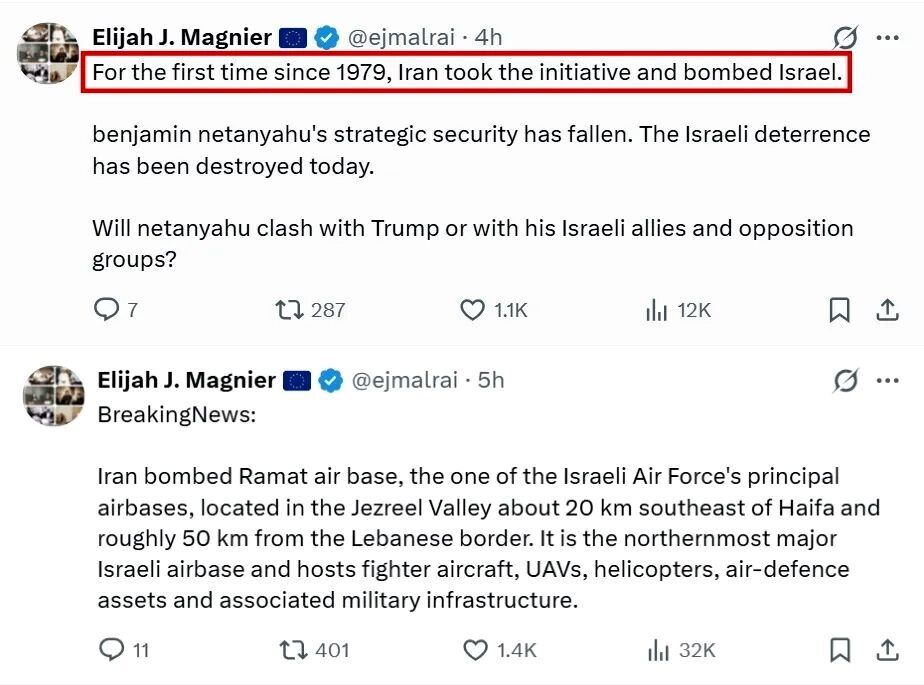
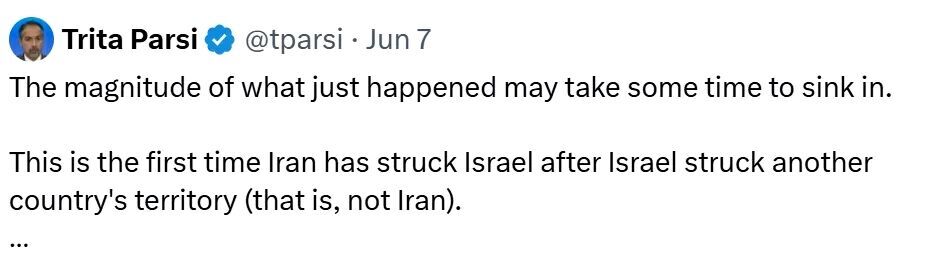
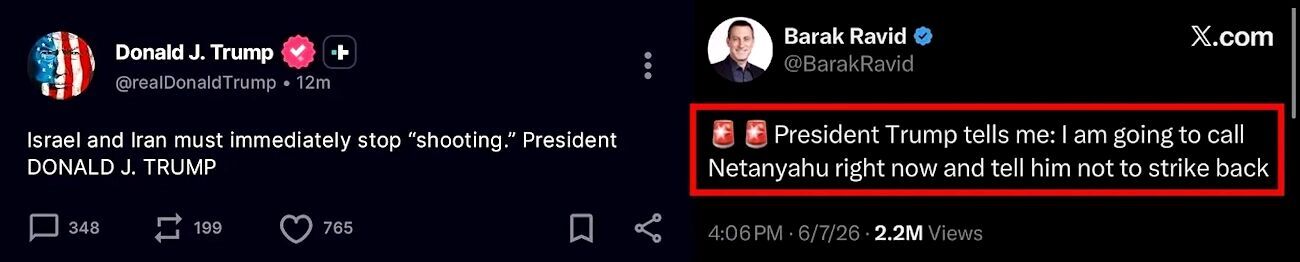
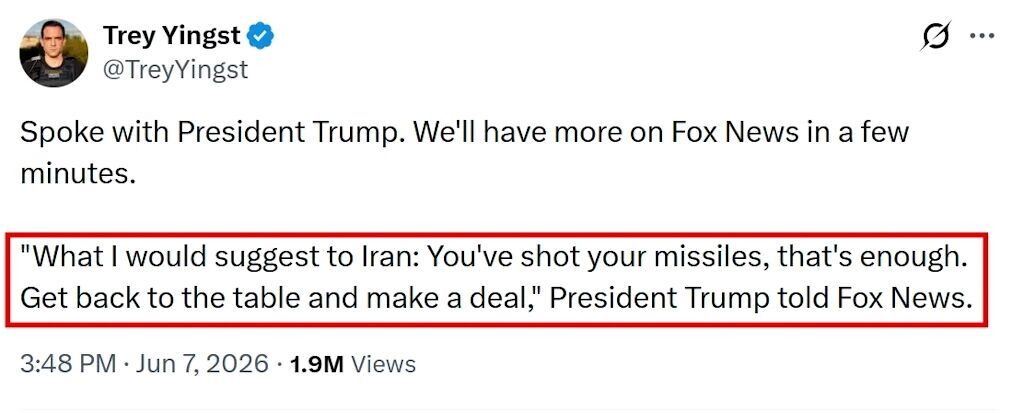
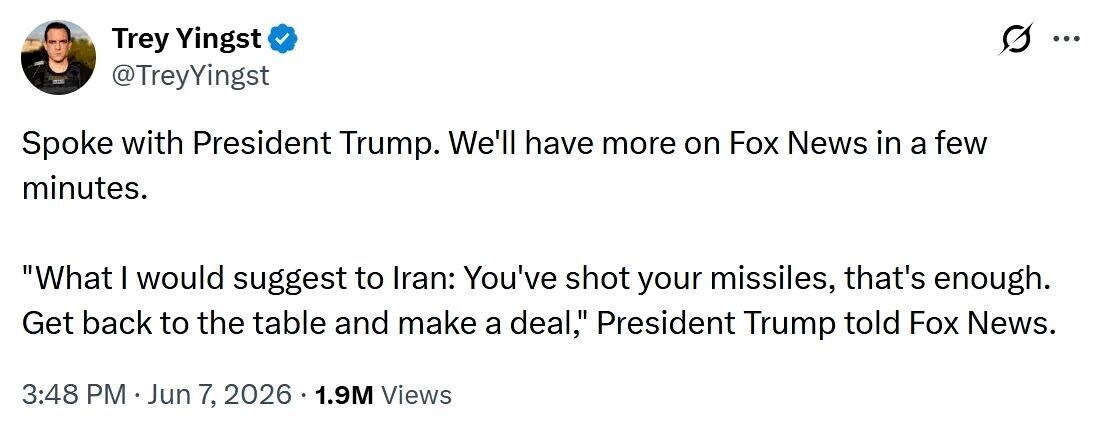
Trump was relegated to begging Iran to stop on social media, as well as pitifully excusing Iran for its attacks, stating, in effect: "All right, you've blown off your missiles, now quit it."
Related — an Iranian missile being prepped for launch in the latest round:
One astute commentary on events of the past week:
During the 2024 ceasefire between Hezbollah and Israel, absolute violations were being committed by Israel through continuous bombings and assassinations. However, Hezbollah never responded to these violations due to strategic reasons, including the closure of its logistical supply routes from Syria following the fall of the Assad regime.The linchpin behind the new flare-up has been Israel's failed Lebanese campaign, wherein the struggling Israeli army has slowly slogged past the Lebanese border in an attempt to control everything south of the Litani river. Frustrated with setbacks, Israel had begun bombing Beirut, after Hezbollah's newly-found mastery of FPV drones unleashed havoc on unprepared IDF troops.
By now, Hezbollah has fully learned its lesson from these types of ceasefires and will not tolerate any violations under any circumstances. What is striking, however, is that the United States wanted to impose this exact same ceasefire model on Iran. They believed Iran would not retaliate, much like Hezbollah.
Yet, what Iran actually did shocked Washington. An attack on a radio tower on Qeshm Island prompted Iran to completely devastate a terminal at Kuwait Airport. At the same time, it launched an attack on Bahrain. Through this, Iran is telling the United States: "For every single bullet, we will respond with many." This once again confirms America's failure to establish a long-term ceasefire model similar to the 2024 Hezbollah-Israel ceasefire, through which it intended to gradually weaken Iran's defenses in the south of the country.
In an article for Haaretz, former Israeli PM Ehud Barak stated that there is no sign of Hezbollah's collapse and that the conflict can only be resolved diplomatically, given the rising pressures of Israeli society back home, particularly those living along the border regions:
Under the leadership of Naim Qassem, who was marketed to the public as a faceless personality, Hezbollah is alive and kicking, striking out at the army and the northern residents, disrupting civilian life, and showing no sign of collapse or willingness to disarm. One word sums up the situation in Lebanon from the perspective of the prime minister: failure. And in two words: total failure.Barak also happened to be a former Israeli general and Minister of Defense, so he knows a bit more of what he's talking about when it comes to military matters than the average Israeli politician.
To eradicate Hezbollah, we would need to occupy all of Lebanon, which is simply unrealistic. The only way to disarm the organization is through a diplomatic process in coordination with the governments of Lebanon, the U.S. and others of the region.
In fact, just yesterday, war mappers noted the first Israeli withdrawal of the northern Lebanese war, after the IDF suffered humiliating setbacks:
◉ Dibbine — First Israeli Withdrawal of the War:
➡️ Israeli forces pulled out of Dibbine on June 4 following intense clashes with Hezbollah fighters the first Israeli withdrawal from any position since the current Lebanon war began in March 2026.
➡️Lebanese army soldiers and Spanish UNIFIL peacekeepers moved in the following day, deploying at the village entrance and beginning rubble clearance.
➡️The Lebanese army has barred residents from returning for now. This wasn't a strategic retreat it was a contested position Hezbollah made too costly to hold, and the Lebanese army's immediate deployment is Israel's attempt to prevent Hezbollah from walking straight back in Whether that buffer holds is the real question?
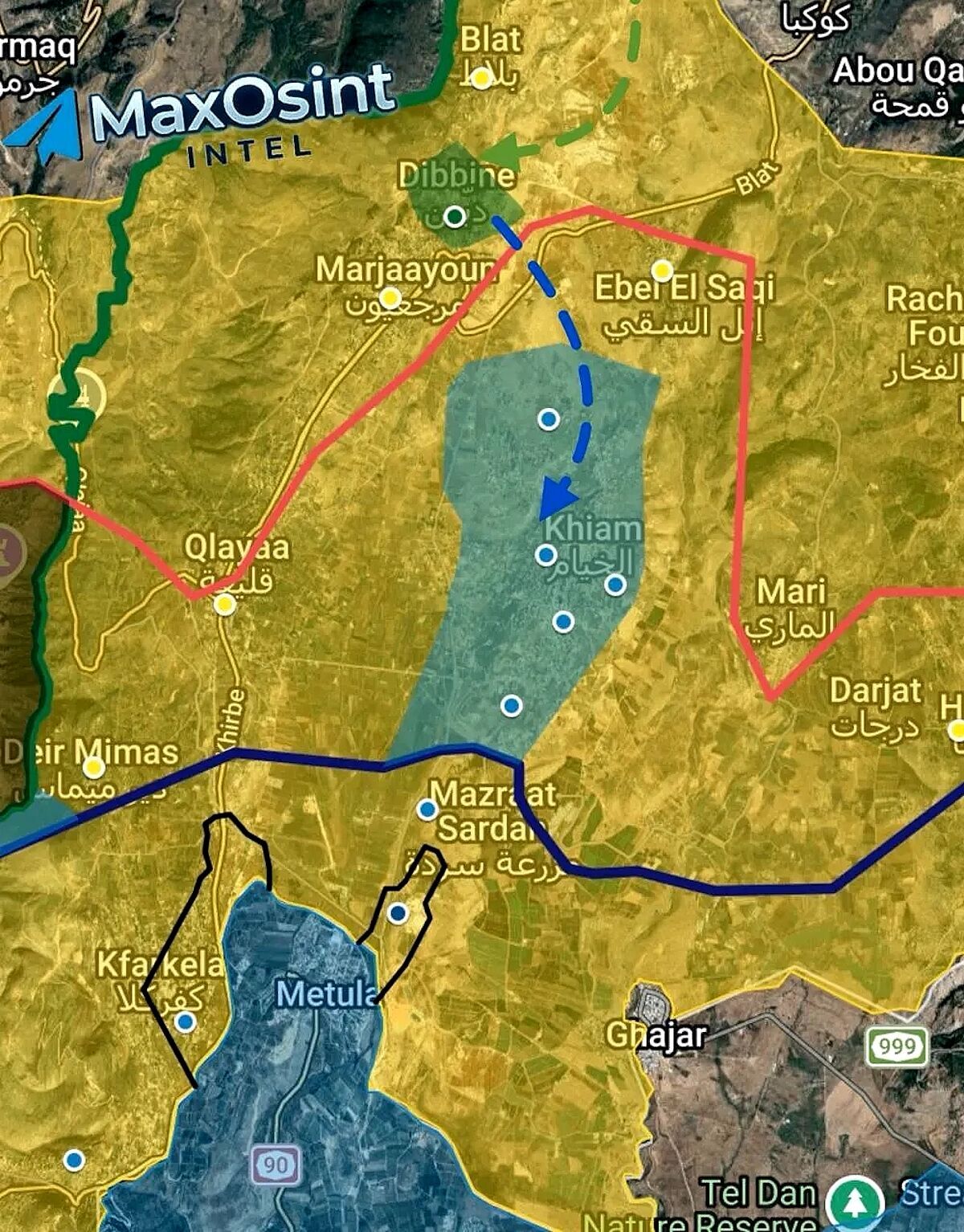
© MaxOsint Intel/TelegramIsraeli forces pulled out of Dibbine on June 4, 2026 following intense clashes with Hezbollah fighters
War mapper MaxOsint Intel also wrote that Hezbollah re-took Arnoun, just southwest of Dibbine:
Hezbollah has retaken Arnoun, pushing Israeli forces back down toward Yohmor and breaking the IDF's hold on the Beaufort ridge less than a week after it was established.Granted, the IDF is still attempting to push north in other sections of this front, but it is coming at increasingly greater costs as Hezbollah masters drone technology and reportedly receives more and more smuggled FPVs, which include the latest fiber-optic variety.
There's been dozens of such videos lately, but here's the most recent from today as example:
The Lebanese "Hezbollah" has published a video showing an attack by an FPV drone on an "Merkava" tank of the Israeli regime's army near Beaufort Castle in southern Lebanon.
Israel's attacks on Lebanon to destroy Trump's fragile ceasefire had one major purpose: to ensure that Israel never loses its right to attack any country at will. To allow itself to be held to a norm or 'standard' of any kind in refraining from hitting Lebanon would be to set a dangerous precedent for Israel, which has historically operated with no checks on its wanton aggression. Such a precedent would be a sign of massive weakness and failure that would be a crack in the system of colonization Israel has worked so fiercely to impose on the region.
For his part, Trump appears to be finally growing exasperated with Netanyahu's defiance, admitting to an interviewer that he yelled and cursed Bibi out in a phone call last week, telling him "You're fu*king crazy!"
The alleged transcript, according to Axios:
"You're fucking crazy. You'd be in prison if it weren't for me. Everybody hates you now. Everybody hates Israel because of this."It seems Trump is more disturbed by the fact that precious Israel is finally receiving its much-due blowback.
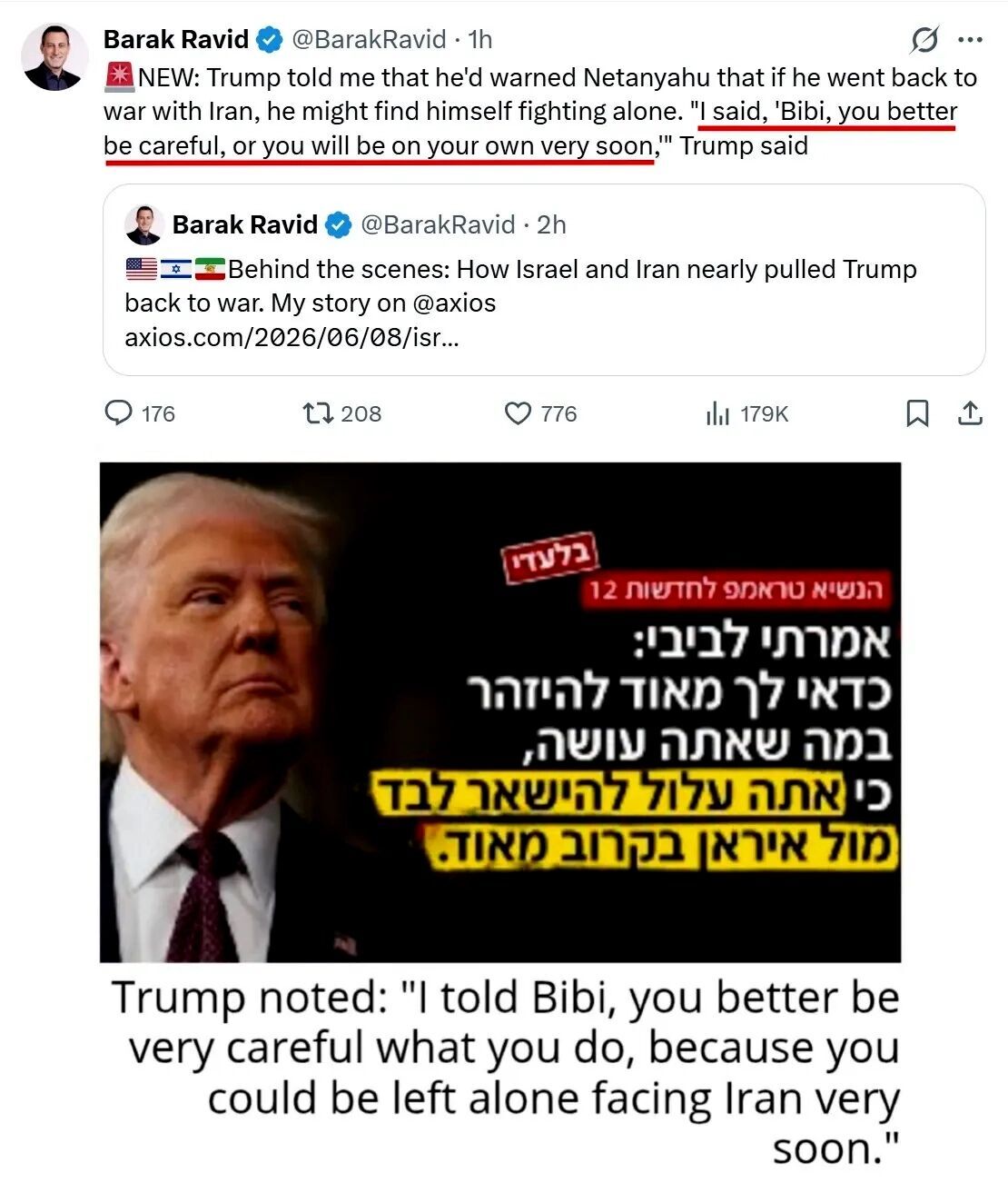
Now Trump has allegedly gone even farther, telling Bibi that he may soon be on his own against Iran:

In an attempt to salvage some semblance of dignity from his humiliating episode vis-a-vis Netanyahu's defiance, Trump told FT that Netanyahu will have "no choice" but to do as told :
Israeli Prime Minister Benjamin Netanyahu will have no choice but to accept any deal the US negotiates with Iran, Donald Trump said, because the US president "calls the shots".Who believes that one?
"He won't have any choice," Trump told the FT in a telephone interview. "I call the shots. I call all the shots. He [Netanyahu] doesn't call the shots."
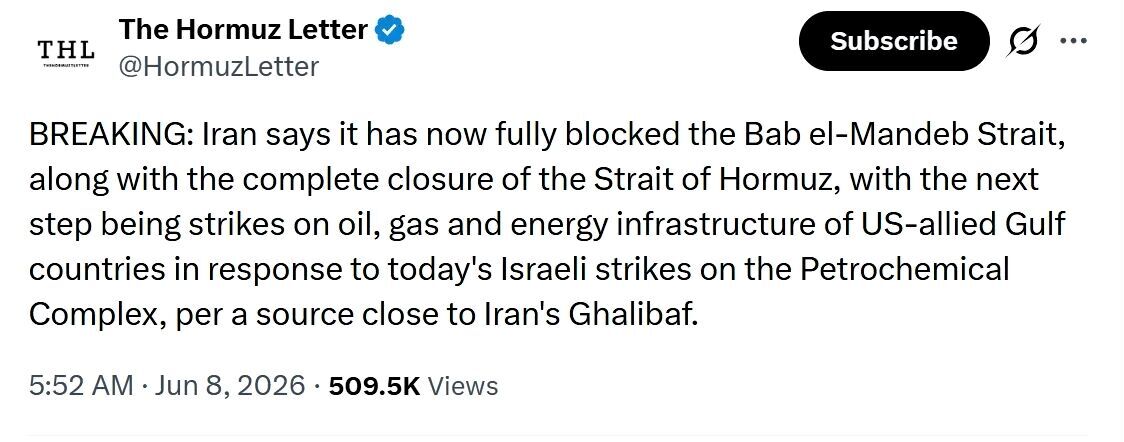
There were reports that the Houthis have decided to finally block the Bab al-Mandab in response to Israel's transgressions, but as of this writing there hasn't been any real confirmation if this was nothing more than empty threat-making:
The events of the past hour underscore just how resounding a strategic failure the latest campaign against Iran has been. Israel now faces a tough dilemma: to respond and risk a frontal clash with the President of the United States, or to refrain from responding and allow Iran to entrench a new equation that will significantly curtail Israel's freedom of action against Hezbollah in the future.The fact that Trump was so permissive with Iran's latest strikes, trying his hardest to dismiss them as not deal-breaking, is a major token of the US's increasingly weak position and lack of playable 'cards'.
More importantly, the recent developments illustrate that despite two military campaigns against Tehran, Iran is far from deterred. On the contrary. The Iranian leadership is projecting high confidence in its capabilities, and is particularly convinced that there is currently no credible threat — neither from Israel nor from the United States — that could compel it to make a substantive change in its policy.
Meanwhile, President Trump faces a particularly problematic strategic reality. The options available to him are not good, and he appears to be someone who prefers to reach an agreement with Iran at almost any cost rather than allowing a slide into a broader regional confrontation.
In the end, this is the price of a campaign that yielded impressive tactical achievements but failed to attain its central strategic goal: the toppling of the regime. Instead, Israel finds itself with less freedom of action, Iran with greater self-confidence, and the United States with a growing desire to end the crisis through a political settlement.
For instance, just this past week news broke that the US Navy had been secretly "coordinating" a few tankers each night to transit Hormuz, by providing them with communications, helicopter support, real-time intelligence, etc. It seems while Trump boasts about being able to prolong his blockade indefinitely, the effects of Iran's own blockade are wearing a heavy toll and forcing the US to try and desperately eke through a few ships here and there just to get some economic lifeblood flowing.
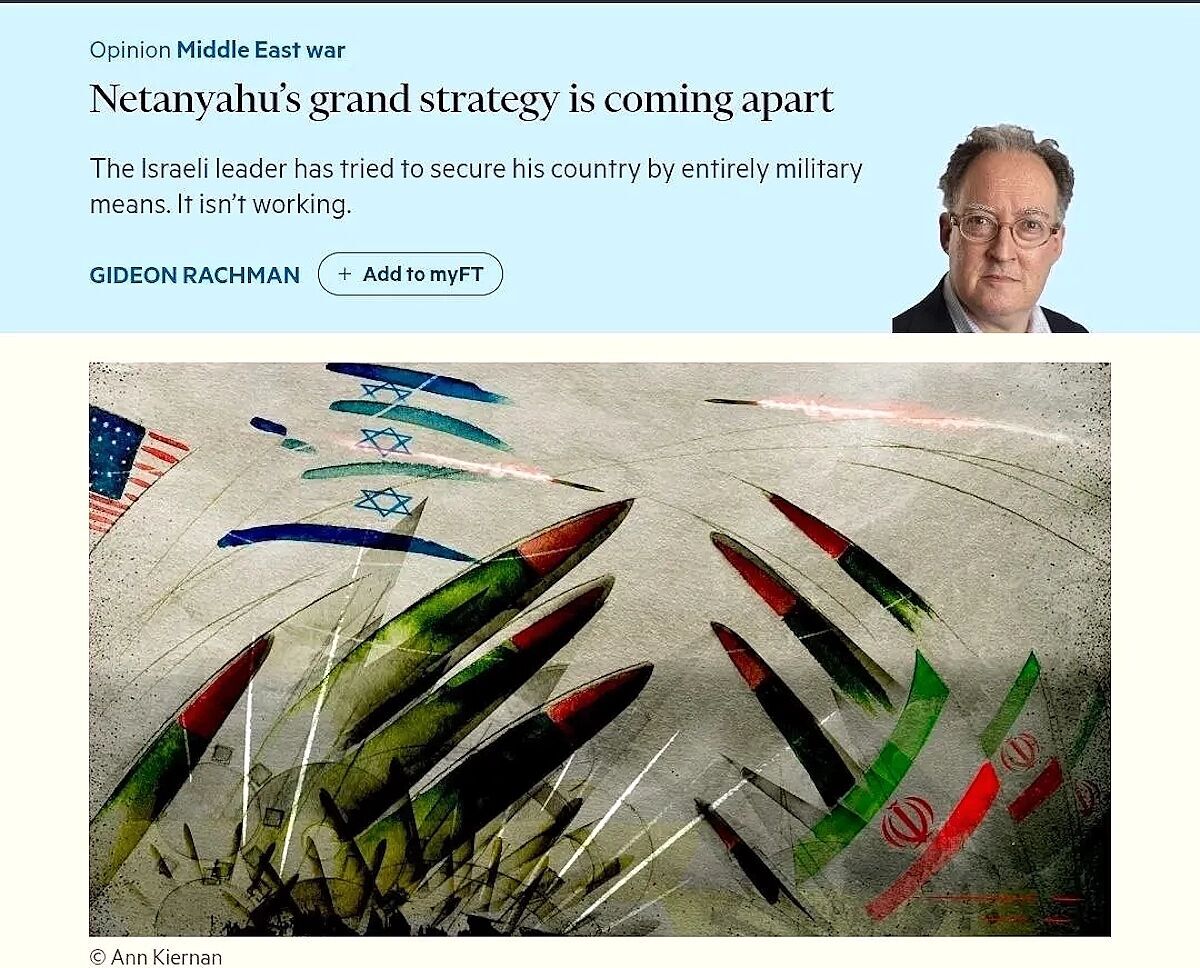
Besides the US's failings, Iran is arguably close to checkmating Israel in a major, generational way. Israel has no good options as Iran has put it between rock and hard place in regard to Lebanon, as Gideon Rachman points out in FT:
Israel is now trapped in a quagmire in both Gaza and Lebanon with its hands being increasingly tied by pressure from Trump, who himself is being swallowed by the pressures wrought of his failed Hormuz gambit. That means Israel may soon be trapped in an untenable position with all the hornet's nests of its surrounding enemies having been stirred up, while its economy sinks and military stocks deplete. Iran holds the high ground in virtually every way, and each passing moment brings Iran more strength in reconstituting its losses.
What began with widespread opinions that Israel would emerge as the big winner of all this chaos has slowly transitioned to Israel looking increasingly vulnerable and impotent. Iran has cleansed itself of Mossad networks and Israel has already blown its shot at big "surprise" intel ops that take years to plan and organize, with nothing left in the tank that can move the needle. Iran now gets politically stronger and more unified each day having weathered the dangerous opening 'shock' phase of US-Israel's operations to take down the country.
Time is now on Iran's side.





Good, bring it on.