
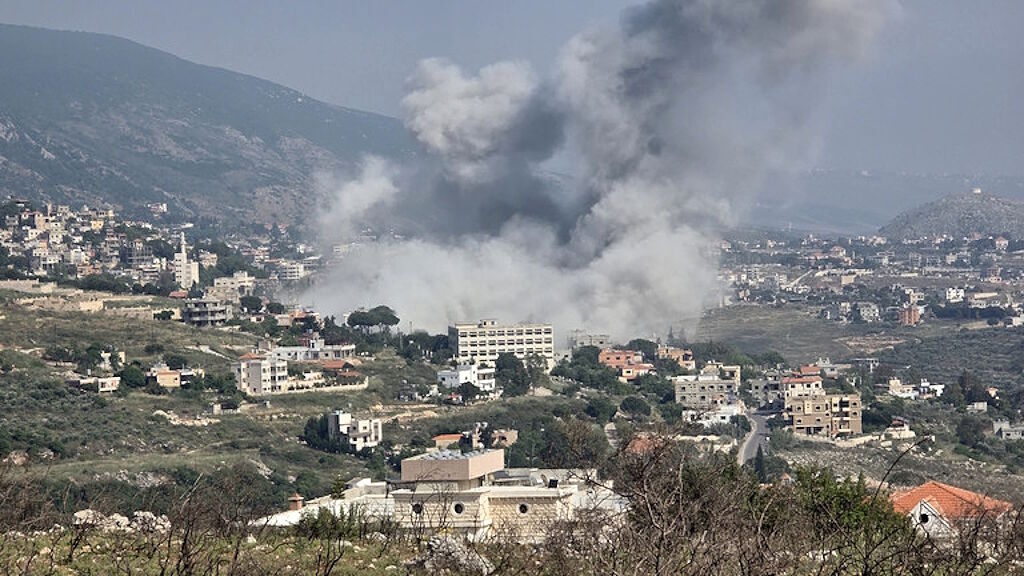
© Mohamad Zanaty / Anadolu via Getty ImagesSmoke rises after an Israeli airstrike on Upper Houmine in southern Lebanon on May 27, 2026
Diplomatic efforts to finalize a peace agreement between the US and Iran ran into significant delays due to Israeli violations across West Asia, Pakistani government mediators revealed to Anadolu Agency on 9 June.
US President Donald Trump told reporters in New York on Monday that a settlement could be reached in "two or three days," yet Pakistani mediators say that such an immediate breakthrough is "unlikely."
While Trump continues to maintain that a peace deal is close at hand, officials in Islamabad stress that the "situation is complex and has entered a sensitive phase" due to persistent Israeli military aggression in southern Lebanon.
According to sources close to the mediation, the two nations were "inches away" from concluding a temporary truce in late May, only for the momentum to be derailed by the "large-scale" Israeli incursion and the annexation of Lebanese territory.
Although a temporary ceasefire in Lebanon was established on 17 April and subsequently extended until early July, Israel has maintained daily violations, including airstrikes and ground incursions.
Pakistani officials have informed Washington that Israel's actions in both Lebanon and Gaza are the primary obstacle to reaching a final end to the war.
The Iranian leadership has reiterated through diplomatic channels that it will not return to the negotiating table while Israeli strikes persist.
Last week, Pakistani Interior Minister Mohsin Naqvi traveled to Tehran for the fourth time since 28 February to deliver a "special message" to Supreme Leader Mojtaba Khamenei from the Pakistani army chief, Field Marshall Asim Munir.
Pakistan, alongside regional partners such as Qatar, is currently attempting to convince Trump to apply "maximum" pressure on Israel to halt its offensive.
Islamabad has reported receiving a "positive response" from the White House regarding the situation in Lebanon, despite the lack of an immediate cessation of attacks.
Pakistani sources told Anadolu Agency they anticipate a "breakthrough" in efforts to stop the Israeli military attacks "in a few days."
If a halt to the fighting is achieved and direct communication between Washington and Tehran is restored, mediators believe there are "high" chances of reaching a deal "soon," noting that the majority of conflicting issues have already been resolved.
However, the officials maintained that "this process cannot be completed within two or three days."
Israel has continued to strike out on multiple fronts. On Tuesday morning, Israel issued a forced mass displacement order against the southern Lebanese city of Tyre (Sur) for the second time in less than a month.
At least 15 airstrikes hit Tyre on Tuesday morning, killing nine and injuring over two dozen.
Thousands of civilians were forced to flee north, joining the over 1 million already displaced throughout Lebanon.
Since the Israeli invasion of Lebanon began in March, the attacks have so far killed at least 3,666 people and injured over 11,000.
On Monday, Israel also reignited a brutal campaign of collective punishment on Gaza by closing all entry points for humanitarian aid in response to Iranian retaliatory strikes triggered by Israel's overnight violations in the Lebanese capital of Beirut.
Iran had repeatedly asserted that a strike on the Lebanese capital was an unacceptable red line that should not be crossed.



Comment: Iran is fed up with Trump's inability to rein in madmen like Bibi, Smotrich and ben-Gvir. Time for action:
Lebanon red line: Iran establishes escalation dominance with first-ever non-retaliatory strike on Israel