Puppet MastersS


Rocket

Russia to ramp up attacks on Ukraine - Putin

Russian President Vladimir Putin
© Sputnik / Kristina KormilitsynaFILE: Putin says Russian armed forces are becoming as capable and prepared to use advanced weapons as no other army in the world, President said
Moscow's forces only strike military targets, unlike Kiev, which mounts indiscriminate terror attacks on civilians, the president has said

Ukraine's weekend attack on the Russian city of Belgorod, which has left dozens of civilians dead and injured, was an act of terrorism, Russian President Vladimir Putin said on Monday. Kiev will not be left unpunished when it engages in such activities, he warned.

The president insisted that Moscow will not retaliate in kind with indiscriminate attacks on civilians, but will focus instead on Ukraine's military sites.

Comment: Strikes against Ukrainian targets have since been carried out by Russia:
Powerful blasts reported in Ukrainian cities
The strikes targeted defense industry facilities and ammunition depots, Moscow has said
Russia explains target selection in new strikes on Ukraine
The long-range attacks were aimed at the country's military-industrial base and ammunition stocks, the Russian Defense Ministry has said
[...]
In a statement on Tuesday, the ministry said that Russia's armed forces had "carried out a group strike with long-range precision weapons and unmanned aerial vehicles on enterprises of the military-industrial complex of Ukraine."

Russian officials stated that the barrage particularly targeted facilities in Kiev and its suburbs that produced missiles and drones, as well as those that repaired weaponry and other military equipment. Other strikes were aimed at missile depots, ammunition and aircraft weaponry supplied to Kiev by Western countries, the ministry said.

"The mission of the strike has been achieved. All targets have been hit," the officials concluded.


Sheriff

No other army has weapons like Russia's - Putin

Russian President Vladimir Putin
© Sputnik / Kristina KormilitsynaFILE: Putin says Russian armed forces are becoming as capable and prepared to use advanced weapons as no other army in the world, President said
No other army in the world has weapons like the ones that the Russian Armed Forces have, President Vladimir Putin said at a meeting with troops participating in the special military operation.

"Our armed forces are becoming as capable and prepared to use advanced weapons as no other army in the world. First, no other army in the world has weapons like the ones that we have," the head of state said.

Putin emphasized that another special thing about the Russian army was its ability to use all new weapons.

Comment: One gets the impression from Russia and China's recent admissions, that they're intended to serve as gentle, friendly, reminders: China reveals next-gen multi-target electronic warfare weapon design

Furthermore, analysts from across the globe have also commented how the West's proxy-war in Ukraine have provided Russian troops with battle experience unlike any military in the West has encountered in recent times, and their success on the battlefield has proven their capabilities; the same can't be said of the US and Israel: Israel says it will pull out thousands of troops from Gaza


Hourglass

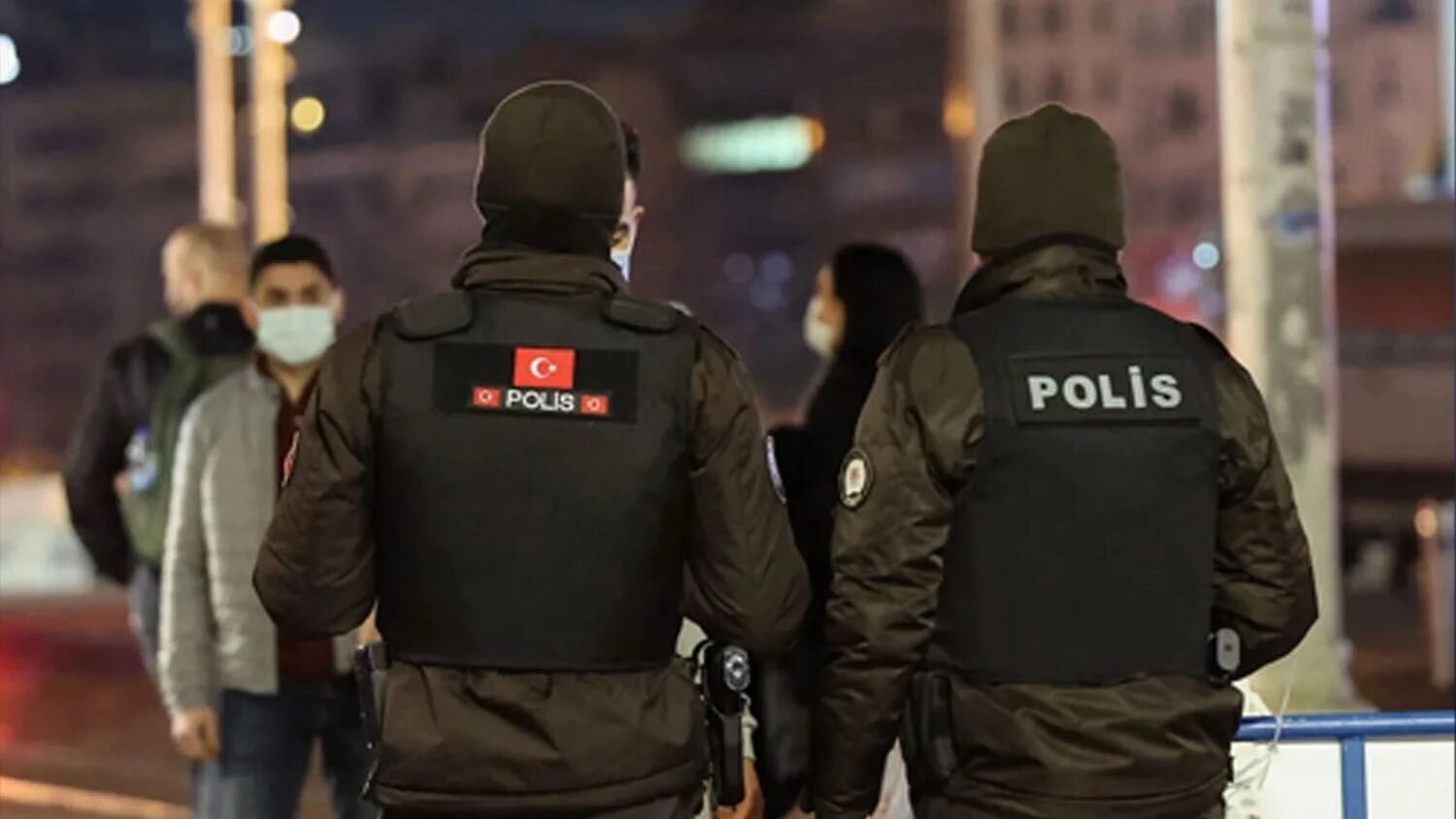
Turkey detains 33 more suspected Mossad agents amid 'anti-terror initiative'

mossad
© Anadolu AgencyThese arrests follow a series of recent anti-terror operations conducted by Turkiye
Turkish authorities have arrested over 30 people with suspected ties to Israel's Mossad intelligence service, Interior Minister Ali Yerlikaya said on 2 January.

Yerlikaya said on social media Tuesday that "33 suspicious persons were captured in the 'MOLE' Operation, which was held simultaneously in 8 provinces centered in Istanbul, for the Detection and Deciphering of International Espionage Activities."

The interior minister mentioned that police raided 57 locations across eight provinces as part of Operation "MOLE," which was launched by the Istanbul Counter-terrorism Bureau and the Turkish National Intelligence Organization (MIT).

Comment: The days of the West and its allies operating in the multipolar world without consequence are coming to a close; and if the seeming increase in Mossad arrests are anything to go by, that time is fast arriving:


Info

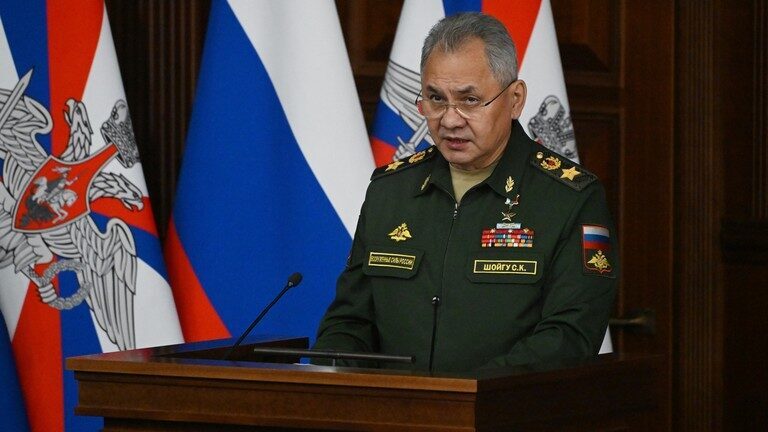
Defense Minister Sergey Shoigu has claimed that US, UK, and Polish military personnel are operating air defense and multiple launch rocket systems

Russian Defense Minister Sergei Shoigu.
© Sputnik/Sergey GuneevRussian Defense Minister Sergei Shoigu.
Several NATO member states have boots on the ground in the Ukraine conflict, Russian Defense Minister Sergey Shoigu has claimed. Western military personnel are operating certain weapons systems, he alleged, and that hundreds of the US-led military bloc's satellites are providing surveillance data to Kiev.

Speaking at a meeting of Defense Ministry officials on Tuesday, where President Vladimir Putin was also present, Shoigu stated that "NATO service members are directly operating air defense systems, tactical ballistic missiles, and multiple launch rocket systems" in Ukraine. He cited radio intercepts featuring English and Polish speakers. According to the minister, Western officers are also playing an active role in preparing Ukrainian military operations as well as training troops, both in their home countries and in Ukraine.

Comment: On several occasions, there have been strikes against command centers where the rumors and information from people close to the location later are that the strikes took the lives of foreign personnel. In 2023, there was a case with a bunker near Lvov, later there was one in Kiev and a couple of others. Following recent strikes on facilities in Kiev, Kharkov and Odessa, there are new rumors, but the Russian Ministry of Defence is as usual not saying much except that objects were hit. This approach gives the option for the NATO party to sign a nondisclosure agreement with the family of the person who has died, pay out compensation, spin a story about how he or she died, and send over a replacement. It also gives those wounded a chance to be flown out, without publicity. Some commentators have gone on to estimate the number of foreigners present in Ukraine as well as the number of wounded, based on the number who are reported to have been killed. Such estimates are based on the assumption that in combat only a fraction are killed and that the number of wounded is larger than the number killed.

See also:
Sep 25, 2023: NewsReal: Are Top Western Generals Being Killed in Ukraine?
Jul 23, 2023: Zelensky's 'cannon fodder': The strange lives and pointless deaths of foreign mercenaries fighting in Ukraine
Jun 26, 2023: Western officials admit Ukraine is crawling with CIA personnel
Feb 07, 2023: Austrian Colonel claims NATO soldiers are fighting in Ukraine as mercenaries
Feb 01, 2023: Former UK defense minister says NATO may need to send ground forces to Ukraine
Jul 21, 2022: Reality bites: Foreign soldiers flocked to Ukraine after Russia invaded, but five months on, the fighting is taking a heavy toll.
Nov 22, 2018: Belligerent Britain to send more troops to Ukraine claiming 'Russia threat'
Jul 18, 2016: Deserter from Ukraine's military tells of NATO-guided preparations for attack on Lugansk
Jul 08, 2016: British instructors train Ukrainian military to slaughter more Eastern Ukrainians
Feb 08, 2016: NATO instructors preparing Ukrainian Army for combat


Jet4

Best of the Web: Pushing Ukraine past breaking point: How the largest missile strike in Russian history just unfolded over 18 hours

Burning Military Warehouse in Kiev
Image allegedly showing burning military warehouse in Kiev.
Following major advances on the frontlines in Eastern Ukraine by Russian Army units, including the capture of the strategically located town of Maryinka which was at the centre of Ukrainian forces' presence in the Donetsk region, the Russian Armed Forces on December 29 launched their largest ever series of missile strikes on Ukrainian positions. Before 7am local time Ukrainian monitoring resources had reported that 18 Russian strategic bombers had taken off, with nine Tu-95MS and nine Tu-22M3 bombers prepared to launch cruise missiles against targets in Ukraine.

The close monitoring of Russian airbases hosting such assets had long been used to provide some warning of impending strikes, although the ability of bombers to loiter in the air for hours, and from October the constant patrols by ballistic missile armed MiG-31K strike fighters, had made this significantly more difficult.

Eighteen of Russia's intercontinental range Tu-95MS bombers would reportedly participate in strikes over the course of the day according to Ukrainian sources, with Ukrainian officers highlighting that the Kh-22 missiles launched by Tu-22M3 bombers in particular had proven effectively impossible to shoot down with not a single one intercepted since the war began.

Comment: See also:


Fire

Middle East: Arsonists shout "Fire!"

Arsonist
While they claim the opposite, NATO and the EU together pursue the project of destroying the Palestinian state. The Hamas attack is only a pretext to finally accomplish the plan of the "revisionist Zionists", set out in the 1930s by Vladimir Jabotinsky and his private secretary, Bension Netanyahu (father of Benjamin Netanyahu).

Comment: See also:


Stock Up

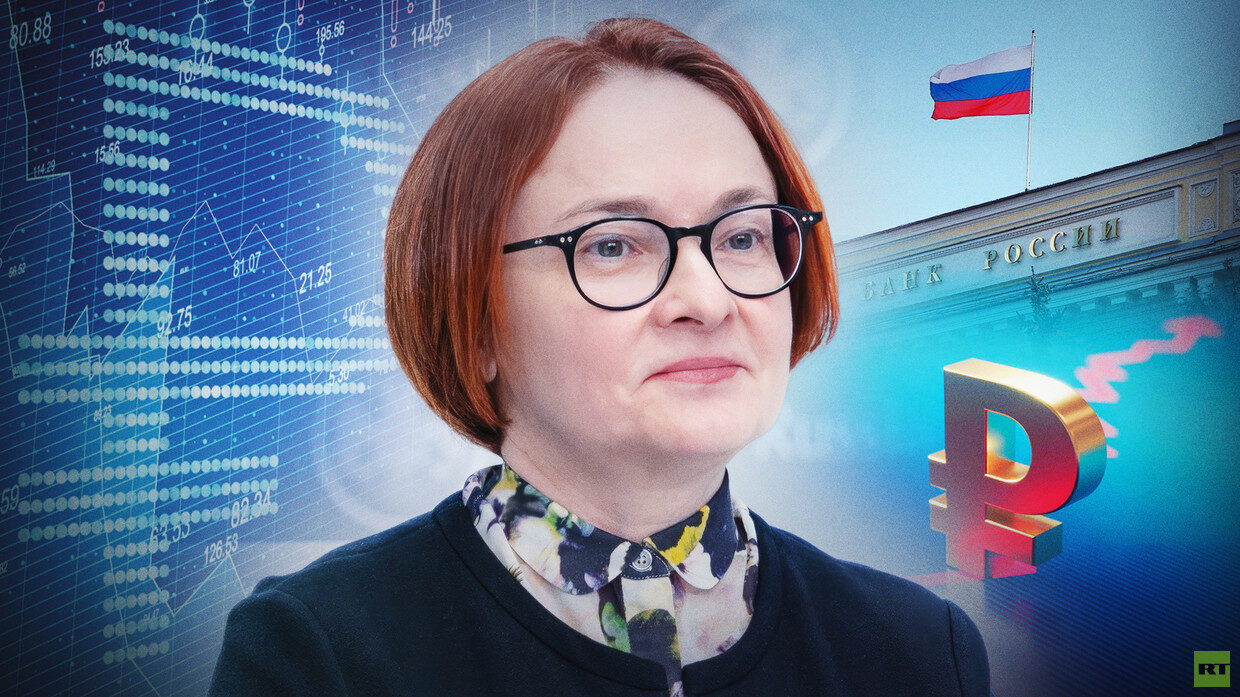
Moscow's anti-sanctions tsarina: What the woman leading Russia's Central Bank says about economic war with the West

The woman who has become a nightmare for the architects of Western sanctions against Russia gives her first interview in two years
Elvira Nabiullina
© RT
The head of the Bank of Russia, Elvira Nabiullina, has held the position for more than ten years. When she was just starting the job, the world's media highlighted that Nabiullina had become the first woman to run a central bank in a G8 country. Now, however, the Western press talks about her in a completely different context. Not long ago, Politico magazine named her "disruptor of the year" because she "has managed to stave off the effects of unprecedented Western sanctions designed to drain the Kremlin's coffers."

In her first interview since Russia's military engagement with Ukraine began, Nabiullina told RBK about the toughest sanctions and the delayed key-rate increase, and specified whether subsidized mortgages will become rare in the future.

This interview was first published by RBK, translated and edited by the RT team.

— The financial sector was the first one to get hit by the sanctions. The largest banks fell under blocking sanctions, their reserves were frozen, currency restrictions were imposed, and the banks were disconnected from SWIFT. What was the most unexpected and difficult challenge for you?
— We have been living under sanctions since 2014 and, therefore, have always considered the risk that the sanctions may increase. We did a lot of work in this respect and conducted stress tests with many financial institutions. Therefore, when the major banks fell under sanctions, they were largely prepared for it. Disconnection from SWIFT has been a threat since 2014, so we created our own national payment system. We diversified our reserves and increased the share of yuan and gold reserves. International payments were actually the biggest issue, and we are still working on it. Blocked and frozen individual assets are also a painful subject since millions of people who were not sanctioned ended up with frozen assets. We are still trying to solve this problem together with the government.

As for the frozen reserves, I think this is a highly negative signal for all the central banks, because it violates the basic principles of security. But in this regard, we were aided by the floating exchange rate and the currency restrictions, which we adopted last spring and which were quite severe. Later, as you remember, these restrictions were weakened. This helped us mitigate financial stability risks.

As you rightly mentioned, the financial sector was the first one to get hit by the sanctions - and there were a lot of sanctions, not just the ones you mentioned. But in general, we managed to maintain financial stability.

Comment: See also:


Chess

Putin names Russia's real enemies

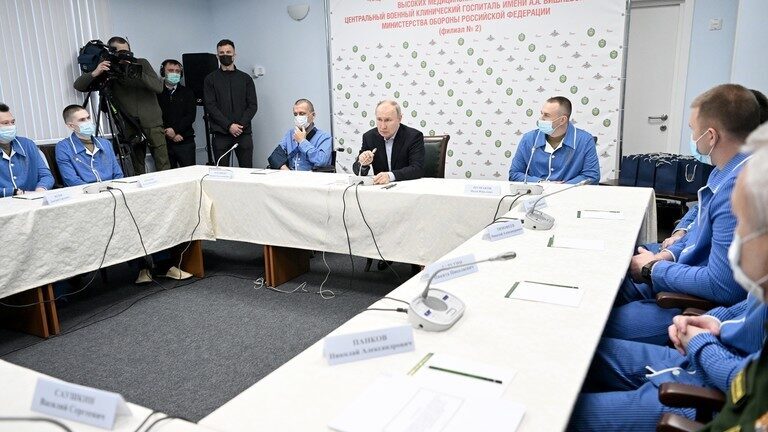
Russian President Vladimir Putin meets with participants in the special military operation
© Sputnik/Kristina KormilitsynaRussian President Vladimir Putin meets with participants in the special military operation at Vishnevsky Central Military Clinical Hospital in Moscow, Russia.
Ukraine itself is not a foe, but Western elites backing it are, the Russian president has said

Ukraine is a mere tool in the hands of the collective West which is using it to fight Russia, President Vladimir Putin said on Monday. He was speaking at a military hospital in Moscow where he met servicemen wounded during the ongoing conflict.

Asked about the enduring Western support for Kiev, the president said the elites of the collective West were actually the true enemy of Russia, rather than Ukraine itself.

"The point is not that they are helping our enemy, but that they are our enemy. They are solving their own problems with [Ukraine's] hands, that's what it's all about," Putin stated.

Comment: For now the conflict continues: in the days December 31- January 2, Russia launched massive missile strikes toward Ukrainian military-industrial facilities and command centers, located in Kiev, Livov, Odessa, Kharkov etc, while Ukraine continued to shell especially Belgorod, a town of 350,000 people located only 40 km north of the border with Ukraine.

Along the frontline, there has been intense fighting in several areas. As usual, there are no major changes, since both forces have well-established defensive lines and trenches, but Russia has the most initiative. Last year, there was a lull in the fighting around the Orthodox Christmas on January 7. This year, the Ukrainian Orthodox Church moved its Christmas to December 25, as if they are preparing to keep fighting and shelling through the Orthodox holiday.

See also this article and the comments: Putin 'tried everything possible' to make peace - Ukrainian diplomat


Better Earth

Best of the Web: Building a just world order: How Russia and the Arab world defied Western pressure in 2023

Russian President Vladimir Putin and President of the United Arab Emirates Sheikh Mohamed bin Zayed Al Nahyan in Abu Dhabi on December 6, 2023
© Sergey Savostyanov / Sputnik / PoolRussian President Vladimir Putin and President of the United Arab Emirates Sheikh Mohamed bin Zayed Al Nahyan in Abu Dhabi on December 6, 2023
By putting their own national interests first, Moscow and its partners work towards a more balanced multipolar reality

The year 2023 did not bring any radical changes to Russia's relations with the Middle East, but the trend towards strengthening relations continued, despite unprecedented pressure from Western countries led by Washington. The countries of the region increasingly demonstrated their commitment to neutrality, and in some cases even took steps towards integration into non-Western associations, declaring their special path of sovereign development in the context of geopolitical turbulence. Thus, in August 2023, Egypt, Iran, Saudi Arabia, and the United Arab Emirates were granted membership in BRICS.

Overall, the year 2023 was a positive one for Russia's relations with the Middle East. Russia's economic, political, military, and cultural influence in the region continued to grow. This trend is likely to continue in the years to come, as Russia seeks to expand its presence in the Middle East. The following are the main points that characterized Moscow's relations with Middle Eastern countries in 2023.

Comment: See also:


Russian Flag

Best of the Web: Ivan Timofeev: Here's why Russia enters 2024 in a better position than it was in 12 months ago

Russian President Vladimir Putin
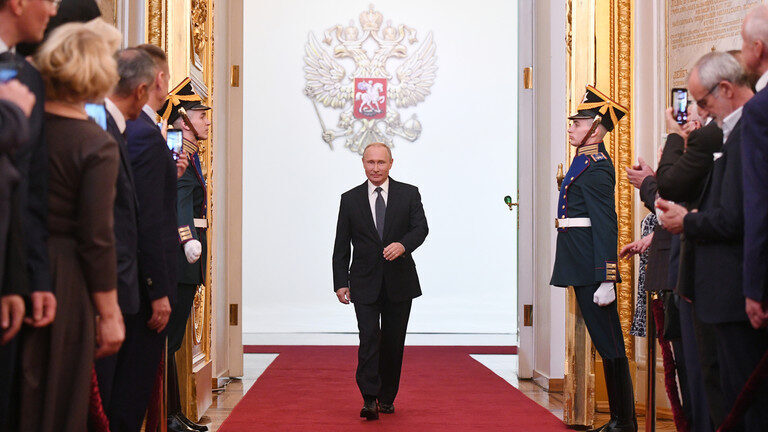
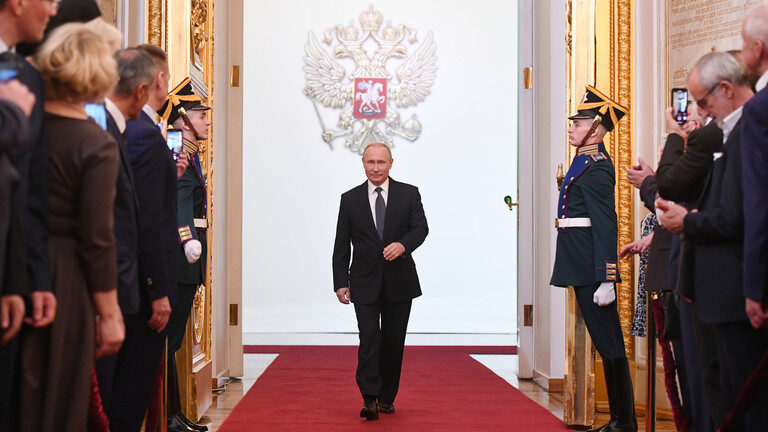
© Sputnik / Evgeny BiyatovRussian President-elect Vladimir Putin during the inauguration ceremony in the Kremlin on May 7, 2018.
Russian politics has moved from crisis mode to a new normality. And the divorce from the West is permanent.

Back in 2022 high stakes were at play. Everyone wanted to know whether Russia would be able to withstand the tipping point. Could Moscow keep its economy from collapsing under sanctions and would it be able to consolidate both the elites and broader society?

Last year ended with a lack of clear answers to these questions. However, 2023 has brought more certainty. The rupture is over: Russia is living in new conditions of confrontation and is coping with them.

The main outcome of the past twelve months is the transition to a new normal in foreign and domestic policy. By comparison, 2021 was a time of gathering stormclouds. Back then, an imminent turning point was in the air but many wanted to believe it wouldn't happen. The mood of the thirty years since the end of the Cold War - peace, openness and cooperation - had become too familiar.

In relations with the West, the tide began to turn long before 2021. Cracks started to appear as early as the late 1990s and, since 2014, have become increasingly irreversible. But, as is often the case, the possibility of major change was hard to believe precisely because the inertia of everyday life distracts from signs of tectonic shifts. Of course, in hindsight they are always clearly visible and make sense. But, in the past itself (ie, what was then the present), few people want to believe in what's coming.

Comment: See also: