
© Alex Krainer's Substack
- Uzbekistan's national team, which arrived in New York for a friendly match against the Netherlands, were subjected to intensive screening which included a check with the assistance of drug-detection dog. The Dutch team wasn't subjected to the same treatment.
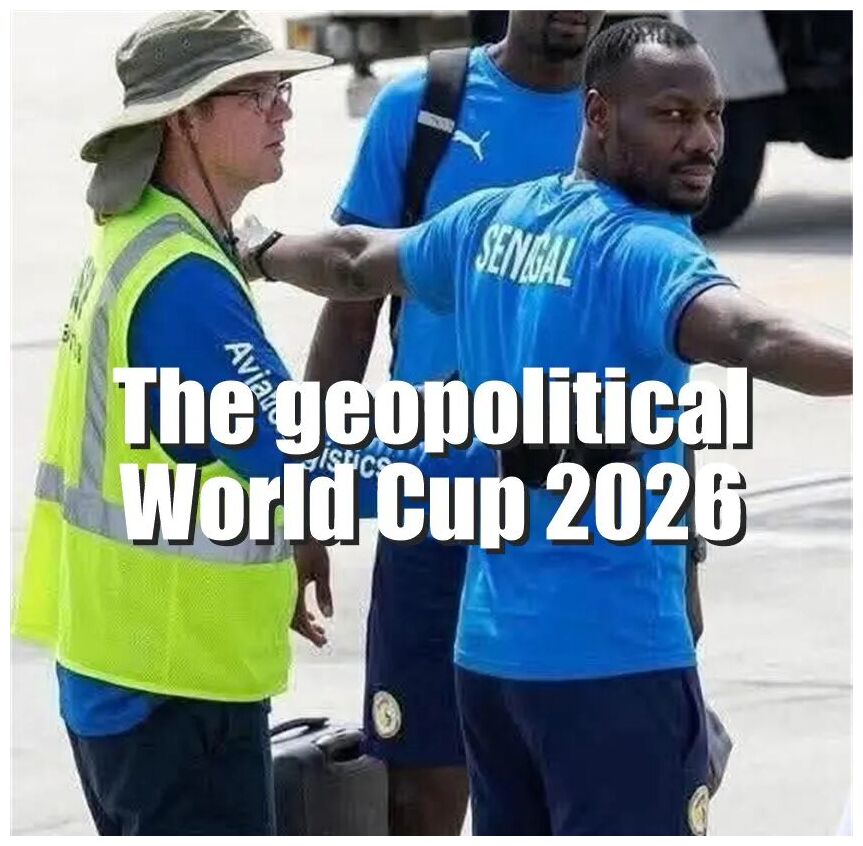
- Senegalese players were also subjected to intrusive security checks.
- Iraqi striker Aymen Hussein, who is his national team's vice-captain and one of the country's key players was detained at Chicago's O'Hare airport for interrogation that lasted almost seven hours.
- The Iraqi national team's official photographer was denied entry without any explanation and deported from the US.
- Somali referee Omar Abdulkadir Artan — Africa's Referee of the Year 2025 who was selected as one of 52 officials for the 2026 World Cup, and the first Somali ever at the tournament — was denied entry into the United States at Miami Airport on June 6. He was deported over vague "vetting concerns" in spite of his his holding a valid visa and a diplomatic passport.
- Iranian team was informed that they can only enter the US to play their games but will not be allowed to stay overnight. Iran is the only team in the World Cup that will be forced to enter and exit the United States on the same days when they play their games which sets their team at a clear disadvantage relative to their opponents.
Athletes are ambassadors of peace
The teams arriving in the US are top level professional athletes and the idea that they might pose a security threat or use the World Cup to deal drugs is unlikely, to put it politely. They are sports ambassadors of their own nations, invariably aware that they should represent their nations with honor as role models to younger people.
Besides, one of the main objectives of international sporting events is to bring nations closer together in a friendly and respectful way. Even if opposing teams' nations are adversarial to one another, the athletes usually have a respectful and friendly disposition amongst themselves. They pour their lives' blood, sweat and tears in the same striving and understand each other far better than politicians and diplomats ever could. The following example is not atypical:
In the final match of the European mixed martial arts championship in Belgrade in February this year, Serbian fighter Marko Ivković fought against his Croatian rival Petar Pejić. The fight was very closely contested and narrowly won by the Croatian fighter. After the match, both players wrapped themselves in their respective national flags, but instead of hostility and trash talk, the two embraced and congratulated one another for the fight.
Then, after the winner was declared and in front of the full audience and TV cameras, the two swapped flags: the Croatian fighter wrapped himself in Serbian flag, and the Serbian fighter in Croatian flag.

© Alex Krainer's SubstackFighters of two rival nations swap flags and raise them before audiences and TV cameras.
In this way, international sporting events offer a truly unique and powerful opportunity to foster friendship, mutual respect and peace among the peoples of the world. This opportunity should not be wasted, regardless of the misguided efforts of World Cup event's organizers.
Legitimate security concerns
To be fair, FIFA World Cup's organizers do face legitimate security concerns. While the US and Israel are at war against Iran, the World Cup would be the perfect venue to stage a terrorist attack against the players and staff of one of the teams. Recall, during the 1972 Olympic Games in Munich, West Germany, eight members of the Palestinian militant group Black September infiltrated the Olympic village disguised as athletes. They gained entrance to the Israeli quarters and took a number of Israel's athletes and coaches hostage, ultimately killing 11 of them.
A similar attack on Jewish or other visible targets is conceivable between now and 19 July when the World Cup ends. Senator Ted Cruz even foreshadowed the possibility in a recent statement. Asked by an interviewer whether he was concerned about the sleeper cells, he replied as follows:
"There is a heightened danger of terrorism right now. ... The danger of terrorism has never been higher than right now. ... We know that radical Islamic terrorists entered this country and there's a vulnerability all across this country."Senator Cruz may or may not know something, but even if a (false flag) attack should materialize, it almost certainly wouldn't be perpetrated by the athletes, but by agents who might attempt infiltrate the event. Rather than harassing the athletes and their support staff (all known and duly identifiable individuals with valid entry visas and FIFA credentials), extra security should be discretely provided for vulnerable venues and potential targets of a terrorist attack.
A deliberate assault on US reputation?
This is, in fact, routine business: major sporting events are already held under extremely tight security. Intelligence agencies monitor these risks closely without fail, especially for events like the World Cup or Olympic games. The fact that the US authorities opted for needless and very visible harassment of some (though not all) of the 48 competing teams is in fact very bizarre, particularly in view of the fact that similar harassment wasn't reported from either Canada or Mexico.
It's as though someone decided to deliberately inflict damage on the reputation of the United States during the world's most closely watched sporting events to an immense embarrassment of the American people. Again, the question that poses itself is, why? I'm afraid that any coherent answer to that question would involve much speculation in outer realms of geopolitical strife currently afflicting the world. We should hope however, that the participating teams will conduct themselves in the spirit of good sportsmanship as Marko Ivković and Petar Pejić did.



Reader Comments
to our Newsletter