OF THE
TIMES

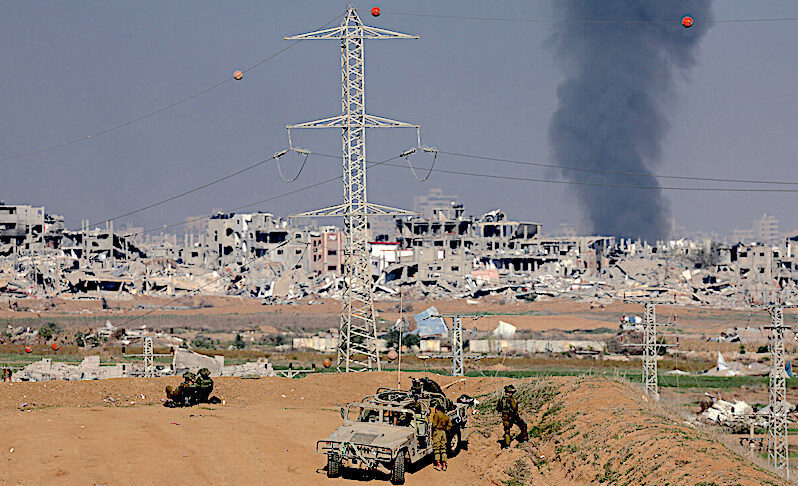
South Africa's 84 page long Application to the International Court of Justice to begin proceedings against Israel for its genocide in Gaza is a devastating document laying out Israel's genocidal acts and statements in horrifying detail.On Thursday, December 28, South Africa filed an Application Instituting Proceedings at the International Court of Justice to commence proceedings in a legal forum against Israel for its genocide in Gaza, and to press for "provisional measures" - a preliminary order requiring the Israel Government and military to cease their genocidal acts in Gaza pending a full hearing by the court.

Senior Hamas official Saleh al-Arouri killed in Beirut suburbNotably, on New Year's Eve:
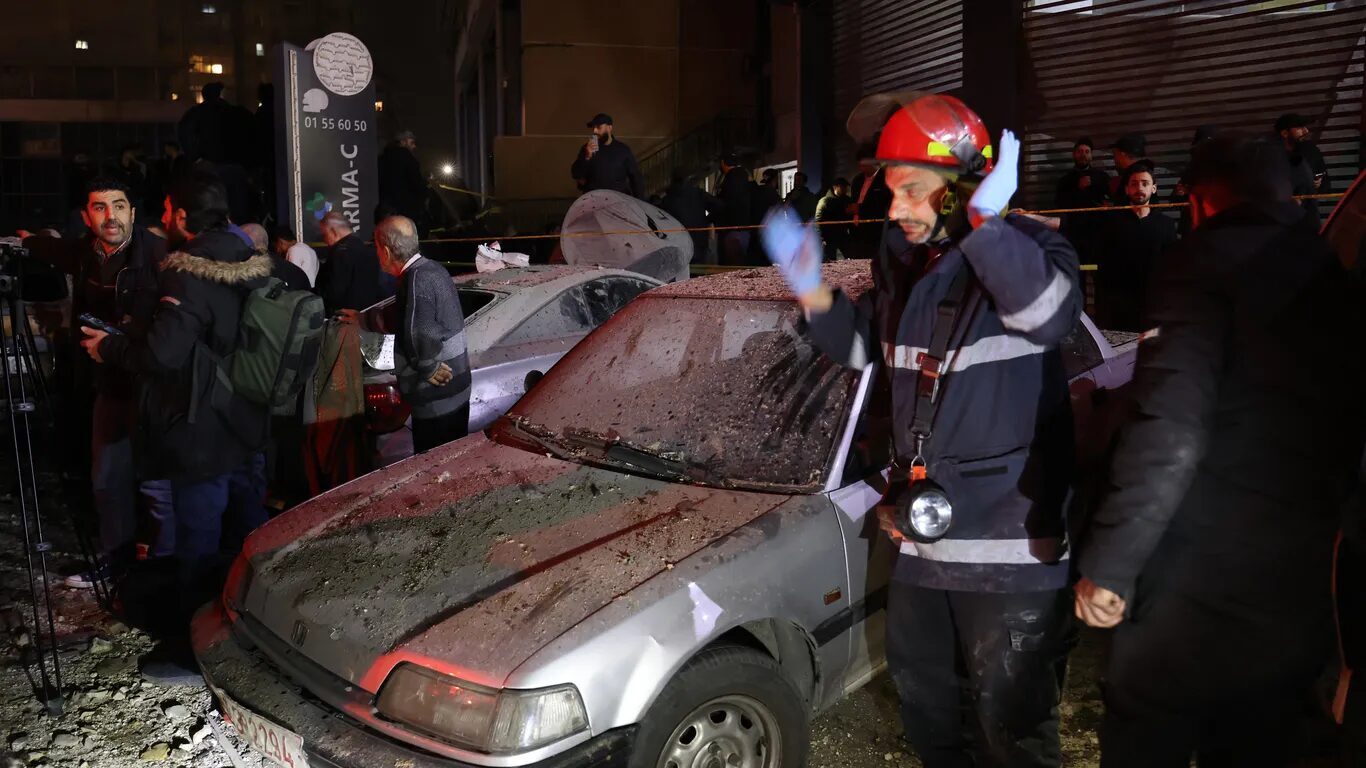
Senior Hamas official Saleh al-Arouri has been killed in an Israeli drone strike on Beirut's southern suburb of Dahiyeh, the Palestinian group and Lebanese media outlets say.
Al-Arouri was killed on Tuesday in a "treacherous Zionist strike", Hamas said on its official channel. Hamas politburo member Izzat al-Sharq called it a "cowardly assassination".
Al-Arouri was a senior official in Hamas's politburo and was known to be deeply involved in its military affairs. He had previously headed the group's presence in the occupied West Bank.
Samir Findi Abu Amer and Azzam Al-Aqraa Abu Ammar, leaders of Hamas' armed wing - the Qassam Brigades - were also killed, Hamas said in a message on its Telegram channel.
It named four other members of the group who were also killed.
Earlier, Lebanon's state-run National News Agency said the blast has killed at least six people and that it was carried out by an Israeli drone.
Hamas said al-Arouri's killing would not "undermine the continued brave resistance" in Gaza, where the Palestinian group's fighters are battling Israeli ground forces.
"It proves once more the utter failure of the enemy to achieve any of its aggressive goals in the Gaza Strip," senior Hamas official Izzat al-Rishq said in a statement.
The group's top leader Ismail Haniyeh condemned the attack, and said the killing of Hamas members in Beirut was a "terrorist act", a violation of Lebanon's sovereignty, and an expansion of Israel's circle of hostility against Palestinians.
Haniyeh said Hamas "will never be defeated" in televised remarks.
Mark Regev, an adviser to Israeli Prime Minister Benjamin Netanyahu, told the United States news channel MSNBC that Israel had not taken responsibility for the attack but "whoever did it, it must be clear that this was not an attack on the Lebanese state".
"Whoever did this did a surgical strike against the Hamas leadership," Regev said in an interview.
Lebanese Prime Minister Najib Mikati condemned the killing. His office said in a statement that the attack "aims to draw Lebanon into a new phase of confrontations" with Israel at a time when Hamas ally Hezbollah has been exchanging daily cross-border fire with Israeli forces in northern Israel, the statement said.
'Dangerous escalation'
Al Jazeera's Zeina Khodr, reporting from Beirut, said there was "panic" in the Lebanese capital after the attack.
"The targeted killing made many people here in the capital feel that this conflict could widen and could escalate, and all eyes are now on Hezbollah's reaction," Khodr said.
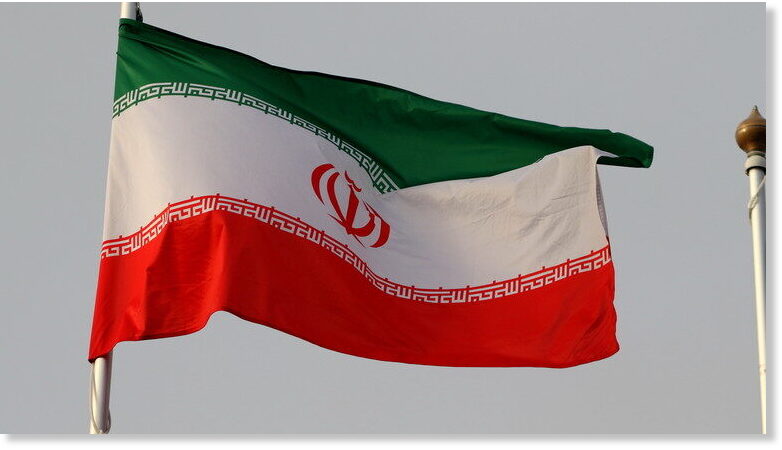
Iran, which supports both Hamas and Hezbollah, said al-Arouri's killing would create more resistance against Israel, its state media reported.
"The martyr's blood will undoubtedly ignite another surge in the veins of resistance and the motivation to fight against the Zionist occupiers not only in Palestine but also in the region and among all freedom seekers worldwide," Iranian Ministry of Foreign Affairs spokesperson Nasser Kanaani said.
Netanyahu had threatened to kill al-Arouri long before Israel's latest assault on the besieged Gaza Strip.
Israeli political analyst Akiva Eldar told Al Jazeera the killing was a much needed success for Netanyahu.
Imad Harb, director of research at the Arab Center Washington DC, agreed, saying Israel carried out the attack in search for what has become an elusive win.
"So far, the Israelis have not been able to call a victory in Gaza, so assassinating Hamas leaders is partly something that they wanted to do anyway," he told Al Jazeera. "This is an achievement for the Israeli army and for the Israeli politicians."
Since Israeli forces and Hezbollah began exchanging fire across the Lebanese-Israeli border on October 8, the fighting has largely been concentrated a few kilometres inside each country. But on several occasions, Israel's air force has hit what it said were Hezbollah positions deeper inside Lebanon.
Harb said the killing of al-Arouri is a "dangerous escalation" because it took place in Hezbollah's area of operations, far from the border.
Harb predicted Hezbollah would likely step up attacks on Israel in response to the killing but would stop short of escalating the conflict into an all-out war.
Meanwhile, at mosques in Arura, the hometown of the slain Hamas leader in the West Bank, Palestinians gathered to mourn al-Arouri's death.
Protests and gatherings also took place in Ramallah and several nearby towns, such as Deir Qaddis.
A general strike in Ramallah has also been called for Wednesday.
Hezbollah warns of escalation in cross-border clashes with Israeli regimeSee also:
Hezbollah's Deputy Secretary General Sheikh Naim Qassem has warned the Zionist regime if it insists on its warmongering attempts, they will receive stronger blows from the Resistance in the future.
Sheikh Naim Qassem said on Sunday that Operation Al-Aqsa Storm is creating a new phase in the region which will lead to cultural, and political progress plus an expansion of the resistance after the end of the war, Lebanese Al-Manar TV website reported.
Referring to the Zionist regime's proposals on northern Palestine and southern Lebanon, he said that the Israeli regime is trying to show that it has options that allow the settlers to safely return to the north and keep Hezbollah and Resistance out of southern Lebanon, but they should know that the Zionist regime is not in a position to impose its options.
He added that the Zionist regime cannot return the settlers to the north, nor will it be able to achieve anything in this war or the end of it.
The Zionist regime must first halt the Gaza war to stop the war on the Lebanese front, and if they persist in warmongering attempts, they will receive stronger blows from the Resistance in the future.
The remarks came after Israeli prime minister Benjamin Netanyahu repeated his hollow threats against Hezbollah in Lebanon, and said that the regime restore security to the northern residents through diplomatic option or a military operation.
All the business of war, and indeed all the business of life, is to endeavour to find out what you don't know by what you do; that's what I called 'guessing what was at the other side of the hill.'"Find out what you don't know by what you do". It's not easy, it's not necessarily pleasant but it's what you have to do in order to minimise your surprise when whatever it is actually comes over the hill at you.
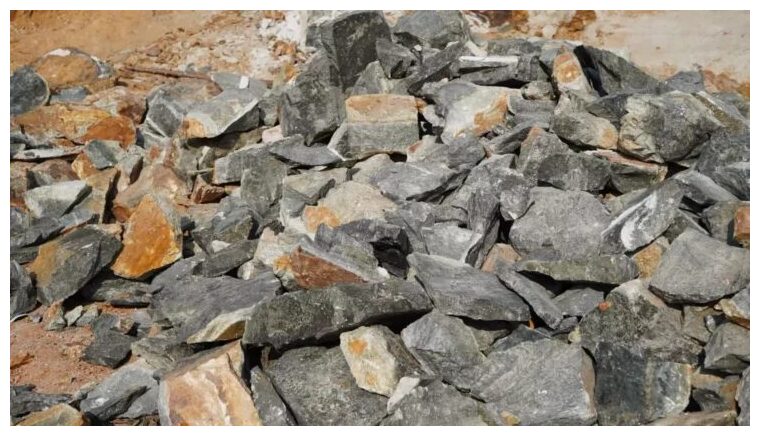
"Critical minerals are key to transitioning to a low-carbon world. There are over 70 countries globally that have set net-zero targets and pledged to lower their emissions. However, these widespread measures for a greener future are straining natural resources, especially the minerals required to produce energy transition technologies such as electric vehicles (EVs) and solar panels..."The report goes on to reveal how these rare minerals are monopolized by just a few regions and how supply chain problems affect their recovery and distribution. In short, if Europe does not procure more Lithium, the energy transition EU President Ursula von der Leyen toots her horn about every other day will either be delayed or made unfeasible because of demand shortages.

Comment: Hahn spells out the possibilities for Ukraine and the reasons they will fail.