Earth ChangesS


Tornado2

Second tornado in a week hits Faro, Portugal (VIDEOS)

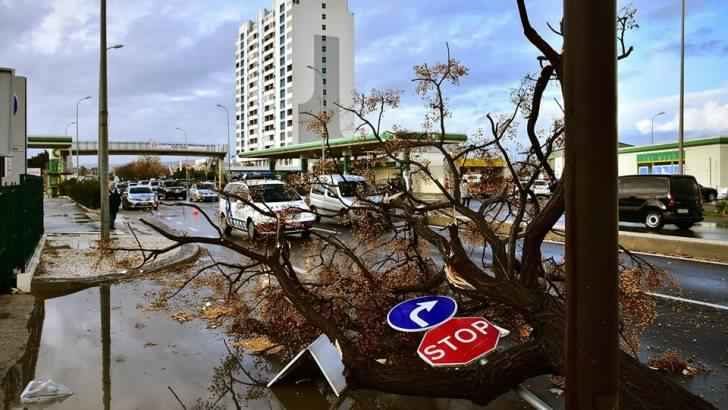
Tornado damage in Faro, Portugal
Faro was plunged back into tornado chaos on Sunday, only four days after being hit by similar extreme weather in the dockland area.

This time the swirling column of wind reaching speeds of 180 km/ hour hit the city near the entrance of town, uprooting trees, destroying cars, walls and other structures.

Eye-witness John Slaughter described "a very loud noise" as the extreme phenomenon struck "which sounded like machine gun shots" (due to the splitting of window frames and breaking of glass).

Mr Slaughter was in a restaurant near Faro Beach - the same place hit last Wednesday - and said that "most people started running for the exits screaming and many others tried to hide.

"People including myself immediately thought it was a terrorist attack".

Elsewhere a gypsy community in the area known as Cerro do Bruxo had its makeshift housing torn apart while serious damage was suffered at fuel stations, greenhouses and businesses further inland.

Faro firefighters registered around 50 significant incidents.

The tornado went on to affect other areas: Olhão - particularly the area of Pechão - Tavira, Castro Marim and Vila Real do Santo António, but it was in Faro and Olhão that damage appears to have been worst.


Comment: Some other tornado events so far this year include: Other rare or unseasonal tornadoes have formed around the planet in recent times including countries such as South Africa, Turkey, Netherlands, Mexico, United States, Russia and China.

Study: Tornado outbreaks are increasing - but scientists don't understand why. A coauthor of this paper states "What's pushing this rise in extreme outbreaks is far from obvious in the present state of climate science."

Recently other climate scientists were saying hurricane Harvey "should serve as a warning", as they continue to push the man-made climate change/global warming lie. They are not considering the importance of atmospheric dust loading and the winning Electric Universe model in their research. Such information and much more, are explained in the book Earth Changes and the Human Cosmic Connection by Pierre Lescaudron and Laura Knight-Jadczyk.
The accumulation of cometary dust in the Earth's atmosphere plays an important role in the increase of tornadoes, cyclones, hurricanes and their associated rainfalls, snowfalls and lightning. To understand this mechanism we must first take into account the electric nature of hurricanes, tornadoes and cyclones, which are actually manifestations of the same electric phenomenon at different scales or levels of power.
Increasing cometary and volcanic dust loading of the atmosphere (one indicator is the intensification of noctilucent clouds we are witnessing) is accentuating electric charge build-up, whereby we can expect to observe more extreme weather and planetary upheaval as well as awesome light shows and other related mysterious phenomena.


Seismograph

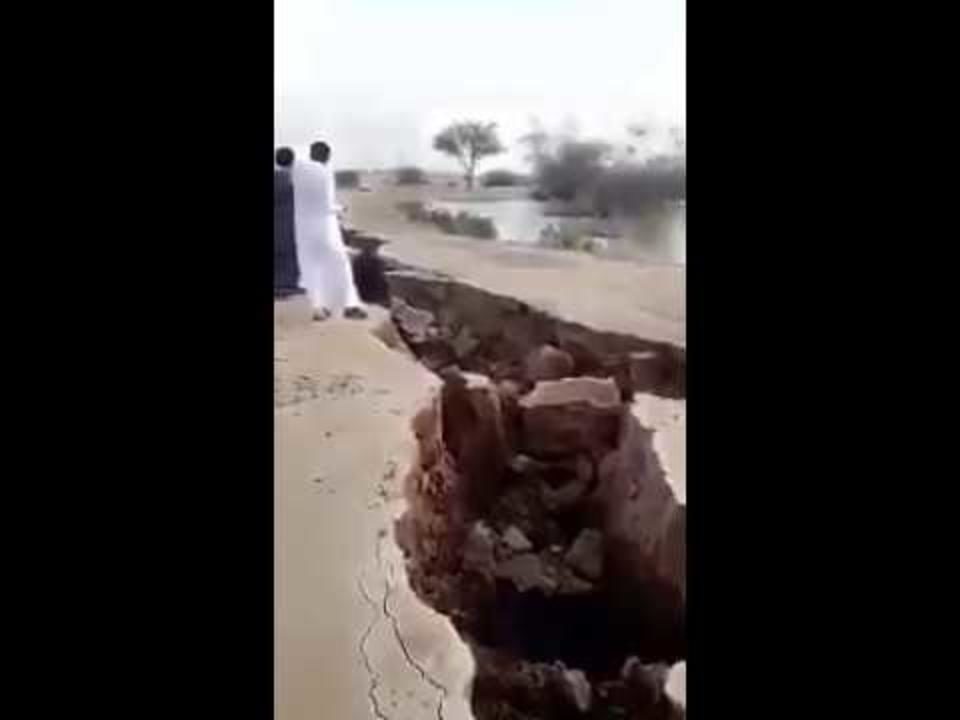
"Earth splits in two" - Huge fissures appears in the ground in Saudi Arabia (VIDEO)

huge crack opens in Saudi Arabia
Our Earth splits in two as giant fissure appears in the desert of Saudi Arabia By Strange Sounds - Mar 6, 2018 1

Giant cracks are opening all around the world. While terrifying landslide and fissures are perforating the ground in Peru, another large and unexplained geological event split the Earth in two over at least 200 meters in desertic Saudi Arabia.


The deep crack is still growing. It was discovered on February 27, 2018, in Al-Majma'a Governorate, north of Riyadh.

Comment: Saudi Arabia has seen some bizarre weather from hailstones to flooding in the famously scorching hot region:


But it's not just Saudi Arabia seeing extreme weather events:


See Also:


Info

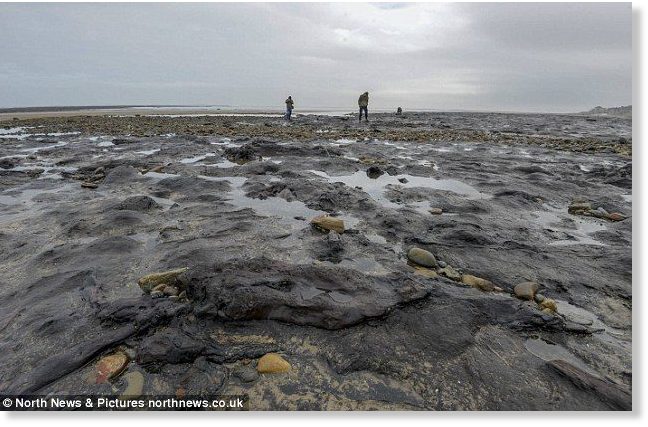
Shifting sands after Storm Emma reveal forest remains hidden beneath the sea dating back 7,000 years at Redcar, UK

The 'petrified' woodland in Redcar, Cleveland, dates back 7,000 years and is very rarely visible
The severe weather conditions in Britain have uncovered an ancient forest which usually lies hidden under sand.

The woodland in Redcar and Cleveland, dates back 7,000 years and is very rarely visible, but the extreme weather has shifted the sand - meaning that the ancient tree stumps and felled logs can now clearly be seen on the shore.

Although only a stretch of around 400 yards has emerged, since Storm Emma the forest runs for several miles along the coastline.

Hartlepool lifeboatman Garry Waugh, who has lived in the area all his life, said: 'I last saw the forest when I was ten years old. That was around 40 years ago. There was a school trip and we were taken down to see it.

Cow

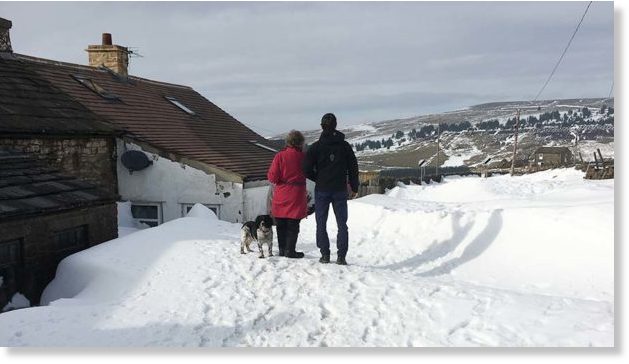
Storm Emma leaves hundreds of livestock dead across north-west England

snow
© Rory Stewart
Hundreds of livestock are feared dead as the effect of Storm Emma on farms starts to become clear in north-west England.

Defra is facing calls from industry leaders and local representatives to release emergency funding to subsidise the cost of fallen stock disposal in Cumbria.

But the department told the NFU no government money is available to support collection costs.

MP Rory Stewart, who represents the Penrith and The Border constituency, described conditions as "some the worst in living memory" and said the case for Defra support was clear.

Attention

Shinmoedake volcano in Japan rumbles anew with explosive eruption

Shinmoedake Volcano is seen erupting in Miyazaki Prefecture on Kyushu Island, Japan, March 6, 2018
A volcano which was featured in the 1967 James Bond movie "You Only Live Twice" shot smoke and ash thousands of meters into the sky Tuesday, prompting the cancellation of flights to and from a nearby airport. The eruption is likely to continue for some time.

It was the first time in about seven years such explosive activity occurred at the 1,421-meter-high volcano straddling Kagoshima and Miyazaki prefectures, according to the Meteorological Agency. No injuries were reported, local authorities said.

Shinmoedake, located in a largely rural area some 985 km from Tokyo in Kyushu, had been erupting on a smaller scale since March 1. At the time, only access to the peak was restricted.

Due to the recent activity, officials restricted access to the entire mountain, and the danger zone may be expanded Thursday to a 3 kilometer radius from the crater.


Comment: See as well the following chart showing the large uptick in the number of reports in recent years carried by Sott concerning volcanic activity, starting in 2010 up until present time:


2 + 2 = 4

Politicized science & phony icons: Polar bears keep thriving even as global warming alarmists keep pretending they're dying

Susan Crockford: Polar bears are flourishing, making them phony icons, and false idols, for global warming alarmists
polar bear
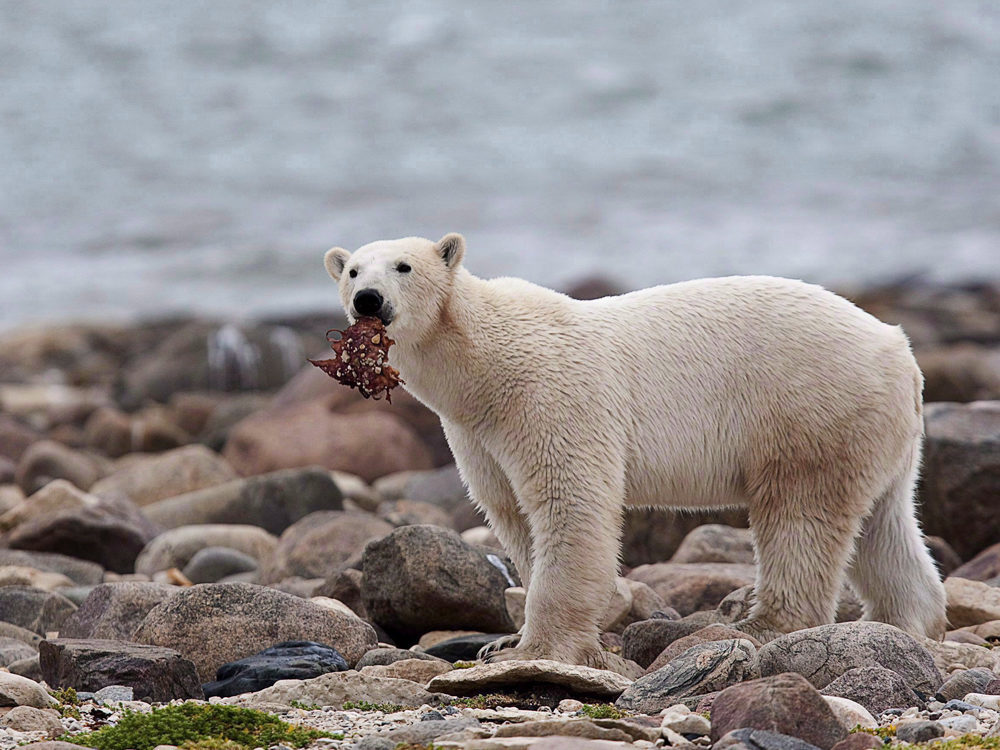
© Sean Kilpatrick/The Canadian PressA polar bear eats a piece of whale meat as it walks along the shore of Hudson Bay near Churchill, Man.
One powerful polar bear fact is slowly rising above the message of looming catastrophe repeated endlessly by the media: More than 15,000 polar bears have not disappeared since 2005. Although the extent of the summer sea ice after 2006 dropped abruptly to levels not expected until 2050, the predicted 67-per-cent decline in polar bear numbers simply didn't happen. Rather, global polar bear numbers have been stable or slightly improved. The polar bear's resilience should have meant the end of its use as a cherished icon of global warming doom, but it didn't. The alarmism is not going away without a struggle.

Part of this struggle involves a scientific clash about transparency in polar bear science. My close examination of recent research has revealed that serious inconsistencies exist within the polar bear literature and between that literature and public statements made by some researchers. For example, Canadian polar bear biologist Ian Stirling learned in the 1970s that spring sea ice in the southern Beaufort Sea periodically gets so thick that seals depart, depriving local polar bears of their prey and causing their numbers to plummet. But that fact, documented in more than a dozen scientific papers, is not discussed today as part of polar bear ecology. In these days of politicized science, neither Stirling nor his colleagues mention in public the devastating effects of thick spring ice in the Beaufort Sea; instead, they imply in recent papers that the starving bears they witnessed are victims of reduced summer sea ice, which they argued depleted the bears' prey. There are also strong indications that thick spring-ice conditions happened again in 2014-16, with the impacts on polar bears being similarly portrayed as effects of global warming.

Comment:


Wolf

Hungry wolves pushing into farms and villages in Estonia, attack one resident's dog

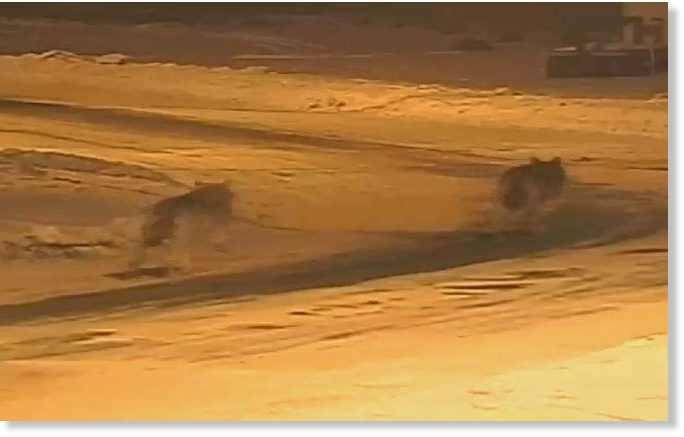
Wolves caught by a security camera in Lääne County.
© ERRWolves caught by a security camera in Lääne County.
Wolves have recently been spotted close to farms and even in villages in Lääne County. The animals are driven closer to human settlements by hunger, as the African swine fever has significantly reduced the number of wild boar. On Saturday, wolves attacked a dog in the village of Pürksi.

ERR's "Aktuaalne kaamera" newscast reported on Monday evening that the hunting licenses granted by the state to shoot four wolves in Lääne County's Padise area weren't enough according to Hugo Peterson, who is coordinating the hunt for the animals.

While only four licenses were granted for Padise, at the same time there were 16 more licensed kills in Lääne and Rapla County. There are still too many wolves in the area, and they are apparently getting bolder.

Comment: Sea also: Wolves seen near the outskirts of Warsaw, Poland for the first time in 50 years

Parisians on edge as 'endangered' wolves freely roaming suburbs, fear they may make the capital their new home

Wolves losing their natural fear of humans? Several attacks reported in 2016 across Canada

Wolves seen on the outskirts of Rome for the first time in more than 100 years

Another atypical animal attack on humans: Villagers viciously attacked by a pack of starving wolves in China


Bug

"Ecosystem heads towards collapse": One-fifth of Europe's wood beetles at risk of extinction

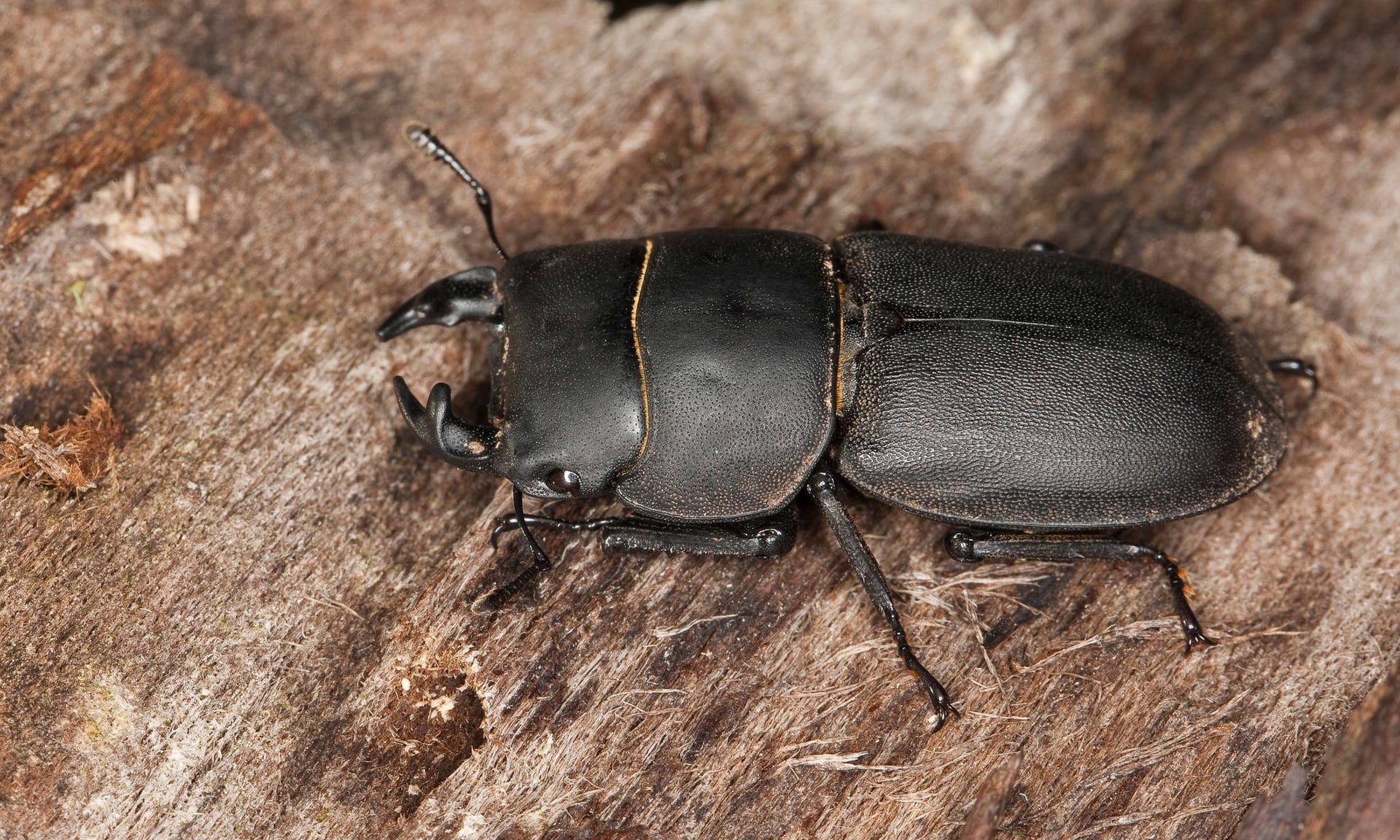
The lesser stag beetle’s larvae develop in decaying wood.
© Alamy Stock PhotoThe lesser stag beetle’s larvae develop in decaying wood.
Almost one-fifth of Europe's wood beetles are at risk of extinction due to a widespread decline in ancient trees, according to a new report which suggests their demise could have devastating knock-on effects for other species.

The study says 18% of saproxylic beetles - which depend on dead and decaying wood for some of their lifecycle - now exist on a conservation plane between "vulnerable" and "critically endangered".

Another 13% of the insects are considered "near threatened" and their disappearance could have a disastrous impact on biodiversity and ecosystems, according to the new red list released by the International Union for the Conservation of Nature (IUCN).

Comment: With mass mortality events (MME) in other creatures attributed to a variety of causes, and in some insects in particular, we're seeing irregular swarms, it's highly possible there are a variety of factors at play here;


Snowflake Cold

Australia predicted to have coldest winter on record with heavy rain and snowfall

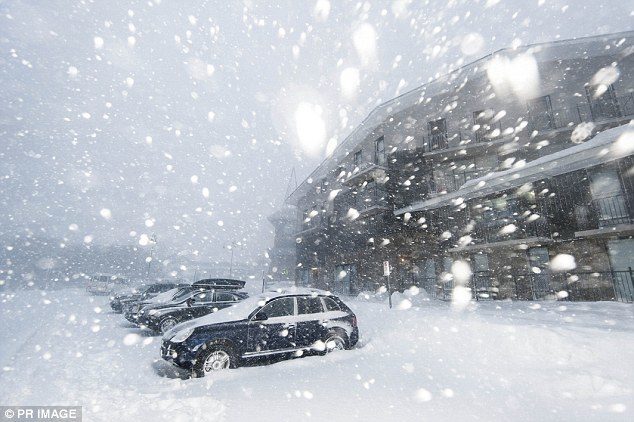
Mount Buller, Victoria
Australia is set for the coldest winter on record, an amateur weather forecaster has claimed. Pictured: Mount Buller, Victoria
Australia is set for the coldest winter on record, an amateur weather forecaster has claimed.

Temperatures and snowfall could reach shocking levels compared to previous years, said David Taylor, who runs the East Coast Weather Facebook page.

Mr Taylor, who has correctly predicted major weather events in the past, said that the icy conditions would impact huge areas of the country.

'It will be slightly cooler than normal in the north but the real cold will be in the southern states and southeast Queensland,' he told The Cairns Post.

Comment: If the extreme cold witnessed this winter in the northern hemisphere is anything to go by, and he isn't be the first weather forecaster to use space weather in his calculations, then it wouldn't be surprising if his predictions came to pass. It's clear we are seeing serious cooling on our planet:


Windsock

Terrified passengers flee as powerful winds rip roof from Chinese airport (VIDEO)

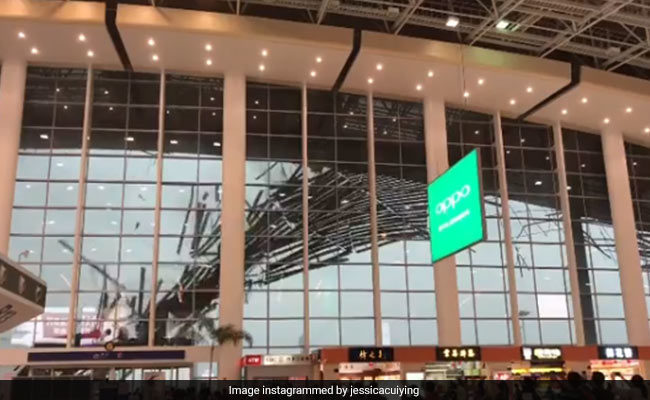
Roof blown off at Nanchang Changbei International Airport
© Instagram/jessicacuiyingThe incident took place on Sunday afternoon at east China's Nanchang Changbei International Airport
Passengers at Nanchang Changbei International Airport in China were forced to flee in terror as powerful winds wrenched the roof cladding off the terminal building. Debris rained down on cars below during the dramatic episode.

The roof at the entrance to the airport's Terminal 2 collapsed as gusts reached speeds of 109kph (67 mph) following a torrential downpour at approximately 3:30pm local time on Sunday.

"It really felt like the end of the world, so frightening. The wind was so strong that it seemed like it would break the glass," one netizen said, as cited by the Hong Kong Free Press.

The damage was largely superficial and the main structure was not impacted. Flights were briefly suspended but returned to normal scheduling once the tempest had subsided. There were no reports of injuries.

Nanchang Changbei International Airport opened in Jiangxi province in 1999. It serviced roughly 10.9 million passengers in 2017. Footage shared widely on Chinese social media shows panic-stricken passengers fleeing from the falling debris.