
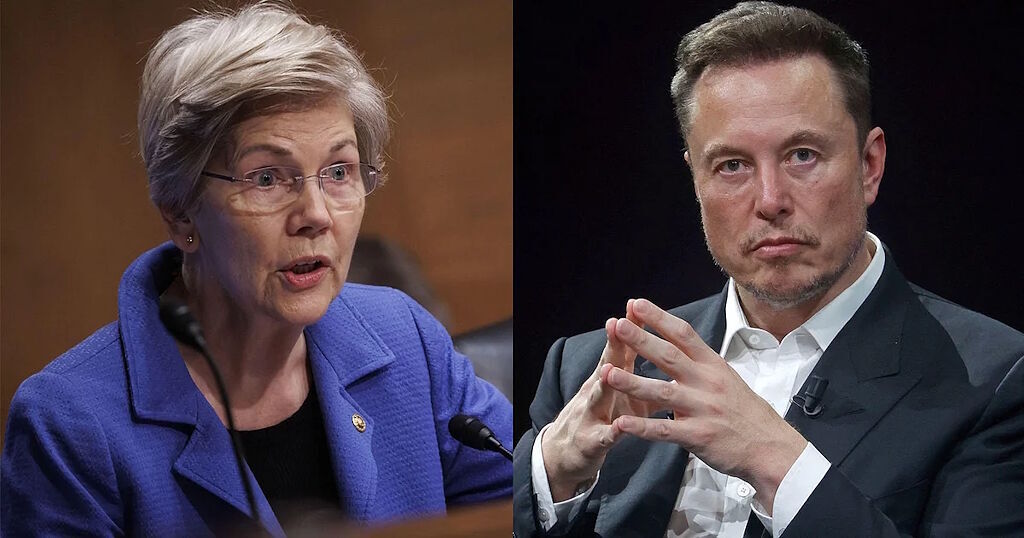
Sen. Elizabeth Warren and Elon Musk.
Dear Senator Warren,
When I watched your recent video on X about Elon Musk becoming the world's first trillionaire, I found myself in the unusual position of agreeing with you — at least in part. That is not a sentence I write often.
You see...you are correct that something has gone profoundly wrong in an economy that can produce a trillionaire. You are correct that the gap between the financial elite and ordinary Americans has become so vast that most people can barely comprehend it. And you are correct that millions of Americans increasingly feel as though the economy is rigged in favor of a small group of people at the top.
According to The Wall Street Journal, there are now roughly 430,000 American households worth more than $30 million, including approximately 74,000 households worth over $100 million. The growth of these groups has dramatically outpaced overall population growth over the past several decades.
You are correct that the wealth inequality gap is widening quickly:
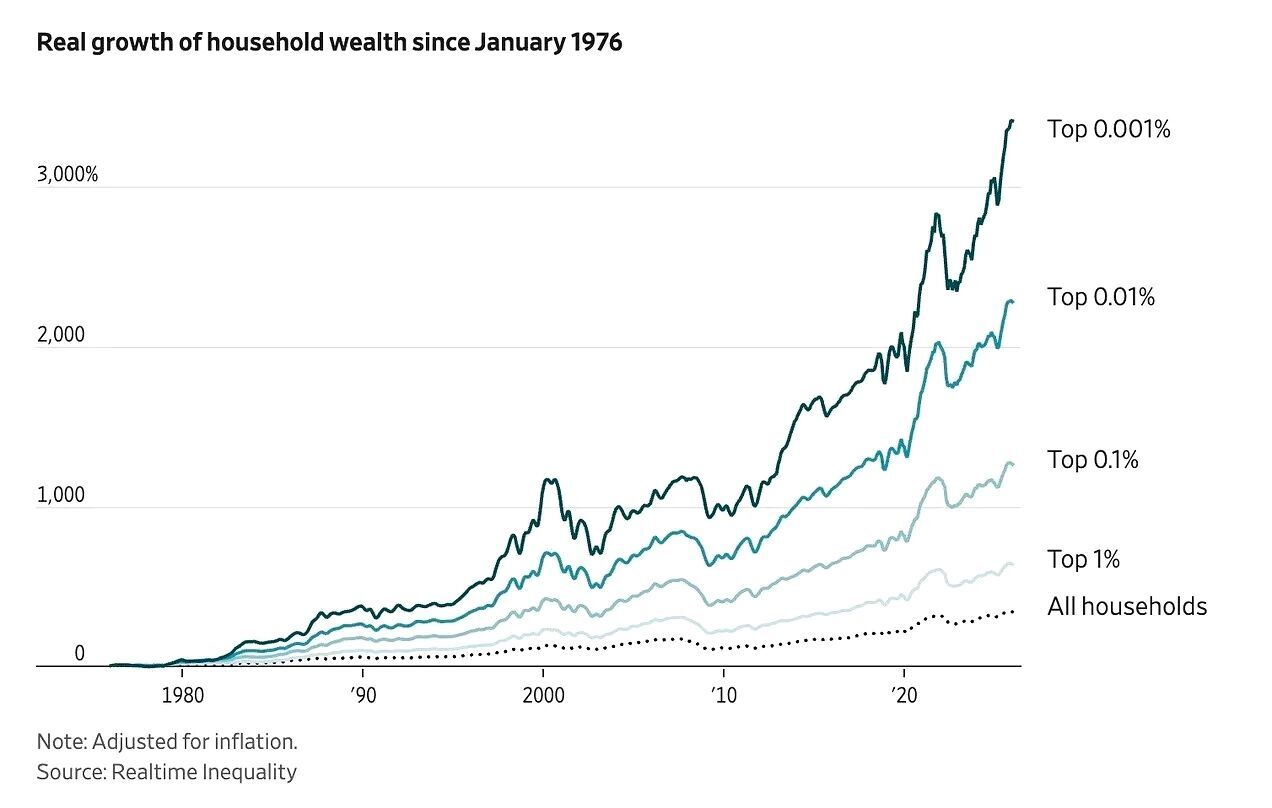
You see Elon Musk's wealth and conclude that the problem is Elon Musk. I see Elon Musk's wealth and conclude that the problem is the system that made such wealth possible in the first place. Those are very different diagnoses, and they lead to very different solutions.
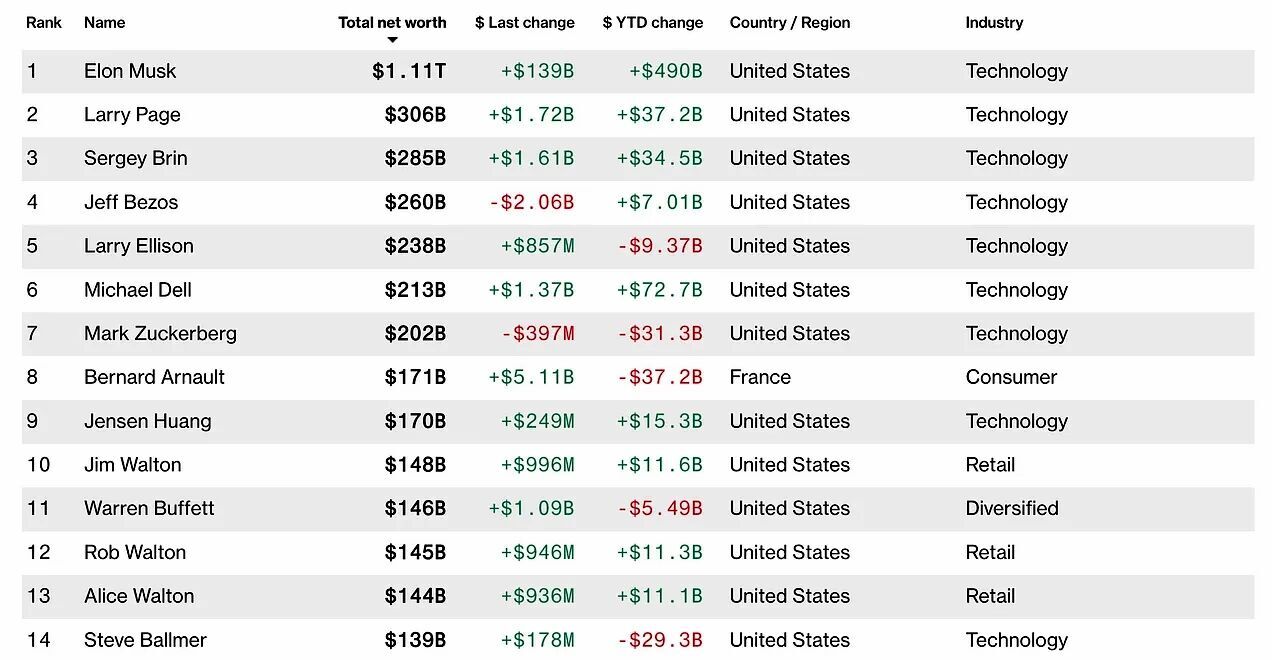
The irony is that I suspect we agree on more than either of us would like to admit. I do not believe it is healthy for today's society to have trillionaires. When comparing Musk's wealth to the next richest person on the Bloomberg Billionaires Index, where the difference in rankings is $20 billion or so among the top 10 richest, there is a massive $800 billion difference. 40 times the average of the rest of the list. That should raise eyebrows.
I do not believe an economy is functioning normally when wealth accumulates on that scale. I do not believe it is sustainable for financial assets to appreciate so rapidly while wages struggle to keep pace. And despite being a Republican who has frequently defended markets, capitalism, and entrepreneurship, I find the emergence of this trillionaire fortune difficult to view as evidence of a healthy economic order.
But where you see a trillionaire problem, I see a monetary policy problem.
For years, Americans have been told a story about wealth inequality. The story goes something like this: billionaires are getting richer because they are hoarding wealth, exploiting workers, avoiding taxes, and accumulating ever greater control over the economy. There is some truth in parts of that narrative. Human nature has not changed. Powerful people have always sought more power, and wealthy people have always sought more wealth.
What the story leaves out, however, is the role of the institutions that have systematically inflated the value of financial assets for decades. One of the strangest things in American politics is that everyone wants to talk about wealth inequality until the conversation reaches the actual source of it.
The modern American economy is built on a foundation of cheap money. Whenever markets stumble, politicians demand intervention. Whenever economic growth slows, politicians demand intervention. Whenever unemployment rises, politicians demand intervention. The Federal Reserve responds with lower interest rates, asset purchases, liquidity programs, and other mechanisms designed to support economic activity and financial markets.
The result is entirely predictable. More money creation, which leads to more price inflation, which hits financial assets first, which benefits the "haves" and not the "have nots".
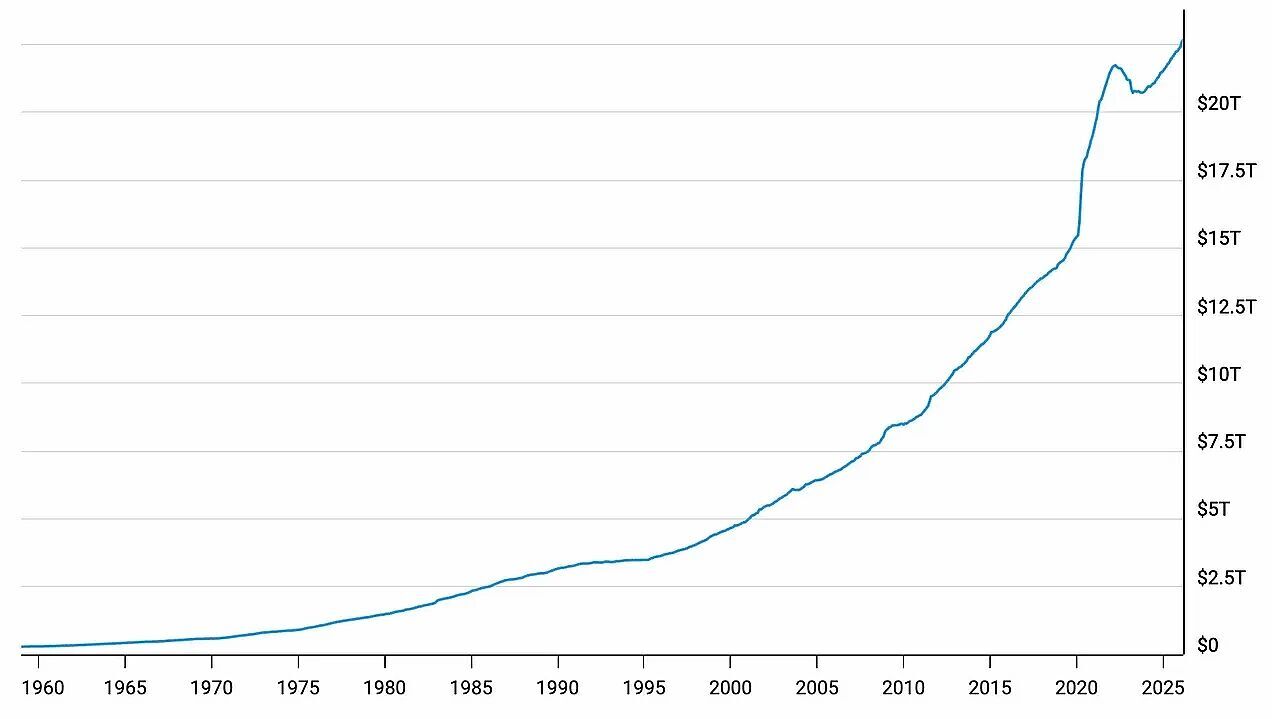
M2 Money Supply
The people who rely primarily on wages do not.
This is not a conspiracy theory, it is simply the mathematical reality of how asset inflation works. If stocks rise faster than wages, stockholders become richer relative to workers. If housing prices rise faster than incomes, homeowners become richer relative to renters. If financial assets appreciate because trillions of dollars are flowing into the system, then the people who own financial assets will inevitably pull further away from everyone else.
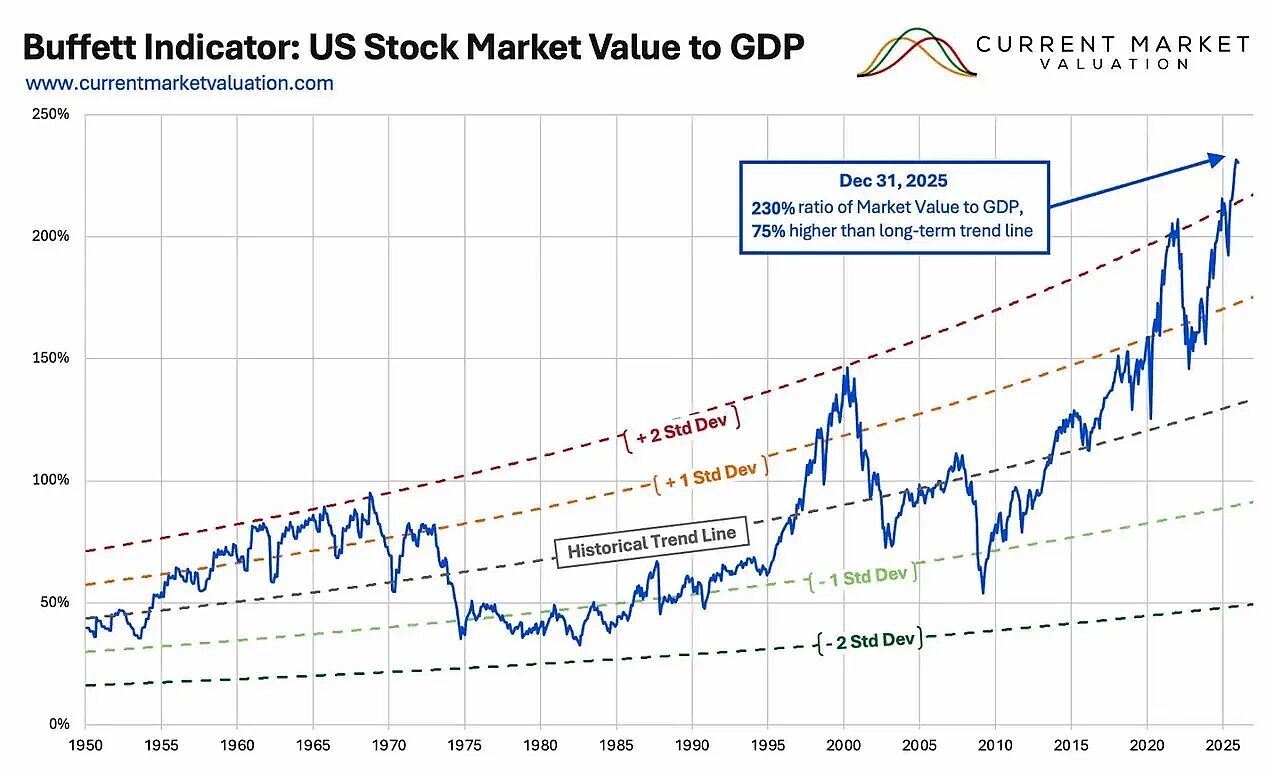
That is exactly what has happened. As I have recently written about, our public markets have become distorted beyond recognition as a result of money printing. The fundamental rules of economics, math and money no longer apply when trillions can be printed in hours. The Fed has launched us into a reality distortion field and that's why stocks are the most overvalued they have ever been...and yet liquidity still keeps coming from somewhere.
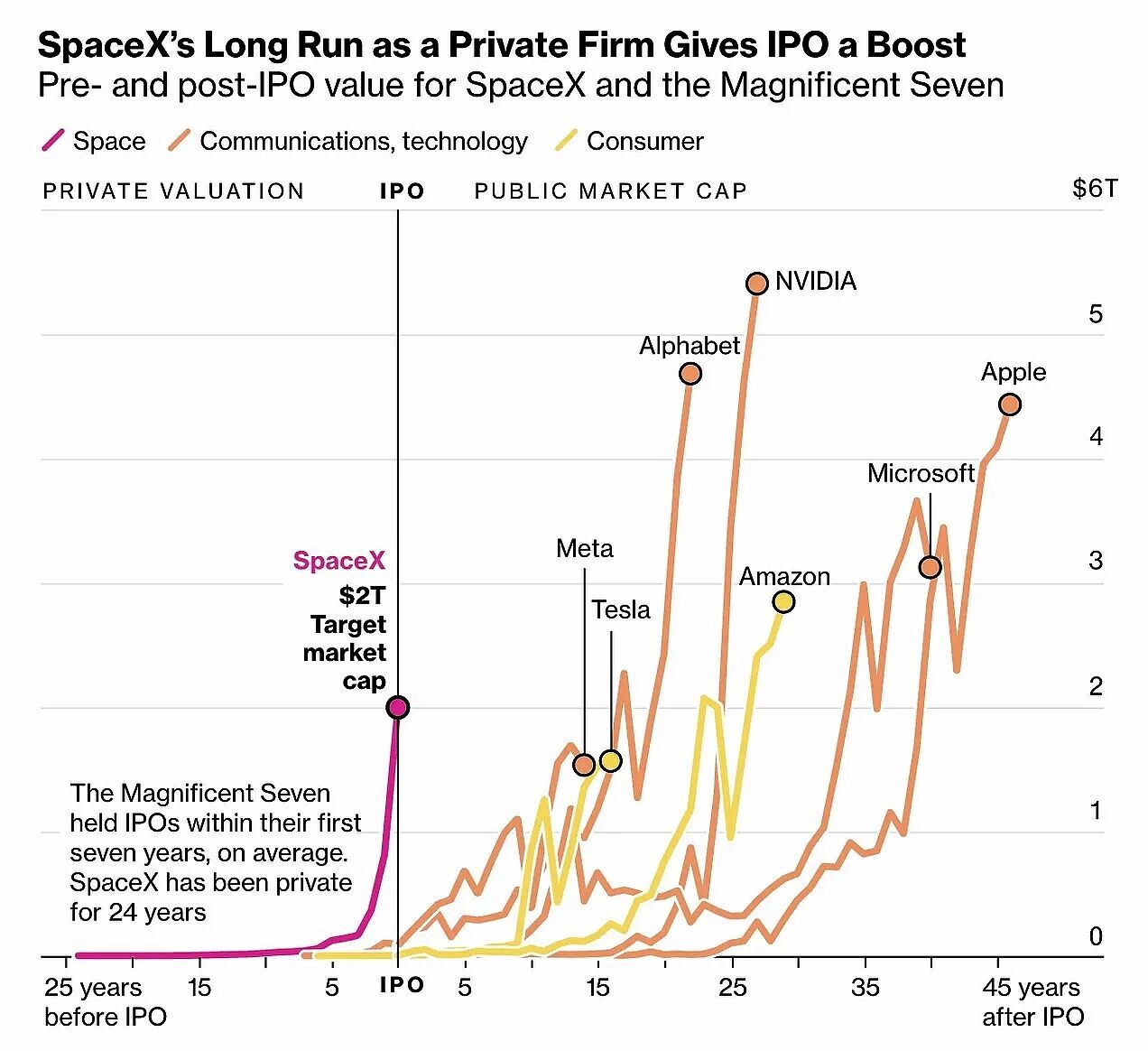
This overvaluation as a result of money printing is what emboldens bankers, the financial media, exchanges and analysts to tacitly bless one of the most aggressively (and insanely) overvalued IPOs in modern history without batting an eye. It is what made SpaceX "worth" more, quicker, than most other companies before going public, despite hemorrhaging billions in cash instead of turning a consistent profit.
The wealth gap that concerns you did not emerge from nowhere. It did not appear because Elon Musk woke up one morning and decided to become worth a trillion dollars. It emerged from decades of policies that consistently rewarded ownership of assets more than productive labor. And by new policies being put in place that quickly link unprofitable public companies to the retirement accounts of average Americans.
And this is where your critique becomes frustrating. You identify the outcome correctly. You recognize that wealth concentration has reached extraordinary levels. You understand that many Americans feel excluded from the prosperity they are constantly told exists. Yet when it comes time to identify the cause, your focus immediately shifts to the people benefiting from the system rather than the system itself.
Your solution is a wealth tax. Then it is an AI tax. Then it is another tax. Then another. The underlying machinery is almost never discussed.
What makes this particularly difficult to take seriously is that the policies that contributed to this environment have enjoyed bipartisan support. Republicans share responsibility. Democrats share responsibility. Donald Trump has publicly pushed for lower interest rates. Many Democrats, including yourself, have repeatedly supported monetary policies aimed at stimulating economic activity through easier financial conditions.
The underlying direction has been remarkably consistent: both parties have become dependent on asset appreciation. Both parties celebrate rising stock markets. Both parties fear the consequences of allowing markets to fully clear. Both parties prefer the short-term benefits of easy money to the long-term consequences of asset inflation. And then both parties act surprised when wealth inequality worsens.
So can we just cut the act at this point?
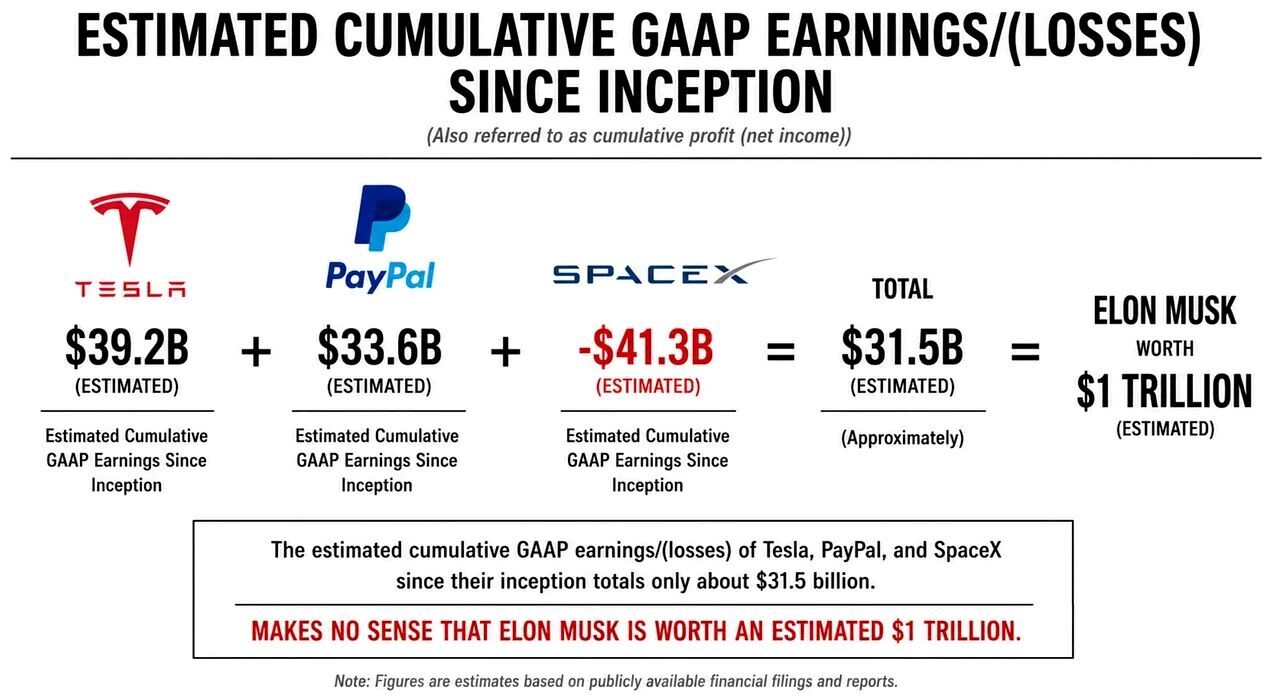
The truth is that Elon Musk is not the architect of this system. He is one of its most successful participants. He did not invent quantitative easing. He did not establish the Federal Reserve's framework. He did not create an economy in which every financial downturn is met with demands for intervention. He did not spend decades encouraging policies that inflated asset values across the board. He simply rode the wave. But you have to ask, what type of system allows a man to be worth $1 trillion when the sumtotal of all of his companies' profits dating back decades is barely $30 billion?
Why are valuations reaching levels that previous generations would have considered absurd? Why are financial assets appreciating so much faster than the real economy? Why does every crisis seem to result in more intervention, more liquidity, and more upward pressure on asset prices? Why is it that the people closest to financial markets consistently emerge as the biggest winners?
These are the questions that should be dominating the discussion about inequality. Instead, our politics increasingly revolves around personalities. The billionaire becomes the headline, the outrage becomes the story, yet the underlying incentives remain untouched.
That is unfortunate because I believe your instincts are partially correct. There is something unhealthy about a society that produces trillionaires right now. There is something unhealthy about a system in which asset ownership increasingly determines economic outcomes. There is something unhealthy about a financial structure that appears to reward speculation more aggressively than productive work.
Where you lose me is when you conclude that the answer is simply to tax the visible winners more heavily.
If the machine continues operating exactly as it does today, new trillionaires will emerge. If asset inflation continues to outpace income growth, wealth concentration will continue. If monetary policy remains focused on supporting financial assets whenever they come under pressure, inequality will continue to widen regardless of how many new taxes are created.
You cannot permanently solve a structural problem by targeting its most visible beneficiaries.
That is why your recent comments strike me as an example of getting the right answer to the wrong question. Yes, something is broken. Yes, the gap between ordinary Americans and the financial elite is becoming unsustainable. Yes, the emergence of trillionaire fortunes should force us to ask difficult questions about the economy.
But the first question should not be, "How do we punish the trillionaire?"
The first question should be, "What kind of economic and monetary system produces trillionaires in the first place?"
Until policymakers are willing to confront that question honestly, the cycle will continue. Asset prices will rise. Wealth concentration will increase. Politicians will express outrage. Billionaires will become convenient villains. New taxes will be proposed. And the underlying forces driving inequality will remain largely untouched.
If you genuinely want to reduce wealth inequality, Senator, start with the institutions and policies that inflate asset values across the economy. Start with the monetary framework that has helped make financial assets the primary engine of wealth creation. Start with the bipartisan addiction to easy money and perpetual intervention.
Because if Elon Musk's trillion-dollar fortune is evidence that something is broken, then the real culprit is not the man standing at the top of the mountain. It is the system that spent decades building the mountain beneath him.
Respectfully yours,
QTR



Reader Comments