
© shutterstock
The Trump administration is preparing to reduce key U.S. air and naval assets available for NATO missions in Europe, a move that would mark a broad shift in America's military posture inside the alliance, according to The New York Times.
Two senior European officials familiar with the decision said the reductions were detailed in a document provided to allies in early June. The plan would cut the number of American aircraft and warships assigned to NATO operations and could limit the alliance's capacity for aerial refueling, surveillance, long-range strikes and maritime monitoring.
Under the proposal described by the officials:
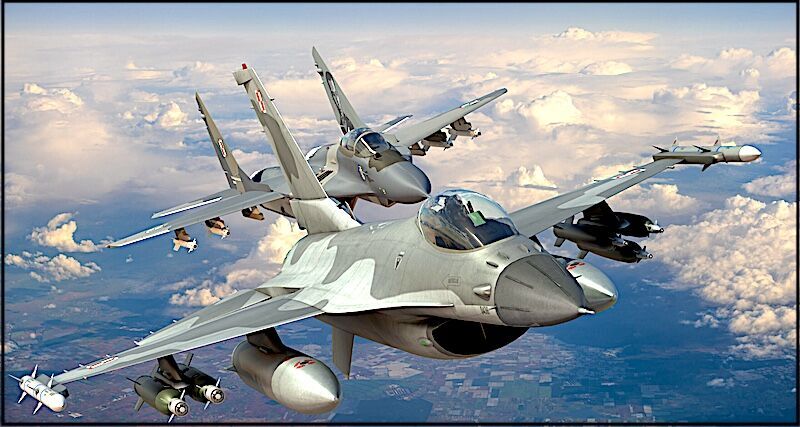
- U.S. F-16 and F-15E fighter jets available for NATO operations would fall from about 150 to 100.
- Maritime reconnaissance aircraft would be reduced from 26 to 15.
- All eight aerial refueling tankers previously assigned to Europe would be withdrawn.
- Reassignment of a missile-launching submarine, an aircraft carrier and several supporting warships. One of the two bomber groups previously designated for Europe's defense would also be reassigned.
The Pentagon declined to address the specific numbers in the document. It instead referred to a recent statement from U.S. European Command about plans to reduce American commitments in Europe.
The reported reductions provide one of the clearest pictures so far of how far the Trump administration intends to go in scaling back the U.S. role within NATO, the post-World War II alliance created for the collective defense of North America and Europe. European leaders continue to regard NATO as central to deterring Russian aggression, and the proposed shift comes as many governments on the continent remain concerned about Moscow's military activity near alliance territory.
No public timetable has been announced for carrying out the reductions. However, U.S. officials have signaled that the changes could occur sooner than many European governments had expected.
The impact could be felt across several NATO missions. Fewer aircraft and ships could affect the alliance's ability to track Russian submarine movements, support long-distance air operations and conduct long-range strike missions.
Giuseppe Spatafora of the European Union Institute for Security Studies said the combined reductions would have consequences beyond any one category of equipment:
"While each of these cuts can be managed individually, together they represent a significant posture change and pose challenges to European deterrence readiness across the spectrum."President Donald Trump has repeatedly argued that European NATO members rely too heavily on U.S. military power and should spend more on their own defense. His administration had already announced smaller adjustments to American troops and forces in Europe, but the June document outlines wider reductions affecting NATO missions across the continent.
The United States would still maintain one of NATO's largest military footprints in Europe after the planned cuts. At the same time, European governments have increased defense spending and moved to rebuild military capacity amid uncertainty over long-term U.S. support.
Security concerns have remained elevated in Europe. In late May, a Russian drone struck an apartment building in Romania, the first such strike in a major urban area inside NATO territory.
The planned drawdown was communicated as senior U.S. defense officials were publicly emphasizing the need to shift American military resources toward the Indo-Pacific region.
Gen. Alexus G. Grynkewich, commander of U.S. European Command and NATO's supreme allied commander in Europe, said in early June that NATO's force structure had become too dependent on U.S. assets.
"There has been an unhealthy codependence in the NATO Force Model on U.S. forces. President Trump, Secretary [Pete] Hegseth, and others have been clear that this needs to change, and it will change. The potential reality of simultaneous conflict in multiple theaters demands it."The planned reductions would leave NATO allies facing a faster transition toward greater European responsibility for defense operations at a time when Russia remains a central security concern and Washington is increasingly focused on military demands outside Europe.



Reader Comments
to our Newsletter