© Screengrab France 3/YouTube
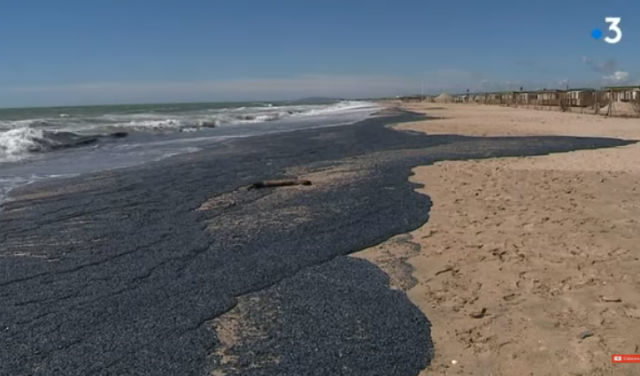
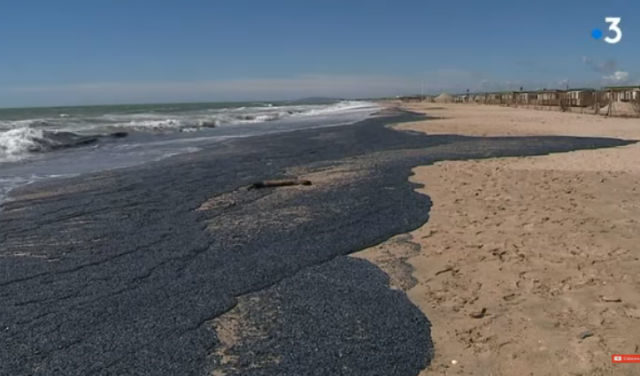
A popular beach in the south of France has been invaded by billions of purple creatures and it's made for an impressive sight.
Residents of the southern French seaside town of Palavas-les-Flots, got a shock when they took their usual morning stroll along the beach this week. On Tuesday morning the sand at the town just south of Montpellier on the Mediterranean coast looked a little different. A lot more purple than sandy brown.
That's because billions of jellyfish-like creatures known in French as the "vélleles" (Velella in English), recognised for their oval shape and purple colour had washed up on the shores. "I first thought petrol had spilled in the sea, seeing as all the beaches are covered for miles, but no, these are jellyfish" one resident told FranceInfo radio.
In fact the Velella are not officially jellyfish although they are lumped in the same family of creatures known as Cnidaria. They are often called "by the wind sailors" or "sea-rafts". The strange incident happened because these jellyfish, which usually move together in large groups in the sea, have been pushed for three weeks by heavy winds towards the shores.
It's reportedly the first time an invasion of this type of jelly fish has happened in the south of France. These kind o jelly fish are normally found further north of the coast of Britain and Ireland. A clean-up operation was due to take place on Wednesday and Thursday.


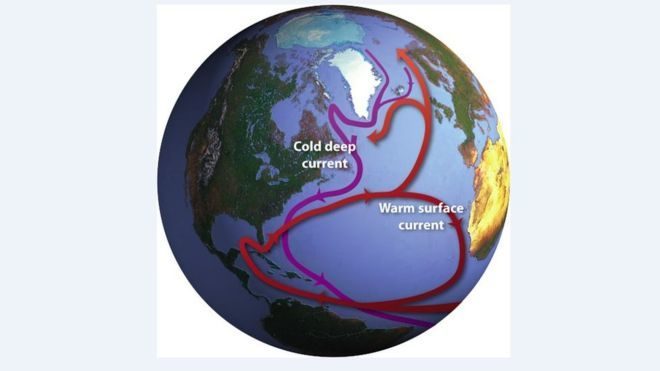










Comment: As usual the scientists involved are doing mental gymnastics to incorporate their erroneous belief of global warming with the facts they're presented with. What is clear, and surprisingly even they are able to admit it, is that the Atlantic Ocean circulation is slowing down and consequently there will be cooling, which when taken into account with data from elsewhere shows that it's a global trend, as is to be expected as we enter an ice age:
- Subtle second magnetic field surrounding Earth discovered
- Report: Crippled Atlantic currents signaled ice age climate change
- Study finds potential instability in Atlantic Ocean water circulation system could trigger global cooling
- NASA satellites indicate slowdown of Gulf Stream
- Stratospheric Winds Affect Ocean Circulation
- The coming ice age - Antarctic peninsula has been cooling not warming
- Arctic sea ice increases in August & Europe begins 1963 cooling repeat
- Global cooling continues after an El Niño induced string of warm years
Also check out SOTT radio's: Behind the Headlines: Earth changes in an electric universe: Is climate change really man-made?