Health & WellnessS


Beaker

The Name Game: Cultured meat could suffer the same fate as GMOs

cultured meat
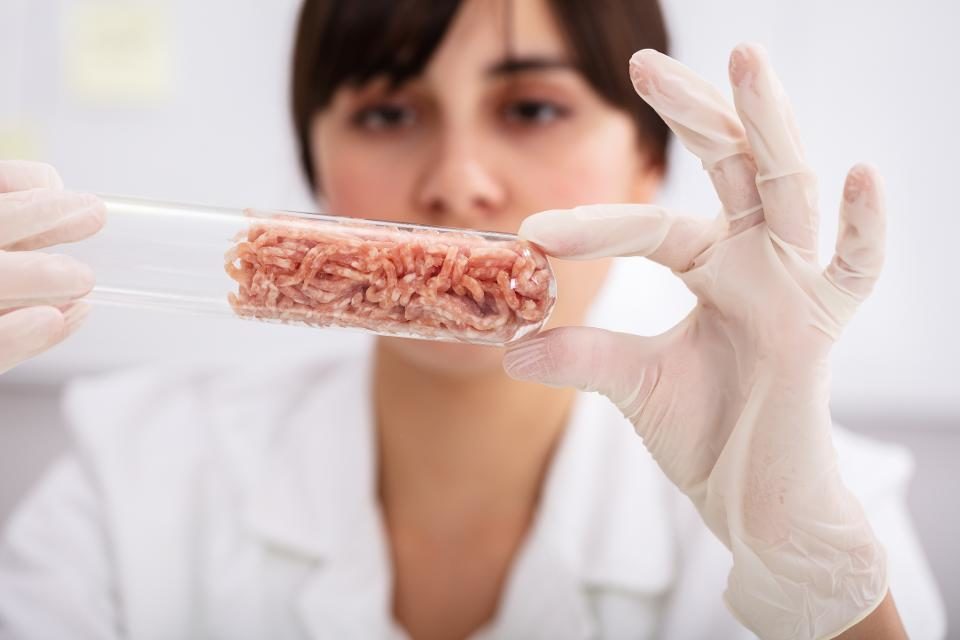
New research offers a warning to companies looking to sell cultured meat. This new type of protein — meat engineered from cell tissue in a lab rather than using traditional animal agriculture — could end up suffering the same fate as GMOs if producers and proponents aren't able to shift the public narrative.

In a study published July 3 in the journal Frontiers in Nutrition, researchers found that consumers presented with images of cultured meat framed as high tech innovation felt more negatively about it than consumers who were presented with images and text highlighting the meat's societal benefits or its equivalent taste and nutrition.

Researchers separated the 480 consumers surveyed into three groups, presenting cultured meat to each group through a slightly different lens. The three different frames were "high-tech," which showed the meat in a lab spilling out of a petri dish, "societal benefits," which showed cows in a field with a sentence about helping animals and reducing environmental harms, and "same meat," which showed a meatball sizzling in a pan with text highlighting equivalent taste and nutrition.


Comment: Lab Meat: Big hype, bad investment
Seems like investors are just lining up to throw their dollars at technology's latest thing. But I have a prediction for them. Lab meat will be no more successful than soy burgers or Just Mayo. People today want real food, and vegans are mostly too poor to afford highly processed food like "cultured" meat. But meanwhile, lab meat is good way to separate a lot of dot-com millionaire fools from their money.


Mail

Poisoned for Profit: Whether in the UK or India, we are not the agrochemical industry's guinea pigs

poisoned for profits
© Global Research
Environmentalist Dr. Rosemary Mason has just written to the Health and Safety Executive (HSE), the Department for Food, Environment and Rural Affairs (Defra) and the Chemicals Regulation Division (HSE) in the UK claiming that the glyphosate-based weed killer Roundup has poisoned her nature reserve in South Wales and is also poisoning people across the UK (she includes herself here, as she struggles with a neurodegenerative condition). She notes that the widespread spraying of glyphosate went against the advice of directive 2009/128/EC of the European parliament but was carried out at the behest of the agrochemicals industry.

Mason has sent a 24-page fully referenced document with her letter in support of her claims. It can be accessed in full here. What follows is a brief summary of just a few of the take-home points. There is a lot more in Mason's document, much of which touches on issues she has previously covered but which nonetheless remain relevant.

Comment: Objective:Health: #22 - Poisoned Agriculture, Poisoned World


Brain

Dr. Valdeane Brown: Optimizing your nervous system with Neuroptimal neurofeedback

Neurofeedback
© neuroedge.ca
Dr. Brown had a long and varied history in the field of mental health before even pursuing his Ph.D. in Psychology. For over 25 years he taught Continuing Medical Education courses across a wide range of clinical topics including Rapid Transformation of Borderline Phenomenology, Dual Diagnosed Clients, Dynamics of Family Therapy, Working With Angry Adolescents.

For many years he was a featured and keynote speaker at numerous national and international conferences in the fields of neurofeedback, child psychology, Total Quality Management, and others. He developed and published the Five Phase Model of Neurofeedback which was the first and still the only, approach to clinical neurofeedback that integrated multiple protocols into a single comprehensive approach that could be used regardless of clinical presentation.


Comment: See also:


Brain

The brain-eating amoeba is a nearly perfect killer

kids swimming
© Ognen Teofilovski / Reuters
Last week, a North Carolina man became a notorious microbial killer's first confirmed victim this year. Fifty-nine-year-old Eddie Gray had unknowingly come across a brain-eating amoeba while swimming in a man-made lake near Fayetteville in mid-July; 10 days later, he was dead.

Since the brain-eating amoeba was first recognized and named, in 1970, grisly reports of its disastrous attacks have made headlines nearly every year. About 97 percent of confirmed cases in the United States have been fatal. But the infection is also incredibly rare, and the small sample size leaves the epidemiologists who study it and the doctors who encounter it with their hands tied. It may be one of nature's most perfect crimes.

Despite their gruesome moniker, most brain-eating amoebas never eat a single brain. The single-celled swimmer, formally known as Naegleria fowleri, passes its time resting in a dormant state or, when it's warm enough, splashing around and munching on bacteria. Unlike most waterborne pathogens, it's utterly benign if you drink it. It becomes dangerous only when, thanks to a person enjoying a day at a water park or a quick rinse in a stream, the amoeba is yanked from its bacterial buffet and swept into the dark recesses of the human nose.

Comment: Following the above safety precautions is probably a good idea, despite the rarity of the infection. But it is curious that a number of cases have surfaced recently. The spate of new infections that seem to be springing up as of late does make one wonder what exactly is going on.


Biohazard

Study finds 90% of families have glyphosate in bodies with significantly higher levels found in children

glyphosate


Results released as Trump's EPA poised to approve the continued use of glyphosate in the U.S. for 15 more years


A new study by Center for Environmental Health (CEH) found over 90% of families tested had glyphosate in their bodies. The study sought to determine whether children are more exposed to Monsanto's toxic weed killer than their parents. The results were unequivocal. Nine of the twelve parent-child pairs tested (in one family both parents and two children participated), the child had higher concentrations of glyphosate in their body than their parent. Six children had twice the amount than their parents and one had nearly a hundred times more. The families tested lived in a variety of states from across the country. CEH's findings corroborate other recent studies that found glyphosate in the bodies of 70 to 93% of those tested.

"Our findings are particularly alarming for children, whose bodies are still developing," said Caroline Cox, CEH's Senior Scientist. "A toxic weed killer known to cause cancer has no business in our bodies or our food. Human health and the health of our children should outweigh the chemical industry's right to profit. These results warrant immediate, long-term, independent follow-up studies with increased sample sizes."

Comment: See also:


Biohazard

Former Pittsburgh Steeler Merril Hoge sues Roundup maker, alleges it caused his cancer

Merril Hoge Pittsburgh Steelers
Former Pittsburgh Steelers running back Merril Hoge is among the thousands of plaintiffs suing Roundup maker Monsanto alleging his exposure to its weed killer caused him to develop non-Hodgkins lymphoma.

The former football star, 54, alleges in a lawsuit filed this month that he was first exposed to Roundup in 1977, while working on a potato farm in Idaho. He developed non-Hodgkin's lymphoma in 2003.

More than 11,200 plaintiffs allege in pending lawsuits that exposure to glyphosate, the active ingredient in Roundup, caused them cancer or other injuries.

Comment: It's interesting, yet unsurprising, that a corporate media story about an ex-sports star suing Bayer because he says Roundup caused his cancer contains almost exclusively quotes from the corporate giant denying their products are unsafe, yet no information to counter that claim. Also note the lack of a statement from Hoge. Spin anyone?

See also:


Health

Florida health officials say mosquito-borne virus that causes brain swelling, death detected in state

mosquito
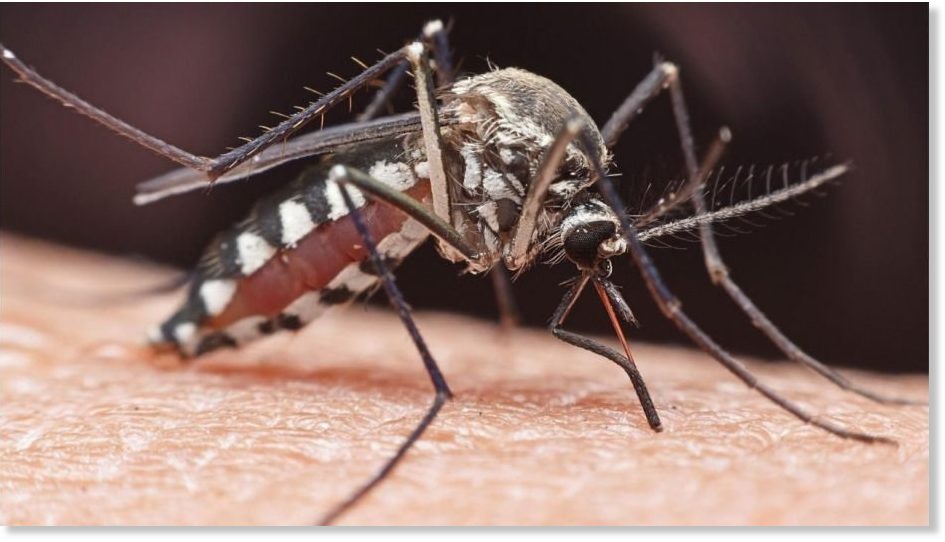
Heads up, Floridians: A dangerous and potentially deadly mosquito-borne virus has been detected in the state, the Florida Department of Health in Orange County (DOH-Orange) announced late last week.

"Several sentinel chickens in the same flock" tested positive for Eastern equine encephalitis virus (EEEV), per the DOH-Orange, which noted, "the risk of transmission to humans has increased."

EEE, according to the Centers for Disease Control and Prevention (CDC), is a rare disease that's spread by infected mosquitoes. EEEV "is one of a group of mosquito-transmitted viruses that can cause inflammation of the brain (encephalitis)," the federal health agency says.

Alarm Clock

The science on time-restricted eating and circadian rhythm

time restricted eating
Time-restricted eating is a form of daily fasting wherein the time of the day during which a person eats is limited, or compressed. People who practice time-restricted eating typically eat during an 8- to 12-hour daytime window and fast during the remaining 12 to 16 hours. Unlike intermittent fasting, which involves caloric restriction, time-restricted eating permits a person to eat as much as they want during the eating window. Time-restricted eating aligns the eating and fasting cycles to the body's innate 24-hour circadian system.[1] Within the scientific literature, time-restricted eating primarily refers to human trials, while time-restricted feeding primarily refers to animal studies; however, both terms are occasionally used interchangeably.

The circadian system is composed of multiple cellular clocks found in all cells throughout the body. These clocks orchestrate the regulation of gene expression that coordinates metabolic programs needed to support bodily functions. Of the entire human genome, approximately 15 percent of the genes display daily oscillations, or fluctuations, in their activity. Many of these genes participate in carbohydrate, lipid, and cholesterol metabolism.[2] In both animal studies and human trials, time-restricted feeding and eating have elicited beneficial health effects, including weight loss, reduced fat mass, improved heart function, and enhanced aerobic capacity, without altering diet quality or quantity.[3]

Comment: See also:


Coffee

The physiological effects of caffeine

caffeine sources
Caffeine is one of the most used stimulants in the world with over 80% of adults in the US consuming caffeine daily. Caffeine is most commonly consumed through coffee, tea, soda, or energy drinks, but foods such as dark chocolate also have high levels of caffeine. Given the wide spread consumption of caffeine, it is important to understand how it affects our physiology.

How much caffeine do you consume?

The average caffeine intake in the US is 165-300mg/day (Mitchell et al., 2014). Below is a table of approximate caffeine in a single serving of common caffeine containing food and beverages.

Comment: See also:


Biohazard

Brazil's toxic pesticides 'affecting people all over the world' through agricultural exports

pesticides
© Global Look / Florian Kopp
Brazil's embrace of highly toxic pesticides - the government has approved 262 so far this year and loosened regulations on what is considered "extremely toxic" - is affecting people far outside its borders, an expert tells RT.

"EU-banned pesticide[s are] being manufactured in the EU, and then coming back to citizens in the EU, in the food we eat," environmental journalist and founding member of the Green Economic Institute think tank Oliver Tickell told RT, explaining that as one of the largest soy exporters in the world, Brazil supplies a significant quantity of the feed that cattle and other livestock worldwide consume. European consumers tucking into a juicy steak have no idea that the creature they're eating might have been nourished on soy sprayed with highly toxic pesticides.

"This is not just a problem for Brazil and Brazilian people and people exposed in the countryside to these pesticides and consumers and farmers," Tickell warned. "It is actually affecting people all over the world through Brazil's agricultural exports."