
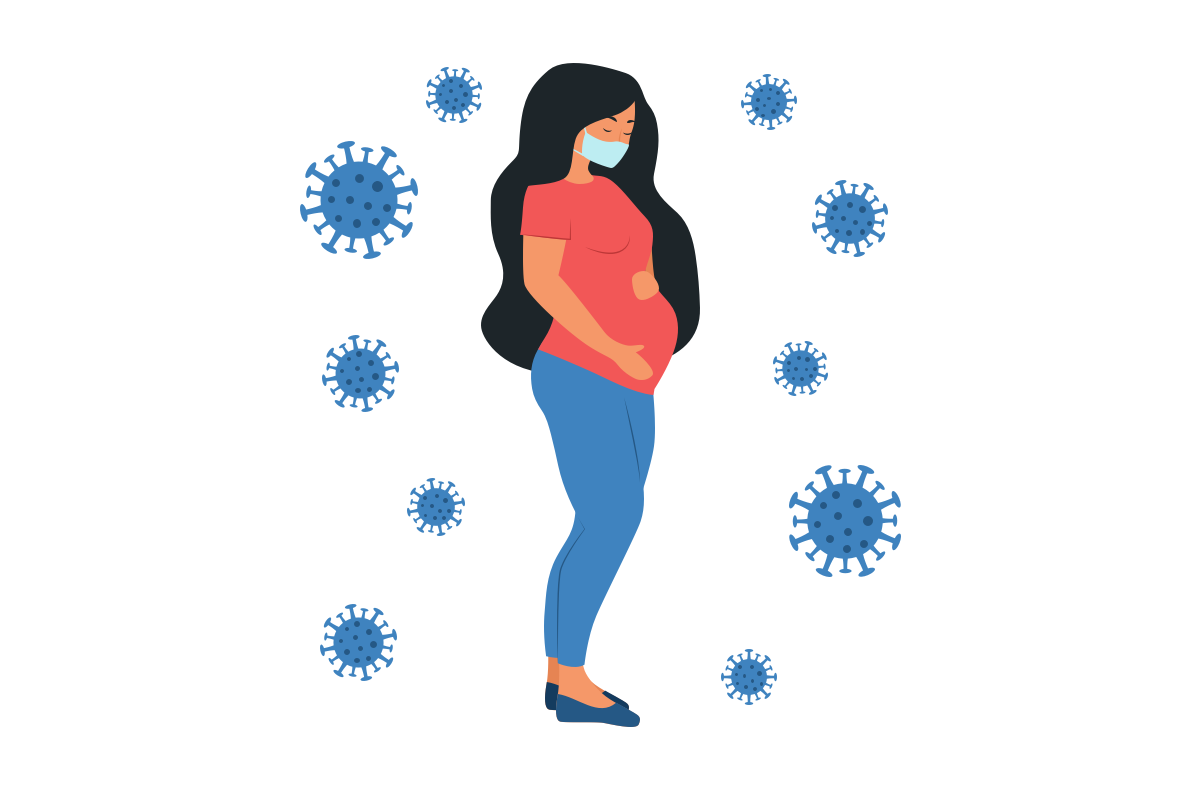
© Shutterstock
She was pregnant, I'd guess in the 2nd trimester. According to the US NIOSH (National Institute for Safety and Health) there are now millions of pregnant women wearing masks — primarily because they're mandated to do so. But there doesn't appear to be any data for how long they're worn and under what circumstances, i.e. indoors, outdoors, working, exercising or whatever.
Given what I've learned about masks I had a strong urge to warn her that there were serious risks to her and I assumed the unborn baby. I assumed because I really didn't know. The problem is there are virtually no reliable studies which link mask wearing to postnatal outcomes. But as I've come to understand the lack of a specific study need not inhibit an accurate risk/benefit analysis. So let's do that.
The wearing of masks to attempt to prevent the spread of a virus has never been widespread in the general population in the Western world. (An exception to that was during the 1918 flu pandemic, masks were mandated in some cities, USA, but not others.
Subsequent studies showed no difference in infection rates or deaths between the mask wearing cities and those that chose not to.) In Asia where mask wearing is more common they are worn for a multitude of reasons including, significantly, for protection against car exhaust and industrial air pollution. Most studies everywhere have concentrated on "fit for purpose" or effectiveness analyses.












Comment: See also: