New study shows the
boundary between time moving forward and backward may blur in quantum mechanics.
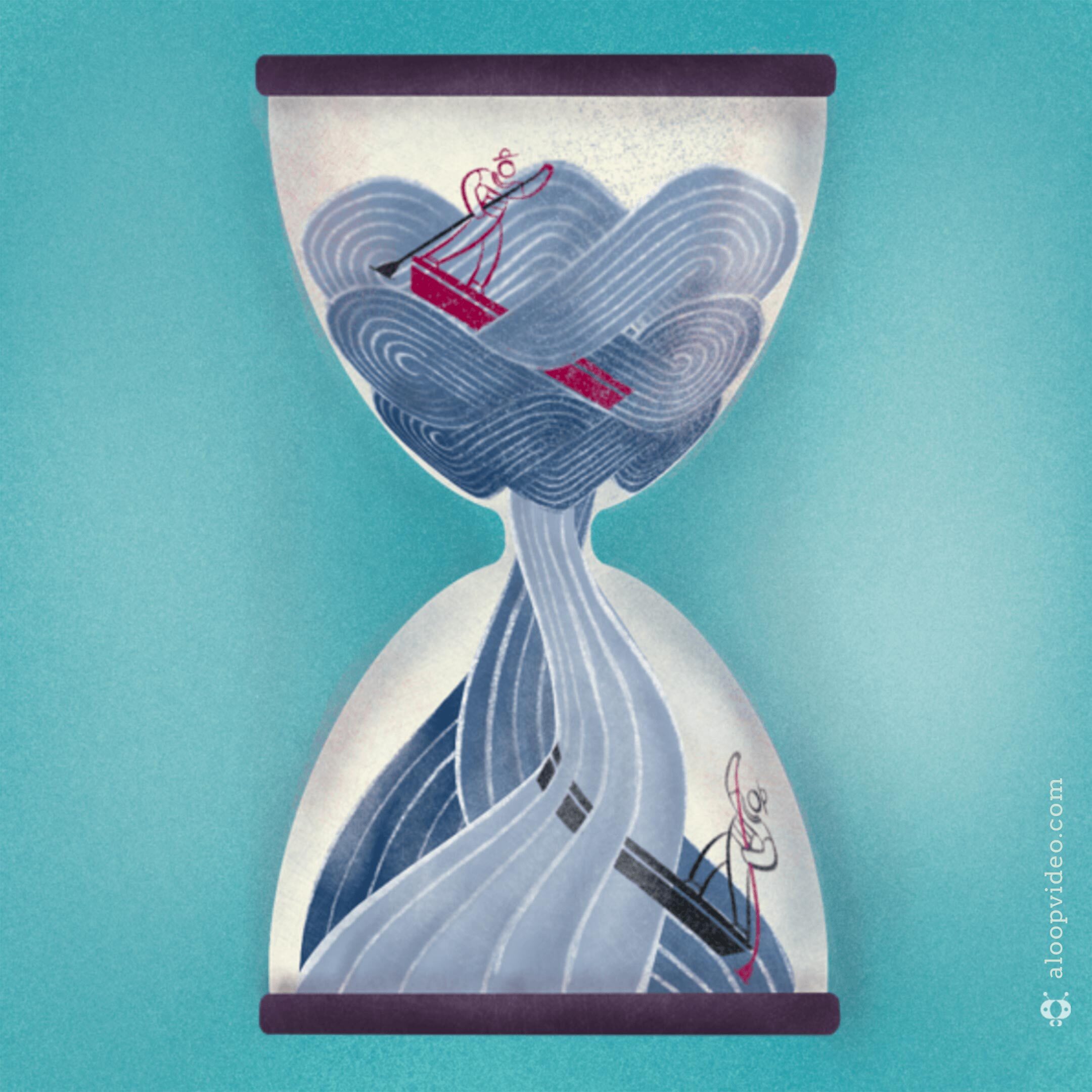
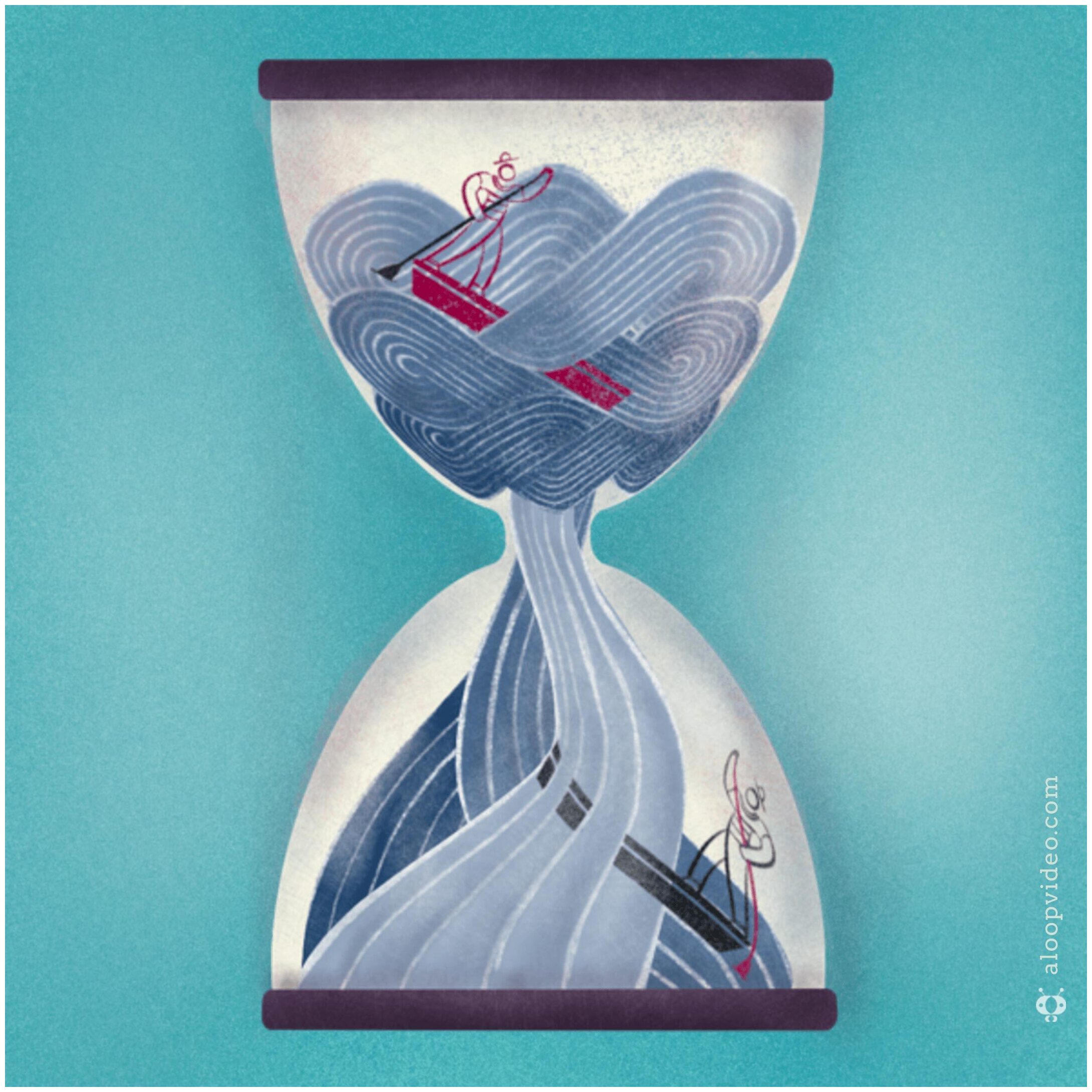
© Aloop Visual and Science, University of ViennaArtistic illustration of a gondolier trapped in a quantum superposition of time flows.
A team of physicists at the Universities of
Bristol,
Vienna, the
Balearic Islands and the
Institute for Quantum Optics and Quantum Information (IQOQI-Vienna) has shown how quantum systems can simultaneously evolve along two opposite time arrows -
both forward and backward in time.The study, published in the latest issue of
Communications Physics, necessitates a rethink of how the flow of time is understood and represented in contexts where quantum laws play a crucial role.
For centuries, philosophers and physicists have been pondering the existence of time. Yet, in the classical world, our experience seems to extinguish any doubt that time exists and goes on. Indeed, in nature, processes tend to evolve spontaneously from states with less disorder to states with more disorder and this propensity can be used to identify an arrow of time. In physics, this is described in terms of 'entropy', which is the physical quantity defining the amount of disorder in a system.
Dr Giulia Rubino from the University of Bristol's
Quantum Engineering Technology Labs (QET labs) and lead-author of the publication, said: "If a phenomenon produces a large amount of entropy, observing its time-reversal is so improbable as to become essentially impossible. However, when the entropy produced is small enough, there is a non-negligible probability of seeing the time-reversal of a phenomenon occur naturally.





















Comment: See also:
- Darwinism, Creationism... How About Neither?
- Some viruses have a completely different genome to the rest of life on Earth
- Typical human virome includes HIV, hepatitis & many other viruses - 2017 study
- First evidence of cell membrane molecules in space
- "Exposome": Scientists measure invisible clouds of matter that orbit every human being
And check out SOTT radio's: