
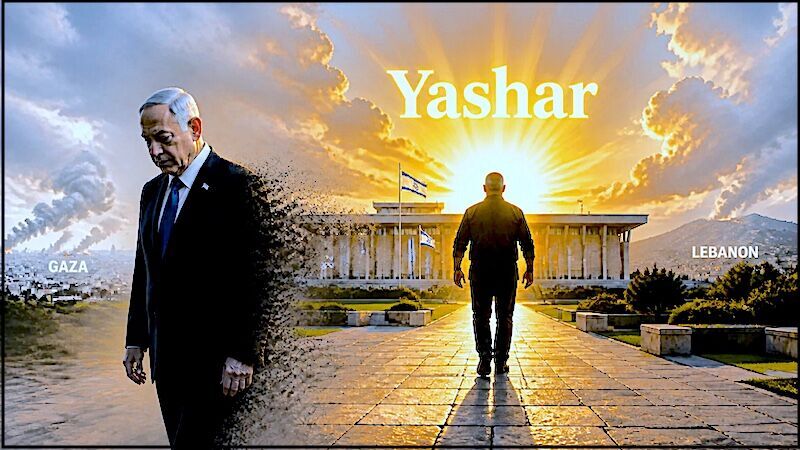
© UnknownNetanyahu becomes replaceable
In the world of geopolitics, even the strongest of leaders can be dethroned by just one crisis. For almost two decades, PM Netanyahu has held on as the leader of the Israelis. Considered to be the longest-serving prime minister of Israel, Netanyahu's foreign policy revolves around security and regional monopoly. However, now in 2026, he is facing serious political backlash. It seems like his policies are now backfiring, and the situation is getting out of hand.
From domestic political circles to the international ones, hatred against Netanyahu has been increasing at an alarming rate. Whether it's the October 7 attack or the recent war with Iran, Israel has been caught in a protracted conflict where it has become too costly to win the war. Is Israel witnessing the end of Netanyahu's era, or is he preparing for a bigger comeback? The unfolding of Israel's domestic circumstances would direct the ultimate result.
Israel's Multi-Party System
There are various political factions in Israel, divided into right-wing, left-wing, and centre-wing parties. However, due to intense political fragmentation, no single party has ever been able to secure a majority in the Knesset. Therefore, coalition-based politics have become central to Israel's domestic political structure. Bibi Netanyahu belongs to the right-wing political party named Likud, while the centrists include the alliance of opposition leaders Yair Lapid and Naftali Bennett. The leftist parties include Arab-Israeli factions, which never secured a majority.
The major reason why Netanyahu has remained in power for almost two decades is that he has mastered coalition politics and has made alliances with nationalist and religious parties. However, the same coalition-based politics that allowed Netanyahu to remain in power are now creating vulnerabilities for him. A new political party, 'Yashar,' has been established by the former IDF Chief Gadi Eisenkot. Although he belongs to the centrist faction, his popularity has seen a boom in recent months, even more than that of his predecessors, Lapid and Bennett. This ever-increasing political fragmentation would now decide the future trajectory of Israel's foreign policy.
Emergence of the 'Yashar' Party
For Netanyahu, Eisenkot's Yashar party has become a nightmare. While the name Gadi Eisenkot, former head of Israel's army, is probably unfamiliar to many around the world, inside Israel, it has become more and more known to Israelis, replacing former Prime Minister Naftali Bennett as Netanyahu's main rival. Yashar, meaning "straight" or "honest" in Hebrew, is now ranking in election surveys.
The most recent one from Channel 12 puts Yashar at 21 seats in the Knesset in the next Israeli election, second only to Netanyahu's Likud, which would take 23, and ahead of the Bennett-Lapid coalition, which is estimated to get 18. When asked who they thought was better to lead as Prime Minister, 38% chose Eisenkot, while 36% opted for Netanyahu. In case Eisenkot allies with Lapid and Bennett's anti-Netanyahu bloc, it might permanently end Netanyahu's statesmanship.
Netanyahu is trying his best to somehow degrade the growing popularity of the Yashar party. On 8th June 2026, Israeli Prime Minister Netanyahu's party, Likud, put up just four words on their X account. "There is no Gadi without Tibi." Alongside the brief message, there was also an 11-second video generated using artificial intelligence that showed two politicians named Gadi Eisenkot and Ahmad Tibi standing together outside parliament amid dark clouds. The text at the end read, "Eisenkot cannot have a government without the Arabs," referring to Tibi.
Collapse of the Security Narrative
Whether it was Lebanon, Iraq, or Syria, Netanyahu's administration has prioritised security over other matters. Even his election mandate was solely centred around securing the state of Israel and resisting Arab factions in and around the country. The circumstances backfired when Hamas attacked on October 7, 2023, crossing the Israeli borders and penetrating deep inside the territory. For a leader who built his career on the promise of security, October 7 became his political Achilles' heel. The event also became the first-ever black mark on Israel's security prudence in the region, and questions started rising on Netanyahu's indispensability.
Napoleon Bonaparte once noted, "Whenever a king sees that his people are about to revolt against him, he starts a war with another country," which is the premise for Netanyahu's plan to destroy Gaza. After an intense bombing and genocide in Gaza for more than three years, Israel has failed to achieve its ultimate objective of dismantling Hamas in Palestine. Likewise, the recent war against Iran and Lebanon (Hezbollah) also met the same fate. Israeli PM Netanyahu was forced by the Americans to limit his military aims in Lebanon and abide by the signed Islamabad Memorandum of Understanding between the US and Iran, which explicitly includes peace at all fronts, including Lebanon. The agreement is on shaky ground at best, and while Netanyahu did seemingly cooperate with the US on this, the situation could reverse at any minute.
As of June 26, 2026, Israel and Lebanon signed a peace agreement that includes a phased retreat of Israeli forces from southern Lebanon. The forces' retreat could become one of the major reasons for Netanyahu losing the upcoming October elections. Moreover, loss of support from Washington has also added its part. The former Israeli army chief of staff and currently Netanyahu's main political rival, Gadi Eisenkot, accused Netanyahu of failing to clearly communicate to the US his nation's strategic objectives in Lebanon. He said, "We failed to capitalise on our military achievements and woke up to a security reality that must not be allowed. Even the fact that Israel needs approval from Washington to carry out a strike in Lebanon is inconceivable." Therefore, it can be observed in every case that Israeli policies under PM Netanyahu have either completely failed or backfired, which clarifies one thing: this election could see the end of the so-called indispensable leadership of Netanyahu.
Conclusion
"The old order changeth, yielding place to new." (Alfred, Lord Tennyson)The upcoming elections in Israel would decide the fate of Netanyahu's political career. However, one thing would be permanent: any future administration would continue to pursue the aims of dismantling Iran and its regional partners in one way or another. Their strategies and policies might be different, but their ultimate objective would be the same. The newly emerged Yashar party is gaining momentum at an alarming rate. Although Netanyahu remains the most influential political personality in Israel, the combination of security failures and political fragmentation has caused a serious dent to his indispensability. Whether he will survive this challenge or not remains uncertain.
The fact is that, for the first time in years, Israel is seriously contemplating a future beyond Benjamin Netanyahu.



Reader Comments
to our Newsletter