
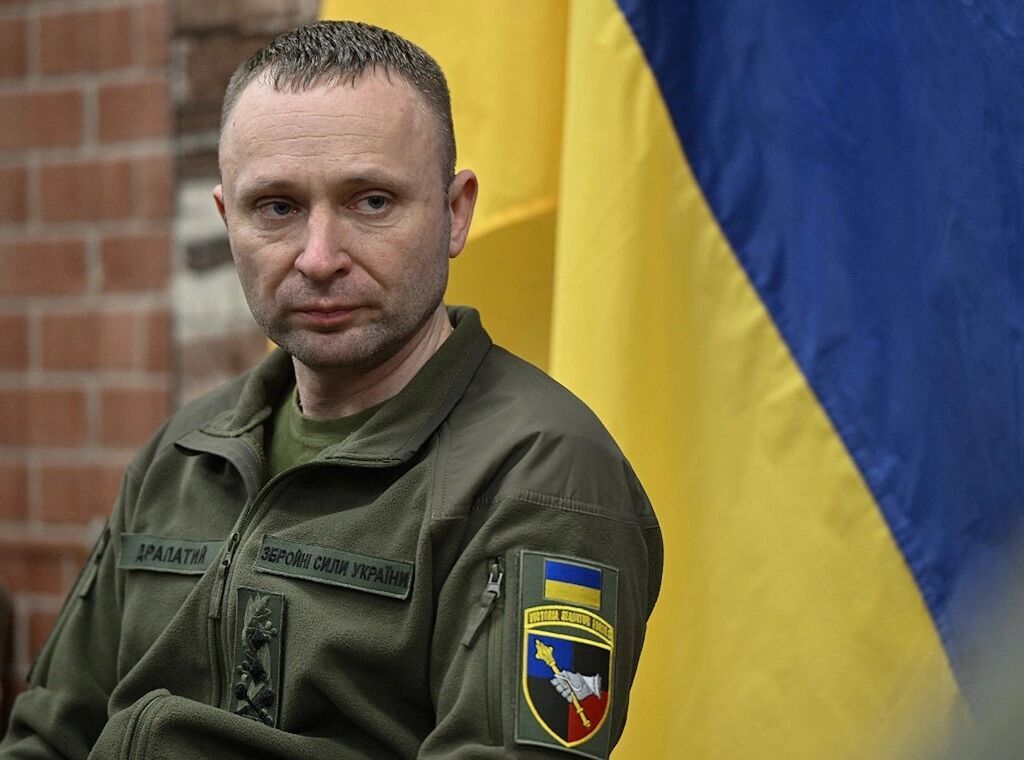
Ukraine military's newly appointed Commander-in-Chief Mykhailo Drapatyi
However, the issue over Minister of Defense Fedorov remains unresolved. After being offered several lesser positions by Zelensky, Fedorov himself declared that he will not accept anything lower than Defense Minister owing to his belief that no other role provides the ability of shaping the future of the armed forces.
"Today there are only three positions in the country that, alongside the troops on the battlefield, actually shape the course of the war: the President of Ukraine, the Minister of Defense, and the Commander-in-Chief of the Armed Forces of Ukraine," Fedorov said.But the biggest story now revolves around Russia's reciprocal strike campaign against Ukraine's own cargo carriers, and particularly, Ukraine's critical Odessa port and wheat transport corridor.
"That is why I will not accept any position other than Minister of Defense. No other role carries the actual authority to combat procurement corruption, complete the army's transformation, plan and execute asymmetric operations against the enemy, root out a culture of lies and unaccountability within the system, or finish the initiatives our team has already started at the defense ministry."
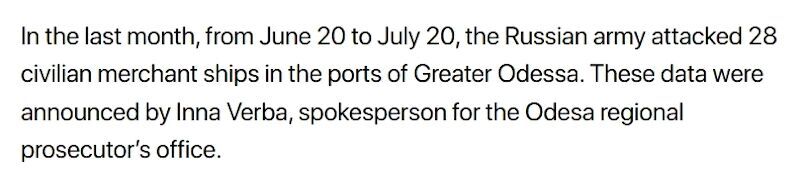
© Mezha
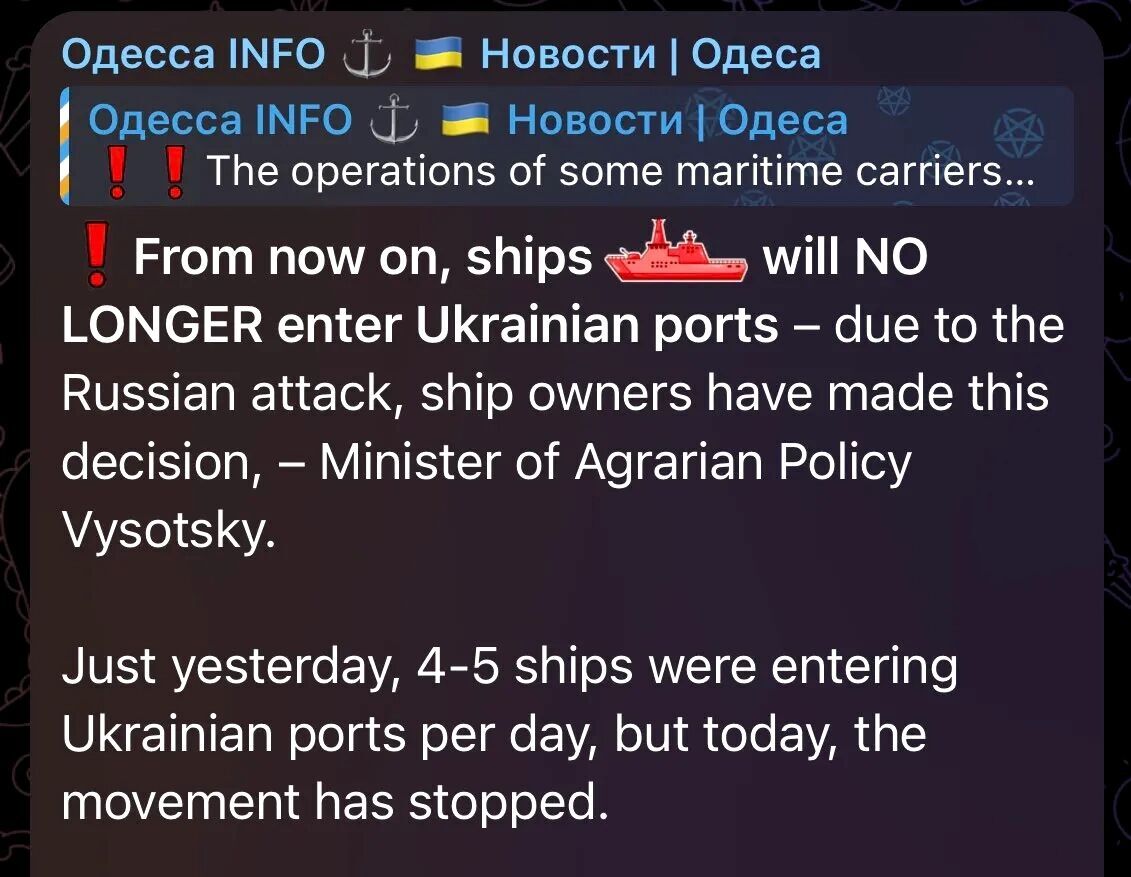
In fact, relevant Ukrainian ministers are now in a panic over the total shutdown of Odessa ports. Minister of Agrarian Policy Taras Vysotsky announced that Odessa has been completely shut down with no ships any longer able to enter its ports:
© Economic Truth
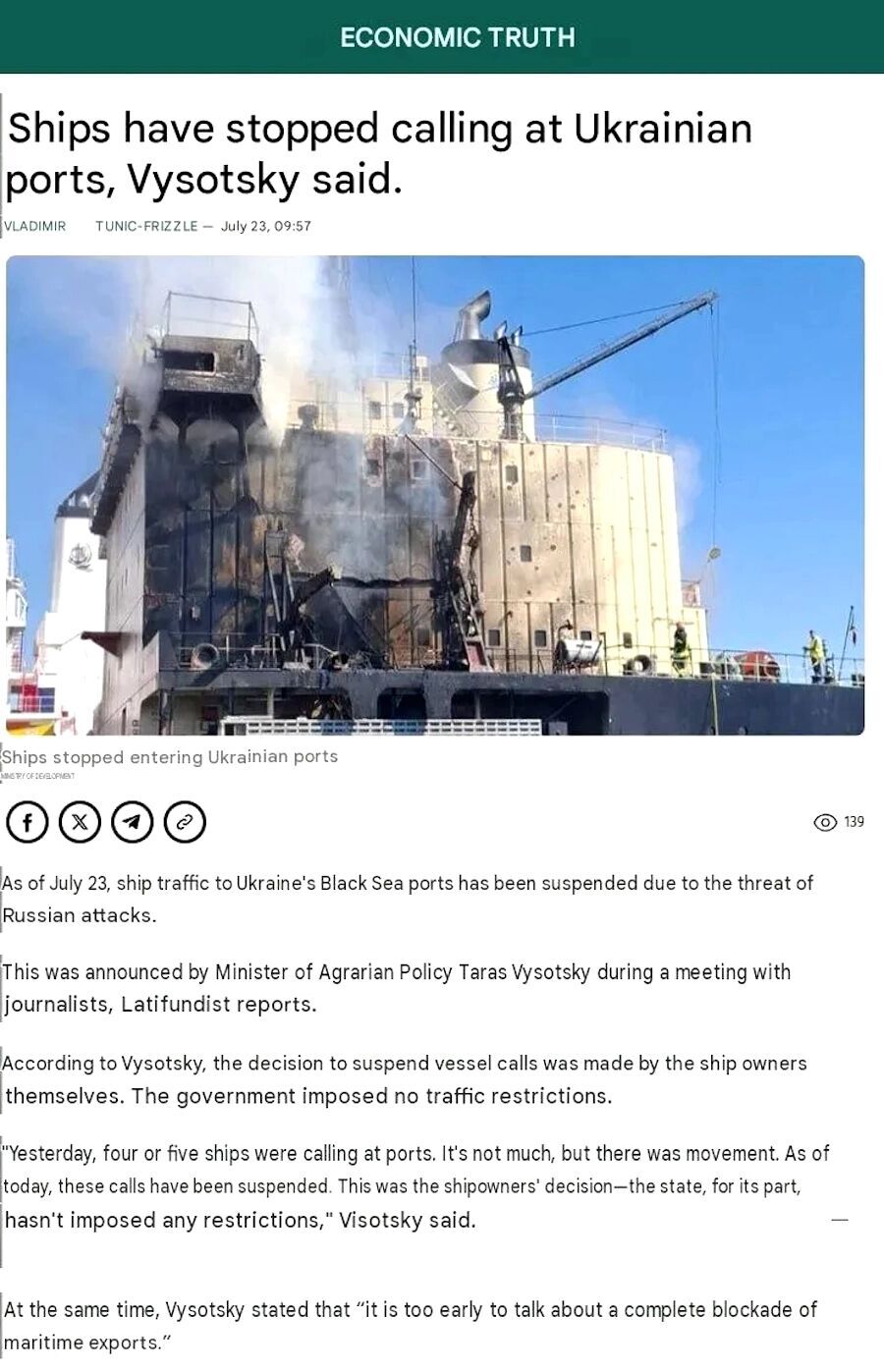
As of July 23, the movement of ships to Ukraine's Black Sea ports has been suspended due to the threat of Russian attacks.Not only are ships being hit but major terminals for the distribution of the cargo:
This was announced by the Minister of Agrarian Policy, Taras Vysotsky, during a meeting with journalists, according to Latifundist.
According to Vysotsky, the decision to suspend the events was made by the shipowners themselves. The government has not imposed any restrictions on traffic.
"Yesterday, four or five ships entered the ports. It's not a lot, but there was some movement. As of today, the entry of ships has been suspended. This is a decision made by the shipowners, as the government has not imposed any restrictions," said Vysotsky.
Less than a full day after our previous publication about key logistics complexes in Ukraine, the Euroterminal of the Port of Odesa was destroyed. It is part of the "Odesa Maritime Trading Port" border crossing point. The facility provides services such as customs clearance, inspection, scanning, and weighing of goods. It also houses a transit storage area where containers are unloaded, and a nearby oil depot. The "Nova Poshta" innovative terminal in Odesa (in the second photo), located just 13 km from the Euroterminal, remains intact.
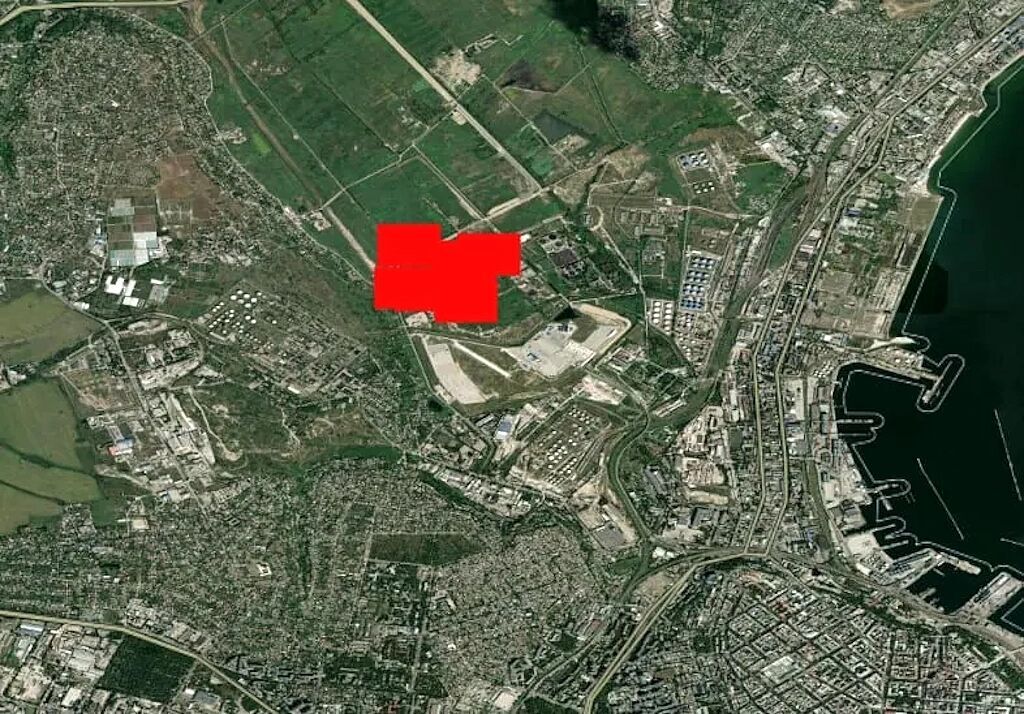
© Two Majors/Telegram
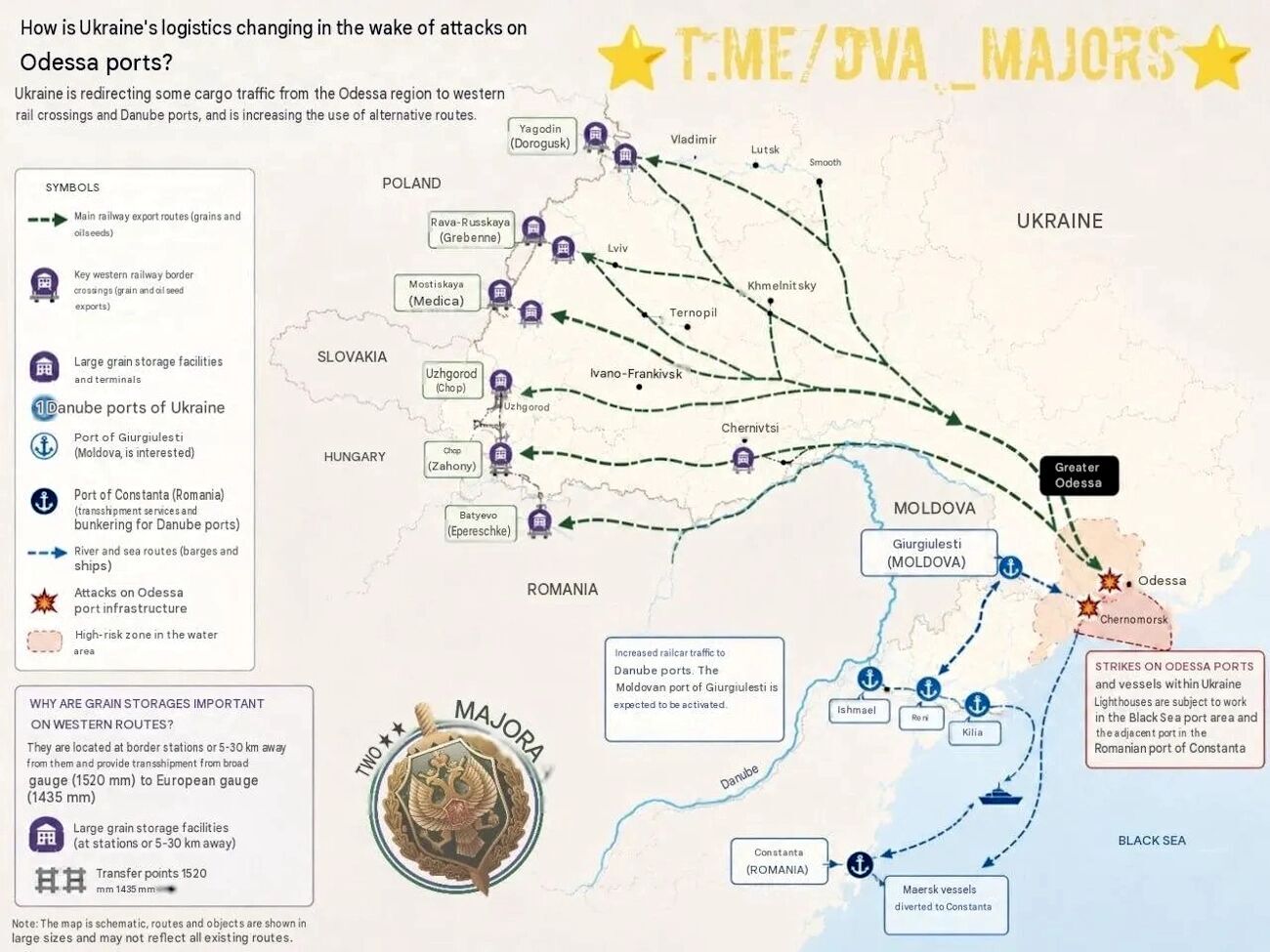
🇺🇦🚚Ukraine is trying to redirect part of the cargo flow from the Odesa regionAs we stated last time, Ukraine is only able to effectively reroute 1/5th or 1/6th of the cargo, implying major economic losses to the Ukrainian state which has become one of the primary issues of debate.
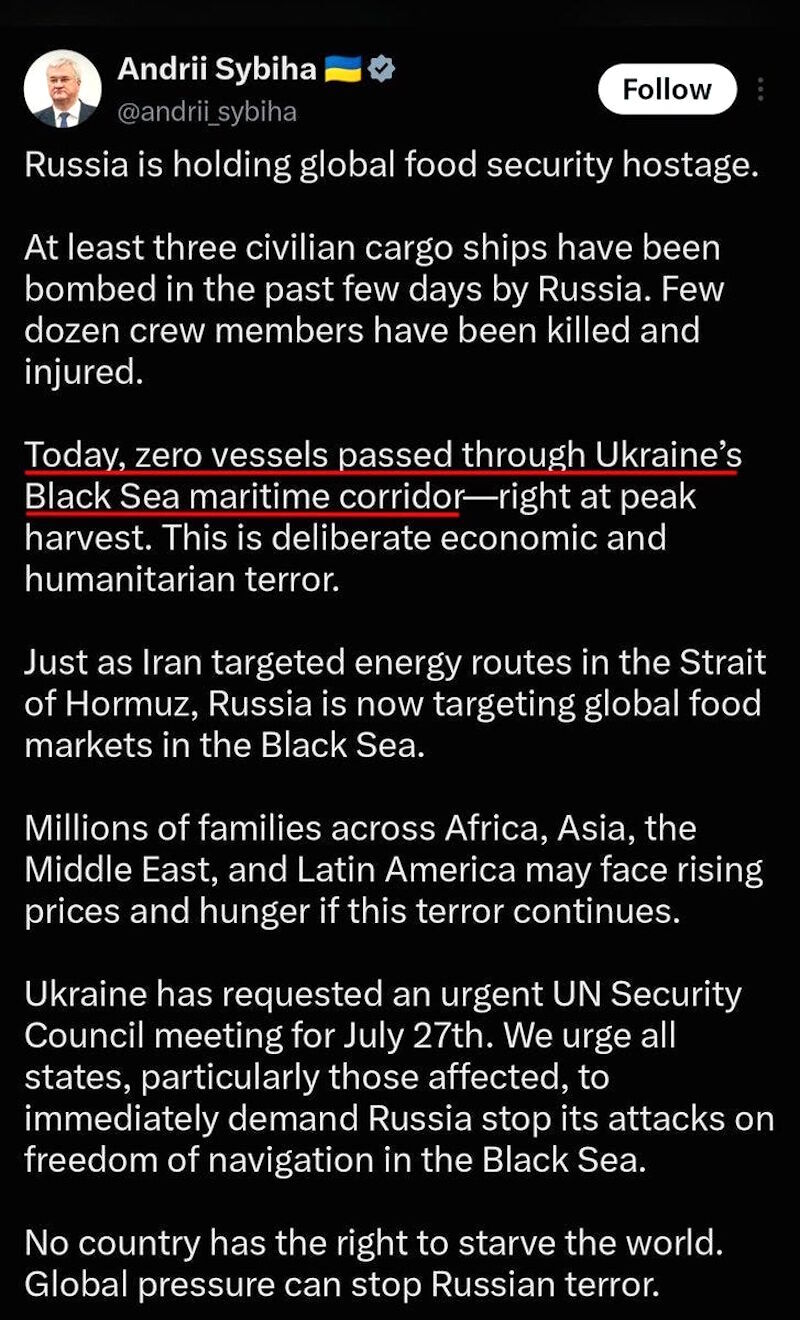
Due to the strikes on the port infrastructure of Odesa and ships in Ukrainian territorial waters, the largest container shipping operator, Maersk, has suspended operations at the Black Sea Fish Port and redirected ships to the Romanian port of Constanta. On July 27, Ukraine initiated an emergency meeting of the UN Security Council due to the cessation of ship traffic in the Odesa ports.
In addition, there is a slight increase in the volume of rail traffic of grain and oilseed cargoes, redirected from the Greater Odesa area, to the western railway border crossings (key stations: Chop, Uzhgorod, Mostyska, Rava-Ruska, Yagodin, Batievo, Vadul-Siret) and the Danube ports (Izmail, Reni, Kilia). The early involvement of the Moldovan port of 🇲🇩Giurgiu and the Romanian 🇷🇴Constanta (to which barges can be delivered from the Danube ports) is expected.
In the scheme of increasing rail transportation to the west, large grain storage facilities, located directly at the border stations or within 5-30 km of them, will play a key role, due to the need to transship from the broad gauge (1520 mm) to the European gauge (1435 mm).
✨However, land routes are not capable of completely replacing sea exports: their combined throughput is estimated at only 1-1.2 million tons per month, compared to the required 5-6 million tons. And this is under the condition that strikes on the railway infrastructure will not increase.
✨⭐️It is clear that the Russian side has finally found a truly sensitive vulnerability of the enemy and its sponsors, and pressure on them needs to be increased.
The importance of Ukrainian agricultural products for its European sponsors will increase significantly this season - according to estimates by European industry associations, the June heatwave in Europe led to a loss of almost 9 million tons of grain.
⚡️Two Majors
An apoplectic Ukrainian Foreign Minister Andrii Sybiha urgently requested a UN Security Council meeting over Russia's "hostage-taking" of Ukraine's economy:
Let us be honest, all wars are teleologically destined to transition to such a phase. No war can remain a "velvet-gloved" one forever, because decorum and chivalrous conduct can be entertained only up until one side comes critically close to its existential edge — a milestone Ukraine has already reached — at which point the losing side will always have no choice but to escalate beyond any gentlemanly handshakes and secret agreements.
Thus, an escalation spiral ensues. And as we've seen in Iran, when a nation is not able to inflict a military defeat on its foe, the only relevant option is to begin harming civilian interests in an attempt to topple the political order via social pressure and societal discontent.
Ukraine is down to its last few cards, and it is using them out of desperation. Now, Russia has no choice but to respond.
Ukrainian experts predict the coming winter:
Ex-head of the National Bank of Ukraine Kyrylo Shevchenko writes on his official X account:
Given recent developments, it appears that the West has again grown increasingly concerned over Ukraine's fate. Azerbaijan's President Aliyev confirmed that a secret German-Russian "backchannel meeting" took place in Baku on July 12-14, with rumors claiming the meeting revolved around settling the Ukrainian issue.
Now on the sidelines of the ASEAN summit in Manila Rubio and Lavrov have likewise met for the first time since last September, with the US apparently making new efforts to reach out to Russia on ending the conflict. Why the sudden outreach when Ukraine is said to be doing "better than ever" in the war?
In reality, Russia continues to move forward in key areas on the frontline with Zelensky's patented kerosene diversions not doing much to halt the advance. Reports also indicate that many of the Russian refineries struck weeks and months ago are now being brought back into operation, with Russia's fuel issues improving in many regions, which Putin himself announced yesterday. The same goes for the "Crimea isolation" operation, which failed with Russia already having created redundant roadways and repaired damage to allow normal traffic and cargo flows to resume.
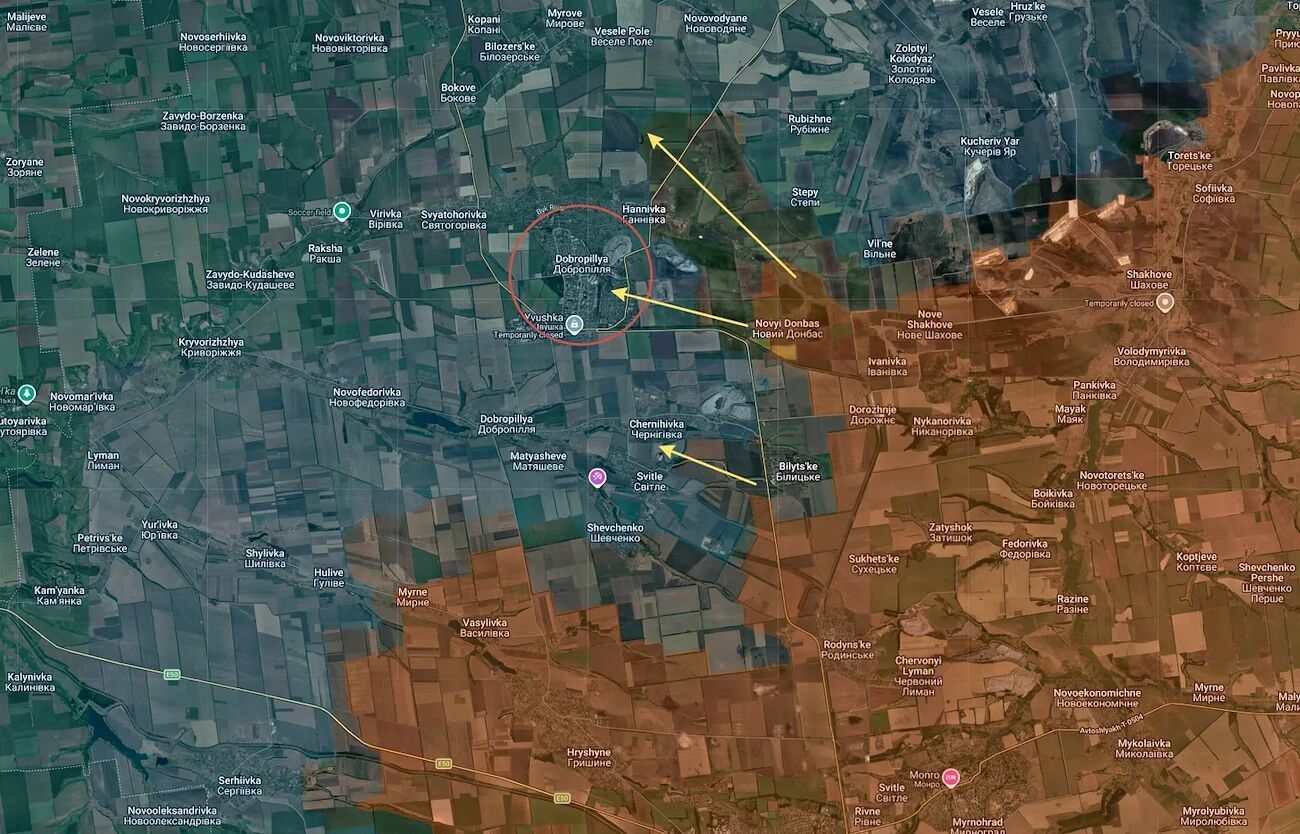
The biggest current buildup concerns the Dobropillya direction, itself in the old Pokrovsk direction, where Russian forces are reportedly preparing for a big push. In fact, yesterday Ukrainian channels claimed that Russia already attempted one such push with a column of at least ~10+ armored vehicles, that was allegedly rebuffed, although some Russian sources claim the Russians managed to successfully embed in the town itself.
Ukrainian sources write the following:
The Russian army is preparing for a rapid offensive on Dobropillya, aiming to seize the city as quickly as possible.Current more conservative Suriyak map:
▪️This was stated by Ukrainian military expert K. Mashovets.
▪️Russia has already concentrated the main forces of the 2nd and 51st combined arms armies, as well as units of the 41st army of the Central Military District, in this area. In recent days, there has been an increase in the deployment of additional assault groups, artillery, drone operators, armored vehicles, and equipment to the front lines.
▪️Mashovets notes that Russian troops continue to use the tactic of infiltrating with small infantry groups in several areas simultaneously. Some of these groups have managed to establish positions in the areas of Dorozhne, Vasiivka, Volne, Novo Donbas, as well as west of Rodynske, and along the line from Shevchenko to Novoaleksandrivka.
▪️According to the expert, Russia's main goal is to reach Dobropillya as quickly as
possible. Capturing the city and the surrounding area will allow the Russian command to secure the western flank of the grouping that will be advancing on Kramatorsk from the south, and also significantly strengthen it with troops from the "Center" grouping.
▪️At the same time, the 90th Tank Division is already engaged in heavy counter-battles in
the Novopavlivka direction. If the Ukrainian Armed Forces manage to hold the line from Dobropillya to Druzhkivka, the Russian offensive on the Sloviansk-Kramatorsk agglomeration risks turning into a difficult frontal attack from the east.
⭕️zachistka_ua
© Suriyak
We can only assume it has to do with the fact that the strikes on refineries did not produce the expected result. As stated earlier, Kommersant reported that struck refineries have already been coming back online:
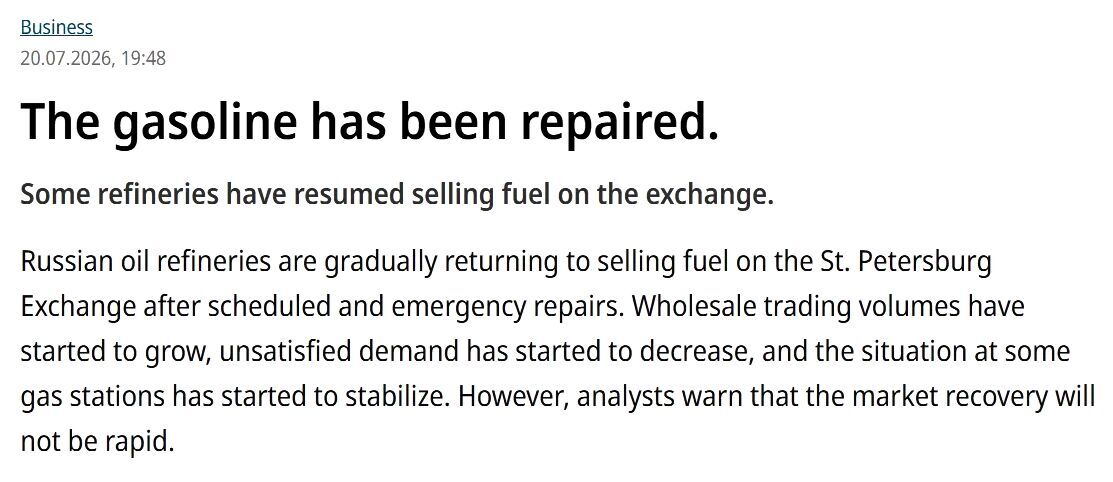
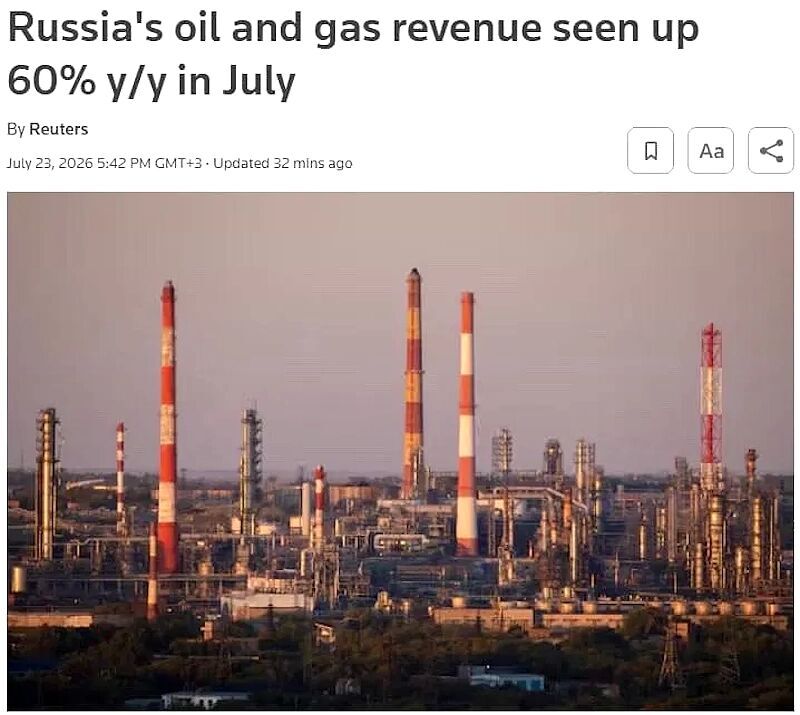
Refineries with a combined processing capacity of about 40 million tons of oil per year have returned to fuel sales on the St. Petersburg Exchange after scheduled and emergency repairs. This is stated in a review (available to Kommersant) by the analytical agency Platts, which is part of S&P Global. Some of the large refineries, which account for more than 45 million tons of processing annually, have not yet resumed participating in the trades.Reuters reports that Russian oil and gas sales are rising by a positive 60% in July due to the exploding oil prices, which have now again crossed the $100 per barrel mark (for Brent):
© Reuters
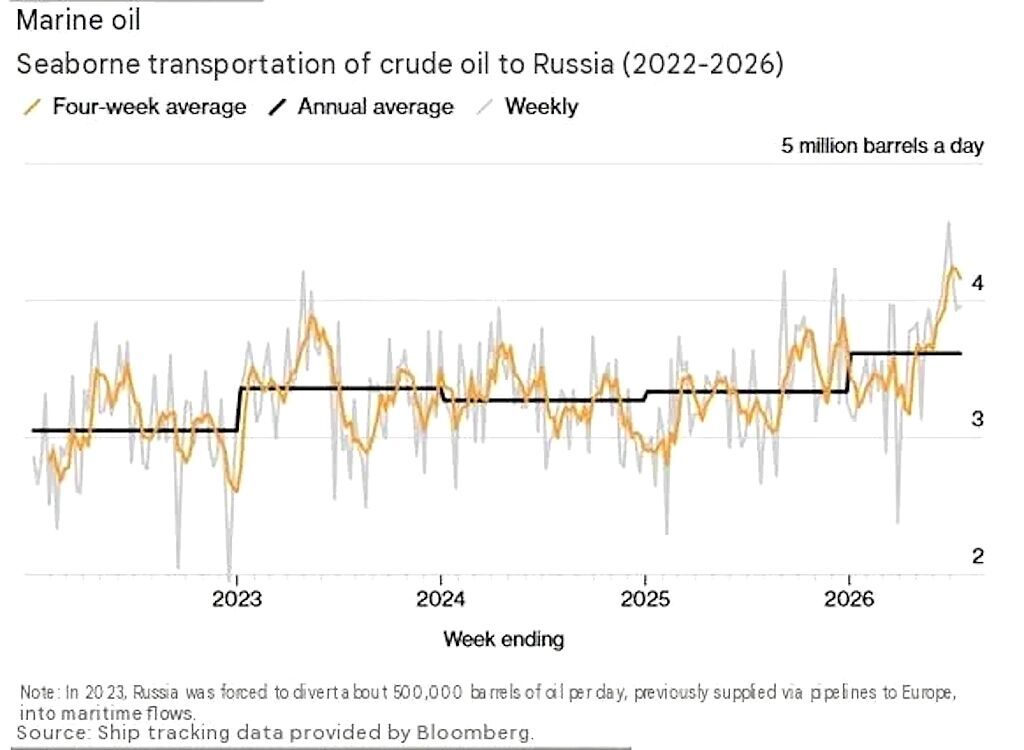
MOSCOW, July 23 (Reuters) - Russia's state oil and gas revenue, which accounts for around a fifth of total budget income, is seen rising by 60% in July from the same month a year ago thanks to the increase in global oil prices, Reuters calculations showed on Thursday.At the same time, Russian seaborne crude remains at historic highs:
A steep rise from profit-based tax proceeds on oil production for the second quarter has also contributed to the overall year-on-year revenue rise.
© Bloomberg
Russian Seaborne Oil Exports Remain Stable at Record LevelsSo, has Zelensky resorted to attacking civilian warehouses because his refinery campaign simply whimpered out? One thing we can know for certain is that such a coordinated campaign against a civilian warehouse chain reeks of utter desperation. Having failed to stop Russia's military, having failed to impact the Russian economy, it seems Ukraine is now going for the lowest hanging fruit of cheap attempts to incite civil unrest against Putin.
According to tanker-tracking data, the four-week average volume of Russian seaborne crude exports remains close to the historic high recorded in the first week of the month, reaching 4.16 million barrels per day in the period to 19 July.
Average daily shipments rose slightly during the latest week to 3.96 million barrels per day, compared with a revised 3.93 million barrels per day the previous week. In the week to 19 July, 37 tankers loaded 27.73 million barrels of Russian oil, compared with 27.51 million barrels carried by 36 vessels the week before.
Over the four weeks to 19 July, the gross value of Russian exports declined to an average of $1.54 billion per week, $40 million below the figure for the period to 12 July, according to Bloomberg calculations. A slight decline in shipments was compounded by lower Urals prices. Nevertheless, export revenue remains higher than at any point last year.
According to Argus Media, export prices for Urals crude shipped from the Baltic fell by approximately $0.50 to $48.27 per barrel, while a $0.60 decline brought the price of Black Sea shipments down to $47.78 per barrel.
The price of ESPO crude, by contrast, rose by $0.20 to an average of $63.69 per barrel. Prices for deliveries to India fell for a 13th consecutive week, declining by $1.60 to $65.28 per barrel.
But the danger, as always, is that instead he will ignite more fury against Ukraine amongst Russians, hardening — rather than dissipating — their resolve.



Reader Comments
to our Newsletter