
Chile's Portillo ski area, currently closed for safety reasons due to the storm, has reported 309cm - over 10 feet - of snow over the past 72 hours, peaking at over 1.5m (five feet) on Friday-Saturday.
Valle Nevado, from where the webcam image top was captured today, reports 1.7m (nearly six feet) of snowfall from the storm. It also published this before and after picture.
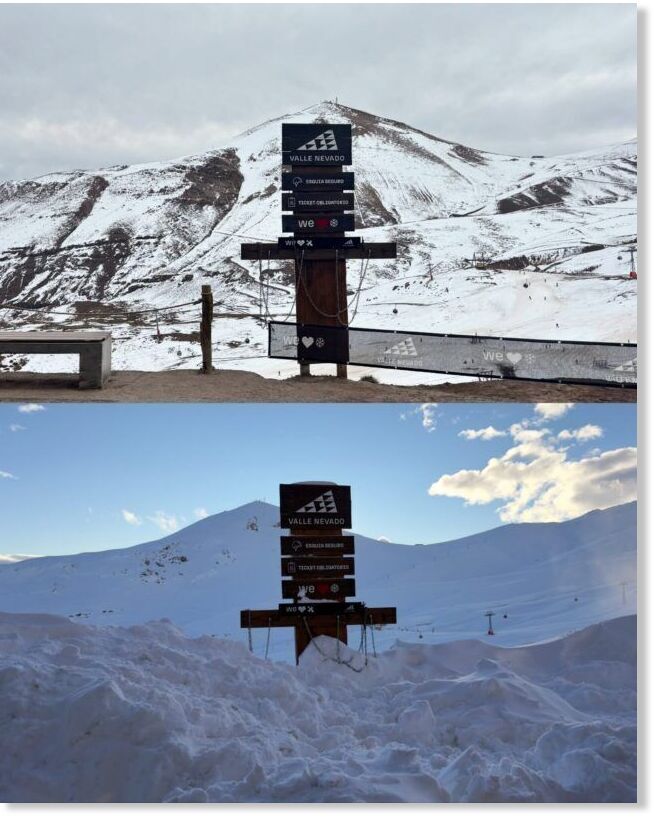
It's a remarkable change of fortune for South American ski areas which had struggled to open much terrain at all during the first month of the 2026 season. Most had had less than 50cm of snowfall over the past few months ...until this weekend.
Most areas in the region are now due to see a brief lull in the snowfall before the next front is expected to move in on Tuesday.
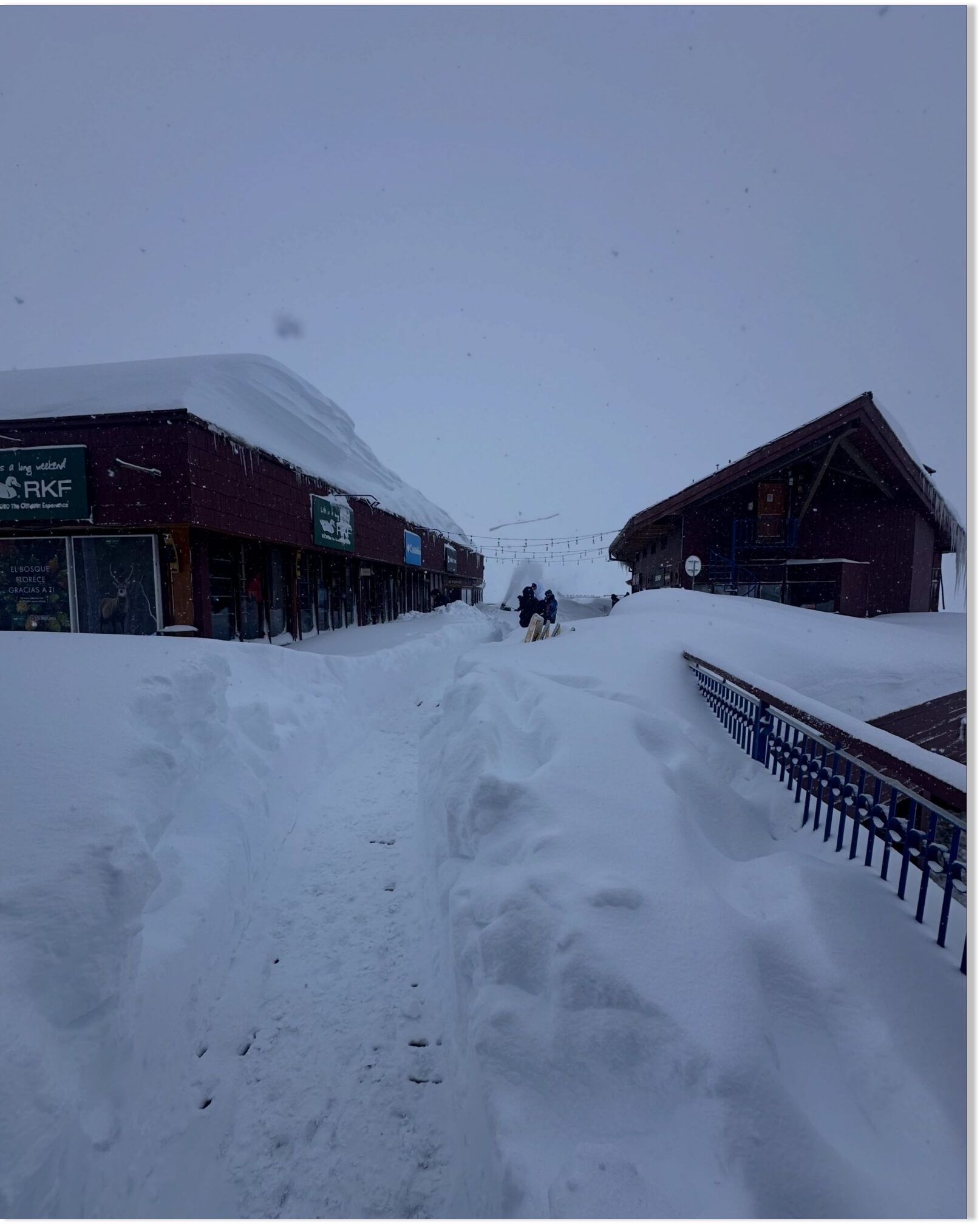
Portillo's live snow report shows 408cm of snow in the past 7 days, with 470cm recorded so far this season and a 244cm base at the hotel.
Are the roads to Portillo open?
Portillo's latest report lists routes from both Santiago and Mendoza as closed, with access dependent on official road and border authorities.
Is Portillo open for skiing after the storm?
At the time checked, Portillo was reporting 0% of lifts operating, with all listed lifts closed while storm recovery and safety work continued.
How much snow has Valle Nevado had in 2026?
Valle Nevado's live mountain report shows 111.8in total snow for the 2026 season, with 12 open trails and seven open lifts at the time checked.
Why is the Andes snowstorm important for skiers?
It marks a major shift after a slow start to the South American ski season, adding substantial snow cover but also bringing short-term disruption, road closures and the need for avalanche and slope-safety work.



Reader Comments
to our Newsletter