Science & TechnologyS

Comet 2

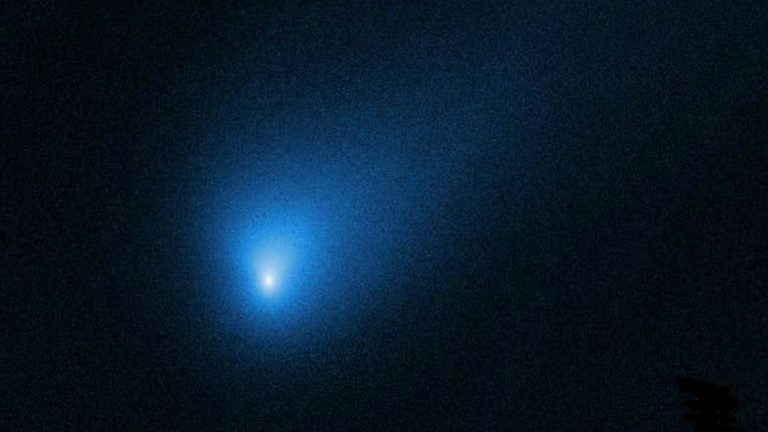
Water from beyond our solar system found on interstellar comet 2l/Borisov

Borisov
© (UCLA)Comet Borisov, the interstellar visitor. NASA, ESA, and D. Jewitt
Water from a completely alien star system has been detected on the interstellar comet 2I/Borisov, which is currently passing through our space neighborhood.

In an extraordinary breakthrough, astronomers studying Borisov believe they have detected the tell-tale signs of water on the visiting comet. Water from another planetary system has never before been spotted inside our solar system.

Borisov was spotted by an amateur astronomer on 30 August, and the professionals have been scrambling to analyse before it flies away. Researchers had already detected gas being spewed from the comet's surface, but finding water would signal a hugely significant discovery.


Comment: See also: And check out SOTT radio's:


Sun

'Artificial leaf' successfully produces clean gas

artificial leaf
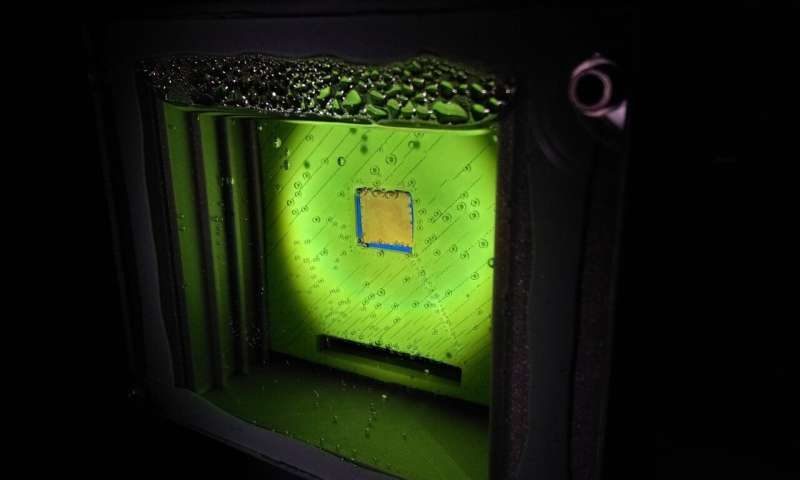
© Virgil AndreiThis 'artificial leaf' uses water, sunlight and carbon dioxide to produce a widely-used gas, inspired by the natural process by which plants use the energy from sunlight to turn carbon dioxide into food.
A widely-used gas that is currently produced from fossil fuels can instead be made by an 'artificial leaf' that uses only sunlight, carbon dioxide and water, and which could eventually be used to develop a sustainable liquid fuel alternative to petrol.

The carbon-neutral device sets a new benchmark in the field of solar fuels, after researchers at the University of Cambridge demonstrated that it can directly produce the gas โ€” called syngas โ€” in a sustainable and simple way.

Rather than running on fossil fuels, the artificial leaf is powered by sunlight, although it still works efficiently on cloudy and overcast days. And unlike the current industrial processes for producing syngas, the leaf does not release any additional carbon dioxide into the atmosphere. The results are reported in the journal Nature Materials.

Comment: At least one benefit of the 'green movement' is that there is a push to understand energy through a myriad of lenses. Such approaches are leading to some interesting findings such as the above. That said, oil and gas will remain dominant for quite some time ... and Epstein didn't kill himself.


Info

We may be getting close to building chromosomes

Chromosomes
© Genetic Literacy Project
Understand biology and engineer biology. These are the goals of synthetic biology in brief. Due to the developments in sequencing and DNA synthesis, scientists can construct genetic constructs and edit genomes. These tools answer basic research questions and provide biological applications. But synthetic biology can never reach its full potential until artificial genome writing becomes commonplace.

Chromosomes are the "hard drives" of cells. They contain most of the cell's DNA and genes. Bacteria and archaea typically have a single circular chromosome, while eukaryotes contain several linear ones. Besides genetic information, a chromosome contains structural elements. Centromers (that participate in mitosis), telomers (that have a role in maintaining linear chromosome integrity), and origins of replication (that are where DNA replication starts in circular DNA pieces) are some well-known examples.

Artificial chromosomes are chromosomes that have been fully constructed in the lab and assembled within a cell. An important note: artificial chromosomes do not mean artificial life. They function normally within cells and the DNA used is the same as the one found in nature. What is different is their origin - they don't come from a DNA template duplication - and the genetic information they carry.

Pumpkin

NASA telescope catches spooky face staring at us from the void

Hubble Halloween galaxy face
© NASA, ESA, J. Dalcanton, B.F. Williams, and M. Durbin (University of Washington)
The team behind NASA's Hubble Space Telescope has released a cosmically terrifying image of what appears to be a celestial spook looking right at us from deep in the universe.

Thankfully, it is not Cthulhu's cousin or anything quite so sinister but is instead two galaxies merging in a system called called Arp-Madore 2026-424, 704 million light-years away.

The 'head' is a result of the gravitational shock wave that pushes material outwards from the two merging galaxies while the bright 'eyes' are the centers of the galaxies themselves.

"The crash has pulled and stretched the galaxies' discs of gas, dust, and stars outward, forming the ring of intense star formation that shapes the 'nose' and 'face' features of the system," a NASA spokesperson explained on Hubble's official website.

Pareidolia is the tendency for humans to see faces in inanimate objects and in our environment and is often at the heart of reports about the wider universe and sightings of 'faces' and possible 'aliens.'


HAL9000

Putting a chip in your brain will not make you a superhero or a God

Putting a Chip in Your Brain Will Not Make You a Superhero or a God.
Aaron and Melissa Dykes have made the single most important video that we have ever watched. It is called Putting a Chip in Your Brain Will Not Make You a Superhero or a God.

It follows their astonishing documentary about the history of mind control, The Minds of Men.

Elon Musk, the super-wealthy founder of Tesla, has now officially with great fanfare rolled out his ongoing and rapidly progressing technology for the physical control of the brain and mind by irreversibly hooking up our living brains with thread-like wires to the hard metal of supercomputers. But what will happen to the humans enmeshed in this catastrophe and who will be controlling them?

In the video by Aaron and Melissa, we see and hear Musk and his team at their official roll out describing how they are building a foundation for mass application by first getting approval from the FDA for more limited "medical" uses.


Microscope 1

Electroactive bacteria: A "mind-blowing" case of Intelligent Design

Nanowires
© Asw-hamburg [CC BY-SA 4.0], via Wikimedia CommonsNanowires
Editor's note: We are delighted to welcome Otangelo Grasso, a graduate of the Summer Seminar on Intelligent Design, as a contributor.

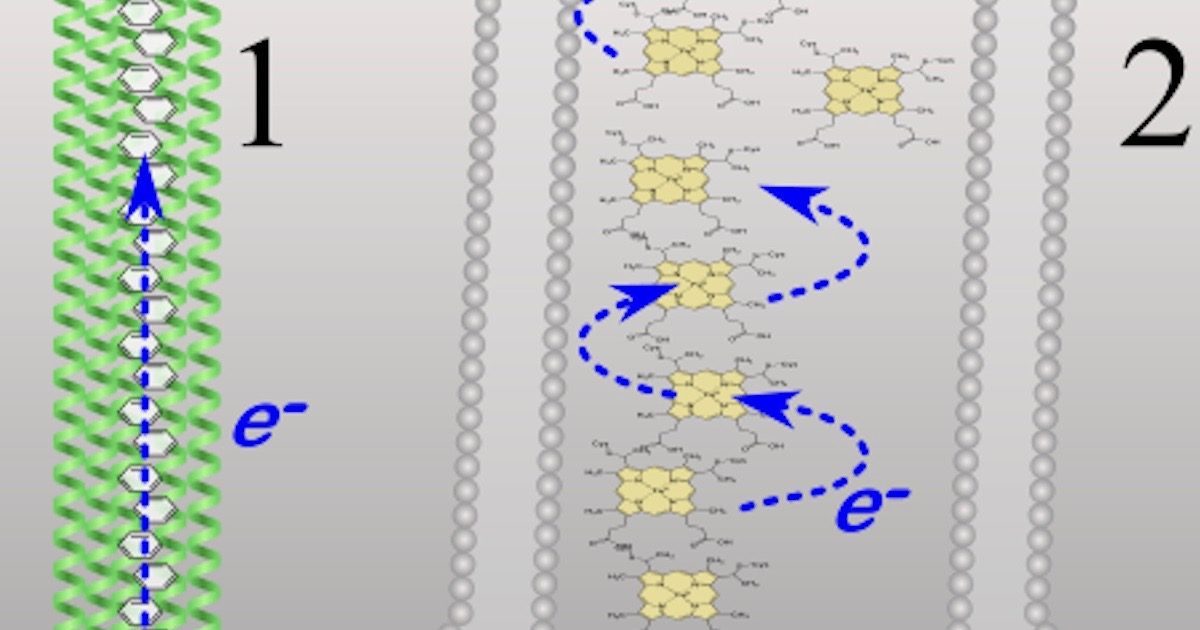
As journalist Carl Zimmer reported not long ago in the New York Times, "Wired Bacteria Form Nature's Power Grid: 'We Have an Electric Planet.'" Electroactive bacteria were running current through "wires" long before humans discovered electricity. Now that is worthy of note and analysis. How did they learn this very sophisticated trick?

In a tweet, Zimmer did not hide his amazement, admitting that that the "discovery that microbes build electric wires all over the world is mind-blowing." Though an outspoken advocate of unguided Darwinian evolution, Zimmer in his article did not explain how bacteria might have gotten that ability by evolutionary means.

Comment: Another nail in the Darwinist coffin. See also:


Moon

Asteroid Hygiea may be the smallest dwarf planet in the solar system

asteroid Hygiea
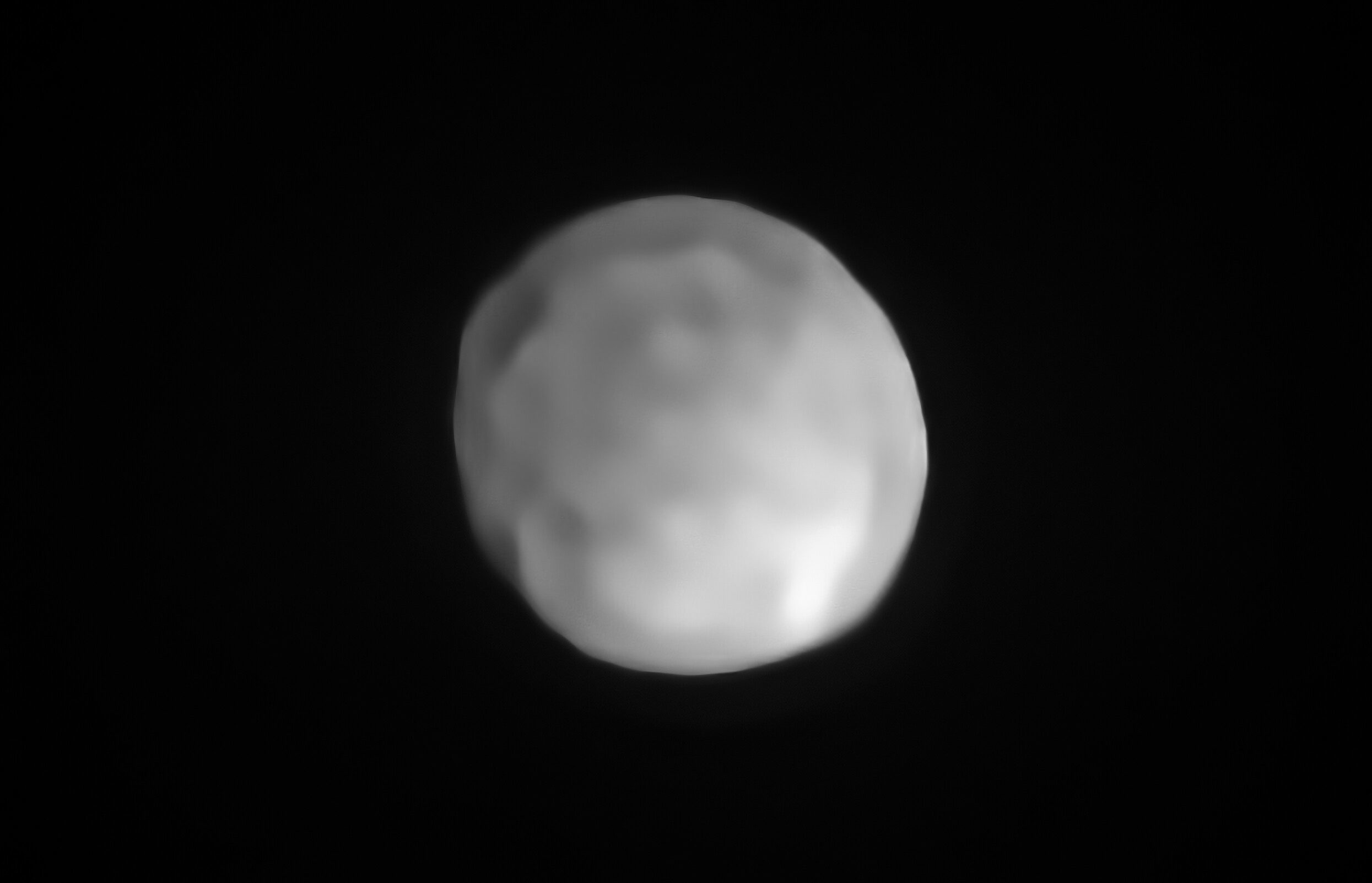
© ESO/P. Vernazza et al./MISTRAL algorithm (ONERA/CNRS)Hygiea, a contender for the smallest planet in the solar system, is featured in this new image from the European Southern Observatory's Very Large Telescope in Chile.
The asteroid Hygiea may qualify as a dwarf planet โ€” and it could steal the title of the smallest dwarf planet in the solar system!

Astronomers have captured high-resolution imagery of Hygiea, the fourth largest rock in the Asteroid Belt. And low and behold, Hygiea is spherical in shape. That's a pretty important dwarf-planet marker, and the only one Hygiea was missing until now.

Asteroids boast a variety of shapes, but the rounded shape of dwarf planets shows that they had enough mass for its own gravity to pull it into this round shape. Hygiea already met the other requirements for dwarf-planet classification since it orbits the sun, is not a moon orbiting another planet and has not cleared other objects out of its own orbit.


Propaganda

Experts question study claiming to pinpoint birthplace of all humans

out of africa
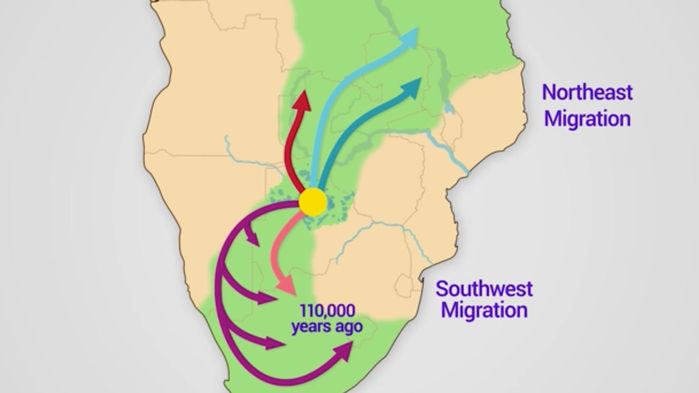
© Garvan Institute of Medical ResearchThe location of a proposed homeland for the maternal ancestors of living humans in what is now the Kalahari Desert of Botswana, and their routes out as climate changed

A new genetic study suggests all modern humans trace our ancestry to a single spot in southern Africa 200,000 years ago. But experts say the study, which analyzes the DNA of living people, is not nearly comprehensive enough to pinpoint where our species arose.


"I'm persuaded that southern Africa was an important area for human evolution," says population geneticist Aylwyn Scally of the University of Cambridge in the United Kingdom who was not involved with the work. But, he says, studies of living people's DNA can't reveal the precise location of our ancestors. "It would be astonishing if all our genetic ancestry at this time arose in one small homeland."

Modern humans arose in Africa at least 250,000 to 300,000 years ago, fossils and DNA reveal. But scientists have been unable to pinpoint a more specific homeland because the earliest Homo sapiens fossils are found across Africa, and ancient DNA from African fossils is scarce and not old enough.


Comment: Which shows that this particular group were already well dispersed throughout Africa.


Comment: In recent years the Out of Africa hypothesis has been well and truly debunked, and this study proves just how weak some of the arguments are: For more check out SOTT radio's:


Airplane

USAF 'space plane' back on Earth after a record-breaking 780-day mission

USAF X-37B
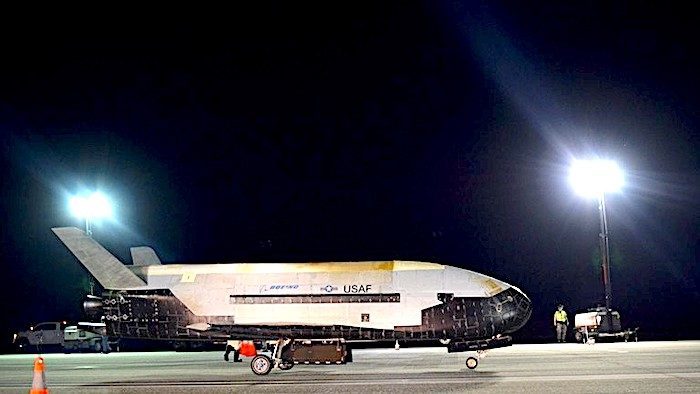
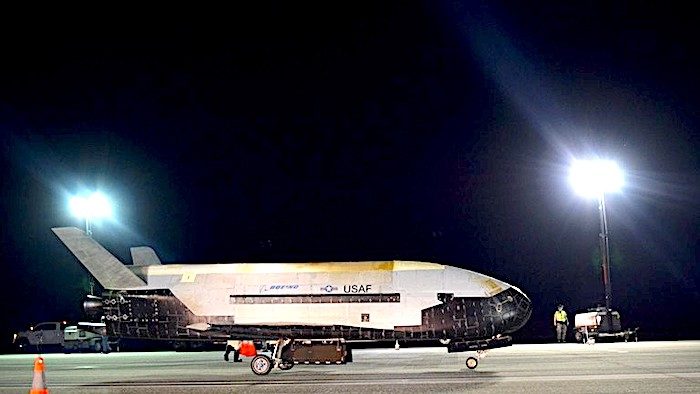
© USAF/Jeremy WebsterAir Force X-37B Orbital Test Vehicle Mission 5, NASA Kennedy Space Center, Oct. 27, 2019
US Force X-37B space plane has touched down at NASA's Kennedy Space Center almost two years after Falcon 9 rocket launched it, smashing its own record for the longest time in space as its mission remains veiled in secrecy.

The unpiloted plane, that looks akin a miniature space shuttle, came back to Earth on Sunday, wrapping up its 780-day-long stint in orbit. Originally built to spend up to 240 days in space, the top secret aircraft has so far conducted five missions, each spanning longer than the previous one.

This time was not an exception, as the X-37B surpassed the previous record, set on May 7, 2017, by 62 days.

The mysterious plane, with its exact objectives of its missions being subject to speculation, landed at Shuttle Landing Facility of NASA's Kennedy Space Center in Cape Canaveral, Florida, at 0751 GMT, the Air Force said in a statement.

"The sky is no longer the limit for the Air Force and, if Congress approves, the U.S. Space Force," Air Force Chief of Staff Gen. David L. Goldfein said, celebrating another milestone in the clandestine project's development.

Satellite

Best images of Pluto's far side released by New Horizons team

pluto
Pluto
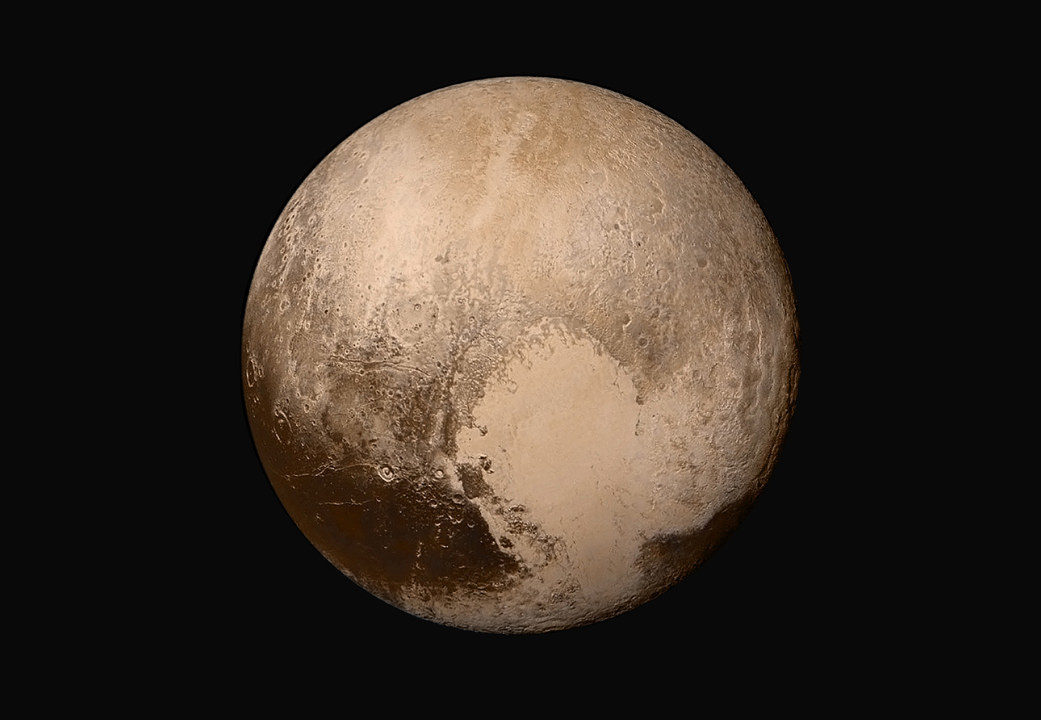
Pluto was discovered in 1930 by astronomer Clyde Tombaugh. For decades, not much detail was known about the erstwhile planet. We assumed it was a frozen, dormant world.

Once the Hubble was operational, we started to become more acquainted with Pluto. We discovered that Pluto has moons, although their planet-moon arrangement is unusual. Then in 2006, the International Astronomical Union (IAU) redefined what planet means, and Pluto was relegated to dwarf planet status. (Ice dwarf planet, to be exact.)

After years of trying to understand Pluto with the Hubble, NASA's New Horizons mission was launched. The New Horizons spacecraft arrived at Pluto in the summer of 2015, making its closest approach on July 14th, 2015. New Horizons was a game-changer when it comes to our understanding of Pluto and its moons.

Comment: See also: