Science & TechnologyS


Nebula

Is a fundamental force of nature out of whack? Physicists search universe for evidence

Gravity
© ShutterstockGravity arises from the distortion of space-time itself.
Just four numbers underpin the laws of physics. That's why scientists have for decades looked for any discrepancies in these so-called fundamental constants. Finding such a variation would rock the very foundations of modern science.

Not to mention, it would guarantee at least one lucky researcher a free trip to Stockholm, a shiny new gold medal and a million bucks.

Recently, a pair of astronomers turned to one of the oldest stars in the universe to test the constancy of one of the superstars of the four fundamental forces of nature — gravity. They looked back in time over the past few billion years for any inconsistencies.

Not to give away the full story, but no Nobel Prizes will be awarded just yet.

The G-man

We take Newton's gravitational constant (denoted simply by "G") for granted, probably because gravity is pretty predictable. We call it Newton's gravitational constant because Newton was the first person to really need it to help describe his famous laws of motion. Using his newly invented calculus, he was able to extend his laws of motion to explain the behavior of everything from apples falling from a tree to the orbits of the planets around the sun. But nothing in his math told him just how strong gravity ought to be — that had to be experimentally measured and slipped in to make the laws work.

Gold Seal

It's another great Nobel Prize year for intelligent design

Nobel Prize
© Adam Baker, via FlickrNobel Prize
And a bad year for a 19th-century creation myth.

After more than a century of shut-outs at the Nobel Prizes, it's understandable that Darwinists are a bit dejected. It's embarrassing that the "greatest idea anyone ever had" and the "theory that explains all of biology" can't in a century garner even one of science's most distinguished awards. Instead, it must make do with wordplay, as we saw with last year's Prize in Chemistry for "directed evolution." (See Ann Gauger's post, "It's Not 'Evolution' — A Nobel Prize for Engineering Enzymes.")

It's understandable why Darwinian scientists spend so much time in court silencing scientists and teachers who question their theory. In the arena of world-class science, Darwinism is a joke, and it wouldn't last a day unless challenges to it were silenced by force.

Sun

Preparing for the inevitable solar storm

Lagrange Points
© NASA/ WMAP Science Team​Diagram of the Lagrange points associated with the Sun-Earth system.
Let's consider the following scenario - the Earth is at risk for a disruptive event. This event has, conservatively, about a 0.2% chance of happening on any given year. But that is the most conservative estimate, at the high end it could be more like 12% over the next decade. Either way the chance of this type of event happening in the 21st century is quite high, and no matter what it is inevitable.

The result will likely be taking out power grids, possibly world wide in a worst-case scenario. Reasonable recovery will take about a year, with full recovery taking about a decade. Just imagine what would happen if we lost our power grid for a year. No digital banking, no internet, no household power. The most conservative estimate of how much such an event would cost is $2 trillion dollars, but experts are increasingly leaning toward $20 trillion as being a closer estimate (and this figure will only go up in the future).

So here's my question - what do you think we should spend now to avoid a high probability of civilization collapse over the next century costing tens of trillions of dollars and growing? I am not talking about global warming, or environmental degradation, the death of the bees, an asteroid strike, or massive crop failure. I am talking about a coronal mass ejection (CME) - a solar storm.

A CME is actually the greatest threat to civilization that we face, in terms of probability and effect. In fact I think we are underestimating the chaos that a worst-case scenario would cause. Imagine going without power for a year. I know, there are people around the world who live without power, and the residents of Peurto Rico recently experienced something similar. But if this happened on a global scale, there's no one coming with aid. Global infrastructures on which we all depend would collapse. How many people would starve or freeze? How much wood would be burned to keep warm or cook until the power comes back on? There are so many downstream effects that we cannot anticipate.

Info

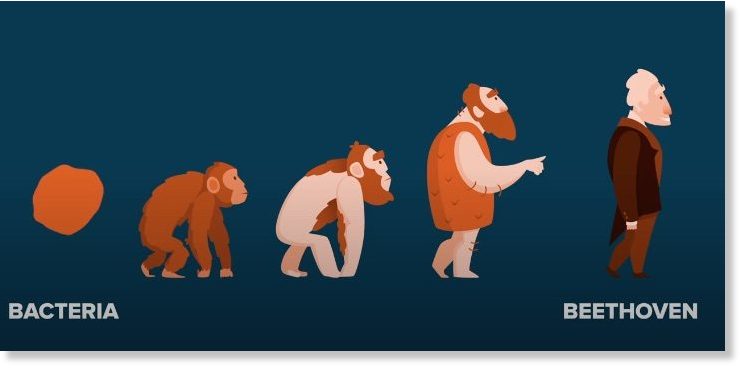
Bacteria collaborate to survive contradicting Darwinism

New microbial research at the University of Copenhagen suggests that 'survival of the friendliest' outweighs 'survival of the fittest' for groups of bacteria. Bacteria make space for one another and sacrifice properties if it benefits the bacterial community as a whole. The discovery is a major step towards understanding complex bacteria interactions and the development of new treatment models for a wide range of human diseases and new green technologies.
Bacteria Collaboration
© University of Copenhagen
New microbial research at the Department of Biology reveals that bacteria would rather unite against external threats, such as antibiotics, rather than fight against each other. The report has just been published in the scientific publication ISME Journal. For a number of years the researchers have studied how combinations of bacteria behave together when in a confined area. After investigating many thousands of combinations it has become clear that bacteria cooperate to survive and that these results contradict what Darwin said in his theories of evolution.

"In the classic Darwinian mindset, competition is the name of the game. The best suited survive and outcompete those less well suited. However, when it comes to microorganisms like bacteria, our findings reveal the most cooperative ones survive," explains Department of Biology microbiologist, Professor Søren Johannes Sørensen.

Satellite

NASA finally launches delayed ICON mission to study the ionosphere

Ionospheric Connection Explorer (ICON) spacecraft
NASA is talking a lot about long-term missions like new trips to the moon and the possibility of human voyages to Mars, but its latest mission is a bit closer to home. The Ionospheric Connection Explorer (ICON) spacecraft is finally in orbit after years of delays. This probe orbits lower than many satellites because it's analyzing the ionosphere, a part of the atmosphere that is both fascinating and tough to study.

The ICON program kicked off in 2013 along with the Global-scale Observations of the Limb and Disk (GOLD) mission. While GOLD launched in early 2018, the ICON program has been much more challenging than expected. That's not the fault of the spacecraft itself but rather its launch vehicle. Northrop Grumman's Pegasus XL rocket launches from an aircraft and has been active since the 1990s. However, the rockets slated to carry ICON seemed to have systems failures each time NASA tried to schedule a launch.

NASA finally had good luck with the Pegasus XL late on Thursday, sending the spacecraft into low-Earth orbit. The ionosphere is the uppermost section of the atmosphere that contains both the exosphere and thermosphere. It's called the ionosphere because it's the part that's ionized. It plays an important role in radio signal propagation, electrical activity in the lower atmosphere, and even how Earth responds to solar weather. The problem is that we can't study it well from the ground, and most spacecraft orbit too high to get a good look at the ionosphere. That's where ICON comes in — it orbits at 360 miles (579 kilometers) with an orbital inclination of 27 degrees.


Chalkboard

How much energy would it take to travel faster than light ala Star Trek's 'warp drive'?

warp drive
Star Trek has long been credited with being at the forefront of technological — or treknological — advances, conceptualizing and showcasing high-tech gadgetry and scientific advancements that decades later are either in progress or actually a reality. But Star Trek's best idea — that of warp drive, has so far eluded scientists looking to head into the far reaches of space.

Scientists have long debated the practicality of warp drive — or traveling faster than the speed of light. While some argue that the entire concept defies the laws of physics as we know it, others continue to press on in their effort to prove that warp drive could one day be a reality, sparking an era in which we would finally become a true space-voyaging species.

Warp Drive For Dummies

Warp drive is just plain awesome; after all, the idea of going where no man has gone before holds great appeal, and the opportunities it would afford are literally endless. But while scientists duke it out over the feasibility of this faster-than-light warp drive, those of us with a non-scientific brain are left befuddled as to what that means. What it really means.

Galaxy

'Like a lighthouse beam': Supermassive black hole at centre of Milky Way exploded, scientists find

Milky Way explosion
© James Josephides/Thorsten Tepper-Garcia/ASTRO 3DAn artist’s impression of the massive bursts of ionising radiation exploding from the centre of the Milky Way and impacting the Magellanic Stream.
The supermassive black hole at the centre of the Milky Way triggered a "cataclysmic" explosion recently enough to occur as our earliest ancestors walked the Earth, scientists believe.

While astronomers have suspected such an event took place for years, new research dates the blast to just 3.5 million years ago - 63 million years after an asteroid wiped out the dinosaurs.

Two cone-shaped nuclear flares sliced through the Milky Way in opposite directions for at least 200,000 light years, bursting out into deep space and impacting the trail of gas partially circling the galaxy known as the Magellanic Stream.

Scientists allege such a powerful blast could only have been caused by nuclear activity associated with Sagittarius A, the black hole at the centre of our galaxy, which is 4.2 million times larger than the sun.

"These results dramatically change our understanding of the Milky Way," said the study's co-author Dr Magda Guglielmo, of the University of Sydney. "We always thought about our galaxy as an inactive galaxy, with a not so bright centre.

"These new results instead open the possibility of a complete reinterpretation of its evolution and nature. The flare event ... was so powerful it had consequences on the surrounding of our galaxy. We are the witness to the awakening of the sleeping beauty."


Comment: 2 Giant blobs at the core of our galaxy are emitting very large amounts of radiation and scientists don't know how they got there


Mars

Best of the Web: NASA scientist: We found evidence of life on Mars in 1970s, NASA covered it up

Mars marte
© CC0/Pixbay
We humans can now peer back into the virtual origin of our universe. We have learned much about the laws of nature that control its seemingly infinite celestial bodies, their evolution, motions and possible fate. Yet, equally remarkable, we have no generally accepted information as to whether other life exists beyond us, or whether we are, as was Samuel Coleridge's Ancient Mariner, "alone, alone, all, all alone, alone on a wide wide sea!" We have made only one exploration to solve that primal mystery. I was fortunate to have participated in that historic adventure as experimenter of the Labeled Release (LR) life detection experiment on NASA's spectacular Viking mission to Mars in 1976.

On July 30, 1976, the LR returned its initial results from Mars. Amazingly, they were positive. As the experiment progressed, a total of four positive results, supported by five varied controls, streamed down from the twin Viking spacecraft landed some 4,000 miles apart. The data curves signaled the detection of microbial respiration on the Red Planet. The curves from Mars were similar to those produced by LR tests of soils on Earth. It seemed we had answered that ultimate question.

When the Viking Molecular Analysis Experiment failed to detect organic matter, the essence of life, however, NASA concluded that the LR had found a substance mimicking life, but not life. Inexplicably, over the 43 years since Viking, none of NASA's subsequent Mars landers has carried a life detection instrument to follow up on these exciting results. Instead the agency launched a series of missions to Mars to determine whether there was ever a habitat suitable for life and, if so, eventually to bring samples to Earth for biological examination.

Comment: See also:


Bullseye

MIT proves da Vinci's 500 year old design for the world's longest bridge works

Da Vinci's bridge
© Karly Bast and Michelle XieLeonardo Da Vinci's original drawing of the bridge included a sailboat passing underneath it. Next to the original drawing, are models created by graduate students Karly Bast and Michelle Xie at MIT that they later 3D-printed.
To test the sturdiness of the bridge, the team 3D printed 126 blocks to represent the thousands of stone blocks the original bridge would have required. Their model was 500 times smaller than da Vinci's bridge design, which would have extended about 919 feet (280 meters).

Though the da Vinci bridge would have been nearly four times shorter than the modern George Washington Bridge and 4.5 times shorter than the Golden Gate Bridge, it would have been the longest of its time, according to the statement. "It's incredibly ambitious," Bast said in the statement. "It was about 10 times longer than typical bridges of that time."

What's more, most bridge supports at the time were designed as a semicircular arch and would have required 10 or more piers to support that length of bridge, according to the statement. But da Vinci's design was a single arch, flattened at the top, that would have been tall enough to allow sailboats to pass underneath.

Comment: See also:


Arrow Up

US Navy files patent for compact fusion reactor

Fusion Reactor
© Lockheed MartinSkunk Works team members at work on their experimental compact fusion reactor.
The War Zone has been reporting on a set of bizarre patents assigned to the U.S. Navy that describe radical new technologies that could absolutely revolutionize the aerospace field, and frankly, the very way we live our lives. These include high-energy electromagnetic fields used to create force fields and outlandish new methods of aerospace propulsion and vehicle design that basically read as UFO-like technology. You can learn all about these patents, their viability, and the issues surrounding them in these exclusive features of ours. Now, the same mysterious Naval Air Warfare Center Aircraft Division engineer behind those patents has produced another patent — one for a compact fusion reactor that could pump out absolutely incredible amounts of power in a small space — maybe even in a craft.

Energy dominance has become a cornerstone of American military policy as laboratories seek to develop the 'Holy Grail' of power generation: nuclear fusion. These attempts at developing stable fusion reactors utilize incredibly powerful magnetic fields in order to contain the nuclear reactions occurring inside. Creating a stable fusion reaction is difficult enough, but some laboratories are going even further by attempting to create compact reactors small enough to fit inside shipping containers or even possibly vehicles.

The form of nuclear power generation employed in nuclear reactors today is fission, in which unstable isotopes of uranium and other radioactive materials are bombarded with particles, splitting them apart and releasing energy. Fusion, on the other hand, involves uniting atoms of hydrogen isotopes like Tritium and Deuterium under extreme pressure and temperature to produce helium isotopes and neutrons, a process that releases large amounts of energy.

If it can be achieved, nuclear fusion would be a massive improvement over fission in that it produces much lower levels of radioactive waste and greenhouse gases, does not require enriched nuclear material that could be used to produce weapons, has a far lower risk of meltdown, and can be powered by more sustainable fuel sources. Fusion has long been hailed as a long-term solution to humankind's energy needs.