Science & TechnologyS


Telescope

November features rare astronomical event that won't occur again until 2032

mercury transit sun november 2019
© Solar and Heliospheric Observatory/NASA/ESA via APThis composite image of observations by NASA and the ESA's Solar and Heliospheric Observatory shows the path of Mercury during its November 2006 transit. On Monday, May 9, 2016, the solar system's smallest, innermost planet will resemble a black dot as it passes in front of the sun. NASA says the event occurs only about 13 times a century.
Grab your telescopes and get some solar filters ready. A rare transit of Mercury across the sun will occur on Nov. 11. This rare astronomical event won't happen again until 2032, so don't miss out!

One of the most highly anticipated astronomical events of the year is less than a month away, and if you want to see it with your own eyes, you will need to start preparing for it now.

A rare astronomical alignment known as a Mercury Transit will occur on Monday, Nov. 11, and will be visible across almost all of North America, South America, Europe, Africa and western Asia from 7:35 a.m. EST to 1:04 p.m. EST.

Camcorder

Researchers test facial recognition technology on transgender women - it says they're men

jessica yaniv
Transgender activist Jessica Yaniv.

It turns out that facial recognition technology doesn't work very well for transgender people.


Researchers at the University of Colorado Boulder recently tested a number of leading AI-based facial analysis services on photos of cisgender, transgender and otherwise gendered Instagram users. They gathered the 2,450 photos by searching the hashtags #woman, #man, #transwoman, #transman, #agenderqueer or #nonbinary.

According to the hyper-woke researchers, the names of the hashtags were "crowdsourced" exclusively from "queer, trans, and/or non-binary individuals."

Overall, the facial recognition and detection services all proved very good at guessing the gender identity of cisgender people — with an accuracy rate of about 98 percent for both men and women.

Comment: Far be it for us to argue for facial recognition software given its grave potential for misuse. But the above is simply insane. It seems that the researcher's main complaint is that computers aren't able to take part in the collective delusion the woke left are trying to foist upon the rest of us since they have a 'bias' toward reading objective reality.

See also:


Beaker

A unique, newly discovered fungus may offer an opioid alternative

fungus opiod alternate discovered
A fungus present in Tasmanian estuarine water may yield an effective and safe opioid alternative.
A new fungus discovered in the estuarine waters of Tasmania could be the unexpected answer to the world's opioid crisis, a current study suggests.

Opioids — many of which are prescription painkillers, such as codeine — have created a worldwide health crisis. Many opioids are highly addictive substances that some people overuse or misuse.

According to data from the National Institute on Drug Abuse, over 130 people die each day in the United States because of an opioid overdose.

The Health Resources and Services Administration call this "an unprecedented opioid epidemic." The situation has led to the World Health Organization (WHO) encouraging countries to monitor the use of opioid drugs closely.

Comet

2I/Borisov is 'mythical, never-before-seen real interstellar comet' says scientists

Interstellar object Comet 2I/Borisov
© NASA/ESA/D. Jewitt (UCLA)NASA's Hubble Space Telescope captured this view of the interstellar object Comet 2I/Borisov on Oct. 12, 2019.
An interstellar comet visiting our solar system is like nothing ever seen before, scientists have confirmed - but looks strangely familiar.

The object, known as 2I/Borisov, has been examined by researchers who say that it has the potential to transform our understanding of the universe that surrounds us.

Scientists have long thought that the gaps between the stars could be home to various comets and asteroids that have been thrown out of their home planetary systems. As they make their way through the universe, they would pass through our solar system and give us the opportunity to spot them, astronomers speculated.

The first of those objects was seen two years ago, when scientists saw 'Oumuamua, and confirmed that such interstellar objects exist. Since then, they have been watching in hope of seeing another interstellar visitor.

Comment: See also: C/2019 Q4: ANOTHER interstellar object to pass through our solar system


Comet 2

Hubble Space Telescope captures interstellar comet 2I/Borisov

Interstellar object Comet 2I/Borisov
© NASA/ESA/D. Jewitt (UCLA)NASA's Hubble Space Telescope captured this view of the interstellar object Comet 2I/Borisov on Oct. 12, 2019.
NASA's venerable Hubble Space Telescope recently turned its eyes to interstellar visitor Comet 2I/Borisov and caught a surprise: The interloper looks a lot like comets from our own solar system.

Hubble's observations from earlier this month show that the dust, structure and chemical composition of the interstellar comet look a lot like those of the comets from our own cosmic neighborhood. Among the observed features was the classic halo of dust that comets usually have around their nuclei, or hearts.

"Though another star system could be quite different from our own, the fact that the comet's properties appear to be very similar to those of the solar system's building blocks is very remarkable," Amaya Moro-Martin, an assistant astronomer at the Space Telescope Science Institute in Baltimore, which manages Hubble operations, said in a statement from NASA.

Until Comet 2I/Borisov appeared, all cataloged comets came from two locations: the Kuiper Belt — an area near the edge of our solar system where larger objects, such as Pluto and MU69, reside — and the Oort Cloud of icy objects located about 1 light-year from our sun. (A light-year is the distance light travels in a year, which is roughly 6 trillion miles, or 10 trillion kilometers.)


Comment: C/2019 Q4: ANOTHER interstellar object to pass through our solar system


Seismograph

Scientists discover big storms can create 'stormquakes'

This satellite image shows Hurricane Michael on Oct. 9, 2018, as it enters the Gulf of Mexico
© NOAAThis satellite image shows Hurricane Michael on Oct. 9, 2018, as it enters the Gulf of Mexico. It made landfall near Mexico Beach in the Panhandle as a Category 5 storm. Florida State University professor Wenyuan Fan said the storm probably created "stormquakes" offshore in the gulf, too.
Scientists have discovered that the sea floor shakes during hurricanes and nor'easters, with a rumbling as strong as a magnitude 3.5 earthquake.

They've dubbed the phenomenon "stormquakes."

The scary sounding mash-up was detailed in research by Florida State University scientists published this week in the journal Geophysical Research Letters.

The shaking of the sea floor during hurricanes and nor'easters can last for days, according to the study. While fairly common, the quakes weren't noticed before because they were considered seismic background noise.

A stormquake is more an oddity than something that can hurt you, because no one is standing on the sea floor during a hurricane, said Wenyuan Fan, a Florida State University seismologist who was the study's lead author.

The combination of two frightening natural phenomena might bring to mind "Sharknado," but stormquakes are real and not dangerous.

Comment: A few days ago as Typhoon Hagibis slammed into southern Japan, Tokyo was simultaneously hit by 5.3M earthquake.


Info

'Helical engine' may violate the laws of physics

Illustration of the EM-drive
© Illustration by luismmolina/iStock / Getty Images PlusRocket engines that don’t need propellant have been proposed before: this is an illustration of the EM-drive.
For every action, there is a reaction: that is the principle on which all space rockets operate, blasting propellant in one direction to travel in the other. But one NASA engineer believes he could take us to the stars without any propellant at all.

Designed by David Burns at NASA's Marshall Space Flight Center in Alabama, the "helical engine" exploits mass-altering effects known to occur at near-light speed. Burns has posted a paper describing the concept to NASA's technical reports server.

It has been met with scepticism from some quarters, but Burns believes his concept is worth pursuing. "I'm comfortable with throwing it out there," he says. "If someone says it doesn't work, I'll be the first to say, it was worth a shot."

To get to grips with the principle of Burns's engine, picture a box on a frictionless surface. Inside that box is a rod, along which a ring can slide. If a spring inside the box gives the ring a push, the ring will slide along the rod one way while the box will recoil in the other. When the ring reaches the end of the box, it will bounce backwards, and the box's recoil direction will switch too. This is action-reaction - also known as Newton's third law of motion - and in normal circumstances, it restricts the box to wiggling back and forth (watch video).

Info

Less excitable neuron leads to longevity says new study

Neurons
© Andrew BrookesLess excitable neurons could lead to a longer life.
A team led by genetics researchers from Harvard Medical School has discovered that a protein named REST helps you live longer by damping down activity in the brain.

The finding, published in the journal Nature, shows for the first time how the brain regulates ageing and could herald new treatments for age-related diseases such as Alzheimer's.

The researchers, led by Bruce Yankner from the Department of Genetics at Harvard Medical School in Boston, US, examined hundreds of post mortem brain specimens from three separate studies of older people who were free of dementia.

When they compared the brains of people over 85 to those of people who died younger - between 65 and 80 - they found something curious; in those older brains the genes that fire up brain cell activity were turned right down.

Something was dialling down neural activity in the longer-lived bunch and Yankner's team had a prime suspect.

It was a protein called REST.

Telescope

NASA reveals 2019 SR8, an asteroid the size of London's Nelson's Column just skimmed past Earth

asteroid earth
© Getty ImagesAn artist's impression of an earth-threatening asteroid
The asteroid, dubbed 2019 SR8, is estimated by NASA to measure between 20 metres and 44 metres in diameter

An asteroid the size of Nelson's Column skimmed past Earth this morning, NASA has revealed.

The asteroid, dubbed 2019 SR8, is estimated to measure between 20 metres and 44 metres in diameter.

At the higher end of that estimate, it would mean the space rock is roughly the same size as London's iconic Nelson's Column.

Comment: They're coming fast and thick lately:


Cow Skull

What really happened when the 'dino-killer' asteroid struck

impact asteroid
Most of us know that a huge asteroid hit Earth 66 million years ago, but the aftermath of the impact is far more mysterious
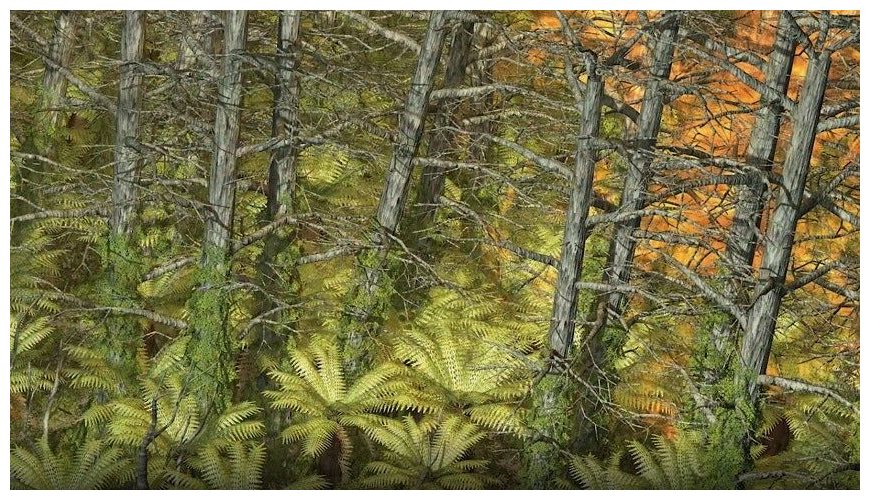
Where armies of trees once stretched skywards, seemingly escaping from the thickets of ferns and shrubs that clawed at their roots, only scorched trunks remain. Instead of the incessant hum of insect chatter blotting out the sound of ponderous giant dinosaurs, only the occasional flurry of wind pierces the silence. Darkness rules: the rich blues and greens, and occasional yellows and reds that danced in the Sun's rays have all been wiped out.

This is Earth after a six-mile-wide asteroid smashed into it 66 million years ago.

"In the course of minutes to hours it went from this lush, vibrant world to just absolute silence and nothing," says Daniel Durda, a planetary scientist at the Southwest Research Institute in Colorado. "Especially in the thousands of square miles around the impact site, the slate was just wiped clean."

Comment: One significant question that doesn't appear to be adequately addressed in the article is why was it that dinosaurs never recovered, and why instead did mammals replace them in the hierarchy almost entirely? For more on that question, check out: We still don't know why the reign of the dinosaurs ended

See also: And check out SOTT radio's: