Science & TechnologyS


Nebula

Bacteria may be first organisms found to use quantum effects to survive

bacteria
© (Kateryna Kon/Science Photo Library/Getty Images)
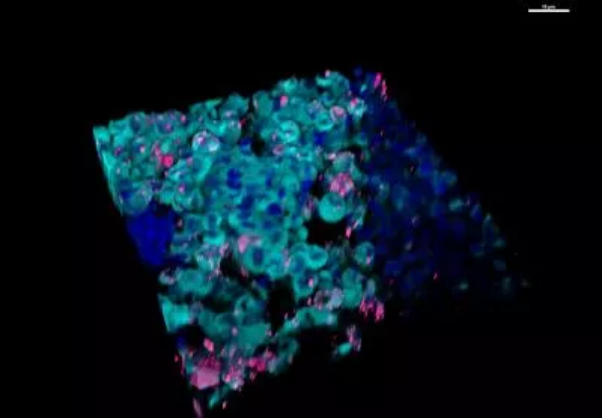
Oxygen is life to animals like us. But for many species of microbe, the smallest whiff of the highly reactive element puts their delicate chemical machinery at risk of rusting up.

The photosynthesizing bacterium Chlorobium tepidum has evolved a clever way to shield its light-harvesting processes from oxygen's poisonous effects, using a quantum effect to shift its energy production line into low gear.

A study conducted by scientists from the University of Chicago and Washington University in St. Louis has shown how the bacterium throws a spanner into its quantum resonance to 'tune' its system so that it loses energy in the presence of oxygen, preventing it from wrecking its photosynthetic apparatus.

Comment: See also:


Eggs Fried

Twin Peaks: More twinning in humans than ever before

twins baby
© CC0 Public Domain
More human twins are being born than ever before, according to the first comprehensive, global overview published today in Human Reproduction, one of the world's leading reproductive medicine journals.

Since the 1980s the twinning rate has increased by a third from 9 to 12 per 1000 deliveries, meaning that about 1.6 million twins are born each year worldwide and one in every 42 children born is a twin. The study finds that a major cause of this increase is the growth in medically assisted reproduction (MAR), which includes not only IVF (in vitro fertilisation) techniques, but also simpler methods, such as ovarian stimulation and artificial insemination. Another cause of the increase is the delay in childbearing observed in many countries over the last decades, since the twinning rate increases with the mother's age.

However, the researchers think that we may have reached the peak in twinning rates, particularly in high income countries such as Europe and North America, because of increasing emphasis on the importance of trying to achieve singleton pregnancies. Whether this is also the case in lower income countries, such as Africa, is less certain and has important implications for the health of mothers and babies, and also healthcare resources.

Comment: See also:


Blue Planet

Neanderthals disappeared from Europe earlier than thought - study

Neanderthal
The remains of the upper and lower jaw of a Neanderthal from the Spy Cave in Belgium
Neanderthal fossils from a cave in Belgium believed to belong to the last survivors of their species ever discovered in Europe are thousands of years older than once thought, a new study said Monday.

Previous radiocarbon dating of the remains from the Spy Cave yielded ages as recent as approximately 24,000 years ago, but the new testing pushes the clock back to between 44,200 to 40,600 years ago.

The research appeared in the Proceedings of the National Academy of Sciences and was carried out by a team from Belgium, Britain and Germany.

Comment: See also:


Cassiopaea

Rare supernova remnant discovered in the core of the Milky Way

Supernova remnant called Sagittarius A East
© X-ray: NASA/CXC/Nanjing Univ./P. Zhou et al. Radio: NSF/NRAO/VLANASA's Chandra X-ray Observatory captured a supernova remnant called Sagittarius A East (Sgr A East) near the center of our Milky Way galaxy.
NASA's Chandra X-ray Observatory has discovered the remains of a rare kind of stellar explosion near the center of the Milky Way.

Supernovas are stellar explosions that seed the galaxy with elements vital for life. Sagittarius A East (or Sgr A East) is a supernova remnant that lies near Sagittarius A* — the supermassive black hole in the center of the Milky Way. This supernova remnant is the first known example in our own Milky Way galaxy of an unusual type of white dwarf stellar explosion called a Type Iax supernova, according to a statement from the Chandra X-ray Observatory.

"While we've found Type Iax supernovae in other galaxies, we haven't identified evidence for one in the Milky Way until now," Ping Zhou, lead author of the study from Nanjing University in China, said in the statement. "This discovery is important for getting a handle of the myriad ways white dwarfs explode."

Info

'Lunar Ark' proposed at aerospace conference

Lunar Ark
© University of Arizona.Artist impression of the proposed underground lunar ark.
Researchers at the University of Arizona have proposed an audacious plan to backup Earth's biodiversity in the event of a planetary obliteration, i.e. nuclear war. The idea is to store the genetic material from millions of species below the moon's surface in lava tubes, which could act as a 'lunar ark' that preserves Earth's most cherished resource: the evolution of billions of years of life.

This project is similar to Norway's "Doomsday" Seed Vault, which hosts more than 850,000 different seed samples in the frigid Arctic. Seeds are kept at -18 °C (-3 °F) and should be protected against a number of potential disasters, ranging from global warming to nuclear war.

Likewise, the lunar ark would deposit cryogenically frozen seeds, spores, sperm, and egg samples from millions of species of animals. In order to protect these precious samples, the ark would be stored inside one of the more than 200 lava tubes identified so far beneath the moon's surface.

A lava tube, or pyroduct, is a natural conduit formed by flowing lava from a volcanic vent that moves beneath the hardened surface of a lava flow.

These yawning, subterranean caverns can have heights that dwarf Dubai's Burj Khalifa. Untouched for the last billions of years, these lava tubes provide the perfect shelter from punishing solar radiation, which is why they've been identified as sites for future human bases.

Cassiopaea

Highest-energy cosmic rays detected in star clusters

Cocoon
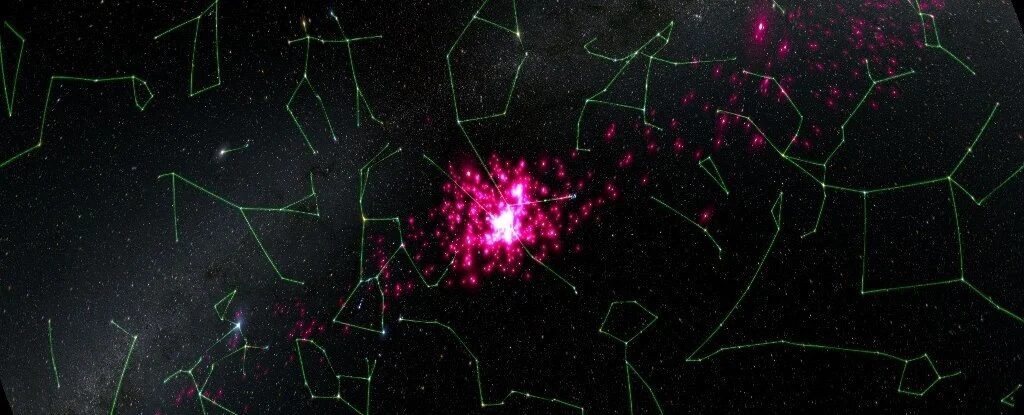
© Binita HonaA 24 micrometer infrared map from the Cocoon region with Spitzers MIPS overlaid with a gamma-ray significance map from HAWC (greenish-yellow to red indicate higher gamma-ray significance). The map is centered at Cocoon with about 4.6 degrees in x and y direction
For decades, researchers assumed the cosmic rays that regularly bombard Earth from the far reaches of the galaxy are born when stars go supernova — when they grow too massive to support the fusion occurring at their cores and explode.

Those gigantic explosions do indeed propel atomic particles at the speed of light great distances. However, new research suggests even supernovae — capable of devouring entire solar systems — are not strong enough to imbue particles with the sustained energies needed to reach petaelectronvolts (PeVs), the amount of kinetic energy attained by very high-energy cosmic rays.

And yet cosmic rays have been observed striking Earth's atmosphere at exactly those velocities, their passage marked, for example, by the detection tanks at the High-Altitude Water Cherenkov (HAWC) observatory near Puebla, Mexico. Instead of supernovae, the researchers posit that star clusters like the Cygnus Cocoon serve as PeVatrons — PeV accelerators — capable of moving particles across the galaxy at such high energy rates.

Comment: See also:


Better Earth

Gondwana: Antarctica's magnetic link to ancient neighbors

Gondwana
© University of KielFor the first time, an international team of scientists has used magnetic data from ESA’s Swarm mission together with aeromagnetic datasets to help unveil the mysteries of the geology that underlies Antarctica’s kilometres-thick ice sheets. Their findings compare well with the geology of formerly adjacent continents, namely Australia, India and South Africa, which were once part of the ancient Gondwana supercontinent.
For the first time, an international team of scientists has used magnetic data from ESA's Swarm satellite mission together with aeromagnetic data to help reveal the mysteries of the geology hidden beneath Antarctica's kilometers-thick ice sheets, and link Antarctica better to its former neighbors.

Not only is Antarctic sub-ice geology important to understand global supercontinent cycles over billions of years that have shaped Earth's evolution, it is also pivotal to comprehend how the solid Earth itself influences the Antarctic ice sheet above it.

The research team from Germany's Kiel University, the British Antarctic Survey and National Institute of Oceanography and Applied Geophysics, and Witwatersrand University in South Africa has today published their findings in the Nature journal Scientific Reports.

Comment: See also: Also check out SOTT radio's: MindMatters: The Meaning of the World's Mythologies


Family

Fifty new genes for eye colour found

eyes green
© Pixabay/CC0 Public Domain
The genetics of human eye color is much more complex than previously thought, according to a new study published today.

An international team of researchers led by King's College London and Erasmus University Medical Center Rotterdam have identified 50 new genes for eye color in the largest genetic study of its kind to date. The study, published today in Science Advances, involved the genetic analysis of almost 195,000 people across Europe and Asia.

These findings will help to improve the understanding of eye diseases such as pigmentary glaucoma and ocular albinism, where eye pigment levels play a role.

In addition, the team found that eye color in Asians with different shades of brown is genetically similar to eye color in Europeans ranging from dark brown to light blue.

Comment: See also:


Info

Breaking the warp barrier for faster-than-light travel

Astrophysicist at Göttingen University discovers new theoretical hyper-fast soliton solutions.
Warp bubbles
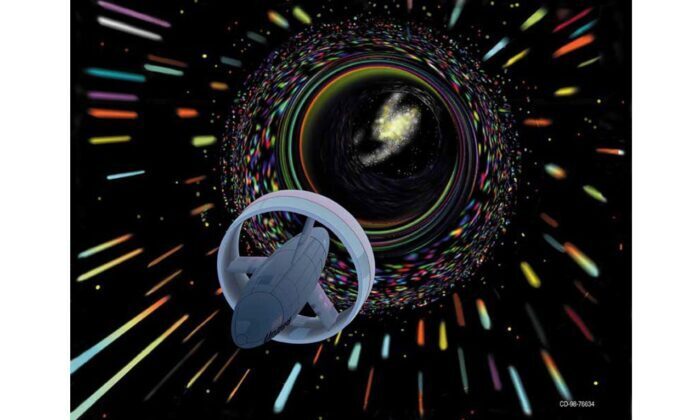
© E LentzArtistic impression of different spacecraft designs considering theoretical shapes of different kinds of “warp bubbles”.
If travel to distant stars within an individual's lifetime is going to be possible, a means of faster-than-light propulsion will have to be found. To date, even recent research about superluminal (faster-than-light) transport based on Einstein's theory of general relativity would require vast amounts of hypothetical particles and states of matter that have "exotic" physical properties such as negative energy density. This type of matter either cannot currently be found or cannot be manufactured in viable quantities. In contrast, new research carried out at the University of Göttingen gets around this problem by constructing a new class of hyper-fast 'solitons' using sources with only positive energies that can enable travel at any speed. This reignites debate about the possibility of faster-than-light travel based on conventional physics. The research is published in the journal Classical and Quantum Gravity.

The author of the paper, Dr Erik Lentz, analysed existing research and discovered gaps in previous 'warp drive' studies. Lentz noticed that there existed yet-to-be explored configurations of space-time curvature organized into 'solitons' that have the potential to solve the puzzle while being physically viable. A soliton - in this context also informally referred to as a 'warp bubble' - is a compact wave that maintains its shape and moves at constant velocity. Lentz derived the Einstein equations for unexplored soliton configurations (where the space-time metric's shift vector components obey a hyperbolic relation), finding that the altered space-time geometries could be formed in a way that worked even with conventional energy sources. In essence, the new method uses the very structure of space and time arranged in a soliton to provide a solution to faster-than-light travel, which - unlike other research - would only need sources with positive energy densities. No "exotic" negative energy densities needed.

Microscope 2

Over 140,000 virus species in the human gut identified, half of which are new to science

Illustration of phage viruses attacking a bacterium
Illustration of phage viruses attacking a bacterium. The mysterious DNA sequences appear to help bacterial cells spot when they've been infected with viruses — and prompt those cells to self-destruct.
The results form the basis of the highly-curated Gut Phage Database (GPD) which will be an invaluable resource for those studying bacteriophages and the role they play on regulating the health of both our gut bacteria and ourselves

Viruses are the most numerous biological entities on the planet. Now researchers at the Wellcome Sanger Institute and EMBL's European Bioinformatics Institute (EMBL-EBI) have identified over 140,000 viral species living in the human gut, more than half of which have never been seen before.

The paper, published today (18 February 2021) in Cell, contains an analysis of over 28,000 gut microbiome samples collected in different parts of the world. The number and diversity of the viruses the researchers found was surprisingly high, and the data opens up new research avenues for understanding how viruses living in the gut affect human health.

Comment: See also: