Science & TechnologyS


Alarm Clock

Supercomputer shows doubling masks offers little help preventing viral spread

japan children masks
© REUTERS / Thomas PeterSchoolgirls, wearing surgical masks, cross a street in Kyoto.
Japanese supercomputer simulations showed that wearing two masks gave limited benefit in blocking viral spread compared with one properly fitted mask.

The findings in part contradict recent recommendations from the U.S. Centers of Disease Control and Prevention (CDC) that two masks were better than one at reducing a person's exposure to the coronavirus.

Researchers used the Fugaku supercomputer to model the flow of virus particles from people wearing different types and combinations of masks, according to a study released on Thursday by research giant Riken and Kobe University.

Comment:


Comet

First time organic materials essential for life on Earth found on surface of asteroid

Itokawa
© ISAS-JAXA
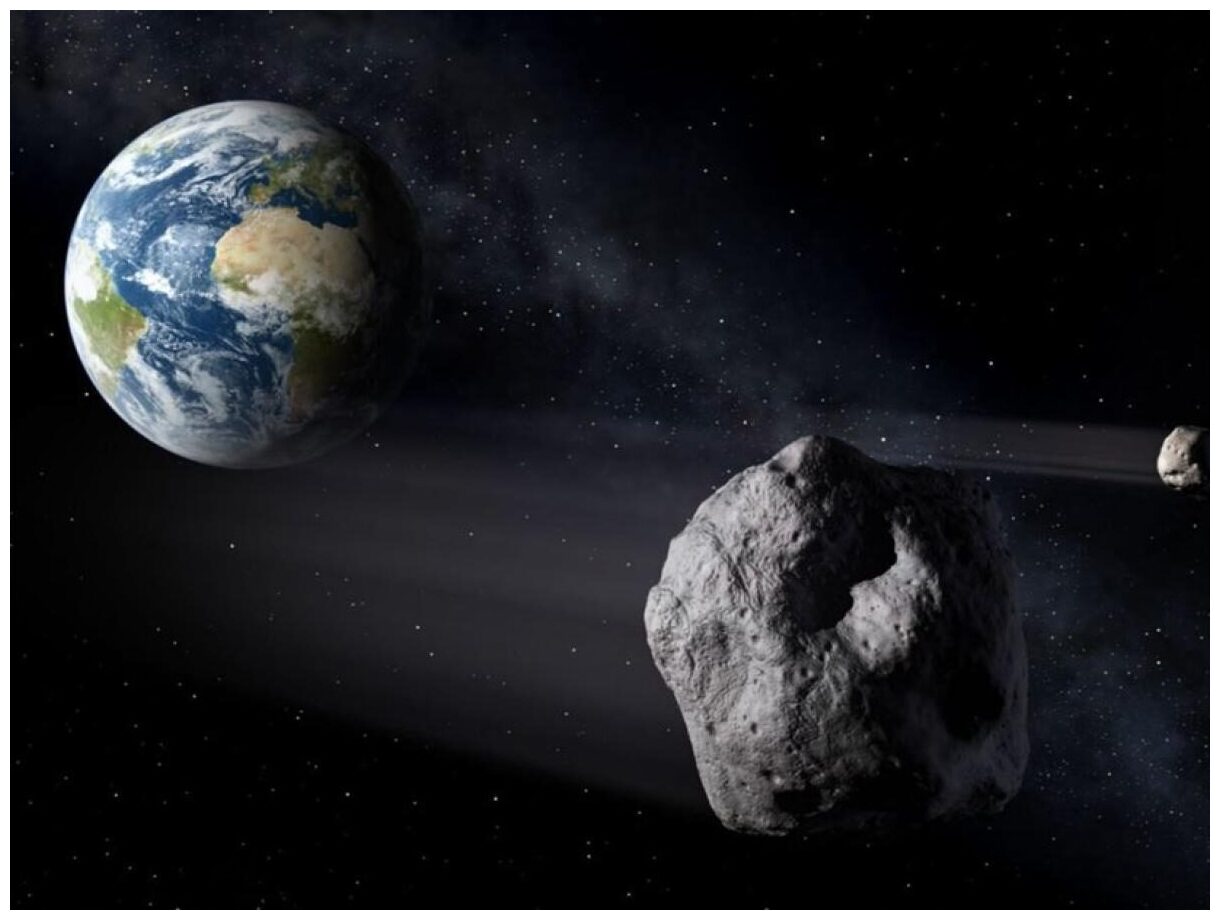
New research from Royal Holloway, has found water and organic matter on the surface of an asteroid sample returned from the inner Solar System. This is the first time that organic materials, which could have provided chemical precursors for the origin of life on Earth, have been found on an asteroid.

The single grain sample was returned to Earth from asteroid Itokawa by JAXA's first Hayabusa mission in 2010. The sample shows that water and organic matter that originate from the asteroid itself have evolved chemically through time.

The research paper suggests that Itokawa has been constantly evolving over billions of years by incorporating water and organic materials from foreign extra-terrestrial material, just like the Earth. In the past, the asteroid will have gone through extreme heating, dehydration and shattering due to catastrophic impact. However, despite this, the asteroid came back together from the shattered fragments and rehydrated itself with water that was delivered via the in fall of dust or carbon-rich meteorites.

Comment: Proponents of Panspermia posit that life itself may be distributed throughout the Universe by asteroids and other debris:


Hearts

European domestic dog may have originated in Southwestern Germany

Canidae
© SenckenbergThe domestication of wolves was studied on the basis of Canidae fossils from the Gnirshöhle cave in Southwestern Germany.
Together with a group of international colleagues, a research team from the Senckenberg Centre for Human Evolution and Palaeoenvironment at the University of Tübingen studied the beginnings of the domestication of wolves in Europe. Using a multi-method approach, the researchers analyzed several Canidae fossils from a cave in Southwestern Germany. In their study, published today in the nature journal Scientific Reports, they reach the conclusion that the transition from wolves to domesticated dogs may have occurred in this region between 16,000 and 14,000 years ago.

Dogs are generally considered the oldest domestic animals. "However, to date it is still not clear exactly when the transition from wolves to domestic and herding dogs occurred. Scientific estimates range between 15,000 to 30,000 years ago," explains Dr. Chris Baumann of the Senckenberg Centre for Human Evolution and Palaeoenvironment at the University of Tübingen, and he continues, "Moreover, the location where this transition from wild to domestic animals occurred also continues to be uncertain."

Comment: Interestingly, it has been proposed that the domestication of dogs may have happened more than once:


Magnify

SOTT Focus: The Stats on Covid-Vaccine Injury and Death Don't Add Up

graveyard headstone cross
There's a big mystery that needs to be solved.

It's how many people are getting sick and dying from the Covid vaccines.

There are reports from around the world of large numbers of elderly people dying right around the time they're vaccinated.

On rare occasions those reports of those deaths even percolate into the mainstream press. An example is this January 16, 2021, Bloomberg article. It quotes the Norwegian Medicines Agency as attributing more than a dozen deaths, perhaps many more, among people 75 and over to effects of the Pfizer-BioNTech mRNA vaccine such as nausea and vomiting.

And I've heard first-hand that a lot of people are getting sick after vaccination, particularly seniors. I've heard this also from others, including health care professionals.

But officials almost always quickly proclaim that deaths aren't caused by the vaccines. Instead they tell us that serious injuries are extremely rare.


X

Academic intolerance on the rise, study finds, highlighting growth of wokeness in younger scholars

cancel culture
© Pixabay / viarami
Surveying both victims and perpetrators of political discrimination in the US, the UK and Canada, researchers at an academic think tank have found intolerance toward dissent is only just beginning - and things may get much worse.

Purporting to be the first paper of its kind to "investigate authoritarianism and political discrimination in academia," the study, conducted by the Center for the Study of Partisanship and Ideology's Eric Kaufmann, seemed to support conservatives' longstanding complaints that they and their political viewpoints face disproportionate levels of ideologically-motivated censorship.

While what the researchers called "hard authoritarianism" - no-platforming, social media brigading, 'open' letters, dismissal campaigns, and formal complaints - was comparatively rare, the absence of any opposing intellectual force meant that the militant cancel-culture activists often got their way. Meanwhile, "soft authoritarianism" - punishing non-conformists by limiting their ability to publish, win grants for their work, be promoted or retain current positions - provided an added burden (and incentive to keep quiet about their beliefs) to conservative academics.

In the US, UK and Canada, some 40 percent of academics told the researchers they would not hire a Trump supporter, and one out of three in Britain would refuse a position to a Brexit supporter. But there's one scarlet letter that will get a person ostracized even further in academia, they found: being considered a gender-critical feminist, i.e. holding a biological-based view of sex.

Cassiopaea

Mystery of monster star's dimming detailed in new Hubble study

Majoris
© NASA, ESA, and R. Humphreys (University of Minnesota), and J. Olmsted (STScI)This zoom into VY Canis Majoris is a combination of Hubble imaging and an artist's impression. The left panel is a multicolor Hubble image of the huge nebula of material cast off by the hypergiant star. This nebula is approximately a trillion miles across. The middle panel is a close-up Hubble view of the region around the star. This image reveals close-in knots, arcs, and filaments of material ejected from the star as it goes through its violent process of casting off material into space. VY Canis Majoris is not seen in this view, but the tiny red square marks the location of the hypergiant, and represents the diameter of the solar system out to the orbit of Neptune, which is 5.5 billion miles across. The final panel is an artist's impression of the hypergiant star with vast convection cells and undergoing violent ejections. VY Canis Majoris is so large that if it replaced the Sun, the star would extend for hundreds of millions of miles, to between the orbits of Jupiter and Saturn.
Last year, astronomers were puzzled when Betelguese, the bright red supergiant star in the constellation Orion, dramatically faded, but then recovered. The dimming lasted for weeks. Now, astronomers have turned their sights toward a monster star in the adjoining constellation Canis Major, the Great Dog.


Comment: Betelgeuse's dimming was considered rather unusual behaviour and researchers still aren't certain what caused it: Betelgeuse is neither as far nor as large as once thought


The red hypergiant VY Canis Majoris — which is far larger, more massive, and more violent than Betelgeuse — experiences much longer, dimmer periods that last for years. New findings from NASA's Hubble Space Telescope suggest the same processes that occurred on Betelgeuse are happening in this hypergiant, but on a much grander scale.

"VY Canis Majoris is behaving a lot like Betelgeuse on steroids," explained the study's leader, astrophysicist Roberta Humphreys of the University of Minnesota, Minneapolis.

Comment: See also:


Galaxy

'Swirlonic' super particles baffle physicists

particles
© CC0 Public Domain
In recent years, active, self-propelled particles have received growing interest amongst the scientific community. Examples of active particles and their systems are numerous and very diverse, ranging from bacterium films to flocks of birds or human crowds. These systems can demonstrate unusual behavior, which is challenging to understand or model.

To this end, large-scale models of active particles were being scrutinized by experts at Leicester, in order to understand basic principles underlying active particle dynamics and apply them in a scenario of an evacuation strategy for customers in a crowded place. Unexpectedly, the 'super-particles' milling in a circular motion were stumbled upon by Leicester's physicists who subsequently coined the phenomenon as 'swirlonic.'

Comment: See also:


Sun

Source of hazardous high-energy particles located in the Sun

CME sun solar
© NASA/GSFC/SDOA coronal mass ejection, or CME, erupting into space on 31 August, 2012. Pictured here is a blended version of the 171 and 304 angstrom wavelengths taken from the Solar Dynamics Observatory.
The source of potentially hazardous solar particles, released from the Sun at high speed during storms in its outer atmosphere, has been located for the first time by researchers at UCL and George Mason University, Virginia, U.S.

These particles are highly charged and, if they reach Earth's atmosphere, can potentially disrupt satellites and electronic infrastructure, as well as pose a radiation risk to astronauts and people in airplanes. In 1859, during what's known as the Carrington Event, a large solar storm caused telegraphic systems across Europe and America to fail. With the modern world so reliant on electronic infrastructure, the potential for harm is much greater.


Comment: A recent report revealed that the the Carrington event was not unique and it's only a matter of time before it happens again, except, as noted above, the impact are likely to be many times more devastating because of our reliance on technology.


To minimize the danger, scientists are seeking to understand how these streams of particles are produced so they can better predict when they might affect Earth.

Comment: See also: And check out SOTT radio's: Behind the Headlines: Earth changes in an electric universe: Is climate change really man-made?


Brain

Of cuttlefish and crows: A cephalopod has passed a cognitive test designed for human children

cuttlefish
© Schafer & Hill/The Image Bank/Getty ImagesThe cuttlefish, Sepia officinalis
A new test of cephalopod smarts has reinforced how important it is for us humans to not underestimate animal intelligence.

Cuttlefish have been put to a new version of the marshmallow test, and the results appear to demonstrate that there's more going on in their strange little brains than we knew.

Their ability to learn and adapt, the researchers said, could have evolved to give cuttlefish an edge in the cutthroat eat-or-be-eaten marine world they live in.

The marshmallow test, or Stanford marshmallow experiment, is pretty straightforward. A child is placed in a room with a marshmallow. They are told if they can manage not to eat the marshmallow for 15 minutes, they'll get a second marshmallow, and be allowed to eat both.

Comment: Cephalopods are a fascinating animal group, as are corvids.


Bizarro Earth

Volcanic activity below desert discovered in Utah

Utah Desert
© (Lee Siebert/Smithsonian Institution/Public Domain)
It might not look like it, but the arid expanses of Utah conceal an ancient volcanic complex, and this hidden underground system is still active far below the desert's surface, scientists say.

According to a new study, a pair of recent earthquakes in 2018 and 2019 were not indicative of tectonic activity, but were seismic rumblings produced by the Black Rock Desert volcanic field - an ancient volcanic system in Utah's Sevier Desert that's been active for over 6 million years and, apparently, is still alive and kicking.

"Our findings suggest that the system is still active and that the earthquakes were probably the result of fluid-related movement in the general area," says seismologist Maria Mesimeri from the University of Utah.

"The earthquakes could be the result of the fluid squeezing through rock or the result of deformation from fluid movement that stressed the surface faults."

The two earthquake sequences in question occurred in September 2018 and April 2019, and were recorded by seismometers within the Utah Regional Seismic Network, as well as by instruments forming part of an experimental project called Utah FORGE, run by the US Department of Energy.