Science & TechnologyS


Books

Becoming the King in the North: Identification with fictional characters is associated with greater self - other neural overlap

game of thrones jon king in the north
Jon Snow
A reader lives a thousand lives before he dies...The man who never reads lives only one.
-George R. R. Martin, A Dance with Dragons
Abstract

During narrative experiences, identification with a fictional character can alter one's attitudes and self-beliefs to be more similar to those of the character. The ventral medial prefrontal cortex (vMPFC) is a brain region that shows increased activity when introspecting about the self but also when thinking of close friends. Here, we test whether identification with fictional characters is associated with increased neural overlap between self and fictional others. Nineteen fans of the HBO series Game of Thrones performed trait evaluations for the self, 9 real-world friends and 9 fictional characters during functional neuroimaging. Overall, the participants showed a larger response in the vMPFC for self compared to friends and fictional others. However, among the participants higher in trait identification, we observed a greater neural overlap in the vMPFC between self and fictional characters. Moreover, the magnitude of this association was greater for the character that participants reported feeling closest to/liked the most as compared to those they felt least close to/liked the least. These results suggest that identification with fictional characters leads people to incorporate these characters into their self-concept: the greater the immersion into experiences of 'becoming' characters, the more accessing knowledge about characters resembles accessing knowledge about the self.

Comment:


Cassiopaea

New nova visible in Cassiopeia constellation discovered by amateur astronomer

Cassiopeia nova
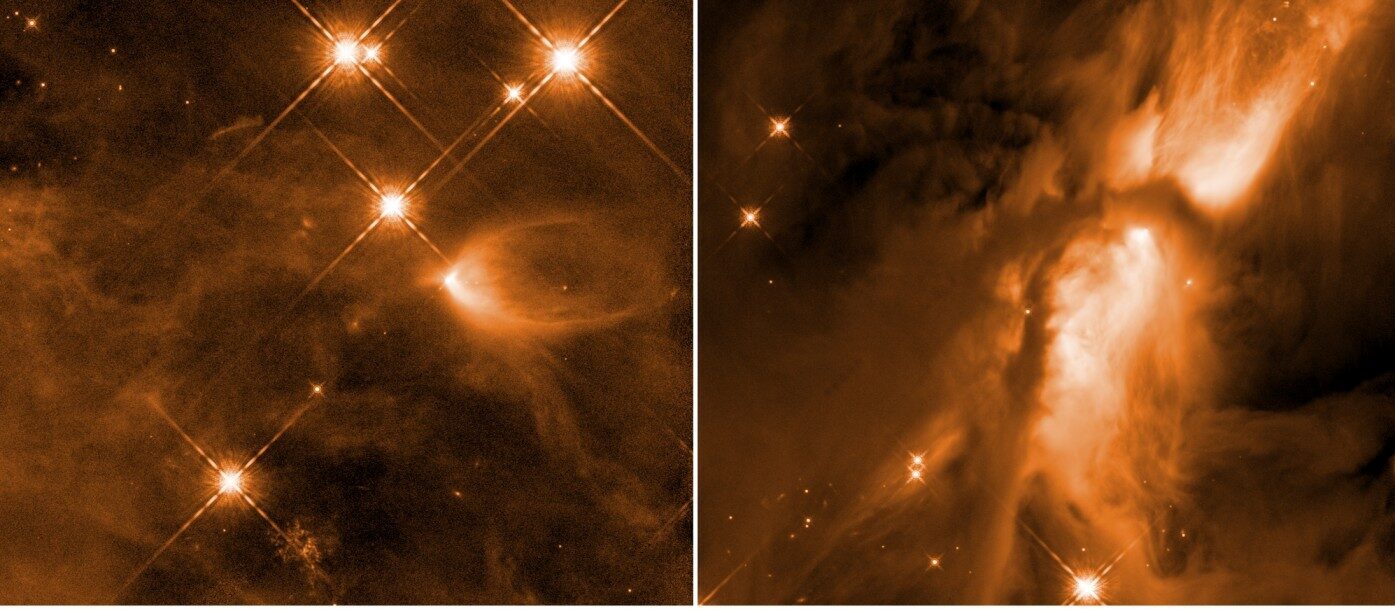
© Yuji NakamuraThe discovery image (left) of a new nova that recently appeared in the constellation Cassiopeia. The right image shows how the same region of the sky appeared just four days prior.
At around 7 P.M. JST on the evening of March 18, Japanese amateur astronomer Yuji Nakamura spotted something strange: A new point of light in the familiar constellation Cassiopeia the Queen.

Researchers at Kyoto University quickly followed up using the 3.8-meter Seimei Telescope atop Mt. Chikurinji in Japan. They obtained a spectrum of the new object, hoping to determine its nature based on clues hiding in its light.

They discovered that the object, which is cataloged as PNV J23244760+6111140, is a classical nova: An outburst from a white dwarf that's stealing matter from its nearby companion star.

Comment: See also:


Fish

Many deep-sea microbes invisible to mammalian immune system

vessel
© SCHMIDT OCEAN INSTITUTEThe Schmidt Ocean Institute's research vessel Falkor
One way the mammalian immune system defends against pathogens known and novel is by picking up on common microbial features, such as elements of bacterial cell walls or flagella. But a study published today (March 12) in Science Immunology indicates that this detection system has some blind spots. The authors found that the majority of microbes collected from the depths of the Pacific Ocean are invisible to mammalian immune cells, despite the presence of familiar bacterial cell wall component lipopolysaccharide (LPS).

This work "implies that there's a lot more potential for a pathogen to escape our immune responses than we had previously thought," says Christopher LaRock, an immunologist at Emory University School of Medicine who was not involved in the study. The bacterium Yersinia pestis, which causes plague, can modify its LPS, thus escaping immune detection, he adds. "We thought things that weren't detected were really clever pathogens that had it all figured out . . . but here's some bacteria that have never seen a human and they can still escape."

Comment: See also:


Info

Enigmatic circling behavior observed in numerous marine animals

Circling Behaviour
© Narazaki et al. / iScienceThis image shows the circling behavior of various marine megafauna.
Technological advances have made it possible for researchers to track the movements of large ocean-dwelling animals in three dimensions with remarkable precision in both time and space. Researchers reporting in the journal iScience on March 18 have now used this biologging technology to find that, for reasons the researchers don't yet understand, green sea turtles, sharks, penguins, and marine mammals all do something rather unusual: swimming in circles.

"We've found that a wide variety of marine megafauna showed similar circling behavior, in which animals circled consecutively at a relatively constant speed more than twice," says Tomoko Narazaki of the University of Tokyo.

Narazaki's team first discovered the mysterious circling behaviors in homing green turtles during a displacement experiment. They had transferred nesting turtles from one place to another to study their navigation abilities.

"To be honest, I doubted my eyes when I first saw the data because the turtle circles so constantly, just like a machine!" Narazaki says. "When I got back in my lab, I reported this interesting discovery to my colleagues who use the same 3D data loggers to study a wide range of marine megafauna taxa."

What came next surprised the researchers even more: they realized that various species of marine animals showed more or less the same circling movements. This finding is surprising in part because swimming in a straight line is the most efficient way to move about. It suggests there must be some good reason that animals circle.

Hourglass

'Deep Time' experiment with 15 people sealed in dark cave for 40 days begins

deep time experiment
© Christian Clot/TwitterThe volunteers will not know what time it is during their underground isolation.
Everybody has a favorite psychological experiment where a bunch of people were put in an isolated place for a number of weeks, then left to let nature take its course.

Classics of the genre include the infamous Stanford Prison Experiment, in which volunteers were locked into a prison and assigned the roles of either prisoner or guards, and the Biosphere 2 project, which saw eight people sealed inside an artificial biosphere for 2 years. Needless to say, both went horribly wrong, with the prison experiment ending in a complete (and possibly partially-staged) horror show, and Biosphere 2 ending after the oxygen inside hit dangerous levels and everyone nearly starved.

Following in their footsteps comes Deep Time, an experiment that has just shut 15 people inside a dark cave for 40 days, with no access to natural light or the ability to tell time. What could possibly go wrong?

Comment: See also:


Ice Cube

Glaciers and enigmatic stone stripes in the Ethiopian highlands

ethiopia glacier
© Heinz VeitThe up to 200 m long, 15 m wide and 2 m deep sorted stone strips on the southern Sanetti Plateau
(ca. 3,900 m a.s.l.) were probably formed during the last glacial period under much cooler
conditions and can best be explained by a natural sorting of the stones in the course
of the cyclic freezing and thawing of the ground
As the driver of global atmospheric and ocean circulation, the tropics play a central role in understanding past and future climate change. Both global climate simulations and worldwide ocean temperature reconstructions indicate that the cooling in the tropics during the last cold period, which began about 115,000 years ago, was much weaker than in the temperate zone and the polar regions. The extent to which this general statement also applies to the tropical high mountains of Eastern Africa and elsewhere is, however, doubted on the basis of palaeoclimatic, geological and ecological studies at high elevations.

A research team led by Alexander Groos, Heinz Veit (both from the Institute of Geography) and Naki Akcar (Institute of Geological Sciences) at the University of Bern, in collaboration with colleagues from ETH Zurich, the University of Marburg and the University of Ankara, used the Ethiopian Highlands as a test site to investigate the extent and impact of regional cooling on tropical mountains during the last glacial period. The results have been published in the scientific journals Science Advances and Earth Surface Dynamics.

Comment: See also:


Meteor

Best of the Web: Record number of asteroids observed flying past Earth in 2020 - Despite lockdowns interrupting surveys

The near-Earth asteroid Apophis (artist’s impression)
© Detlev van Ravensway/SPLThe near-Earth asteroid Apophis (artist’s impression) will fly within 40,000 kilometres of the planet in 2029 — much closer than it came this month.
A 340-metre-wide space rock named Apophis whizzed safely past Earth on 6 March. The next time it returns, in 2029, won't be so uneventful: Apophis will come within 40,000 kilometres of the planet, skimming just above the region where some high-flying satellites orbit. It will be the first time that astronomers will be able to watch such a big asteroid pass so close to us.

Last week's fly-by gave scientists a chance to test the worldwide planetary defence system, in which astronomers quickly assess the chances of an asteroid hitting Earth as they follow its path across the night sky. "It's a fire drill with a real asteroid," says Vishnu Reddy, a planetary scientist at the University of Arizona in Tucson who coordinated the observing campaign.

The Apophis fly-by highlights how much astronomers have learnt about near-Earth asteroids — and how much they still have to learn. Since 1998, when NASA kicked off the biggest search for near-Earth asteroids, scientists have detected more than 25,000 of them. And 2020 turned out to be a record year for discoveries. Despite the COVID-19 pandemic interrupting many of the surveys, astronomers catalogued 2,958 previously unknown near-Earth asteroids over the course of the year (see 'Space rocks').

Comment: Oh yes indeed, there is lots of learning and lots of fun ahead of us.

As usual, scientific reporting on the space threat is penned in the continuous present. These discoveries are not making astronomers more conscious of the billiard-ball nature of the Solar System; it's making them conscious that the Solar System is DYNAMIC. It was more stable; now it is less so, as asteroids pour into the inner System.

Something Wicked This Way Comes
War, rumors of war, corrupt governments run by psychopaths, phony terrorism, burgeoning police states...but is that all we have to worry about? What if there was something to put it all in context? Or rather, what if there is something else we are missing, something that is beyond the control of even the political and corporate elites; something that is unconsciously driving them to attempt to herd the global population to an ever finer order of control...


Info

Discovery identifies non-DNA mechanism involved in transmitting paternal experience to offspring

Sperm Remember
© Getty Images
It has long been understood that a parent's DNA is the principal determinant of health and disease in offspring. Yet inheritance via DNA is only part of the story; a father's lifestyle such as diet, being overweight and stress levels have been linked to health consequences for his offspring. This occurs through the epigenome - heritable biochemical marks associated with the DNA and proteins that bind it. But how the information is transmitted at fertilization along with the exact mechanisms and molecules in sperm that are involved in this process has been unclear until now.

A new study from McGill, published recently in Developmental Cell, has made a significant advance in the field by identifying how environmental information is transmitted by non-DNA molecules in the sperm. It is a discovery that advances scientific understanding of the heredity of paternal life experiences and potentially opens new avenues for studying disease transmission and prevention.

A paradigm shift in understanding of heredity

"The big breakthrough with this study is that it has identified a non-DNA based means by which sperm remember a father's environment (diet) and transmit that information to the embryo," says Sarah Kimmins, PhD, the senior author on the study and the Canada Research Chair in Epigenetics, Reproduction and Development. The paper builds on 15 years of research from her group. "It is remarkable, as it presents a major shift from what is known about heritability and disease from being solely DNA-based, to one that now includes sperm proteins. This study opens the door to the possibility that the key to understanding and preventing certain diseases could involve proteins in sperm."

"When we first started seeing the results, it was exciting, because no one has been able to track how those heritable environmental signatures are transmitted from the sperm to the embryo before," adds PhD candidate Ariane Lismer, the first author on the paper. "It was especially rewarding because it was very challenging to work at the molecular level of the embryo, just because you have so few cells available for epigenomic analysis. It is only thanks to new technology and epigenetic tools that we were able to arrive at these results."

Stop

Audi will stop developing internal combustion engines

Audi
© AUDIAUDI RS
The automaker will slowly phase out existing combustion engines and replace them with all-electric drivetrains.

Audi has an impressive slate of internal combustion engines on offer at the moment, including the 591-hp twin-turbo 4.0-liter V-8 you see above, powering the jaw-dropping RS 6 Avant super-wagon. And let's not forget the sonorous naturally aspirated V-10 in the mid-engine R8. But according to the CEO of the company, the automaker will not develop any new internal combustion engines, and will begin phasing out the current gasoline and diesel engines and replacing them with electric powertrains.

In an interview with German-language industry news outlet Automobilwoche, Audi CEO Marcus Duesmann confirmed the decision. "We will no longer develop a new internal combustion engine, but will adapt our existing internal combustion engines to new emission guidelines," Duesmann told the publication (as translated by Google).

Duesmann cited (and slighted) the increasing challenges of emissions regulations in the decision:
"The EU plans for an even stricter Euro 7 emissions standard are a huge technical challenge and at the same time have little benefit for the environment. That extremely restricts the combustion engine."

Galaxy

New research claims wormholes across the universe are traversable, with one small catch

wormhole
© PixabayWormhole in space
A team of scientists has developed a model that would allow for the existence of traversable wormholes that adhere to the laws of physics without the need for theoretical matter to keep them open. But there's a catch.

The concept of wormholes harken back to the earliest days of Albert Einstein and Nathan Rosen's work on general relativity. The pair theorized the existence of an object called an Einstein-Rosen Bridge, a black hole from which nothing can escape, linked to a white hole, which nothing can enter, that spews out the material sucked into the black hole. Their ideas about particles and antiparticles being linked via a kind of space-time hosepipe never really worked out, but did inspire later work into the concept of wormholes.

The best minds in theoretical physics figured that, while wormholes might work as solutions to Einstein's mind-boggling equations, they would collapse too quickly for anyone to even attempt to travel through them.

However, new research by a team led by theoretical physicist Jose Luis Blázquez-Salcedo posits the possibility of travel through the wormhole without the need for, as yet theoretical, negative mass. This sounds fantastic. Humanity can now track one down and traverse the stars faster than our wildest dreams, right? Not so fast.