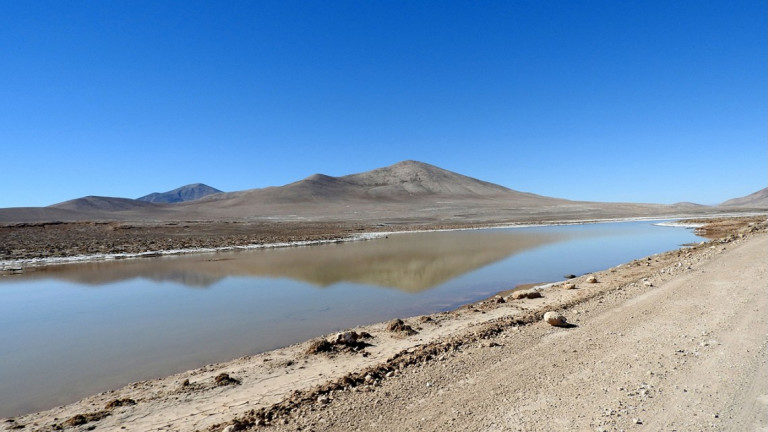
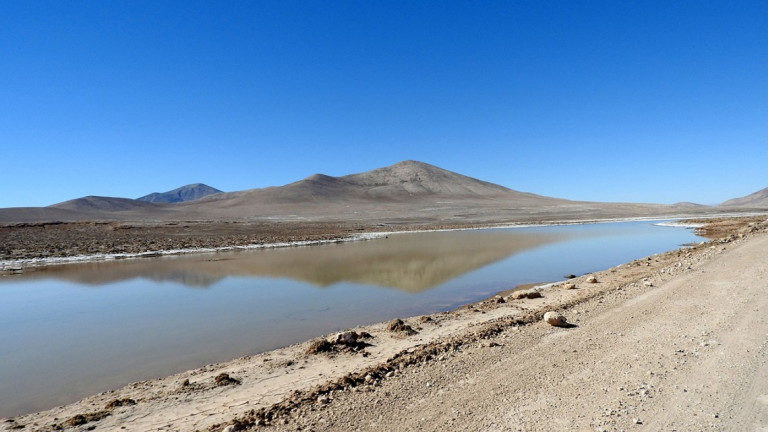
© Carlos González-SilvaA small, temporary lagoon in the Atacama Desert caused by unprecedented rains.
After not experiencing any meaningful amounts of precipitation for at least 500 years, Chile's Atacama Desert is finally getting some rain. Quite unexpectedly, however, these rains-instead of fostering life-are doing the exact opposite.
Life on Earth cannot exist without water, but for microbes highly adapted to arid conditions, the sudden introduction of excess water can be utterly devastating. Such is the conclusion of a
new paper published this week in
Scientific Reports.
Fascinatingly, these findings, while applicable to life on Earth, may also apply to ancient Mars - a planet possibly capable of fostering microbial life during its ancient past, but at the same time susceptible to catastrophic flooding.
Located in northern Chile, the 105,000-square-kilometer Atacama Desert is one of the oldest and driest deserts on Earth, and it's been this way for 150 million years. This desert features a hyper-arid core, with climate models predicting major rainfall events at a paltry rate of once per century. That said, no significant rainfall had been recorded in this region for the past 500 years.
But things are changing in Atacama Desert - and not necessarily for the better.

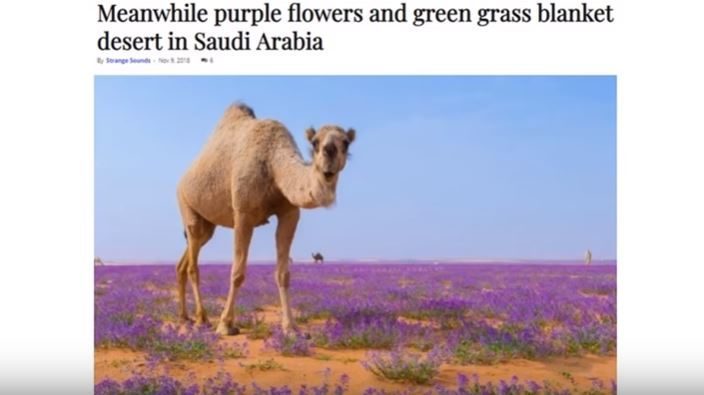
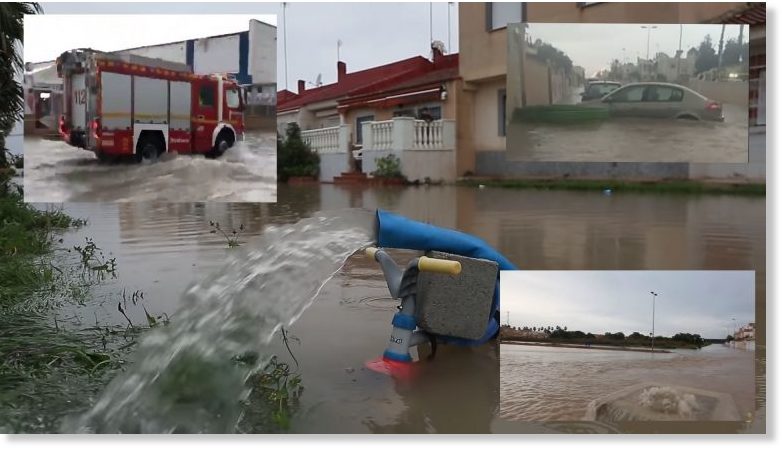
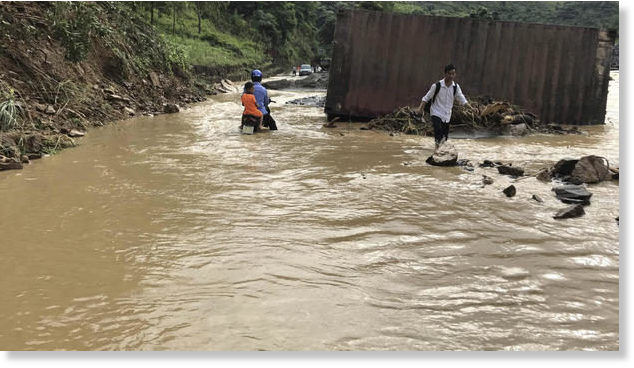
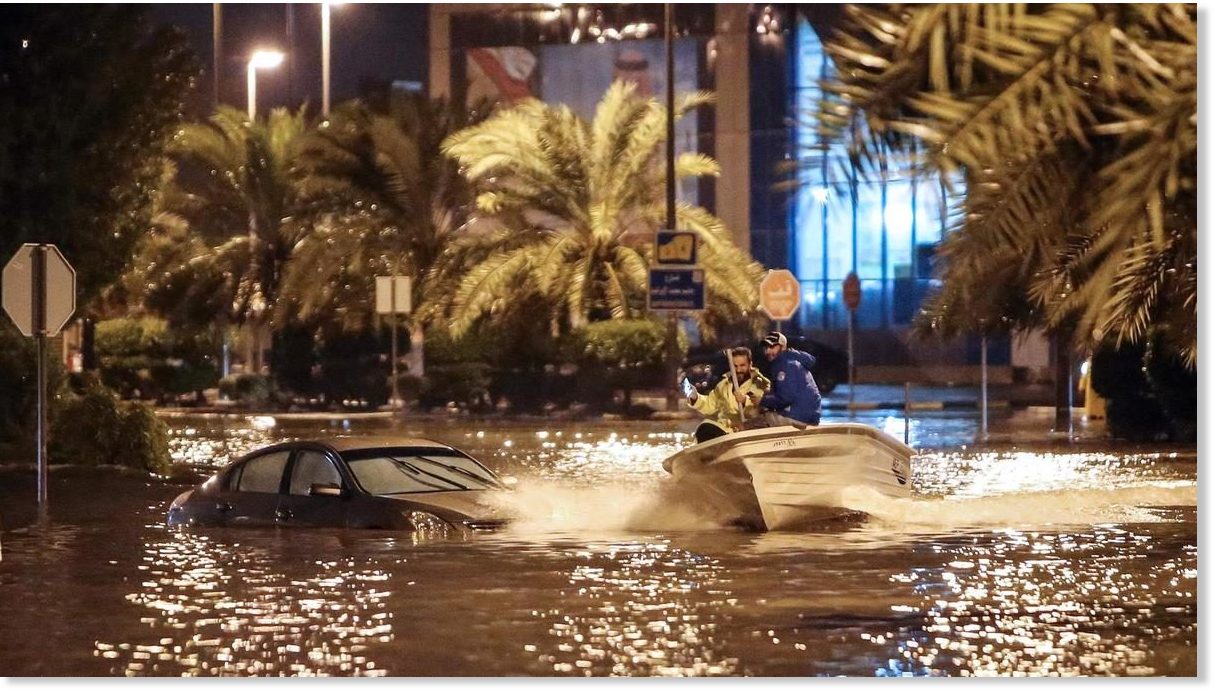
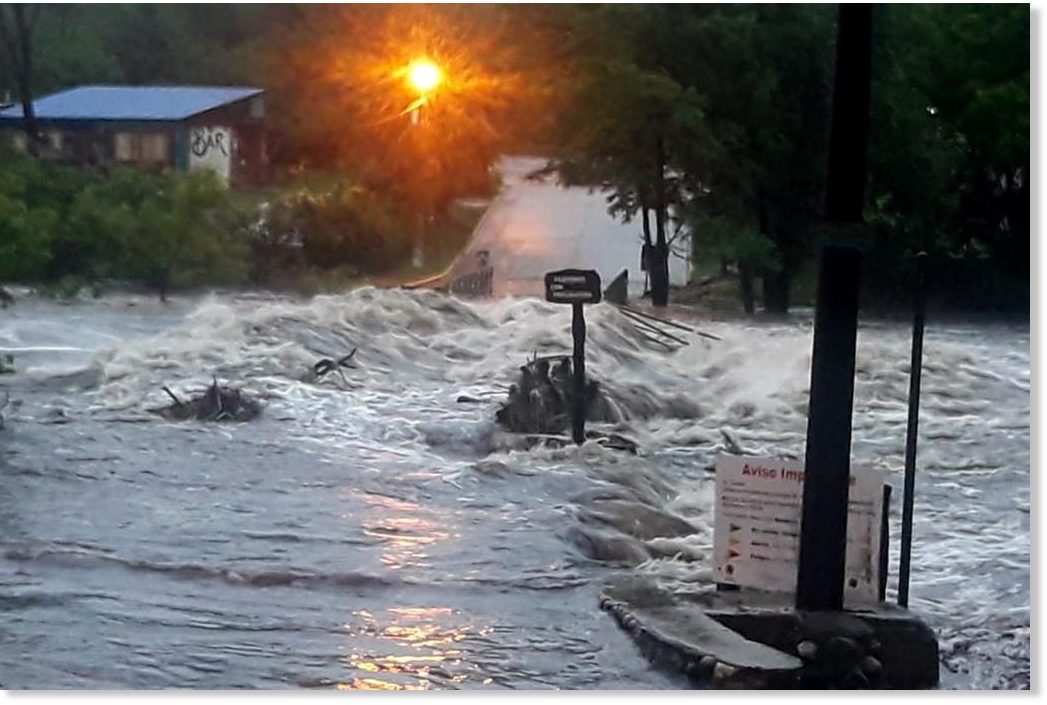
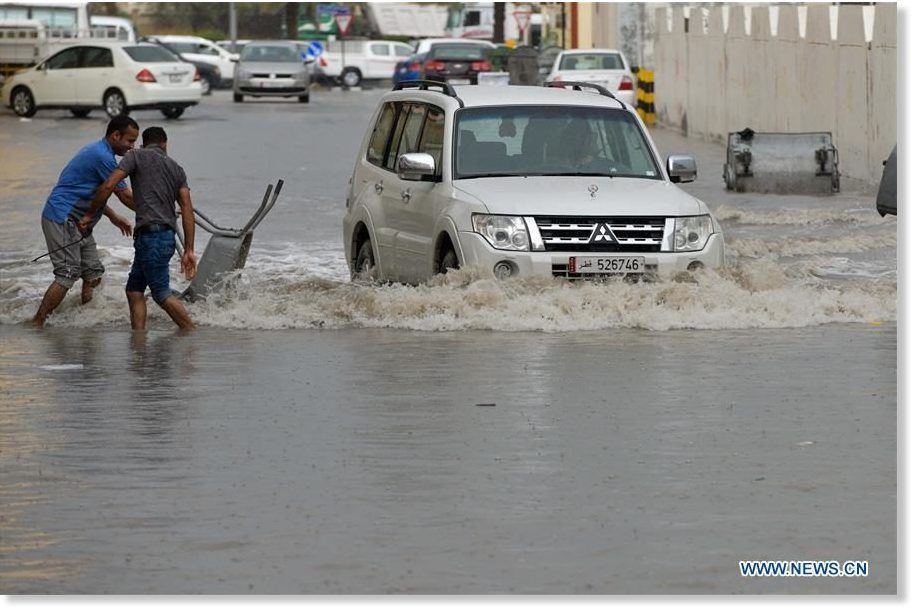




Comment: For more information check out SOTT's latest monthly summary: SOTT Earth Changes Summary - October 2018: Extreme Weather, Planetary Upheaval, Meteor Fireballs
To understand how and why these extreme weather events are occurring read Earth Changes and the Human Cosmic Connection by Pierre Lescaudron and Laura Knight-Jadczyk.