Elizabeth Minero infobae.com Sat, 06 Jun 2026 19:34 UTC
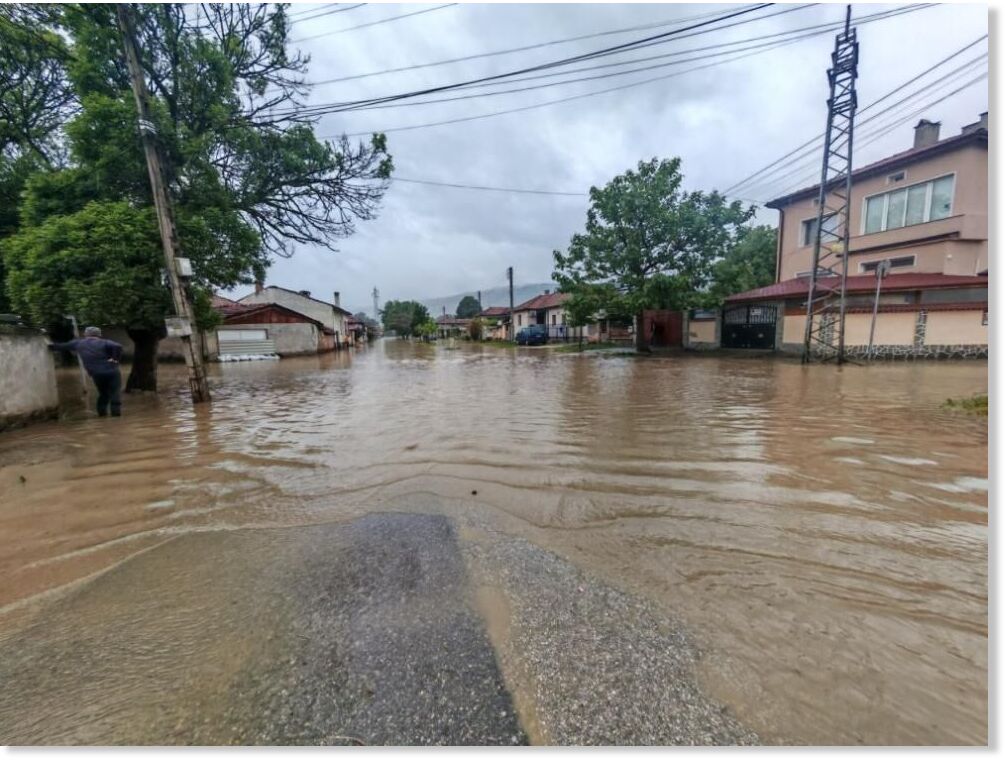
Last night, June 5th, the department of Santa Ana experienced a resurgence of vulnerability due to the intense rainfall that battered the region. The storms that occurred during the night caused the immediate collapse of drainage systems in various parts of the city, leaving several streets and avenues completely flooded.
In a matter of minutes, the streets were transformed into raging rivers, causing serious problems for pedestrians and completely paralyzing vehicular traffic. The force of the currents and flash floods took dozens of people by surprise as they tried to return home.
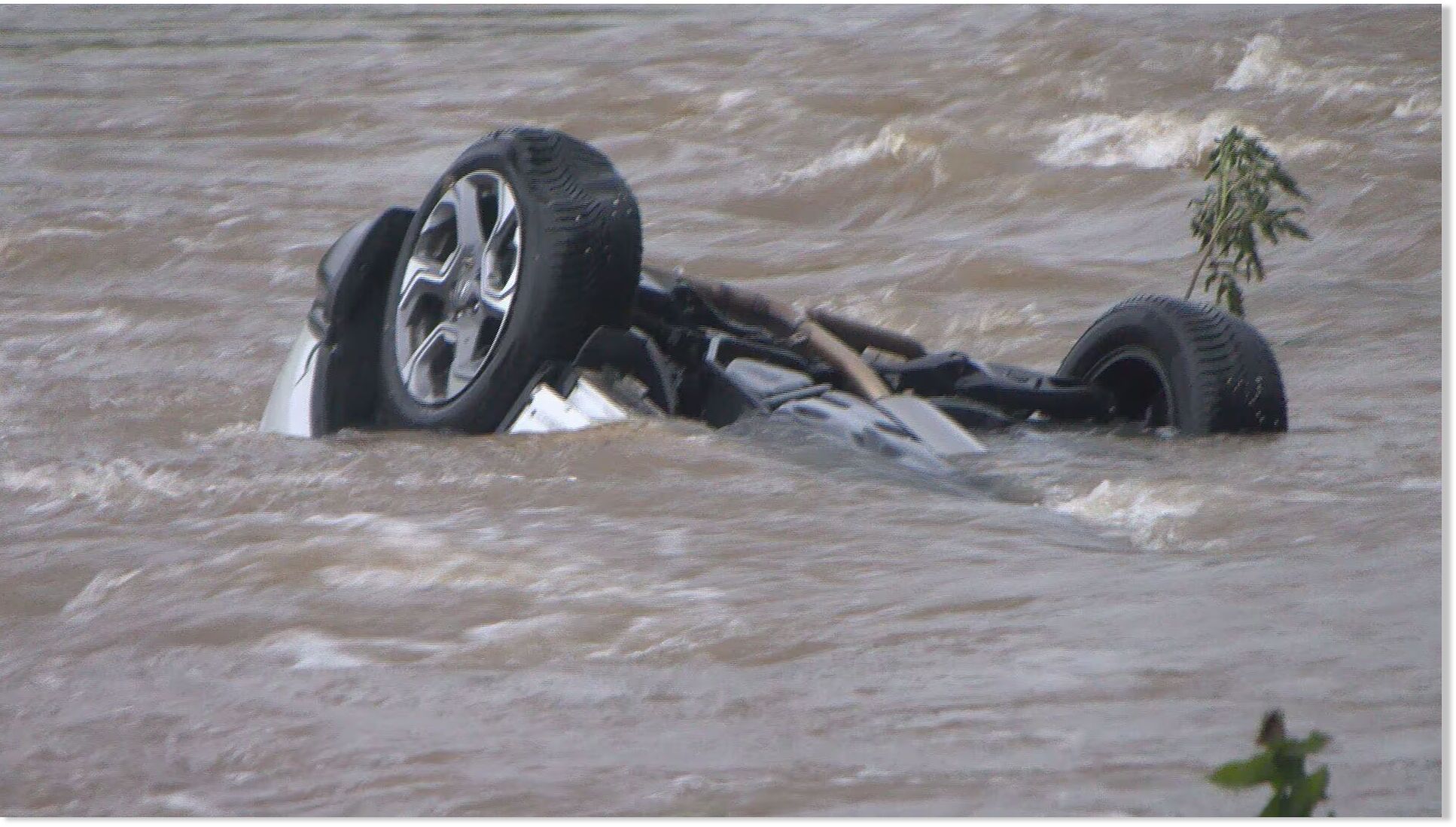
Among the most serious incidents reported overnight, emergency crews had to be urgently deployed to 25th Street West. There, the force of the current trapped a driver, whose vehicle began to be dangerously swept away by the water. Thanks to the swift intervention of the rescue teams, the individual was safely evacuated and taken to a protected area, preventing the situation from escalating or resulting in a tragedy.
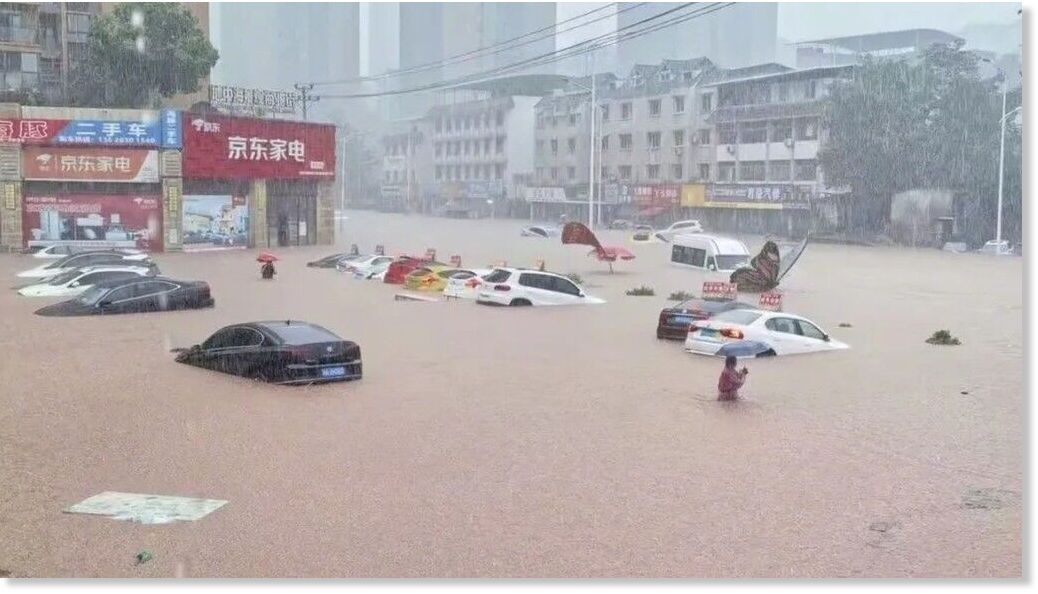
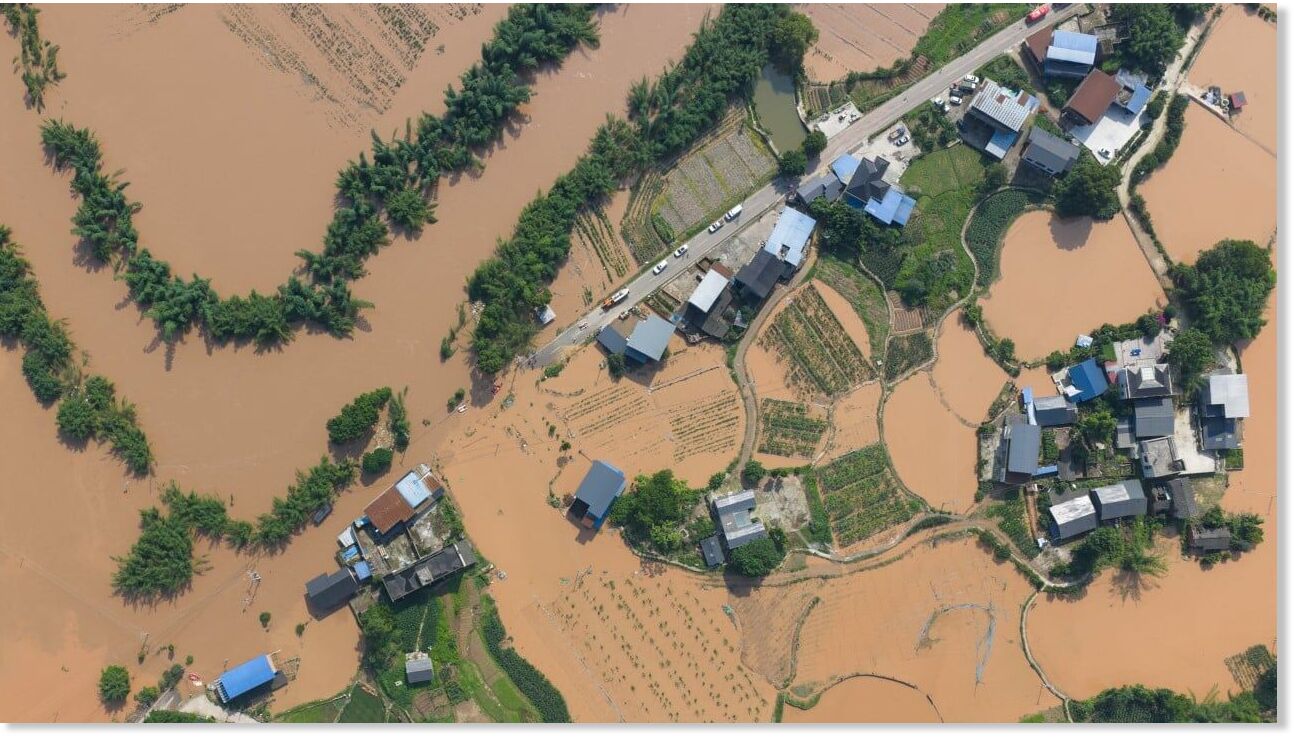
Heavy rain has caused severe flooding in parts of Chongqing, Guizhou and Guangxi, with water levels reaching up to two metres and submerging vehicles, authorities said.
The State Flood Control and Drought Relief Headquarters dispatched a working group to Chongqing on Sunday, urging enhanced emergency duty and strict implementation of 24-hour duty and leadership shifts.
The Ministry of Water Resources and the China Meteorological Administration issued a red alert for mountain torrents at 6pm on Sunday. From Sunday evening to Monday evening, parts of southwestern Hunan, northern Guangxi and southern Guizhou are at very high risk of mountain torrent disasters.
In Chongqing, a 500-600 metre section of road in the High-tech Agricultural Industry Avenue was flooded, with only vehicle roofs visible. A resident said rain started around 1am and by 7am water was about one metre deep, reaching over two metres by morning.
The Chongqing Hechuan District education authority confirmed that three college entrance examination venues are safely distanced from the worst-hit areas and have not been affected.
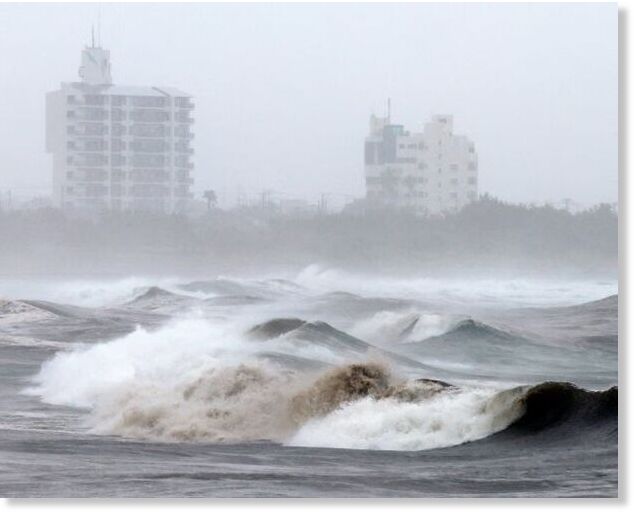
Typhoon Jangmi (also known as Typhoon No 6) moved northwards over the course of this week. From Okinawa to mainland Japan, prolonged and heavy rainfall led to landslide warnings and the flooding of rivers, with Japan issuing level 4 warnings for some rivers, signalling a risk of overflowing. This level is high enough for municipalities to issue evacuation orders. Three-hourly rainfall totals on Wednesday reached 105mm in Chiyoda, Tokyo, which was a record high for the month. Sustained wind speeds of 80mph (130kph) were recorded on Monday - making it a category 1 typhoon - bringing damage and disruption to businesses, transport, infrastructure and the environment.
By Wednesday, 23 people had been injured, 17 of whom were in Okinawa. The typhoon damaged 57 homes and led to 60,000 homes losing electricity. In addition to this, 1.52 million people were advised to evacuate by authorities. The typhoon damaged the exterior wall of Himeji Castle, a Unesco world heritage site in western Japan. The maximum recorded wind speed at Himeji was 56mph, according to the Japan Meteorological Agency. The typhoon has now weakened into a tropical depression and has moved eastwards, away from the islands.
Beginning Saturday evening, violent thunderstorms swept across much of the country, bringing locally unusually heavy rainfall.
Several regions in the south of the country experienced significant downpours, including part of the night, leading to flooding.
The Royal Meteorological Institute (IRM) issued an orange alert at 5:00 PM for all Walloon provinces and Brussels.
The situation in some Walloon municipalities quickly became a nightmare for residents and motorists, as well as for firefighters who were sometimes overwhelmed.
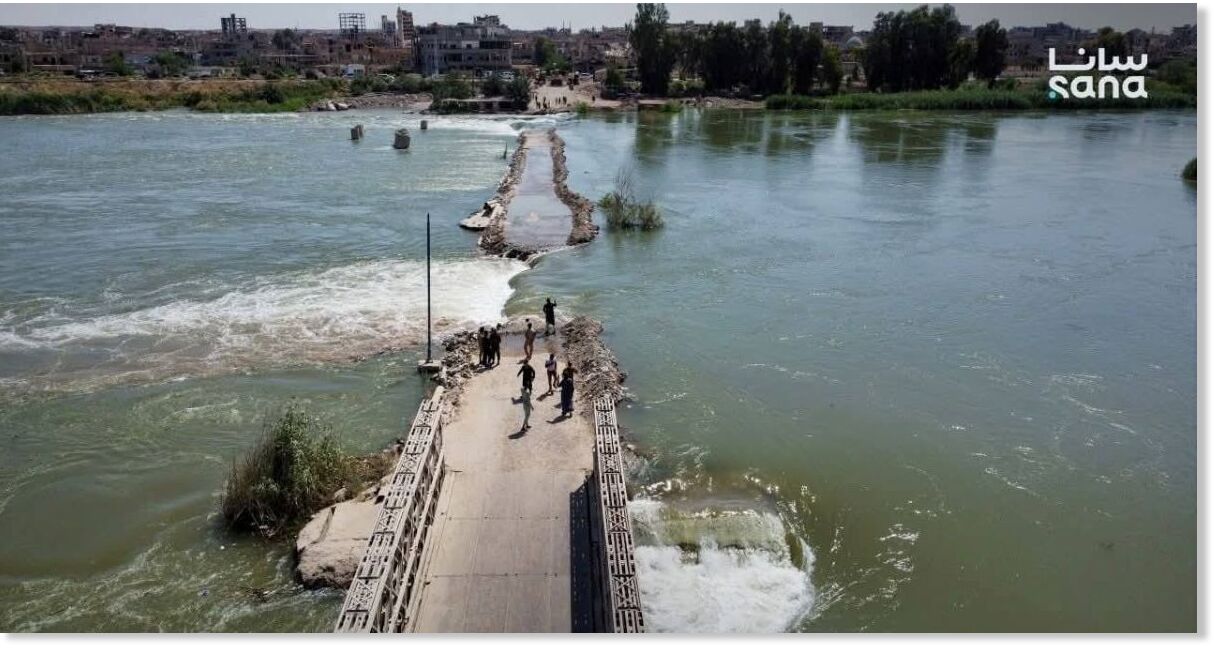
In Turkey, Syria, and Iraq, the crisis surrounding the Deklath (Tigris) and Froth (Euphrates) rivers has taken two devastating forms — drought and flooding. The causes may differ, but the outcome remains the same: suffering and death.
The crisis stems from Turkey's upstream control over the Deklath and Froth through its extensive dam network. When Turkey restricts water flow, Iraq suffers severe drought and water shortages. When it releases massive quantities of water at once, Syria bears the brunt of destructive floods that devastate civilians, infrastructure, and agricultural lands along the riverbanks.
After seven years dominated by the first scenario — suffocation through drought — Turkish authorities recently opened all the floodgates of the Atatürk Dam, the largest dam on the Euphrates River, following heavy rainfall and snowfall during the winter and spring seasons.
The release sent massive volumes of water surging toward the Syrian city of Jarablus. Observers noted that the decision was driven by fears over the dam's structural safety and the possibility of infrastructure failure due to rising water pressure, with clear disregard for the effect on Syrians and Iraqis.
A bridge has been washed away by floods in the central Chinese province of Hubei as several other provinces in the country continue to be lashed by heavy rains.
State media reported that nine people died and an estimated 11 were missing in Chongqing municipality.
A Mississippi woman is dead after flash flooding submerged and swept away her SUV while she was still inside, even as bystanders tried to rescue her.
The incident happened around 3 p.m. Monday in the parking lot of the Eastbrook Commons shopping center in Petal.
Luisa Ortega is an employee at Los Charros Mexican Grill in the shopping center. She says the staff was still inside the restaurant when the rain started to pick up.
"Just flooding in the dining area, flooding in the kitchen," she said. "It was kind of everywhere."
Moments later, Ortega says they noticed a white SUV caught up in fast-moving water in the middle of the parking lot as the driver struggled to get out.
"You could tell that she was... trying to get out or move around," she said. "But the body of water was moving from a lot of different areas."
Tragedy in Bulgaria just now! Large-scale water drowned houses, emergency in Sevlievo
Several days of heavy rain in northern Bulgaria have caused rivers to overflow, flooding settlements and forcing evacuations in several regions, including Veliko Tarnovo, Sevlievo, Apriltsi, and parts of Gabrovo.
Authorities warn that the situation remains unstable as water levels continue to rise. Emergency services are operating throughout the region, and officials describe the situation as one of the most severe in recent years.
Meanwhile, in Veliko Tarnovo, the Yantra River has reached a height of approximately 7.56 meters and remains at a dangerously high level.
Afghan residents clear sludge from a street after heavy rain showers induced flash floods in the Khash district of Badakhshan province on May 22, 2026.
Heavy rain and floods have killed at least 24 people in the past 48 hours across Afghanistan, local and disaster officials said today.
In the last 24 hours, 15 people were killed in the northern province of Baghlan, two in northeastern Badakhshan, and one in central Wardak due to flash floods.
"Fifteen people have lost their lives, and dozens more have been injured due to the floods," said Farooq Akhplawak, spokesman for the Baghlan governor.
A local official in Badakhshan said, "Two people have died, two others are missing, more than 100 residential houses have been destroyed."
Heavy rain has battered much of Afghanistan since Wednesday, causing floods in multiple provinces.
Heavy rains swept across central and eastern China over the weekend, hitting provinces including Jiangxi and Hunan, with more downpours expected.
The National Meteorological Center (NMC) forecasts that over the next three days, heavy rainfall will gradually move eastward and southward.
Since Friday evening, torrential rain in Ganzhou city, Jiangxi, has raised river levels and caused localized flooding. Shangyou county was hardest hit, especially Dongshan township, where rising waters disrupted electricity and water supplies, submerged streets and swept away vehicles.
By 4:30 pm Saturday, the county government had relocated 1,147 residents across a number of townships. No casualties or missing persons were reported, according to local media.
At least 12 people were killed as torrential rains continued across southern and central China on Tuesday, with widespread flooding that also closed schools and businesses, and disrupted transport and power supplies, authorities said.
China's weather agency maintained elevated orange alerts on Tuesday for heavy rain and severe stormy weather, warning that the huge precipitation system has entered its strongest, most destructive stage.
The China Meteorological Administration (CMA) said areas of Jiangxi, Anhui, Hunan, Hubei, Guizhou, Guangxi, Guangdong and Hainan faced a high risk of rain-related disasters, including landslides, flash floods and severe urban flooding and waterlogging. Authorities said they were launching emergency responses in several affected areas.
Many residents in Jingzhou, a city in central Hubei, were knee-deep in water and able to catch fish swimming in the streets, according to images posted on Chinese video platform Douyin.
Some cars were nearly completely submerged on roads surrounded by residential and commercial buildings.
Torrential rainfall hit the upper reaches of the Baishui River, part of Xuan'en county, with precipitation reaching 292.6mm. The rainstorm caused river water levels to surge rapidly, inundating multiple homes along the Baishui River. Some houses collapsed, while roads and communication services were disrupted.
At least eight people were confirmed dead after a pickup truck carrying 15 farm workers fell into a flooded river in China's southwestern region of Guangxi amid heavy rain, state broadcaster CCTV reported. In separate incidents, three people were killed by flash floods in a low-lying village in Hubei, while another person was killed in southern Hunan province, CCTV said.
Torrential rains also battered Shimen county in Hunan province from 7am Sunday, leaving one person dead and two others missing as of Monday evening, according to Xinhua.
Death toll reaches 25 in China rain, 20 more missing
The death toll from heavy rains across central and southern China since the weekend has risen to 25, state media reports showed Wednesday, with 20 more people still unaccounted for.
Natural disasters and extreme weather events are common in China, particularly in the summer, when some regions experience intense rainfall while others bake in searing heat.
Several areas across China have been hit by "record-breaking rainfall" in recent days, state-run broadcaster CGTN said, triggering school and work suspensions as well as allocation of relief funds.
Comment: Update May 19
The Independent reports: Update May 20
Gulf Today reports: