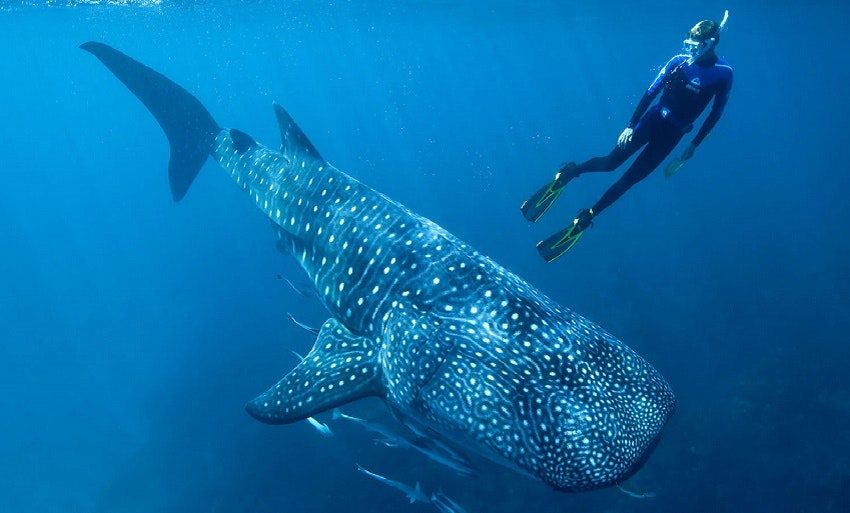
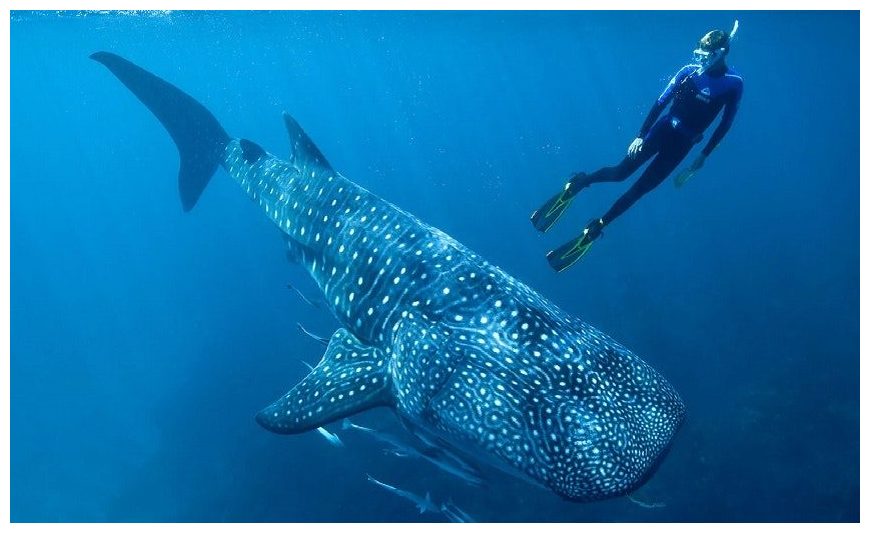
© WAYNE OSBORNAustralian researcher Mark Meekan swimming with a whale shark.
Scientists say they now know how old
whale sharks (
Rhincodon typus) can get, thanks in
no small part to the radioactive legacy of the arms race.Fallout from nuclear tests in the 1950s and 60s left clearly recognisable timelines in the vertebrae of the world's largest fish, they report in a
paper in the journal
Frontiers in Marine Science.This allowed them to establish that one of the specimens they studied was 50 years old at death - the first time, they say, that such an age has been unambiguously verified.
The project brought together researchers from the US, Iceland and Australia, with support from others in Saudi Arabia and Pakistan.
The key was determining how much time the timelines represent.
Like all sharks and rays,
Rhincodon typus lacks an otolith - the bony structure used to assess the age of other fish.
Its vertebrae do feature distinct bands that increase in number with age, in much the same way as rings of a tree trunk, but this has been of minimal value because it wasn't clear until now how often a new band formed.
















Comment: See also:
- Darwinism, Creationism... How About Neither?
- Why Darwinism Is Wrong, Dead Wrong - Part 1: Intelligent Design and Information
- Design from the beginning: It didn't take long for animals to master physics and engineering
- Biologists call to overhaul flawed taxonomic categories
And check out SOTT radio's: