Animals
S


Question

Mystery disease killing Germany's blue tits

There has been an unexplained spike in deaths in Germany's blue tit bird population
An unknown contagious disease is affecting Germany's blue tit bird population, said conservation non-governmental organization NABU. It received over 11,000 reports from the public of sick or dead birds between April 9 and April 17.

The Eurasian blue tit is a small bird native to Europe. It is around 12 cm (4.7 in) long with blue and yellow feathers. A spate of blue tit deaths in Germany, first noted on March 11, prompted NABU to launch the self-report survey.

Particularly hard-hit are blue tits in the lower Mosel wine region and the region around the city of Oldenburg, in Lower Saxony. "At least in these regions there is a noticeable death rate above all among the blue tit population," said NABU on its website.

The disease appears to mainly affect blue tits, but the great tit and other small song birds are sometimes infected.

Cow

Signs and Portents: Mutant cow born with two heads and two spines in Wessington Springs, South Dakota

Farmers have been left shocked by the birth of a twin-headed calf in the US
© Pen News/Amber KolousekFarmers have been left shocked by the birth of a twin-headed calf in the US
A mutant calf with two heads has been born on a farm in the US - to the shock of a family of farmers who had never seen anything like it before in five generations.

Scott Kolousek of Wessington Springs, South Dakota, USA, was halfway through the 2020 calving season when he discovered one of his cows having difficulty delivering her calf.

The poor little thing's front legs and head were out, and everything seemed normal, but it would come no further until a caesarean section revealed the reason why.

"We didn't know the calf was unusual until the vet pulled it out during the c-section," said his wife, Amber.

Attention

Signs and Portents: Afghans not astounded with birth of two-headed calf amid parallel governments

two headed
A video which purportedly shows the birth of a two-headed calf in Afghanistan has gone viral on social media but the majority of people say they are not astounded with the miracle as the country is already being ran by parallel governments which came into being after the end of a two-headed government or the National Unity Government.

The video of the two-headed calf is widely being posted on social media platforms, specifically on Facebook for the past few days.

The calf was reportedly born in Kata Khel Village of Balkh district in northern Balkh province of Afghanistan.


Attention

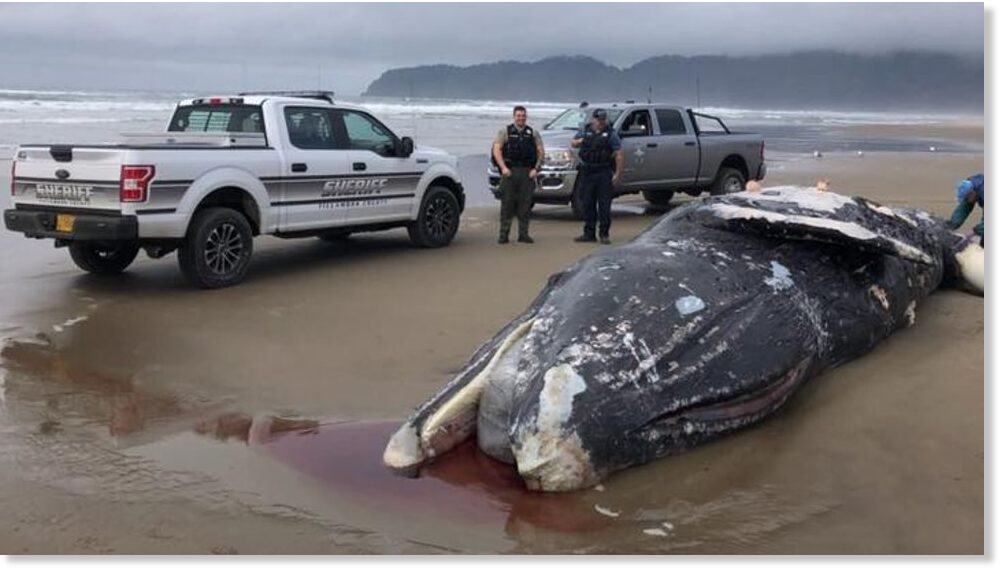
Gray whale washes ashore north of Pacific City, Oregon

A gray whale washed ashore on the beach of the Sandlake Recreation Area north of Pacific City on April 18, 2020.
© Tillamook County Sheriff's OfficeA gray whale washed ashore on the beach of the Sandlake Recreation Area north of Pacific City on April 18, 2020.
A 40-foot gray whale washed ashore north of Pacific City Saturday, the Tillamook County Sheriff's Office said.

Deputies responded after the camp host to Sand Lake Recreation Area discovered the whale had washed ashore overnight.

Biologists from Oregon State University performed an autopsy on the male whale Saturday afternoon.


Question

Hundreds of dead seals mysteriously washing ashore in Nova Scotia, Canada

Several hundred seal carcasses have been found in Cape Breton and Sambro, N.S.
© Marine Animal Response SocietySeveral hundred seal carcasses have been found in Cape Breton and Sambro, N.S.
Hundreds of dead seals have washed up on shores in Cape Breton and near Halifax in recent days, prompting an investigation by the Marine Animal Response Society.

Andrew Reid, the society's response co-ordinator, said it has received a number of reports over the last week about juvenile seal carcasses washing ashore in Cape Breton and Sambro, N.S., just outside Halifax.

Reid said there are believed to be several hundred dead seals in total, including roughly 70 in the Sambro area.

Eleven washed up on Geoffrey Howard's family property in West Pennant, just outside of Sambro. He said he went out to look after hearing his neighbour counted 27 along the shoreline on his property.


Attention

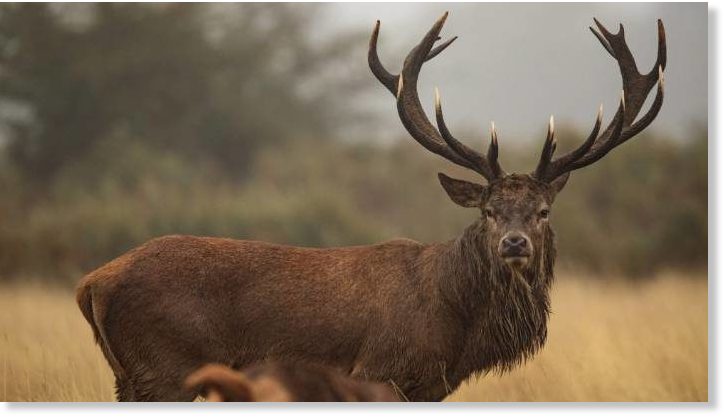
Man killed in stag attack in Southland, New Zealand

stag
A man has died after being attacked by a stag in Southland.

Police said they attended a rural address in Makarewa, north of Invercargill, around 6.10pm on Wednesday.

"Initial indications are that the man was attacked by a stag and suffered fatal injuries. The stag was put down," police said.

The circumstances of the man's death will be investigated on behalf of the coroner.

Info

East African herders consumed milk 5,000 years ago

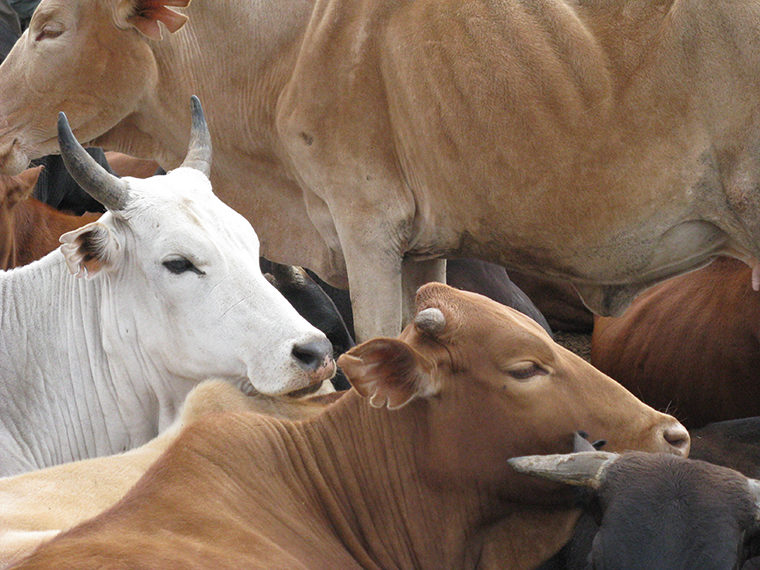
Herd of Cows
© Fiona MarshallAnthropologists from Arts & Sciences discovered lipid traces in ancient pots that offer the first direct evidence for milk processing by ancient pastoralist societies in eastern Africa.
When you pour a bowl of cereal, you probably aren't considering how humans came to enjoy milk in the first place. But animal milk was essential to east African herders at least 5,000 years ago, according to a new study that uncovers the consumption habits in what is now Kenya and Tanzania — and sheds a light on human evolution.

Katherine M. Grillo, assistant professor of anthropology at the University of Florida and a 2012 PhD graduate of Washington University in St. Louis, teamed up with researchers, including Washington University's Fiona Marshall, the James W. and Jean L. Davis Professor in Arts & Sciences, for the study published this week in the Proceedings of the National Academy of Sciences. Julie Dunne at the University of Bristol in the United Kingdom is co-first author on the paper with Grillo.

After excavating pottery at sites throughout east Africa, team members analyzed organic lipid residues left in the pottery and were able to see evidence of milk, meat and plant processing.

"(This is) the first direct evidence we've ever had for milk or plant processing by ancient pastoralist societies in eastern Africa," Grillo said.

"The milk traces in ancient pots confirms the story that bones have been telling us about how pastoralists lived in eastern Africa 5,000 to 3,000 years ago — an area still famous for cattle herding and the historic way of life of people such as Maasai and Turkana," Marshall said.

Doberman

Woman dies after being attacked by pit bull terrier inside her home in Fort Worth, Texas

PIT BULL ATTACK
A 60-year-old woman has died after she was attacked by a dog inside her home in Fort Worth last month, officials said.

Officials said animal control officers were called to Sharon Rene Baldwin's home on March 28 in regards to the dog attack.

Baldwin was taken to the hospital but succumbed to her injuries on Sunday, April 12.

According to officials, the investigation found that a man who lived in the home with the victim had found the dog a week before the attack. Officials said he was caring for the dog until its owner came forward. The relationship between the man and the woman is not known at this time.


Attention

Dead whale washes ashore near Florence, Oregon

dead whale
A dead whale has washed ashore several miles south of Florence.

A spokesperson for the Oregon State Parks Department, Chris Havel, says there are no plans to do anything with the carcass.

Havel says they're asking people to stay away.

"People need to stay home to help control the spread of Covid-19," he said.

Snowflake Cold

Mussels that hitched a ride to Antarctica didn't survive brutal winter conditions

Antarctic
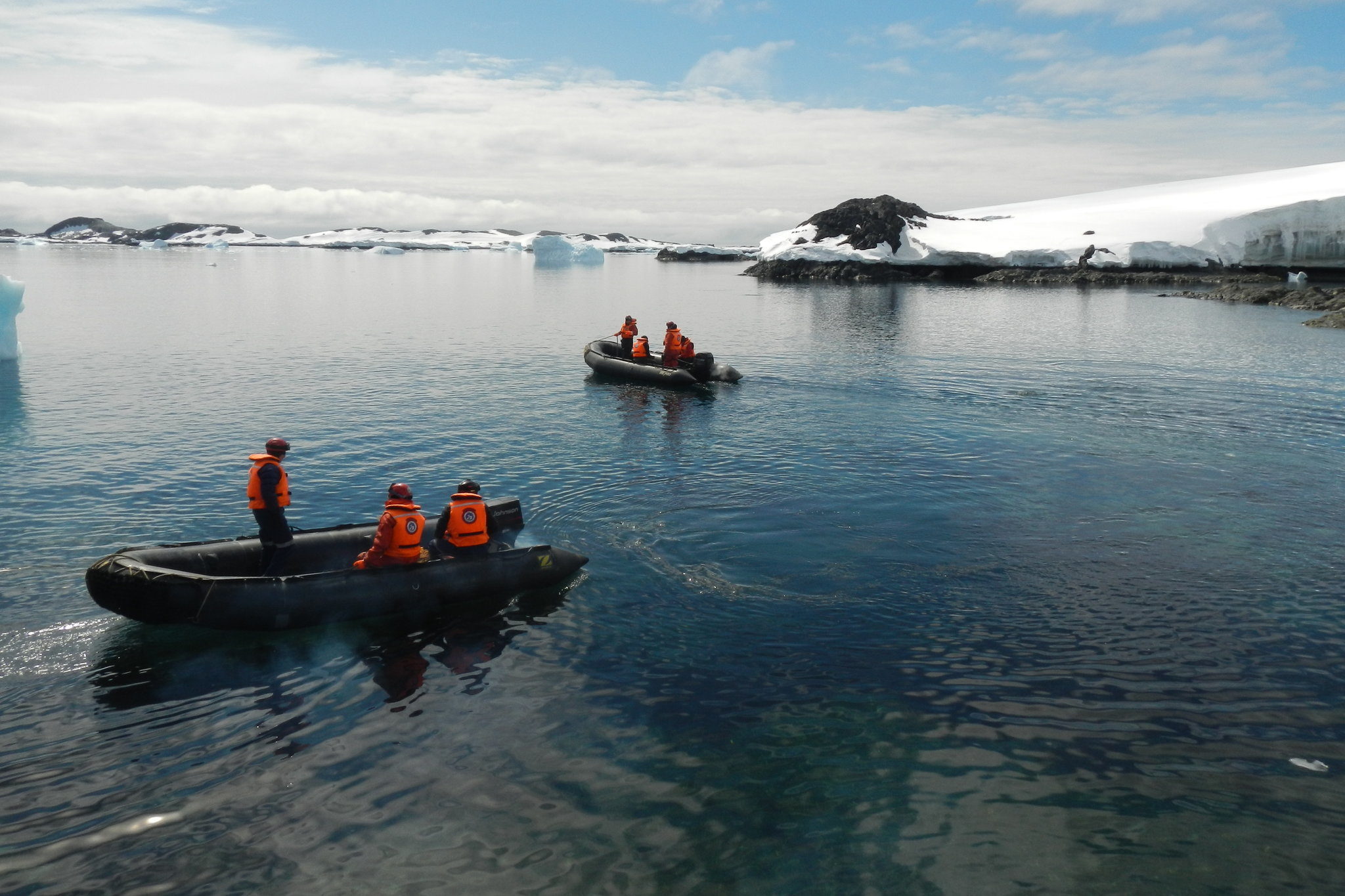
© Center for Dynamic Research of High Latitude Marine EcosystemsScientists suspect invasive mussels are hitching rides on ships to waters around the Antarctic.
Given its geographic isolation and bone-chilling temperatures, Antarctica has long held up a "no soliciting" sign when it comes to invasive species. But now the first successful marine invaders have breached the White Continent's door.

Scientists found a colony of mussels, most likely transported from Patagonia via ship, near the largest of the South Shetland Islands some 75 miles north of the Antarctic Peninsula. This discovery, published last month in Scientific Reports, is a harbinger of future invasions, the researchers suggest, particularly as climate change afflicts the Southern Ocean and ship traffic in the region increases.

Paulina Bruning, a marine biologist at Laval University in Québec City, never set out to find mussels in Antarctica. When Ms. Bruning dove in the 36-degree water of Fildes Bay on King George Island, she was focused on collecting native coral and sea sponges.

Comment: The researchers seem a little disappointed, probably because this puts a damper on the baseless claims that Antarctica is experiencing record warming: