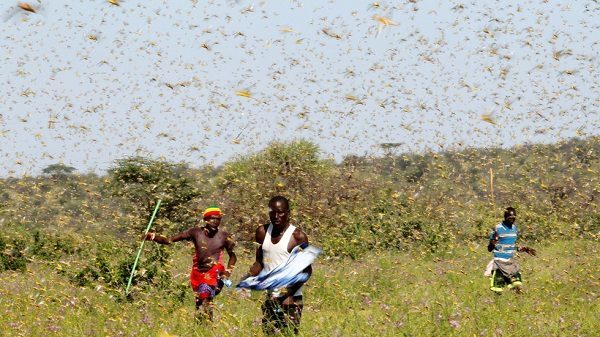
Swarms of desert locusts have been wreaking havoc in large parts of East Africa, Iran and Pakistan, as desperate farmers struggle to fend off the marauding insects.
The most devastating plague of locusts in over 30 years is about to hit Africa and the Middle East, according to Rome-based Senior Locust Forecasting Officer Keith Cressman.
The officer, who is employed by Locust Watch, a division of the United Nation's Food and Agriculture Organization, on Monday cited the organization's most recent report forecasting that new "extremely alarming" swarms of the insects were forming in the Horn of Africa.
Comment: The unprecedented plague of locusts is just one of a number of effects likely related to our planet's increasingly erratic seasons and extreme weather patterns. We've already seen the damage early frosts, summer droughts and golf ball sized hail - to name but a few - can do to our food supply, but there are other equally disastrous knock on effects that may not be immediately apparent. And for an idea of just how some of these changes are affecting wildlife, a recent article Spring arriving earlier across the US throwing wildlife into disarray notes:
Warmer spring temperatures have also led beetles, moths and butterflies to emerge earlier than in recent years. Similarly, hibernating species like frogs and bears emerge from hibernation earlier in warm springs.All species don't respond to warming the same way. When species that depend on one another — such as pollinating insects and plants seeking pollination - don't respond similarly to changing conditions, populations suffer.
In Japan, the spring-flowering ephemeral Corydalis ambiguaproduces fewer seeds than in previous decades because it now flowers earlier than when bumblebees, its primary pollinators, are active.
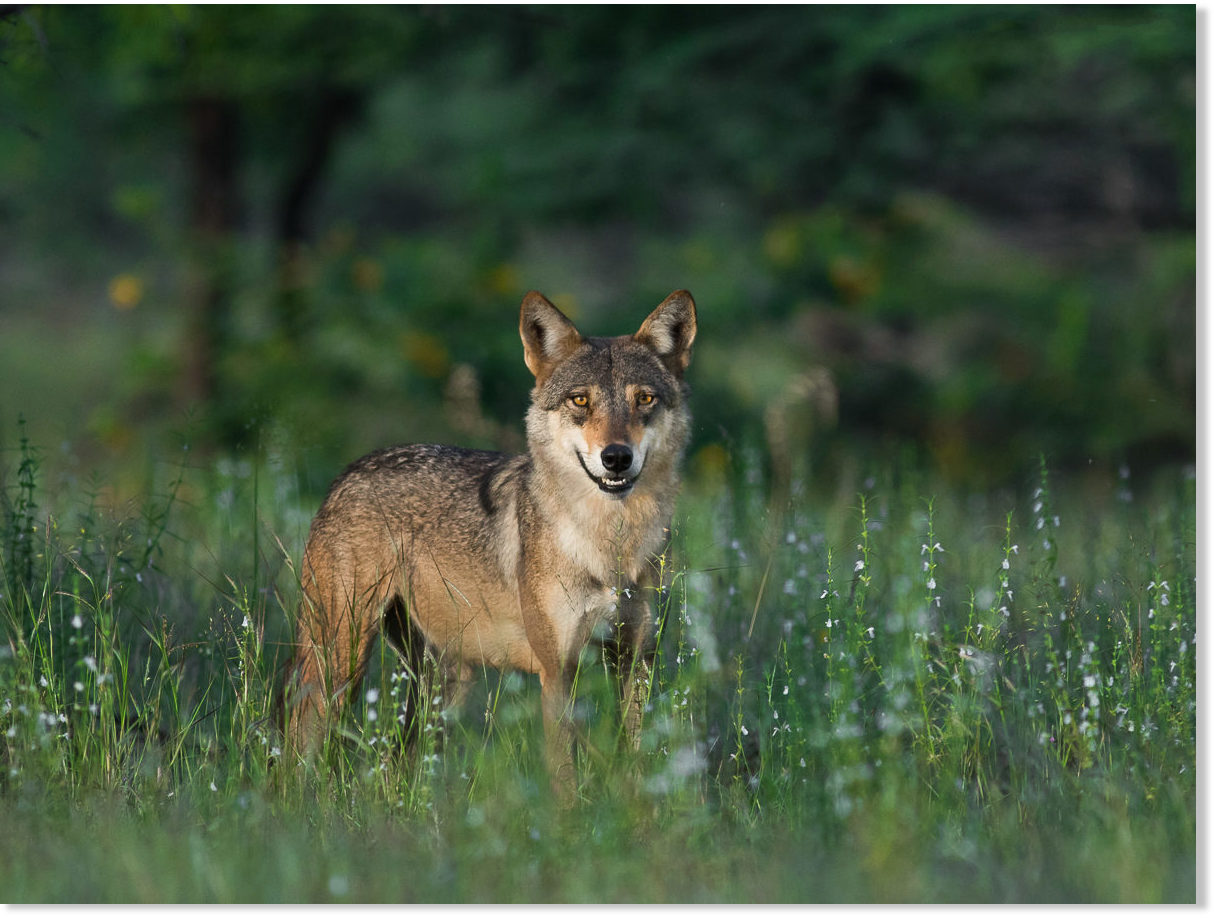
As many as 21 villagers were injured in a possible wolf attack in Dhaurahra area of Lakhimpur Kheri district on Sunday night. The attacks took place in a span of a couple of hours after sunset. All the victims belonged to eight villages adjacent to the buffer zone of Dudhwa Tiger Reserve. All are located within a 16-km radius comprising some 20 villages.
Some of the victims claimed that a lone wolf had attacked them. However, forest department officials are yet to ascertain if it was a wolf or a jackal. However, they are certain that the same carnivore attacked all the victims. They are trying to locate the animal that has created panic among the residents of nearly 20 villages in Dhaurahra. They suspect that the animal may have lost its senses after failing to get a mate and is attacking everyone or it may have become rabid.
A recent census by WWF-India had confirmed the presence of 100 Indian wolves in the Dhaurahra forests. The Indian wolf is protected under schedule I of the Wildlife Protection Act, 1972.
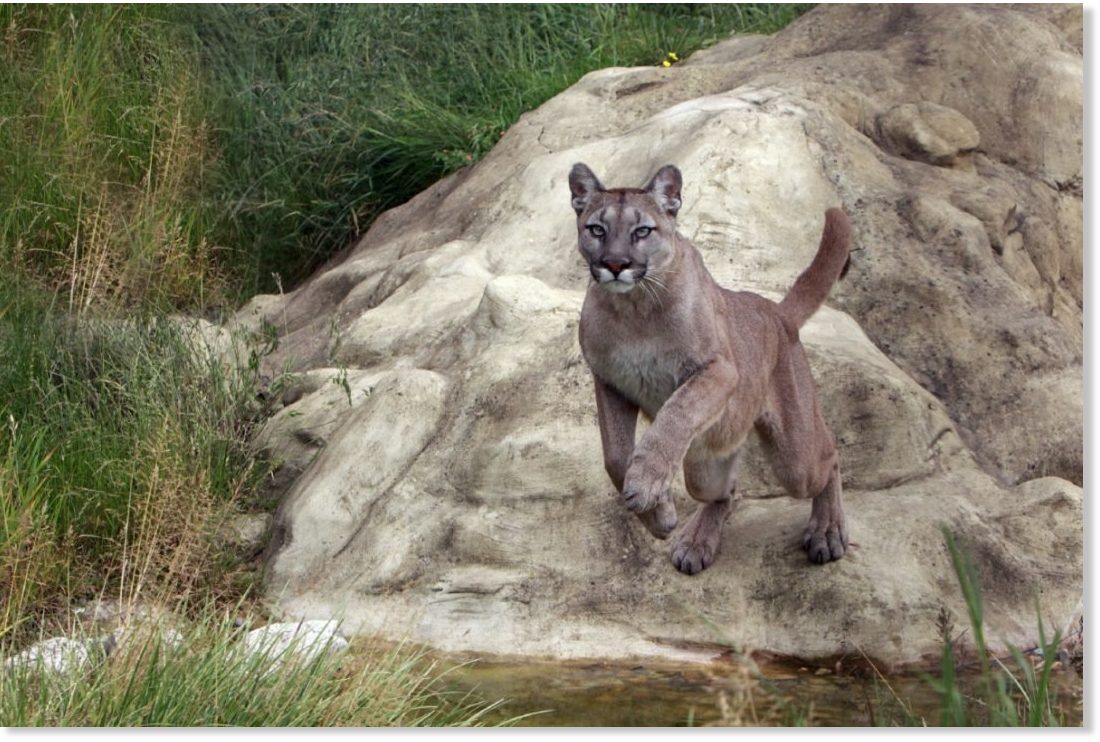
The quiet of a recreational vehicle park along the lazy running Big Thompson River west of Loveland was shattered Wednesday afternoon when law enforcement shot and wounded a mountain lion that attacked a resident and a female deputy.
The animal was later killed by state wildlife officials.
The attacked occurred just after 2 p.m. at the Riverview RV Park, 2444 River Rim Road.
An eyewitness said the Larimer County Sheriff's Office deputy is lucky to be alive. She was transported to an area hospital with injuries that were not life-threatening, according to LCSO spokesman David Moore.
How is it that an eagle can snatch a rabbit off the ground from hundreds of feet in the air and we can not even grab a glass off a table without knocking it over? It's because they see the world differently from us.
Thankfully, a recent scientific research has revealed an astonishing world of vision diversity across the animal kingdom.
The dragonfly brain works so fast that it sees movements in slow motion, snakes pick up infrared thermal signals from hot objects, thus detecting their prey, while horses and zebras have their eyes pointed to the side, which allowing them to have a peripheral vision and to avoid the dangers when necessary.
HIROLA CONSERVANCY: The giraffes lived in an unfenced conservancy
In the latest senseless crime against wildlife, two extremely rare white giraffes in Kenya have reportedly been killed by poachers.
Rangers at the Ishaqbini Hirola Community Conservancy discovered the carcasses of a female white giraffe and her calf in a village in Garissa County.
Conservancy manager Mohammed Ahmednoor on Tuesday said that after a long search, they were only able to recover the super-rare animals' skeletal remains. In a statement, he said:
"This is a very sad day for the community of Ijara and Kenya as a whole. We are the only community in the world who are custodians of the white giraffe.
It's killing is a blow to the tremendous steps taken by the community to conserve rare and unique species and a wake-up call for continued support to conservation efforts.
This is a long-term loss given that genetics studies and research which were significant investment into the area by researchers, has now gone to the drain. Also, the white giraffe was a big boost to tourism in the area."
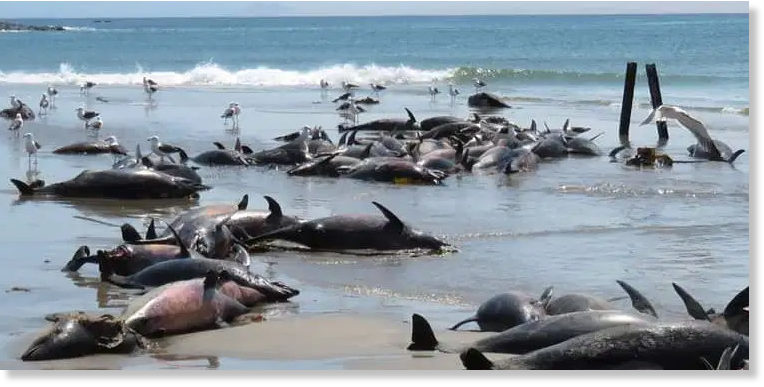
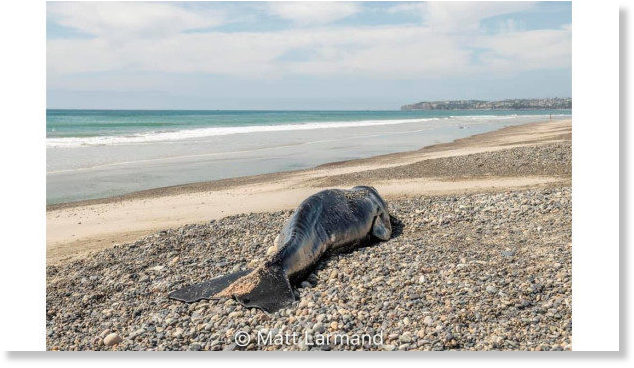
Namibia said on Monday that 86 dusky dolphins, including two calves just days old, had been found dead on a remote beach and it had launched an investigation into what happened.
Marine biologist Kolette Grobler estimated that the mammals had been dead for about a week before they were found on Friday by commercial lobster fishermen at Hottentot Bay, some 40 km (25 miles) north of the southwestern coastal town of Luderitz.
"We suspect that one of them was injured or got sick and called on the others for help, and this might have caused them to accidentally beach themselves," Grobler said.
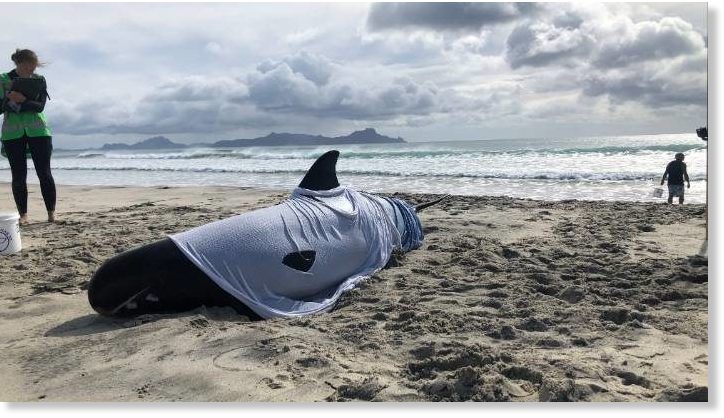
Three pygmy killer whales have died after a small pod was stranded onshore at a Northland beach overnight, less than a day after another stranded whale died.
Four whales were found on Waipu beach about 6pm Monday and reported to Project Jonah and the Department of Conservation. One of the pygmy whales had to be euthanised on Monday night, with two more following close to eleven on Tuesday morning as they were too ill to be saved. The fourth whale is still believed to have been successfully re-floated and in the ocean.
DoC spokeswoman Abi Monteith said local iwi will now decide what to do with the whales. They will either be cleansed, buried or passed on for scientific research.
A small farming community in Rakiraki marvelled at the birth of a stillborn two-headed calf last Friday.
For many in Rarapatu, the event gave them the opportunity to witness the unique deformity for the first time.
"The cow was having difficulties in giving birth so we called a traditional masseur who managed to assist in the birth process,' said animal owner Karan Naidu.
He said the rare phenomenon was only marred by the death of the deformed calf.
"We buried it and the only consolation is that its mother is OK."
What is truth anyway? The truth is the essence of something, its natural state, something as it really is. It is really a quest for love, because to truly love something we must know it for what it really is. Perhaps we can sense in an unconscious way that there is a deeper truth to everything and everyone, and we are led to search for the truth about it, so that we can truly love it for what it really is.
- Joe Quinn
”
Recent Comments
Andrew Burnham in the wings now. Previous vice-chairman of British Fluoridation Society + only resigned because of a possible conflict of...
Comment: The unprecedented plague of locusts is just one of a number of effects likely related to our planet's increasingly erratic seasons and extreme weather patterns. We've already seen the damage early frosts, summer droughts and golf ball sized hail - to name but a few - can do to our food supply, but there are other equally disastrous knock on effects that may not be immediately apparent. And for an idea of just how some of these changes are affecting wildlife, a recent article Spring arriving earlier across the US throwing wildlife into disarray notes: See also:
- Swarms of mosquitoes terrorize southwest Russia after record breaking floods - Residents post footage online
- High bird deaths likely due to cold weather and starvation in Campbellton, Canada
- "Unprecedented": Locust invasion approaches full-blown crisis across Africa and southwest Asia
- Nunatsiavut wildlife manager says polar bear numbers "very, very healthy" - Inuit hunters agree
Also check out SOTT radio's: