Extreme Temperatures
S


Snowflake Cold

Researchers find depths of Pacific Ocean cooling, possibly linked to Little Ice Age

pacific
© Larry Madin, Woods Hole Oceanographic InstitutionCold waters that sank in polar regions hundreds of years ago during the Little Ice Age are still impacting deep Pacific Ocean temperature trends. While the deep Pacific temperature trends are small, they represent a large amount of energy in the Earth system.
A pair of researchers, one with the Woods Hole Oceanographic Institution, the other Harvard University, has found evidence of deep ocean cooling that is likely due to the Little Ice Age. In their paper published in the journal Science, Jake Gebbie and Peter Huybers describe their study of Pacific Ocean temperatures over the past 150 years and what they found.

Prior research has suggested that it takes a very long time for water in the Pacific Ocean to circulate down to its lowest depths. This is because it is replenished only from the south, which means it takes a very long time for water on the surface to make its way to the bottom-perhaps as long as several hundred years. That is what Gebbie and Huber found back in 2012. That got them to thinking that water temperature at the bottom of the Pacific could offer a hint of what surface temperatures were like hundreds of years ago.

Comment: It seems our planet never really recovered its former temperate glory following the medieval warm period because, by most metrics, the climate has returned to cooling. It's also notable that the Atlantic Ocean circulation system is at its weakest in 1000 years with a quadrupling of dead zones.

See also:


Snowflake Cold

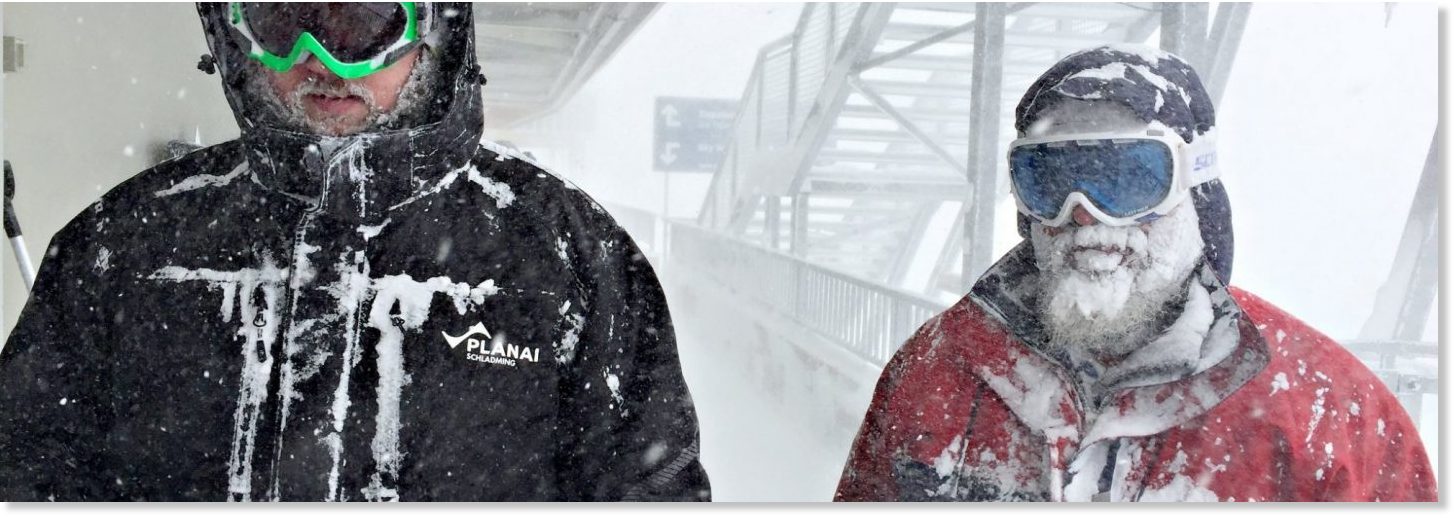
Up to 7 feet of snow in 7 days hits Austria and the eastern Alps

snow beard
Ski areas in Austria have reported huge snowfalls over the past week with the ski area of Tauplitzalm in Styria claiming 210cm (7 feet) of snowfall in that period.

Other big accumulations have been reported by the Skicircus Saalbach Hinterglemm Leogang Fieberbrunn with 150cm (five feet), resorts around Innsbruck with up to 1.2m (four feet) and the Hintertux glacier with 110cm (3.7 feet).

The problem of warm temperatures causing rain at lower elevations seems to have eased too with Saalbach saying its resort-level snow has jumped from zero to 90cm in the past week or so.

St Anton, with 70cm of fresh snow, has moved up to equal Solden for the deepest reported base in the country at 3.3m (11 feet).


Snowflake Cold

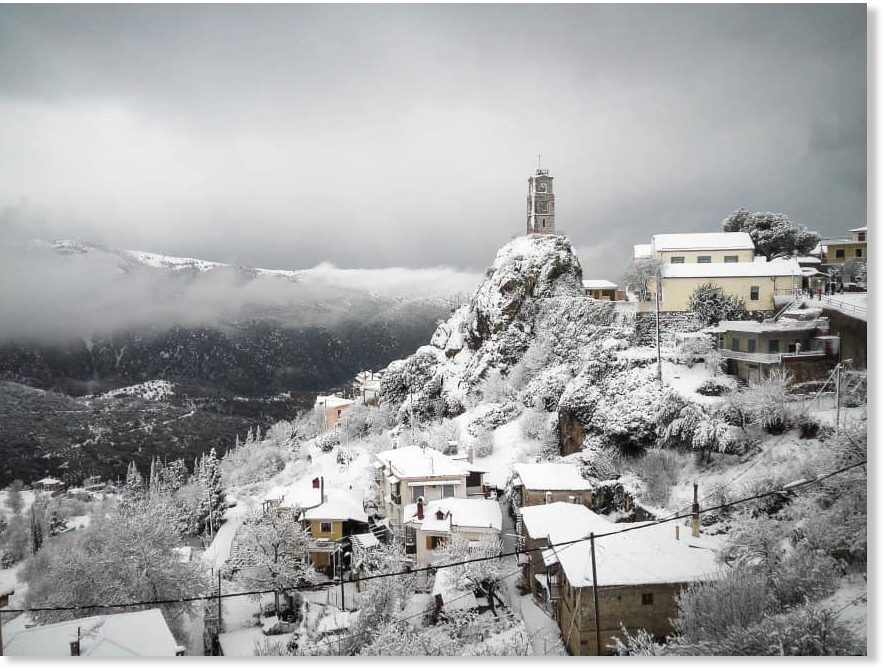
Much of Greece covered in blanket of snow

snow greece
Many regions throughout Greece will see snowfall on Thursday, even in relatively low-lying areas, as part of the phenomena caused by the "Sophia" weather system.

According to the latest forecast by the National Observatory of Athens' Meteo service, snowfall will be especially heavy Thursday (today) and Friday. It is already snowing throughout the prefectures of Macedonia, Ioannina, Trikala and Larissa, and tire chains are required on several roads.

Snow is also expected in Greece's second-largest city of Thessaloniki as well and even the northern suburbs of Athens will see snow in the evening.

"Sophia" will bring very low temperatures, as a mass of cold air from the north sweeps through the country. Temperatures will drop several degrees below zero Celsius overnight into Friday and Saturday, especially in central and northern Greece.


Igloo

Severe winter weather forecast for parts of US and Europe as the polar vortex splits into 3 pieces

Polar Vortex
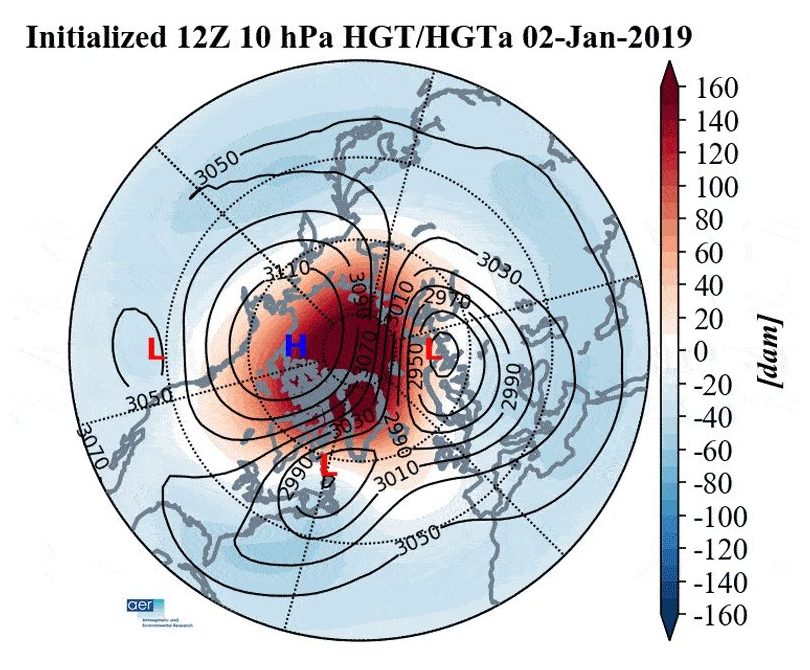
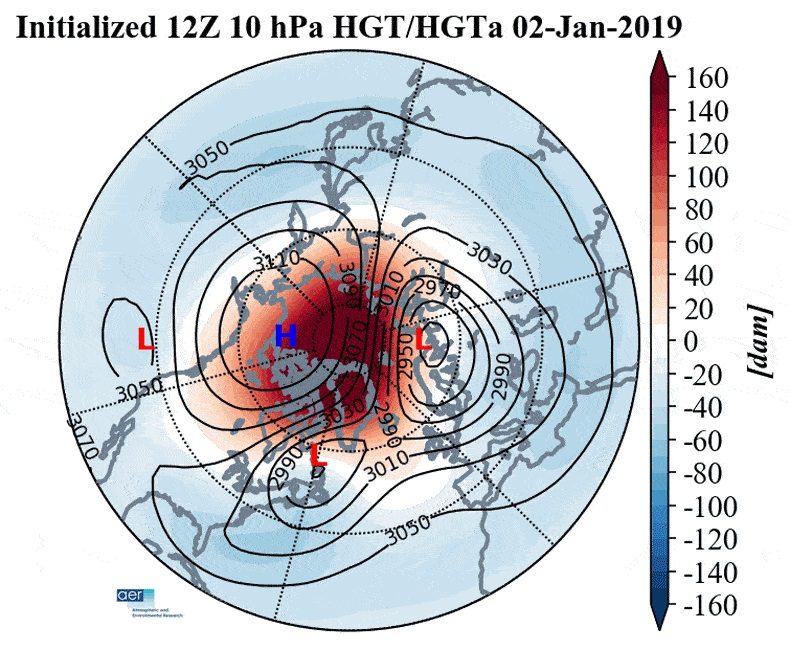
© GFS model via Judah Cohen/AER VeriskComputer model projected 10 mb geopotential heights (dam; contours) across the Northern Hemisphere for Jan. 2 through Jan. 18.
Scientists are seeing signs that global weather patterns toward the latter half of January and into February may shift significantly to usher in severe winter weather for parts of the U.S. and Europe.

How it works: The possible changes are being triggered by a sudden and drastic warming of the air in the stratosphere, some 100,000 feet above the Arctic, and by a resulting disruption of the polar vortex - an area of low pressure at high altitudes near the pole that, when disrupted, can wobble like a spinning top and send cold air to the south. In this case, it could split into three pieces, and those pieces would determine who gets hit the hardest.

The big picture: Studies show that what happens in the Arctic does not stay in the Arctic, and rapid Arctic warming may paradoxically be leading to more frequent cold weather outbreaks in Europe, Asia and North America, particularly later in the winter.

During the past 2 weeks, a sudden stratospheric warming event has taken place, showing up first in the Siberian Arctic, and then spreading over the North Pole.
  • Such events occur when large atmospheric waves surge beyond the troposphere and into the layer of air above it. Such a vertical transport of energy can rapidly warm the stratosphere, and set in motion a chain reaction that disrupts the stratospheric polar vortex.
  • Sudden stratospheric warming events are known to affect the weather in the U.S. and Europe on a time delay - typically on the order of a week to several weeks later, and their effects may persist for more than a month.


Snowflake Cold

Snow blankets parts of the Texas desert - lowest overnight temperatures for 5 years

Footage taken from a car window near El Paso, Texas, shows the usually arid desert blanketed in snow as the West and Southwest of the United States are hit by cold weather
This extraordinary footage from Texas reveals how huge stretches of America's deserts have been blanketed in snow.

The video, taken from the window of a car, shows the usually dry and arid plains covered in white near El Paso amid the big freeze in the desert.

In improbable scenes snow has fallen on the Grand Canyon and cactuses in the Arizona desert this week, as temperatures dropped below freezing in the West and Southwest.

Today the National Weather Service issued a freeze warning for the desert in California where temperatures were tipped to drop as low as 25F overnight.

The footage from the car was posted online by a Twitter user called Marcus.

It shows vegetation by the side of the road dusted in white, with a layer of snow on the ground and on the roofs of nearby buildings.


Comment: Related article: Snow on saguaros: Desert cities in US Southwest see freeze


Snowflake

Newfoundland rings in 2019 with up to 58 cm (22 inches) of snow

snow newfound land
© Todd G. Baker
Many across Newfoundland welcomed the new year with a shovel in hand, as a potent winter storm delivered a wide range of 20 to 50 cm of snow.

By the time the snow tapered off Wednesday night, Gander had seen 58 cm of snow, while St. John's reached 43 cm.

For those in Gander, this blizzard event rivals the town's current record for the most snow seen in a single day: a whopping 58.6 cm, which fell on March 18, 1993.


Powerful winds accompanied the winter weather, as gusts between 90 and 130 km/h hit areas along the northeast and south coasts.


Arrow Down

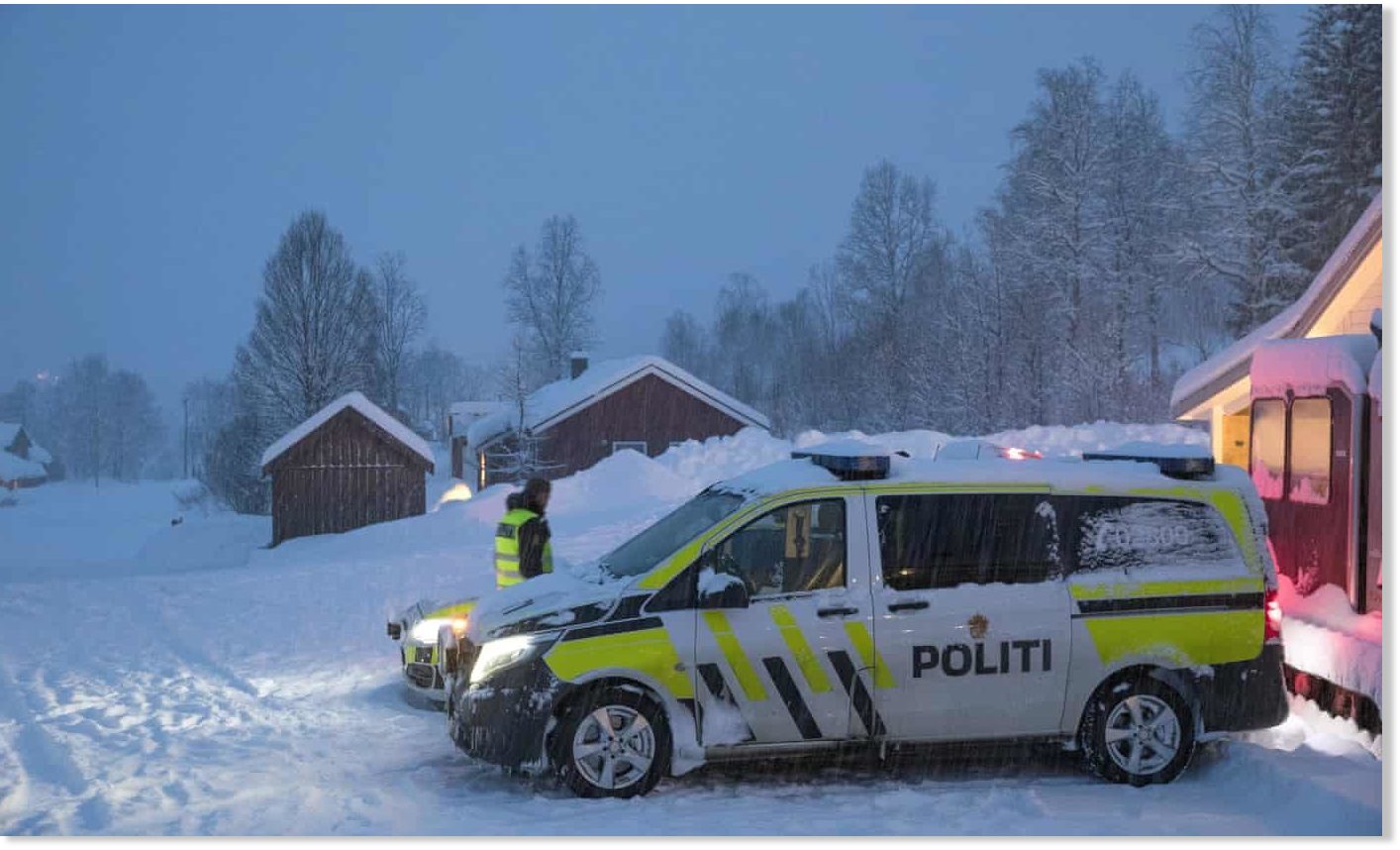
Four skiers still missing after Norway avalanche

Police said there was a high risk of triggering
© Terje Bendiksby/APPolice said there was a high risk of triggering a new avalanche.
Weather stops rescuers from continuing search for tourists from Sweden and Finland

Four tourists from Sweden and Finland are still missing, a day after they were feared to have been swept away by an avalanche in Arctic Norway, police have said.

The avalanche occurred on Wednesday in the northern Norwegian region of Troms. Three Finns and a Swede were skiing in the area and were reported to police as missing at around 1500 GMT, police said.

Weather conditions did not allow rescue crew to continue their work on Thursday, although the searches were not called off.

"The snow mass is huge. There is a high risk of triggering a new avalanche ... and there is a small storm in the area," Troms police chief Astrid Elisabeth Nilsen told a news conference.

Snowflake

Pajarito Ski Resort in New Mexico receives 3 feet of snow in 24 hours

Pajarito Ski Resort
© Tim Lovell
Pajarito Ski Resort is celebrating after the ski area reported 36 inches of snow in the last 24 hours.

KRQE News 13 viewer Tim Lovell sent in photos of the area.

Lovell said he could barely move as he was knee deep in the snow.

The accumulated snowfall got so heavy it was bending trees.

Comment: Related article: Snow on saguaros: Desert cities in US Southwest see freeze


Snowflake

Snow on saguaros: Desert cities in US Southwest see freeze

The Empire Mountains emerge from cloud cover
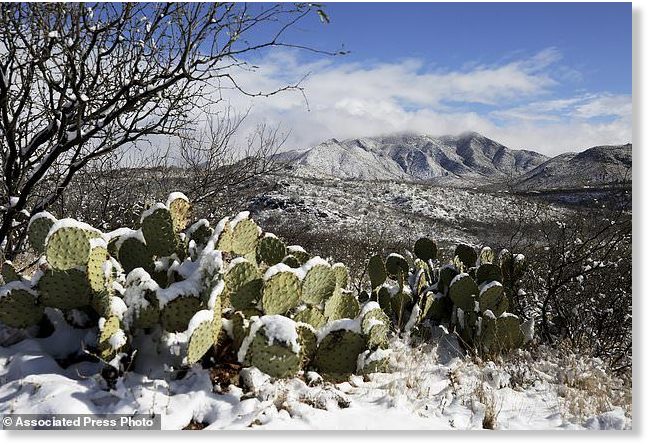
© Mike Christy/Arizona Daily StarThe Empire Mountains emerge from cloud cover after the second round of winter storms brought snowfall to the surrounding metro Tucson area and southeast Arizona, Jan. 2, 2019, south of Vail, Ariz.
The weather was flipped Wednesday throughout much of the U.S. West, with snow falling on cactuses in the Arizona desert and Anchorage seeing balmy weather - at least by Alaska standards.

In Phoenix, the overnight low was 30 degrees for the first time in five years and more cold temperatures were expected Thursday. The Tucson area saw as much as 6 inches of snow.

"It was pretty magical," said Jessica Howard, a resident of the Tucson suburb of Vail who took her 8- and 5-year-old children to play in the snow. "My social media feeds are like 100 percent snow pictures right now."

Snow dusted cactuses and mountains in southern Arizona and covered the Grand Canyon in the north.


Comment: Related article: Pajarito Ski Resort in New Mexico receives 3 feet of snow in 24 hours


Snowflake Cold

China on blizzard alert as cold snap spreads

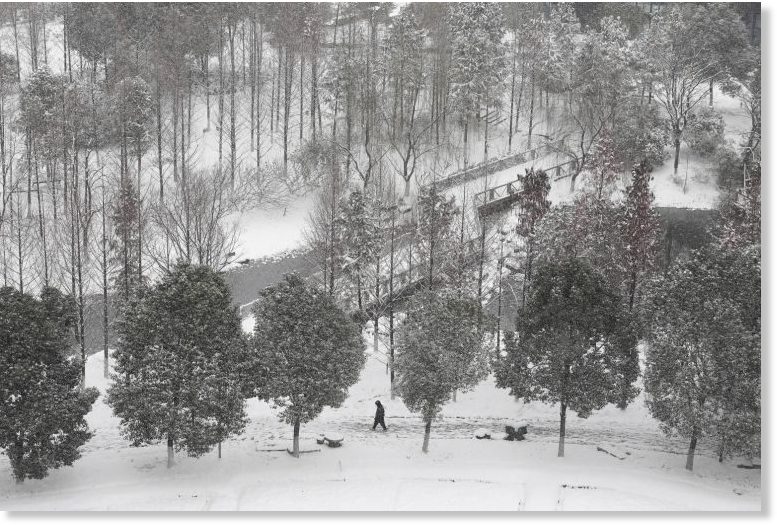
The snow-covered Shanshan wetland in Wuhan, Hubei province, on Sunday. Public transport in parts of China has been suspended as snowstorms hit.
© REUTERSThe snow-covered Shanshan wetland in Wuhan, Hubei province, on Sunday. Public transport in parts of China has been suspended as snowstorms hit.
China has issued a blizzard alert as temperatures around the country plunged, shutting down train lines and bus routes, and grounding some flights.

The National Meteorological Centre issued a Code Blue alert, with heavy snowstorms closing in on regions in the eastern and southern provinces of Zhejiang, Jiangxi, Anhui and Hunan.

China has a four-tier colour-coded weather warning system, with red representing the most severe, followed by orange, yellow and blue.


Comment: See also this report from 2 days earlier: Heavy snow wreaks havoc in central, eastern China