Extreme Temperatures
S


Snowflake Cold

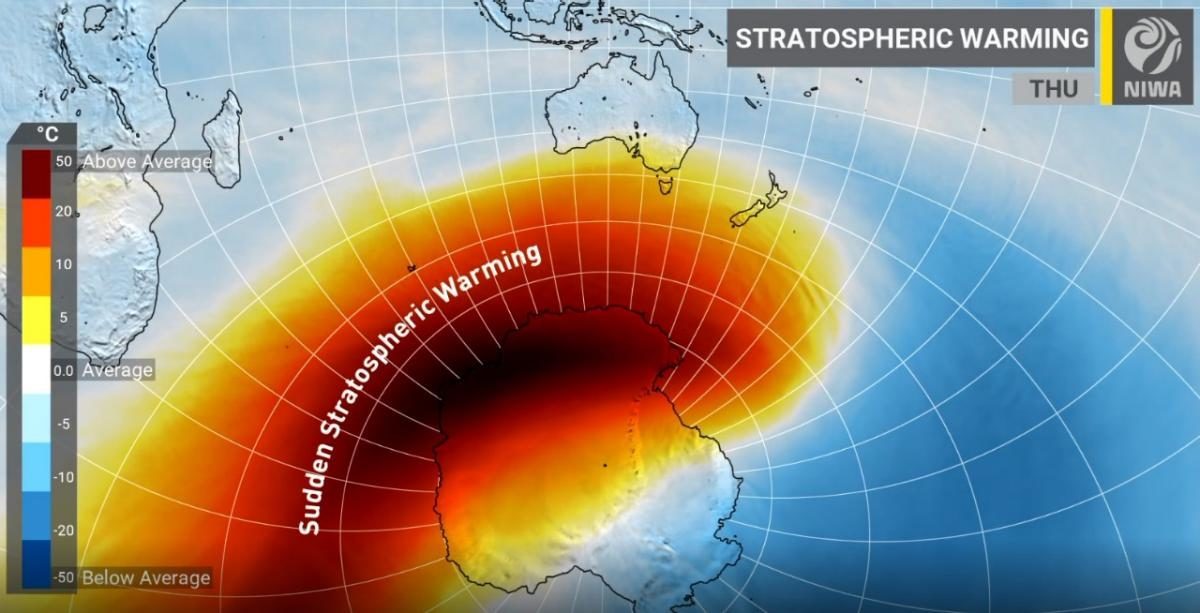
Rare 'sudden stratospheric warming' event could bring icy weather to New Zealand

‘Sudden Stratospheric Warming’ event could bring icy weather to New Zealand
© NIWANIWA says a ‘Sudden Stratospheric Warming’ event could bring icy weather to New Zealand next month.
It's called a sudden stratospheric warming event - and, unlike the name might suggest, the rare phenomenon could spell a burst of bitterly cold weather for New Zealand over coming weeks.

A sudden stratospheric warming (SSW) event kicks off when the temperature of the stratosphere - that's 30km to 50km above ground - over the South Pole climbs by more than 25C. Meteorologists think it's likely this is about to happen next week.

Importantly, it has the potential to mess with a ring of stormy and freezing weather that encircles Antarctica, which is at its strongest at this time of year - and which we know better as the polar vortex that's been dubbed the "beast from the east" - threatening to send a series of cold blasts from the North Pole to Western Europe and the UK, along with the east coast of the United States.

While this swirling, freezing air mass is usually effective at keeping harsh, wintry conditions locked up close to the pole, an SSW can help weaken or displace it in the stratosphere.

This sends these cold masses filtering down on to the tropospheric polar vortex, potentially influencing our own weather patterns.

Niwa meteorologist Ben Noll said that, during a major SSW, the winds in the stratosphere reversed from westerly to easterly.

"For up to about a month after the SSW, polar air masses, known as streamers, can break off from the weakened vortex and move towards New Zealand," he said.

"It doesn't guarantee unusual or extreme weather, but it can happen."

Snowflake

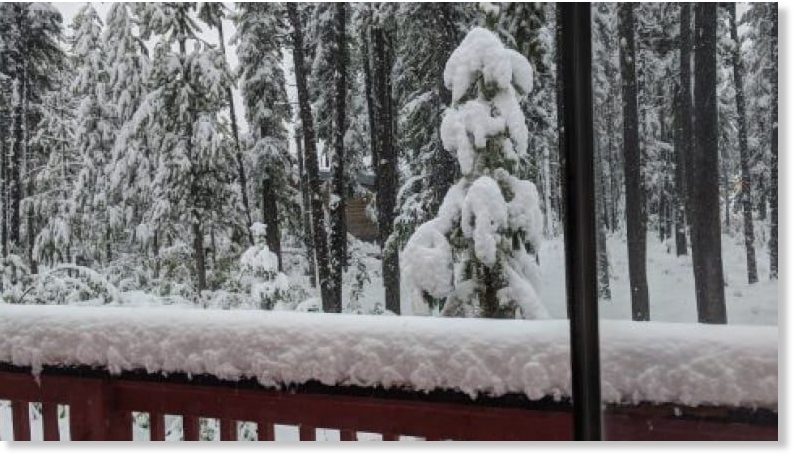
August snow touches down in Colorado

First White Stuff
Colorado ski season is just around the corner.

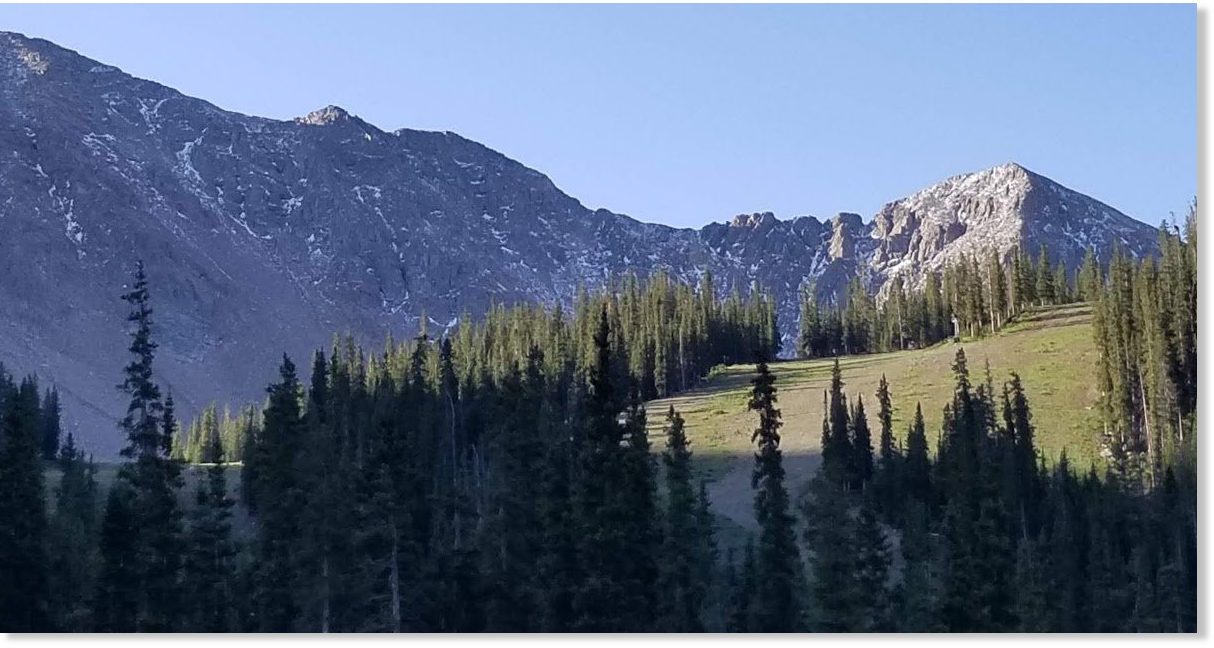
Arapahoe Basin, known for its higher elevation, saw its first dusting of white stuff for the 2019-2020 season early Thursday morning.

"And so it begins. Not sure if it is snow, hail, sleet, slush or what, but the first white stuff of the season was high on the East Wall this morning," Arapahoe Basin COO Alan Henceroth announced on his blog Thursday morning.

Comment: It's Snowing in August all over the world


Snowflake

Adapt 2030 Ice Age Report: Foot of summer snow BC - Hurricane, drought - Crypto nations

The view from Melody Magaton's window Monday morning, at the Buffalo Inn along the Alaska Highway in Pink Mountain, 190 kilometres north of Fort St. John, B.C.
© Melody MagatonThe view from Melody Magaton's window Monday morning, at the Buffalo Inn along the Alaska Highway in Pink Mountain, 190 kilometres north of Fort St. John, B.C.
Over a foot of snow (35cm) has fallen in British Columbia western Canada, so much of a rare season event it caught provincial park staff and campers off guard forcing the closure Fort Nelson and Muncho Lake Park - Stone Mountain. Hurricane season in the Atlantic is far short of expectations although experts tell us that climate change will result in more frequent storms. A look at which countries are adopting cryptocurrency fastest across the globe.

Winter is Coming Cycles of Change Presentation: A comprehensive PDF slide presentation with accompanying MP3 narration of the slides by David DuByne, author of Climate Revolution. Over an hour of detailed explanation and documentation of the rapidly approaching periods of life-changing Cold we will soon experience.

Climate Revolution is a 'Must Read' for understanding our Sun driven climate as we progress deeper into the new Eddy Grand Solar Minimum. Weather extremes leading to Global food scarcity and high food prices are here now, and this book describes the expected changes, how to survive & thrive during future challenging times with practical preparations.


Sources

Sun

Mass salmon die off blamed on heatwave and lack of oxygen in Alaska

salmon
The heat decreases the amount of oxygen in the water, causing salmon to suffocate.
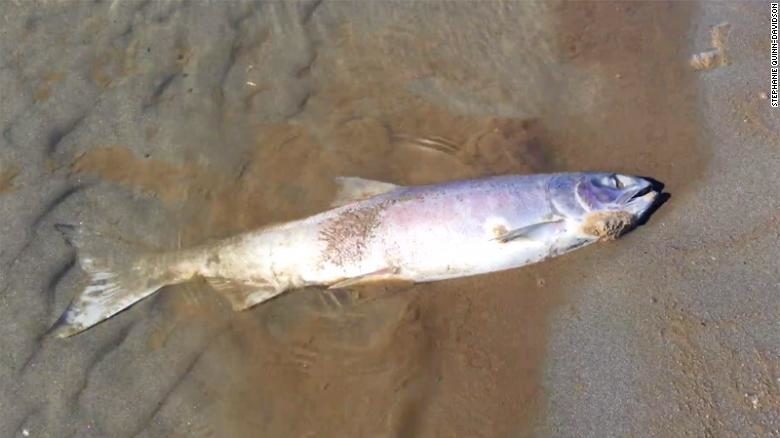
Alaska has been in the throes of an unprecedented heat wave this summer, and the heat stress is killing salmon in large numbers.

Scientists have observed die-offs of several varieties of Alaskan salmon, including sockeye, chum and pink salmon.Stephanie Quinn-Davidson, director of the Yukon Inter-Tribal Fish Commission, told CNN she took a group of scientists on an expedition along Alaska's Koyokuk River at the end of July, after locals alerted her to salmon die-offs on the stream.

She and the other scientists counted 850 dead unspawned salmon on that expedition, although they estimated the total was likely four to 10 times larger.

They looked for signs of lesions, parasites and infections, but came up empty. Nearly all the salmon they found had "beautiful eggs still inside them," she said. Because the die-off coincided with the heat wave, they concluded that heat stress was the cause of the mass deaths.


Comment: So it isn't definitive proof, but it is certainly a possibility, and it's notable extreme temperature swings are wreaking havoc all over the planet.


Quinn-Davidson said she'd been working as a scientist for eight years and had "never heard of anything to this extent before."

Comment: Meanwhile also in that area of the world record cold events are also occurring, and the overall trend is towards cooling:


Info

Ice Age Farmer Report: China stocks up - UK panics - Cartels seize avocados - Fake eggs - Crop losses

Avocado farmer
© US Department of AgricultureAvocado farmer

Sources

Snowflake

It's Snowing in August all over the world

snow
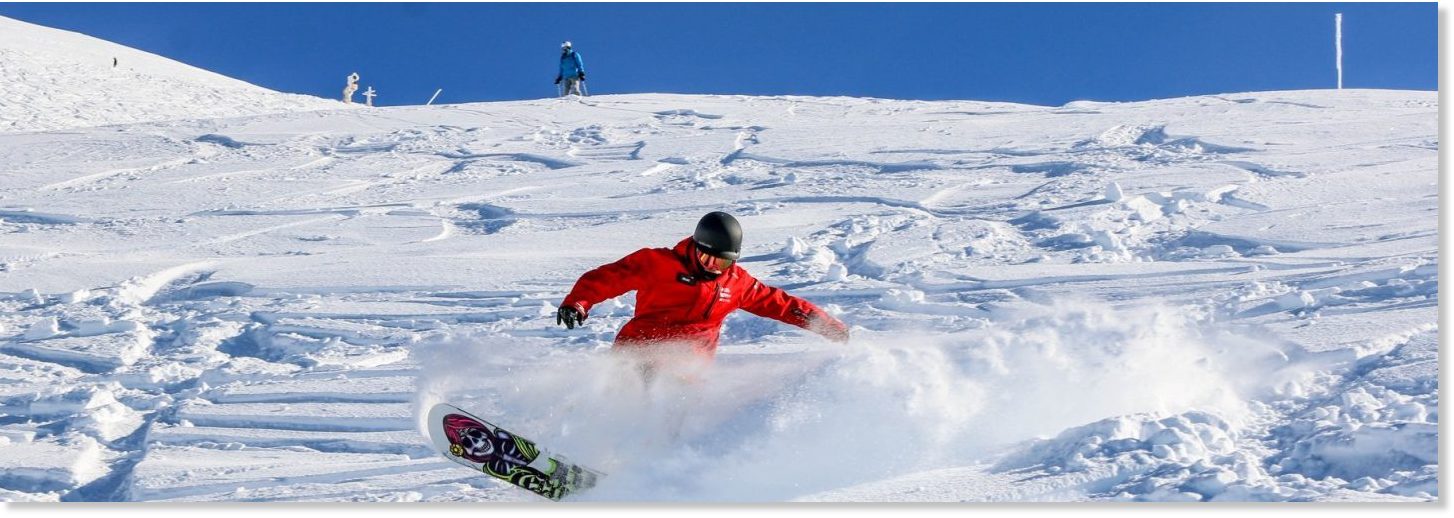
Snowfall has been reported where you'd expect it should - Australia, New Zealand and the South American Andes where it's still wintertime; but also in the northern hemisphere's summertime in the Alps, Scandinavia and North America, where snow in August is more of a rarity.

The snow in Australia (including at Perisher, above) is the latest in a series of big snowstorms that have hit the country since late May, giving resorts there some of the deepest bases they've reported for two decades, with several having more than two metres lying.

It's been less of an epic season, until now, in New Zealand, where 30cm+ of snow in the past few days has finally given some deep powder cover.

Comment: Further details of the unseasonal snow in the northern hemisphere: Heavy summer snowfall hits northern British Columbia

Glacier National Park in Montana sees snowfall in August

Fresh snow in the Alps (Yes, it's August)

Additionally, summer snow was filmed falling in the Pyrenees on August 20th:


Alaska on August 21:


Mount Evans in Colorado on August 17:


Snowflake Cold

Adapt 2030 Ice Age Report: Unusual snows in Australia but not due to warming oceans

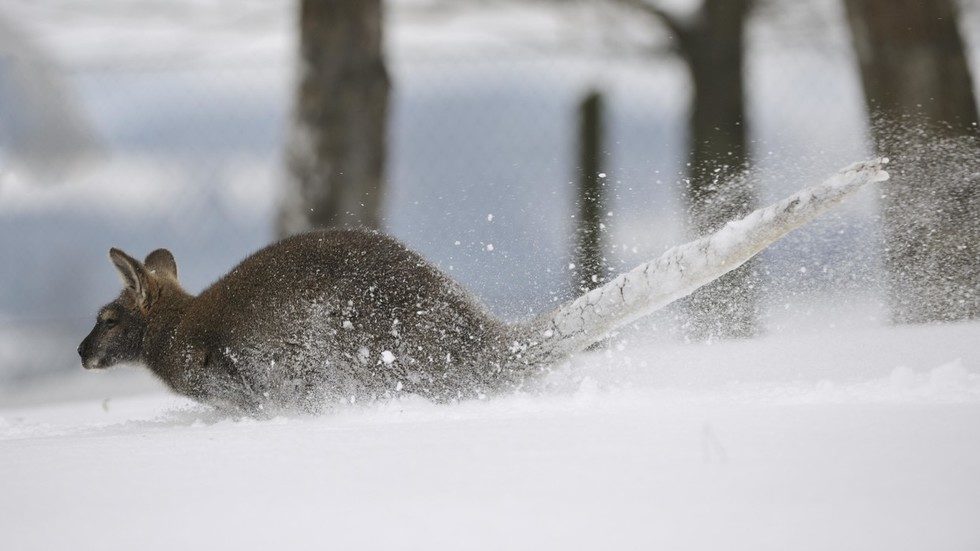
Kangaroo in ice
© Global Look Press / imageBROKER.com / Christian Handl
Australia receiving what was termed as "Rare and Unusual Snow" with pilots reporting the most snow cover they have seen in their 20 years of flying, media reports snow in areas not seeing snow in decades and only two times since the 1950s where there have been accumulations of 70cm or more in a week, all when experts told us that snow would be a thing of the past.

Climate Revolution is a 'Must Read' for understanding our Sun driven climate as we progress deeper into the new Eddy Grand Solar Minimum. Weather extremes leading to Global food scarcity and high food prices are here now, and this book describes the expected changes, how to survive & thrive during future challenging times with practical preparations.

Winter is Coming Cycles of Change Presentation: A comprehensive PDF slide presentation with accompanying MP3 narration of the slides by David DuByne, author of Climate Revolution. Over an hour of detailed explanation and documentation of the rapidly approaching periods of life-changing Cold we will soon experience.


Comment: See also:


Ice Cube

Adapt 2030 Ice Age Report: No ice except there is ice, relax the mind

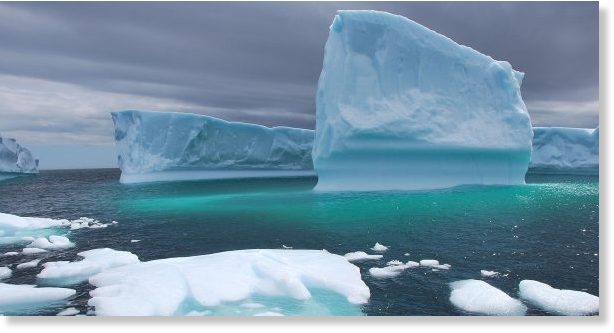
iceberg
Complete Version 3 data sets from 1880 are only 174 of 2082 ets to give consistent thermometer readings showing a warming planet, the rest of Earths surface to 1979 was estimated temps, so much for warmest year ever. Prince Charles said in 2009 that the Polar Ice Caps would be completely gone, charts from DMI show otherwise. Cup of tea anyone, time to calm the mind in a Twilight Zone world.

Climate Revolution is a 'Must Read' for understanding our Sun driven climate as we progress deeper into the new Eddy Grand Solar Minimum. Weather extremes leading to Global food scarcity and high food prices are here now, and this book describes the expected changes, how to survive & thrive during future challenging times with practical preparations.

Winter is Coming Cycles of Change Presentation: A comprehensive PDF slide presentation with accompanying MP3 narration of the slides by David DuByne, author of Climate Revolution. Over an hour of detailed explanation and documentation of the rapidly approaching periods of life-changing Cold we will soon experience.


Comment: See also:


Snowflake

Heavy summer snowfall hits northern British Columbia

The view from Melody Magaton's window Monday morning, at the Buffalo Inn along the Alaska Highway in Pink Mountain, 190 kilometres north of Fort St. John, B.C.
© Melody MagatonThe view from Melody Magaton's window Monday morning, at the Buffalo Inn along the Alaska Highway in Pink Mountain, 190 kilometres north of Fort St. John, B.C.
It's been a long, cold night in parts of northern B.C.

As Environment Canada promised, a heavy dump of snow has fallen on parts of the Alaska highway and a total accumulation of 20 to 30 centimetres is expected to be on the ground when all is said and done.

"The combination of an unseasonably cold arctic airmass and Pacific moisture associated with a low on the North Coast will result in continued heavy snow for higher elevations between Fort Nelson and Watson Lake," read the report from Environment Canada.

Snowflake

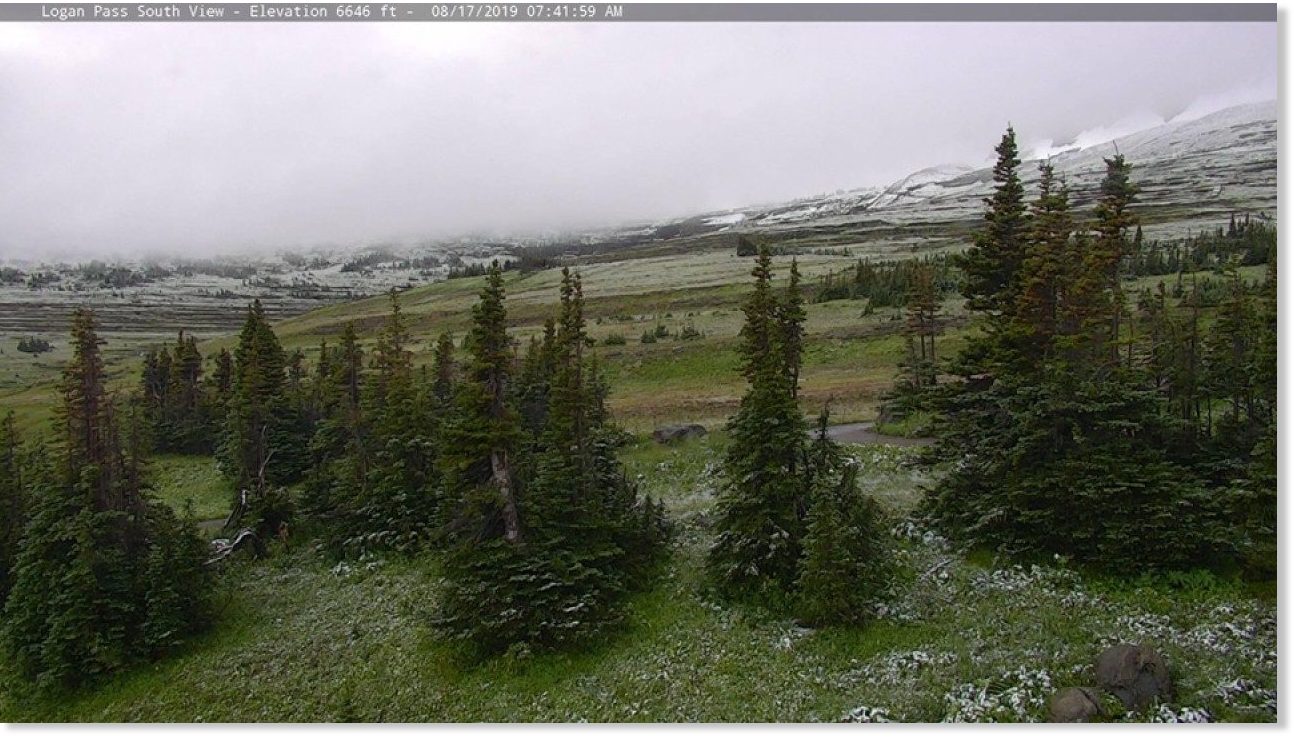
Glacier National Park in Montana sees snowfall in August

Glacier National Park
© Missoula National Weather Service

The Missoula National Weather service recorded between one inch and trace amounts of snow falling near the Canadian border in Glacier National Park above 6,000 feet Saturday.

The weather in Montana is sometimes described as fickle, and mother nature proved that description true once again Saturday morning.

Officials said the snow stuck at 6,000 feet or above.

Comment: Four days prior over in Europe: Fresh snow in the Alps (Yes, it's August)