Secret HistoryS


Eagle

Flashback Best of the Web: Canada has a monumental Ukrainian Nazi problem

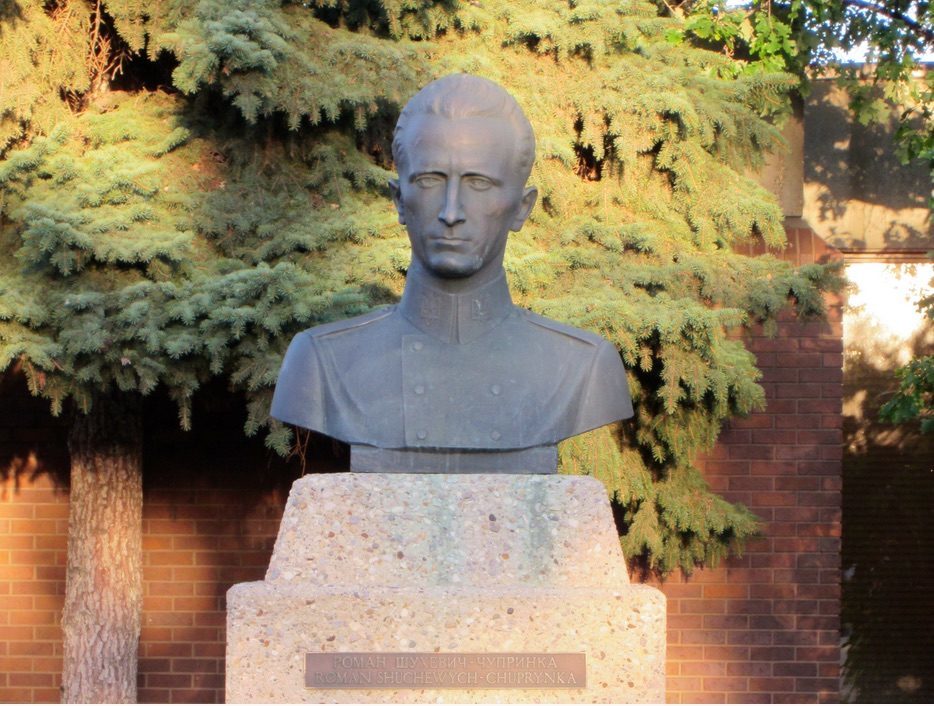
Roman Shukhevych, commander of the Ukrainian Insurgent Army
The monument to Roman Shukhevych, commander of the Ukrainian Insurgent Army from 1943 until his death in 1950, has stood at the entrance of the Ukrainian Youth Unity Complex in North Edmonton, Alberta, since mid-1970s. Shukhevych is lionized by some for his fight for Ukrainian independence against Poland, the Soviet Union and later Germany. But critics of the monument say it glorifies a Nazi henchman who sided with Germany in hopes of winning independence for Ukraine. (Photo courtesy of John-Paul Himka)
A Canadian monument to a hero of an anti-Soviet nationalist uprising in Ukraine is raising questions about the manipulation of historical memory for political purposes.

Critics of the monument say Roman Shukhevych was also a ruthless Nazi henchman and honouring him plays into the hands of the Kremlin propaganda machine that seeks to delegitimize the very idea of Ukrainian statehood.


Comment: Indeed, Canada clearly has a 'Nazi apologist' problem. Among other things, it voted against Russia's anti-Nazism resolution at the UN.


The bronze bust of Shukhevych, one of the leaders of the Organization of Ukrainian Nationalists (OUN) and the commander of the Ukrainian Insurgent Army (known under its Ukrainian acronym UPA) during WWII and immediately after, has stood quietly at the entrance of the Ukrainian Youth Unity Complex in North Edmonton, Alberta, for 45 years.

Shukhevych's stern gaze has greeted generations of Ukrainian-Canadians who came to the centre for various community activities, oblivious of the national hero's messy wartime record of mass murder and ethnic cleansing.

Comment: One solution would be to give these nutcases their state: carve it out of western Ukraine and call it the People's Democratic Republic of Galicia, or Volhynistan or something.

It should be pointed out that Canada was initially reluctant to absorb these Ukie Nazis, until the British govt pressured her into it...
Members of the Galicia Division were initially prohibited from entering Canada due to their membership in the SS. But in 1950, Britain made an appeal to the Commonwealth for volunteers to accept a total of 9,000 division members who were at that time residing in the UK after being disarmed by British troops at the war's end.

When Canada's External Affairs Department, prompted by complaints from the Canadian Jewish Congress (CJC), raised concerns about the division's ties to the Nazis and role in Nazi atrocities, the British government insisted that it had carried out background checks. "While in Italy these men were screened by Soviet and British missions and neither then nor subsequently has any evidence been brought to light which would suggest that any of them fought against the Western Allies or engaged in crimes against humanity," claimed the British Foreign Office. "Their behaviour since they came to this country," added London, "has been good and they have never indicated in any way that they are infected with any trace of Nazi ideology."

With this letter serving as political cover, Prime Minister Louis St. Laurent and his cabinet declared that Galicia Division members would be permitted to immigrate to Canada unless it could be proved that they had personally committed atrocities against civilian populations based on "race, religion or national origins." Simply having been a Galicia Division member would not be considered a valid reason to prevent entry, even though after the war all Waffen-SS members had been deemed complicit in war crimes.

The immigration of Nazi and Nazi-allied war criminals continued for more than a decade after the war and was a significant factor in Canada's emergence during the Cold War as a political-ideological centre of far-right Ukrainian nationalism.

Speaking to a CBS 60 Minutes programme in 1997, Canadian historian Irving Abella, who is currently Professor for Canadian Jewish history at York University, bluntly summed up the political climate of the time. "One way of getting into postwar Canada," he said "was by showing the SS tattoo. This proved that you were an anti-Communist."
See also:


Blue Planet

5,200-year-old grains redate trans-Eurasian crop exchange, climate was warmer and more humid

Chimulchek
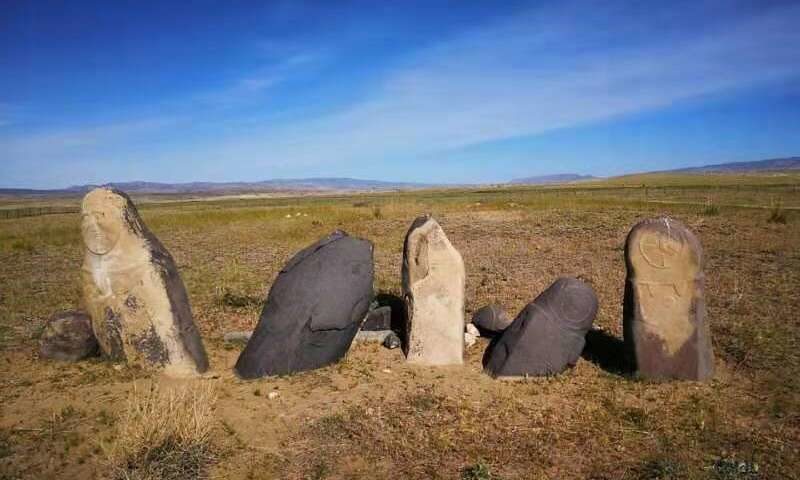
© Jianjun YuA photo of the stone men (Chimulchek Culture) in the steppe area of Altai Mountains. These figures are characteristic of the peoples who lived in the area around the time of occupation at Tongtian. These specific examples are located at the Chimulchek site (ca. 4000 years old) and not far from Tongtian Cave. Ceramic sherds from the cave suggest that the occupants in the cave shared similar cultural traits to other people in the region.
Cereals from the Fertile Crescent and broomcorn millet from northern China spread across the ancient world, integrating into complex farming systems that used crop-rotation cycles enabled by the different ecological regions of origin. The resulting productivity allowed for demographic expansions and imperial formation in Europe and Asia. In this study, an international, interdisciplinary team of scientists illustrate that people moved these crops across Eurasia earlier than previously realized, adapting cultivation methods for harsh agricultural environments.

Most people are familiar with the historical Silk Road, but fewer people realize that the exchange of items, ideas, technology, and human genes through the mountain valleys of Central Asia started almost three millennia before organized trade networks formed. These pre-Silk Road exchange routes played an important role in shaping human cultural developments across Europe and Asia, and facilitated the dispersal of technologies such as horse breeding and metal smelting into East Asia. One of the most impactful effects of this process of ancient cultural dispersal was the westward spread of northeast Asian crops and the eastward spread of southwest Asian crops. However, until the past few years, a lack of archaeo-botanical studies in Central Asia left a dearth of data relating to when and how this process occurred.

Comment: See also:


Dig

Walls made of human bones discovered under Ghent cathedral

wall bones
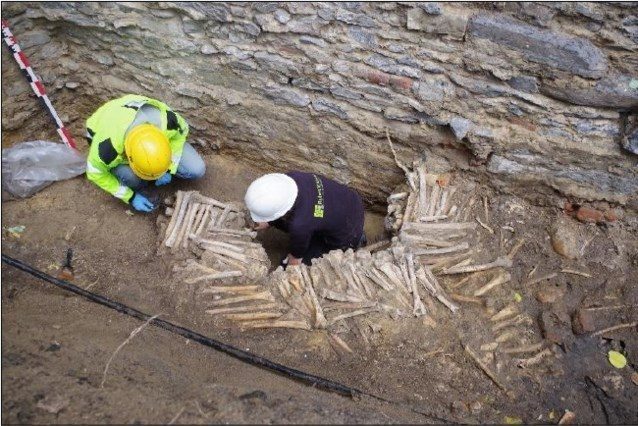
© Ruben WillaertArchaeologists uncover low walls made of stacked thigh and shin bones
Archaeologists working in and around Saint-Bavo's cathedral in Ghent have made a macabre discovery - walls constructed entirely out of human bones.

"This find is unique in Belgium," said a spokesperson for the archaeological team from Ruben Willaert bvba in Bruges.

The walls are made mainly of the thigh and shin bones of adults. Between the walls, the space is filled with skulls, many of them shattered.

Above that level, meanwhile, full human skeletons have been uncovered. "So the graveyard must have still been in use for some time after the walls were built."

Comment: See also:


Microscope 2

Last mammoths plagued by genetic defects

mammoth
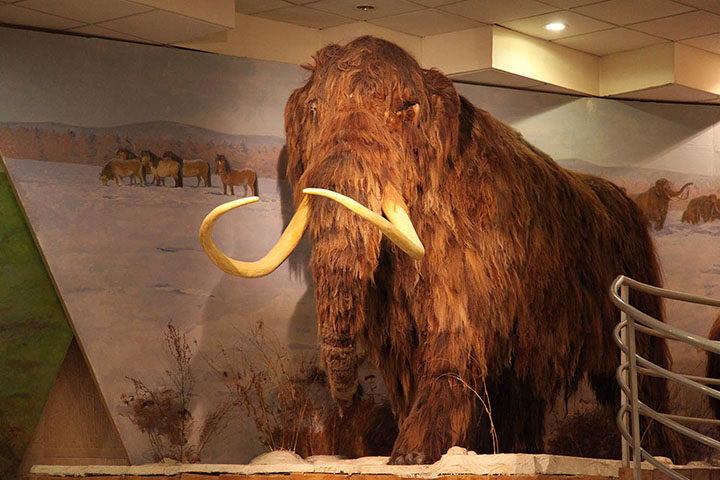
© Albert ProtopopovA mammoth at the Mammoth museum in Yakutsk
The world's last woolly mammoths, sequestered on an Arctic Ocean island outpost, suffered from serious genetic defects caused by generations of inbreeding that may have hampered traits such as sense of smell and male fertility in the doomed population.

Scientists said on Friday that the genome of one of the last mammoths from Wrangel Island off Siberia's coast showed that the population was riddled with deleterious mutations. They resurrected genes from this mammoth in the laboratory to find clues about the demise of this illustrious Ice Age species.

Most woolly mammoths went extinct roughly 10,000 years ago amid a warming climate and widespread human hunting. But isolated populations survived for thousands of years after that on St. Paul Island in the Bering Sea and Wrangel Island in the Arctic Ocean. The Wrangel Island population was the last, disappearing roughly 4,000 years ago.


Comment: Mammoths in Siberia were found to have been flash frozen, meanwhile, they, along with a variety of other mega-fauna, became extinct around the same time. These facts, along with a wealth of other data can be found in Pierre Lescaudron's Of Flash Frozen Mammoths and Cosmic Catastrophes.


Comment: See also:


Magnify

Fossils shed new light on car-sized turtle that once roamed South America

Stupendemys geographicus, armed with sturdy horns, lived from about 13m to 7m years ago alongside giant crocodilians

Stupendemys geographicus
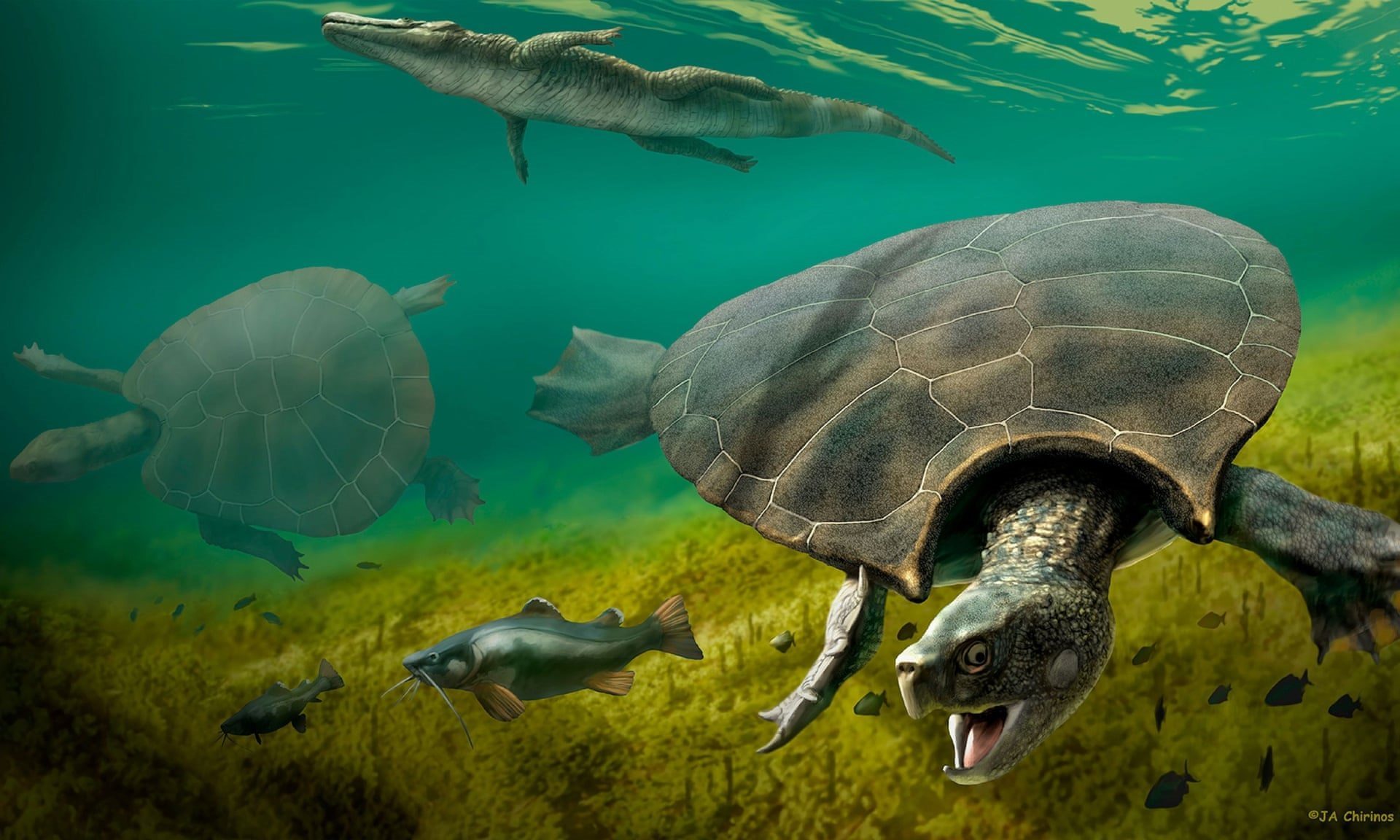
© JA Chirinos/ReutersThe huge extinct freshwater turtle Stupendemys geographicus, that lived in lakes and rivers in northern South America during the Miocene Epoch, is seen in an illustration.
Scientists have unearthed new fossils of one of the largest turtles that ever lived: a car-sized reptile which prowled the lakes and rivers of what is now northern South America from about 13m years ago to 7m years ago.

The fossils of the turtle - Stupendemys geographicus - were found in Colombia's Tatacoa Desert and Venezuela's Urumaco region, and for the first time provide a comprehensive understanding of the creature which grew up to 13ft (4 meters) long and 1.25 tons in weight.

Stupendemys males boasted sturdy front-facing horns on both sides of its shell very close to the neck. Deep scars detected in the fossils indicated that these horns may have been used like a lance for fighting with other Stupendemys males over mates or territory. Females did not have the horns.

Info

Geneticists find evidence of unknown 'ghost archaic' human species

Ancient Skull
© CCO
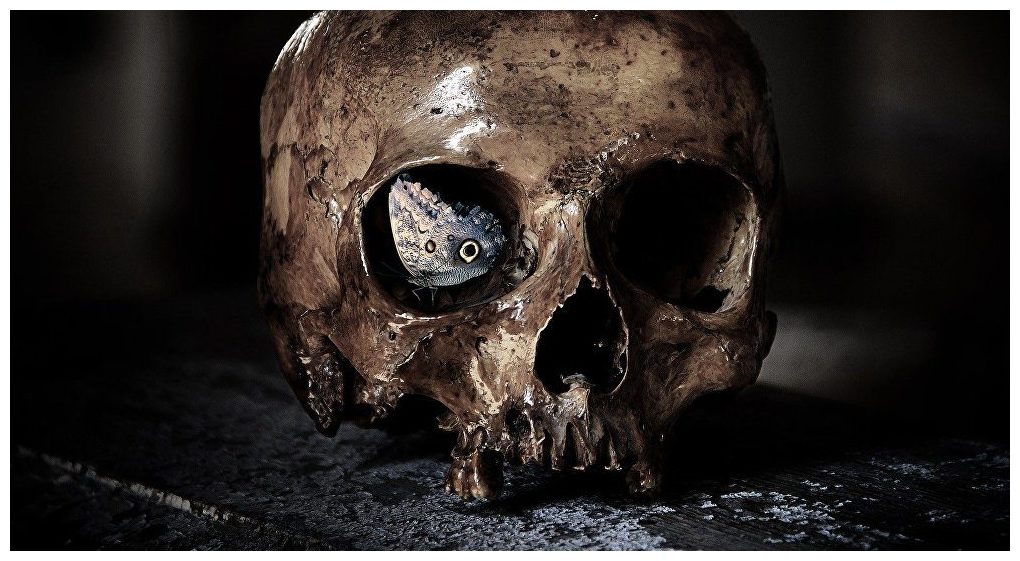
Researchers have concluded that this archaic population split an estimated million years ago from the lineage that led to modern humans, and is connected to neither the Neanderthal and Denisovan families whose DNA is carried in modern humans.

New research carried out by two geneticists from the University of California, Los Angeles, has found evidence of an extinct branch of human.
Geneticists Arun Durvasula and Sriram Sankararaman found pieces of DNA from a so-called ghost archaic population hiding in the genomes of some living populations in West Africa such as the Yoruba of Nigeria and the Mende of Sierra Leone.
The study, which was published in the journal Science Advances, is based on a comparison of genetic diversity in living Homo Sapiens, Neanderthals and Denisovans to track how new genotype variants arose in each branch of humans.

Blue Planet

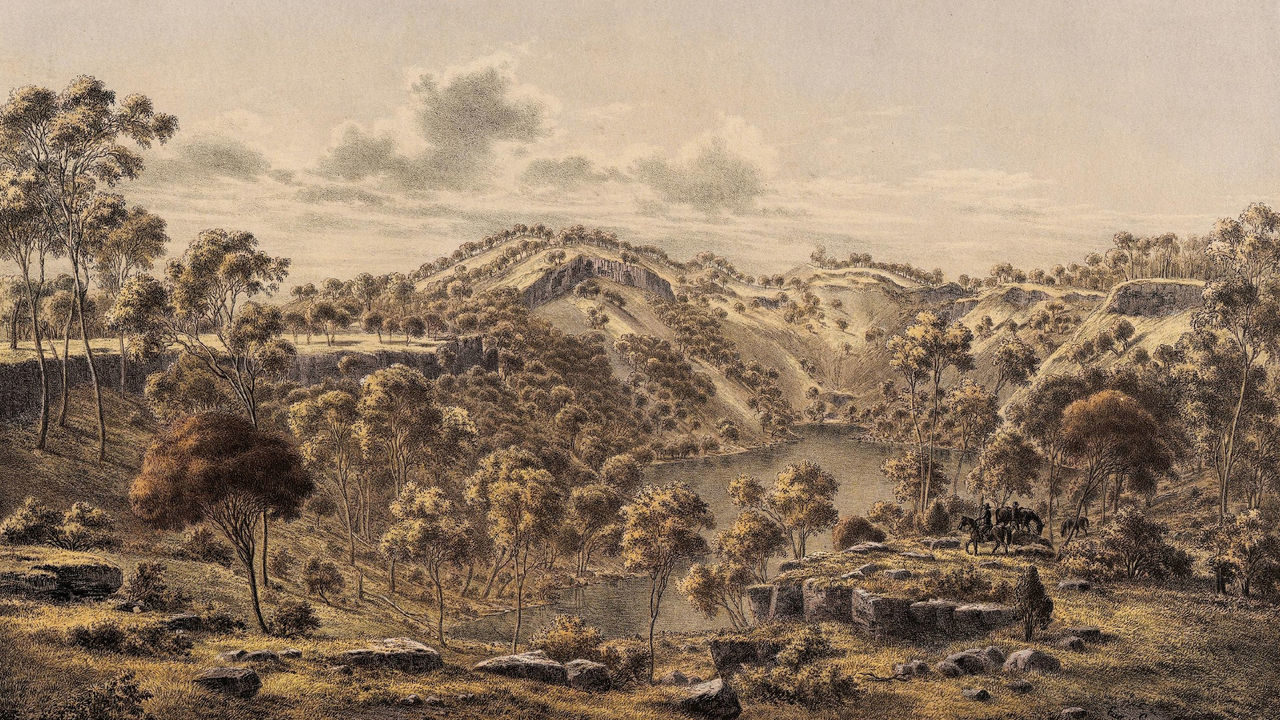
Is a 37,000 year old Aboriginal tale about a volcano the oldest story ever told?

Budj Bim
© Eugene von Guerard/WikiCommons/Creative CommonsA 19th century drawing of the lake in the crater at the top of Budj Bim.
Long ago, four giant beings arrived in southeast Australia. Three strode out to other parts of the continent, but one crouched in place. His body transformed into a volcano called Budj Bim, and his teeth became the lava the volcano spat out.

Now, scientists say this tale — told by the Aboriginal Gunditjmara people of the area — may have some basis in fact. About 37,000 years ago, Budj Bim and another nearby volcano formed through a rapid series of eruptions, new evidence reveals, suggesting the legend may be the oldest story still being told today.

The study raises a provocative possibility, says Sean Ulm, an archaeologist at James Cook University, Cairns, who was not involved with the work. "It is an interesting proposition to think about these traditions extending for tens of thousands of years." But he and others urge caution, as no other stories passed down orally are believed to have survived that long.

Comment: It's quite possible that a number of the world's myths and legends extend much further back into humanities history than we realize: Also check out SOTT radio's:


Flashlight

Pompeii's "excellent" drains to be brought back into service after 2,300 years

tunnels pompeii
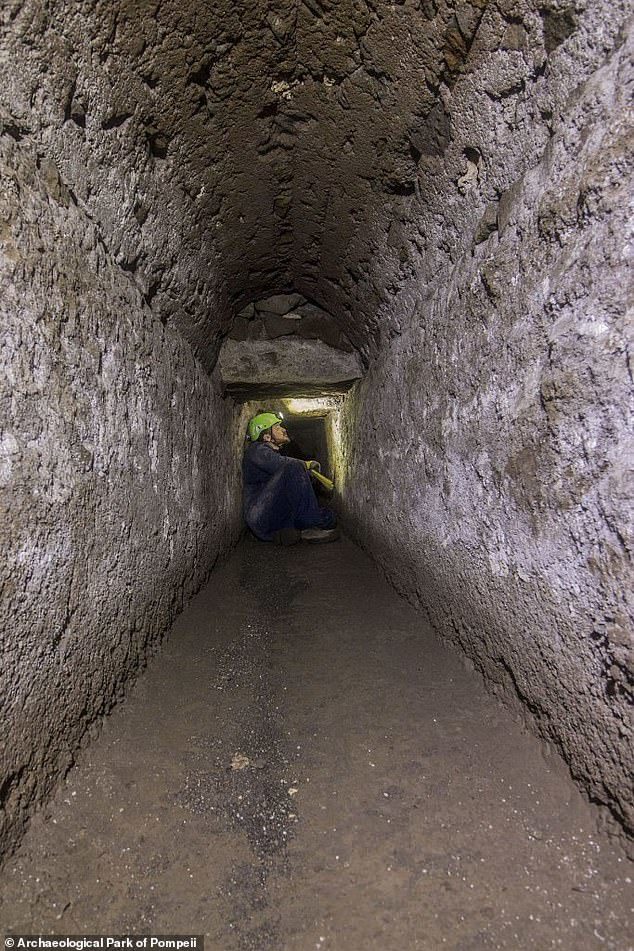
Since 2018, the 1,500ft (457m) network of tunnels (pictured), which are big enough for a human to fit into, have been carefully assessed
Pompeii's ancient drainage system is in such good condition that it is set to be put back into active service, despite being built almost 2,300 years ago.

A 1,500ft stretch of tunnels underneath some of the famed Italian city's most iconic structures was originally built to drain water downhill away from Pompeii's centre.

Analysis of the tunnels revealed they had been almost untouched for millennia and the complex system is still in excellent condition.

'The entrances to the drains were blocked but since we have problems today with flooding from rain we will start using them again,' Massimo Osanna, the director of the site, told The Times.


Comment: One wonders whether this decision to use these drains is because they're suddenly seeing a repeat in weather patterns causing similar problems that the Pompeiians experienced, or the locals are just taking advantage of what lies, ready-made, beneath their feet?


Comment: See also:


Treasure Chest

Havering hoard: UK's largest Bronze Age hoard hints to unknown links with Europe

Havering
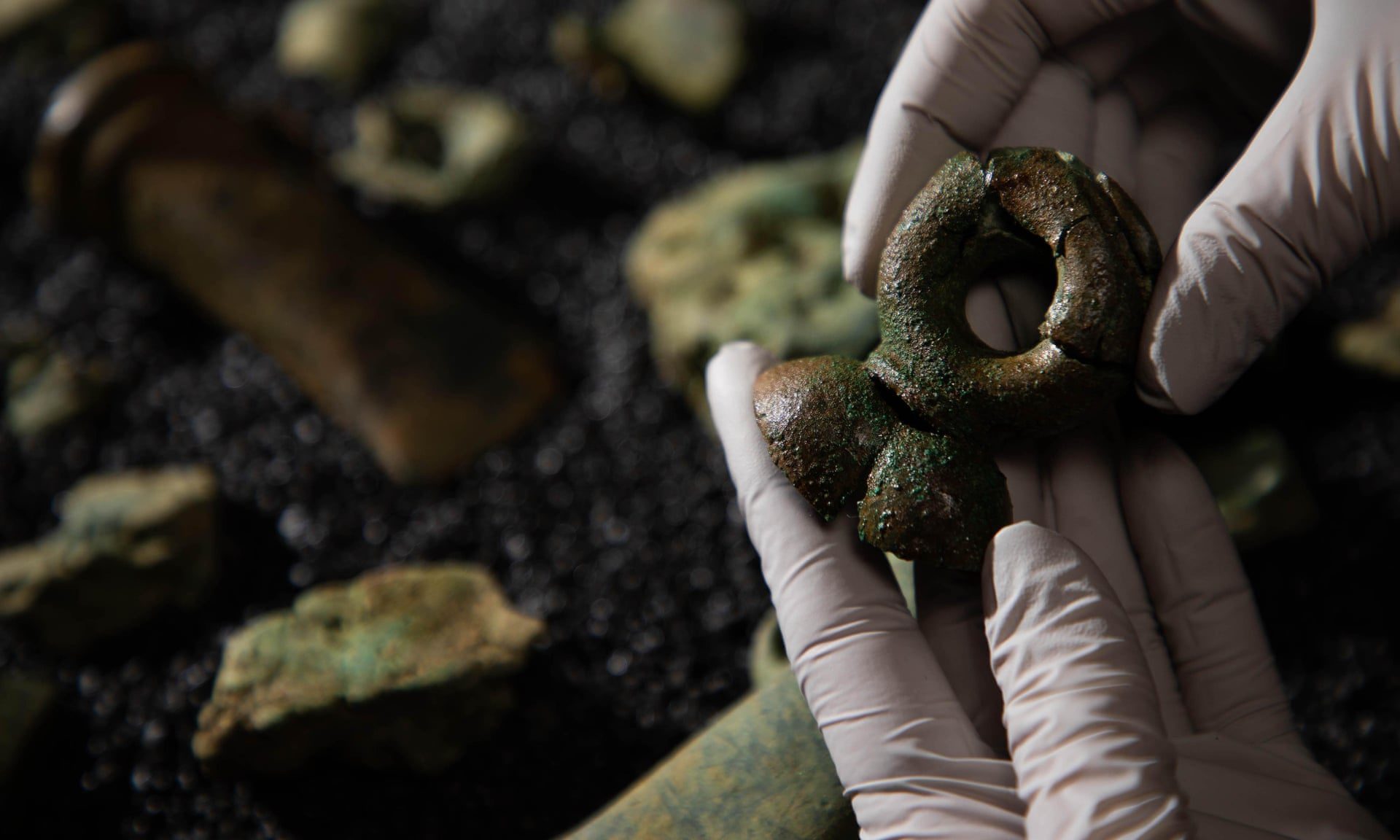
© David Parry/PAA rare terret ring discovered in the Havering hoard.
One of the largest and most mysterious bronze age hoards ever found in the UK contains objects that have astonished archaeologists, including items more commonly found in France and the Alps.

The Museum of London on Monday revealed new finds among the Havering hoard, a remarkable collection of 453 swords, axes, knives, chisels, sickles, razors, ingots and bracelets excavated from a quarry in east London over a period of three months and revealed last year.

Dating from 900-800BC, it is the third largest bronze age hoard ever discovered in the UK.

Closer examination has revealed a pair of terret rings believed to have been used to prevent the reins tangling on horse-drawn carts. Bronze age examples have been found before in France but not the UK.

Comment: See also:


Info

7,300-year-old Neolithic massacre discovered in the Pyrenees Mountains of Spain

El Trocs Cave
© Alt et al. / Scientific Reports
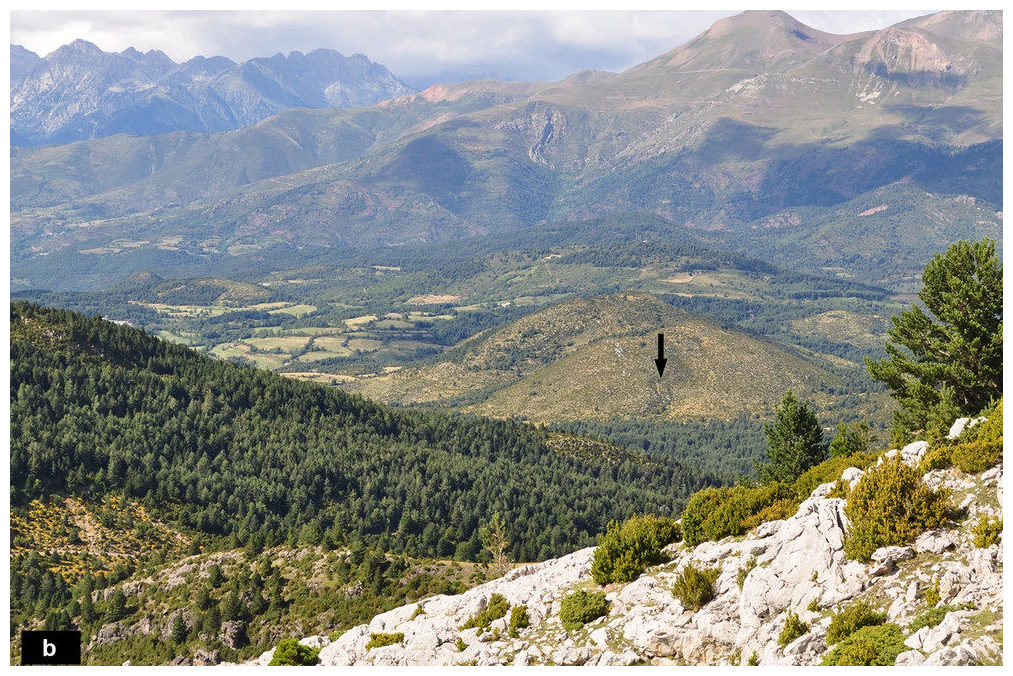
El Trocs Cave (pictured above) is nestled in a serene, picturesque part of the Pyrenees Mountains in Spain, but 7,300 years ago, the area's tranquility was shattered by gruesome violence. Five adults and four children between the ages of three and seven were brutally murdered around 5300 BCE. Their skeletal remains were recently discovered and analyzed by an international team of researchers.

"The violent events in Els Trocs are without parallel either in Spain or in the rest of Europe at that time," the team reported in the journal Scientific Reports.

"The adults display consistent arrow-shot injuries to the skull but not to the perpendicular skeleton. The children and adults furthermore show traces of similar blunt violence to the skull and entire skeleton."

In short, these people were shot, struck, and hacked to death, a terrible truth evinced in their beaten and broken bones.