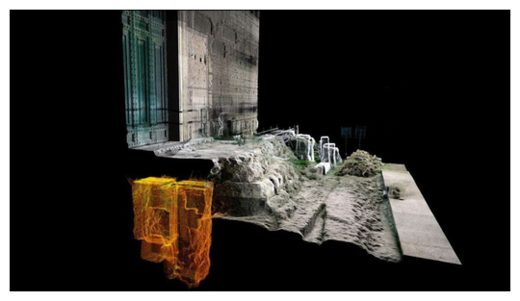
© Parco ColosseoA 3D laser scan image showing the location of the tomb (in yellow) buried beneath the steps to the Curia Julia, or Senate House, in the Roman Forum.
The underground tomb and the temple built around it are thought to date from the sixth century B.C., according to archaeologists.
Ancient Romans believed the tomb held the remains of their city's founder, but the stone sarcophagus that archaeologists just found inside the tomb is empty.
The underground temple — called a
hypogeum in Greek — contains a votive altar that was dedicated to Romulus, said Alfonsina Russo, the director of the Parco Archeologico del Colosseo, which oversees the city's ancient ruins.
The entrance to the tomb is hidden in the northwest of the Forum, underneath the building of the
Curia Julia, or Senate House, Russo told a news conference in Rome today (Feb. 21). The tomb itself would once have been beneath the
Comitium — the central meeting place of the ancient city where votes by public assemblies were conducted, she said.
The tomb is also near the
Lapis Niger — meaning "Black Stone" in Latin — an ancient shrine paved in black marble and thought to cause bad luck, with a stone block marking the spot where Romulus was said to have been murdered by jealous members of the Senate.
The temple was therefore "located in a highly symbolic place for the political life of Rome," Russo said.
The empty 4.5-foot-long (1.4 meters) sarcophagus in the tomb was made of a light volcanic stone, called tuff, quarried from the Capitoline Hill beside the Forum, she said.












Comment: See also: