
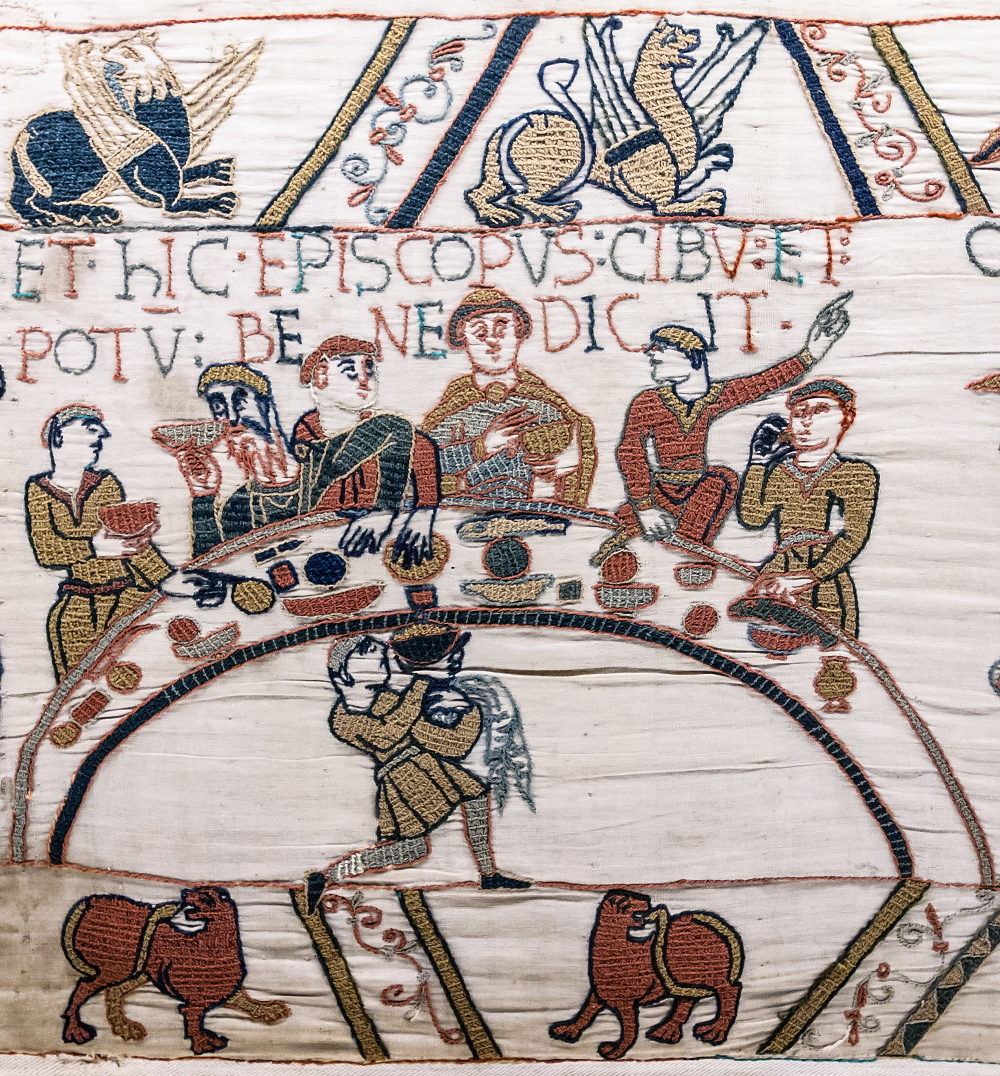
© Bayeaux TapestryMeals were eaten communally and may have looked rather like this feast scene from the Bayeux tapestry—albeit rather less raucous.
In 1314, Jacques de Molay, the order's final Grand Master, was burned alive at the age of 70. Geoffrei de Charney, who was executed in the same year, is usually said to have been around 63. This longevity seems to have been almost commonplace. Fellow Grand Masters Thibaud Gaudin, Hugues de Payens, and Armand de Périgord, to name just a few, all lived into their sixties. For the times, this would have been positively geriatric.














Comment: This article initially raises the question but doesn't really answer why humans would adopt agriculture suddenly after tens of thousands of years as hunter gatherers. For further clues on what changes may have motivated peoples all over the planet around the same time, see:
- Volcanoes, Earthquakes And The 3,600 Year Comet Cycle
- World's oldest cooking pots found in Siberia, created 16,000 years ago at the end of the last ice age
- Mysterious egalitarian 'megasites' could rewrite history of world's first cities
- Two megalithic groups in Spain found to have different diets, child-rearing and burial practices
- New study reveals agriculture has weakened human bones
- Çatalhöyük: The 9,000 year old community troubled by climate change, over crowding and infectious diseases
Also check out SOTT radio's: