
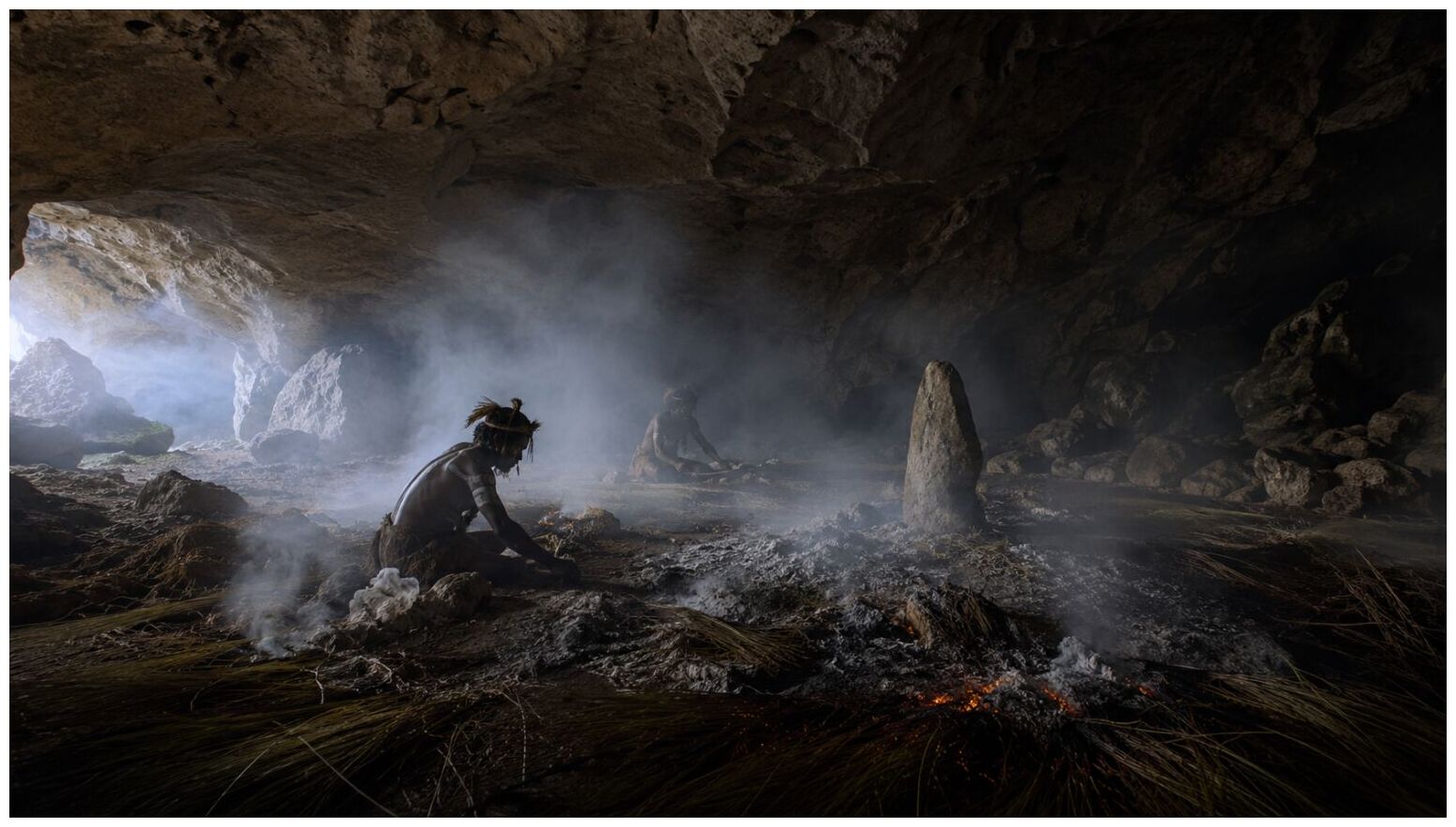
© Arkeonews NetArtist’s reconstruction created by the author for illustrative purposes; it does not depict a documented scene from Cloggs Cave.
They did not appear to bring the grasses solely for food, warmth or ordinary domestic work. Instead, new microscopic evidence suggests that whole plants were deliberately gathered, transported into the secluded cave and burned in repeated, low-temperature fires — activities that strengthen the interpretation of Cloggs Cave as a place reserved for ritual specialists, healing practices and spiritual power.
Located in GunaiKurnai Country in southeastern Australia, Cloggs Cave preserves one of the continent's longest archaeological records of relationships between people and plants. A new study published in Frontiers in Environmental Archaeology examined phytoliths — microscopic silica structures formed inside plants — preserved in deposits spanning approximately 25,000 years.
The results point toward something far more complex than a shelter where people simply cooked, slept or sought protection from the weather.
















Comment: Notably similarly insidious elements are still present and hold great sway in modern day Ukraine: West turns a blind eye to march honoring Nazis in Kiev: Ukraine may not be a fascist state, but it has a fascism problem
See also:
- History of World War II re-written before our very eyes
- The Nuremberg Tribunal: 75 years later and still the basis for humanity's survival
- 'People want to know the truth': Red Army veteran speaks out on liberation of Auschwitz & distortions of history
And check out SOTT radio's: MindMatters: Mr. Jones and the 'Holodomor' Red Pill - What Happened During Stalin's Famine?