
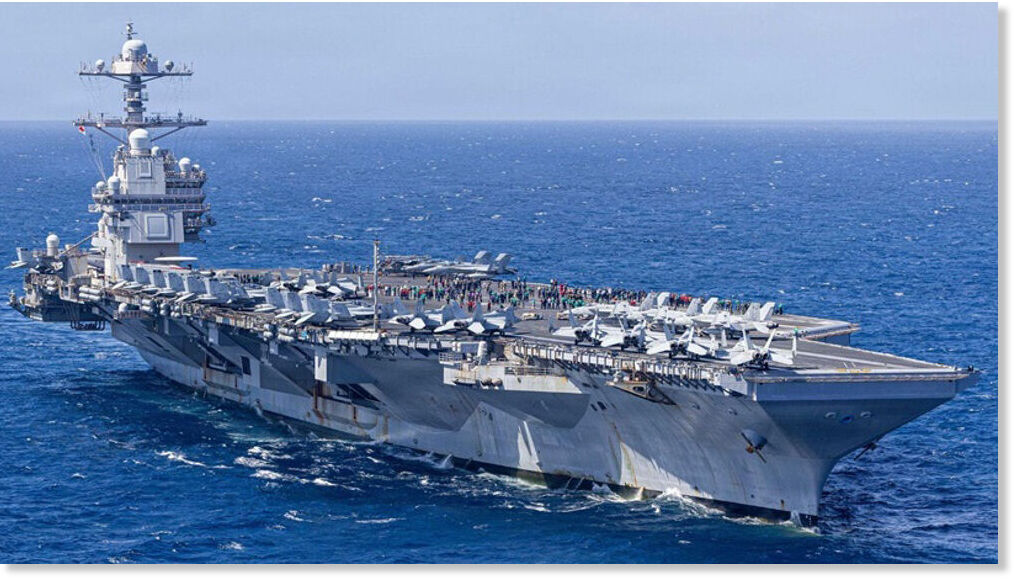
© File photoAmerican aircraft carrier USS Gerald Ford
Early in the conflict it was forced to depart Mideast regional waters and retreat West in the Mediterranean, before undergoing extensive repairs at port in Croatia. Pundits were skeptical of official explanations, which suggested an accidental fire was sparked in the laundry room aboard the giant vessel.
The major blaze erupted in March at a moment Iran claimed to have directly hit US naval vessels, but crisis was consistently downplayed by Pentagon officials at the time.
The obtained video reveals severely destroyed sleeping quarters, showing sailors' bunks entirely reduced to charred, twisted metal. The ceiling directly above the berthing areas appears completely gutted by the intense flames, while exposed wiring hangs from overhead and thick ash blankets the floor.
One sailor and eyewitness stationed on board the aircraft carrier told CNN: "I seriously thought we were going to lose the ship. It's either fight or die."
This doesn't sound like some localized fire in a small compartment, but a massive emergency - which as we now now derailed the Ford's ongoing Iran mission in CENTCOM regional waters.
According to prior revealed details, it took the carrier's crew approximately 30 hours of continuous damage control to fully extinguish the fire, clear out the wreckage, and importantly prevent the fire from reigniting. Some
600 sailors were displaced and left without access to their standard bunks, it had been revealed soon after the event took place.
While the definitive cause of the fire remains unclear, Tehran has claimed responsibility, asserting it successfully targeted the premier American aircraft carrier.
Again, this has fueled widespread speculation that the Iranian account could be accurate, given the Pentagon is known to have downplayed other instances where significant military hardware came under fire.
Prior reporting has also underscored that the blaze actually hindered combat operations against Iran.The incident has been confirmed to have resulted in a complete halt to two days of combat operations. Chief of Naval Operations Adm. Daryl Caudle, had described two months ago, "They fought that, put it out, and started flying sorties two days after that, so I'm very proud of that crew."










Comment: Looks like the damage was even worse than what was previously reported. Not a good look, US Navy . . .