

© Parco ColosseoA 3D laser scan image showing the location of the tomb (in yellow) buried beneath the steps to the Curia Julia, or Senate House, in the Roman Forum.
The underground tomb and the temple built around it are thought to date from the sixth century B.C., according to archaeologists.
Ancient Romans believed the tomb held the remains of their city's founder, but the stone sarcophagus that archaeologists just found inside the tomb is empty.
The underground temple — called a hypogeum in Greek — contains a votive altar that was dedicated to Romulus, said Alfonsina Russo, the director of the Parco Archeologico del Colosseo, which oversees the city's ancient ruins.
The entrance to the tomb is hidden in the northwest of the Forum, underneath the building of the Curia Julia, or Senate House, Russo told a news conference in Rome today (Feb. 21). The tomb itself would once have been beneath the Comitium — the central meeting place of the ancient city where votes by public assemblies were conducted, she said.
The tomb is also near the Lapis Niger — meaning "Black Stone" in Latin — an ancient shrine paved in black marble and thought to cause bad luck, with a stone block marking the spot where Romulus was said to have been murdered by jealous members of the Senate.
The temple was therefore "located in a highly symbolic place for the political life of Rome," Russo said.
The empty 4.5-foot-long (1.4 meters) sarcophagus in the tomb was made of a light volcanic stone, called tuff, quarried from the Capitoline Hill beside the Forum, she said.
Legendary founder
Romulus was the legendary founder of Rome said to have lived in the eighth century B.C. — but most historians think he did not exist in reality.
According to legend, Romulus and his twin brother Remus were the grandsons of Numitor, the deposed king of the Latin city of Alba Longa — the sons of his daughter, Rhea Silvia, and the war god Mars in human form.
When the new king of Alba Longa ordered the infants Romulus and Remus thrown into the Tiber, the story goes, they were instead abandoned on the river bank; there, they were rescued by a she-wolf, who raised them until they were found by a shepherd.
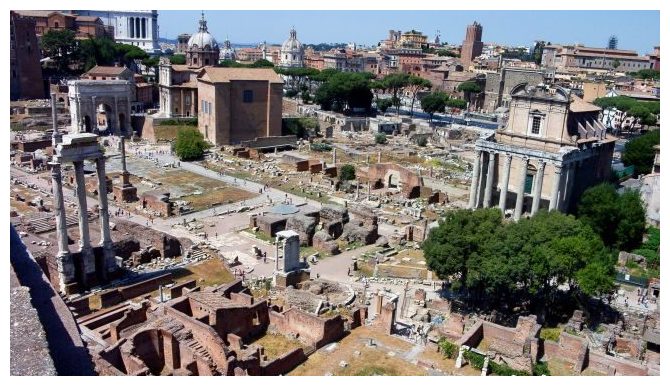
© Jean-Christophe Benoist/CC BY 3.0The entrance to the underground temple was found during excavations on the north-west side of the Roman Forum, beneath the steps of the Curia Julia on the center-left of this photograph.
Romulus established Rome on the Palatine Hill and became its first king; in later centuries, it became a republic led by the Senate, and then an empire.
The tomb of Romulus in the Forum became a mystical site for Romans, and it is mentioned by the ancient Roman historian Marcus Terentius Varro, Russo said.
The tomb was discovered in November beneath the steps of the Curia, by archaeologists investigating the work of the Italian archaeologist Giacomo Boni, who excavated the Lapis Niger shrine and the Comitium in the early 20th century, she said.
The underground site has now been documented with 3D laser scans, and the excavations will resume at the end of April, Russo said, when archaeologists will investigate more of the buried area.



Reader Comments