OF THE
TIMES

Twitter doesn't have a "censoring department" that blocked The Post from tweeting last fall, CEO Jack Dorsey said Thursday — but he wouldn't reveal who was responsible for the blunder.
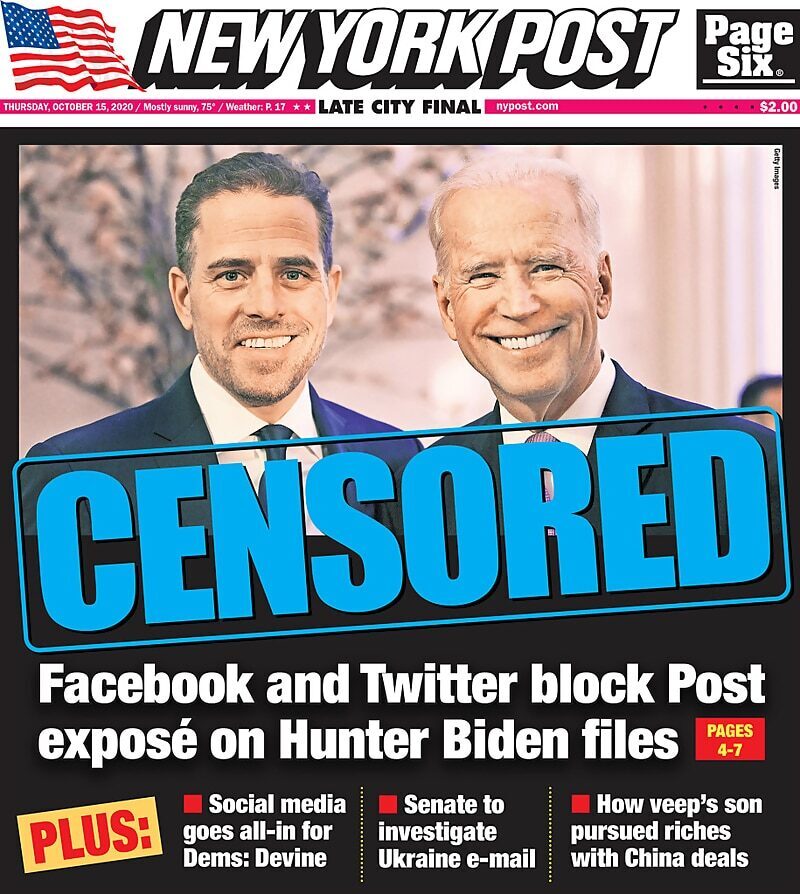
At a congressional hearing on misinformation and social media, Dorsey said Twitter made a "total mistake" by barring users from sharing The Post's bombshell October report about Hunter Biden's emails.
Twitter also locked The Post out of its account for more than two weeks over baseless charges that the exposé used hacked information — a decision Dorsey chalked up to a "process error."
"It was literally just a process error. This was not against them in any particular way," Dorsey told the House Energy and Commerce Committee.
"If we remove a violation we require people to correct it," he added. "We changed that based on their to wanting to delete that tweet, which I completely agree with. I see it. But it is something we learn."
But Dorsey dodged a question from Rep. Steve Scalise about who decided to freeze the 200-year-old newspaper's account.
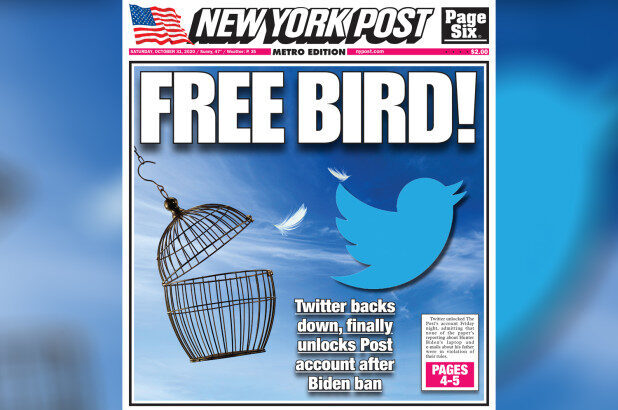
Twitter demanded The Post delete six tweets that linked to stories based on files from the abandoned laptop of President Biden's son. Twitter backed down after the paper refused to remove the posts — a development The Post celebrated on its Oct. 31 front page with the headline "FREE BIRD!"
"Their entire account to be blocked for two weeks by a mistake seems like a really big mistake," Scalise, a Louisiana Republican, told Dorsey. "Was anyone held accountable in your censoring department for that mistake?"
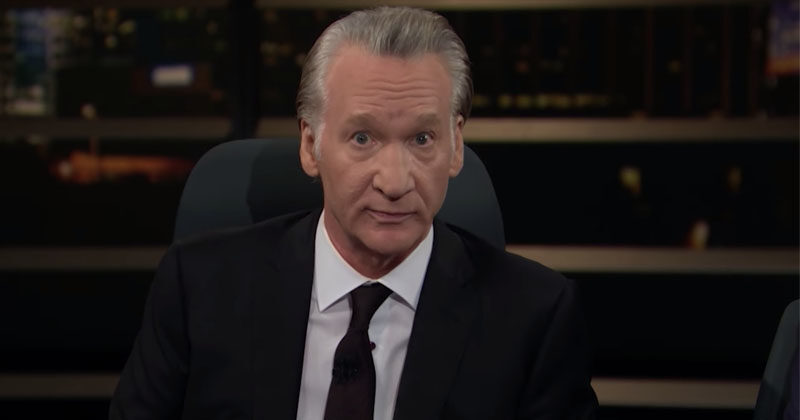
"Well, we don't have a censoring department," the bearded and newly bald-headed tech exec replied.
When Scalise interjected to ask who made the decision "to block their account for two weeks," Dorsey claimed, "We didn't block their account for two weeks."
"We required them to delete the tweet and then they could tweet it again," he said. "They didn't take that action, so we corrected it for them."
Scalise compared Twitter's response to The Post's stories with a Jan. 9 Washington Post article that claimed then-President Donald Trump urged Georgia's lead elections investigator to "find the fraud" in the state's presidential vote and that she'd be a "national hero" if she did.
The paper issued a lengthy correction to the story this month revealing that Trump never used those words, though he did say the official would find "dishonesty" and that she had "the most important job in the country right now."
"There are tweets today ... that still mischaracterize it even in a way where the Washington Post admitted it's wrong, yet those mischaracterizations can still be retweeted," Scalise told Dorsey. "Will you address that and start taking those down to reflect what even the Washington Post themselves has admitted is false information?"
Dorsey would not answer affirmatively either way: "Our misleading information policies are focused on manipulated media, public health and civic integrity," he said. "That's it."


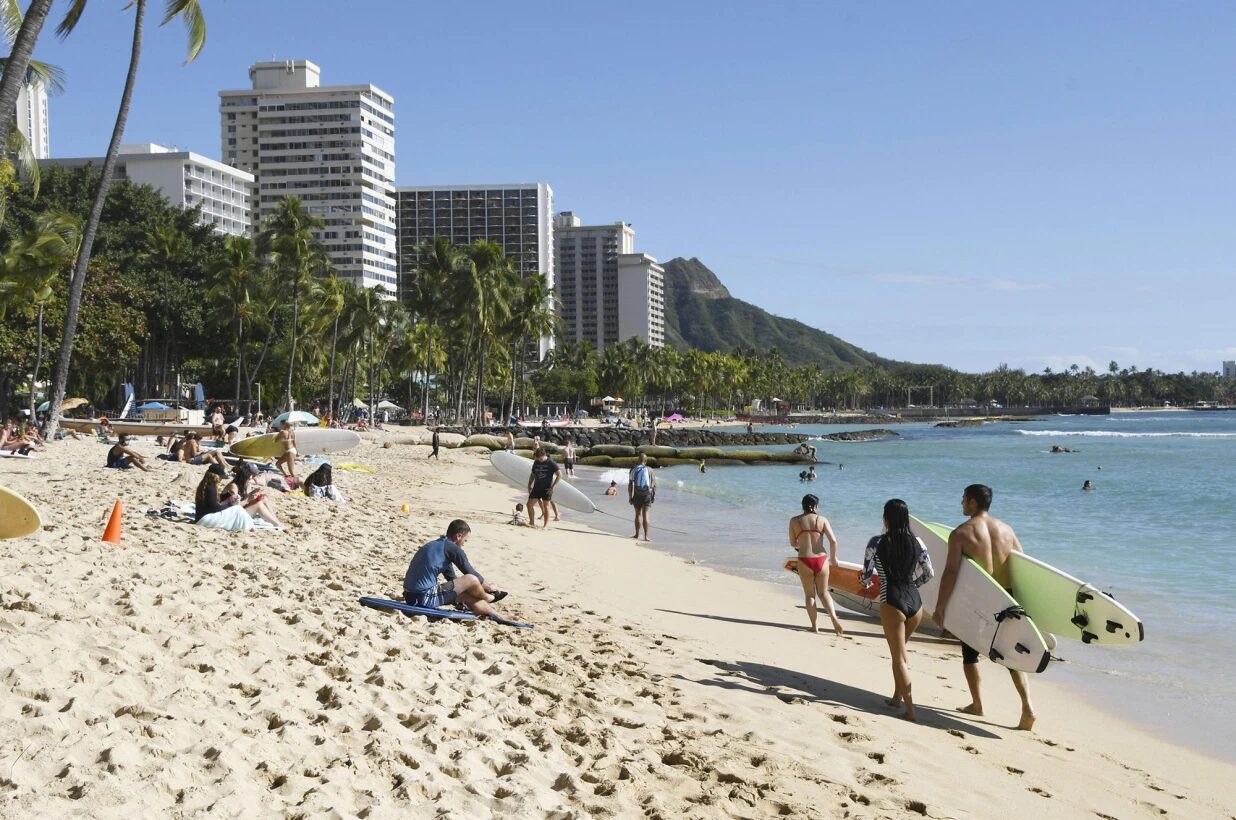
A federal court denied a challenge to Hawaii's prohibition on the open carry of firearms in a lengthy and scholarly opinion released Wednesday — finding that Hawaiian law and practice both predate and supersede a broad application of the Second Amendment.
"Hawai'i law began limiting public carriage of dangerous weapons, including firearms, more than 150 years ago — nearly fifty years before it became a U.S. territory and more than a century before it became a state," the opinion explains in language foreshadowing the method of inquiry and eventual ruling in favor of anti-gun regulation.
Sitting en banc, the U.S. Court of Appeals for the Ninth Circuit ruled 7-4 against George Young, who was twice denied an open carry permit in 2011. The massive, 215-page opinion was authored by George W. Bush-appointed Circuit Judge Jay Bybee. Two dissents were authored by a collection of judges appointed by former presidents Ronald Reagan, Bush, and Donald Trump.
The court spends nearly 50 pages discussing the time-honored regulation of weapons under the law. This section starts in Middle Age England and ends in the Post-Reconstruction United States.
The thorough (and admittedly non-exhaustive) historical inquiry, necessarily long and time-consuming, begins by invoking "a series of orders to local sheriffs that prohibited 'going armed' without the king's permission" which were promulgated by "King Edward I and his successor, King Edward II." The final laws cited in this section are two explicit prohibitions on the public carrying of firearms which were upheld by the Arkansas Supreme Court in 1876 and 1882.
The dissent by Reagan-appointed Senior Circuit Judge Diarmuid O'Scannlain bemoaned the court's grand historical survey — finding the reliance on those regulations "extreme and bizarre." He went on to argue that the court's use of those prohibitions "represents a gross misapplication of the textual and historical inquiries" demanded by the landmark Supreme Court case of D.C. v. Heller, which established the constitutional right of an individual to own a gun for self defense — sans militia membership — way back in 2008.
Comment: Substack has become a haven for journalists like Glenn Greenwald and Matt Taibbi who still care about their craft: