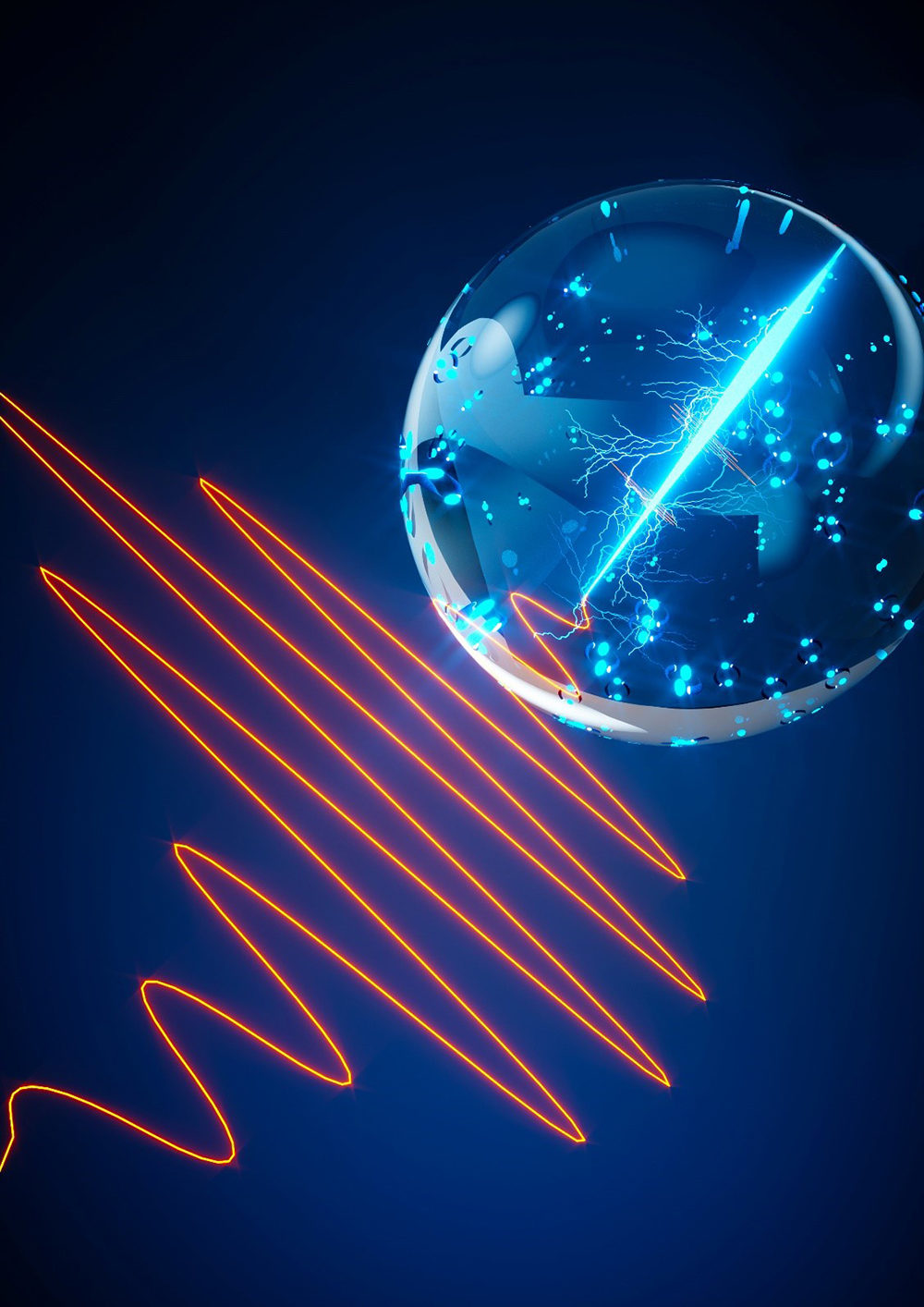
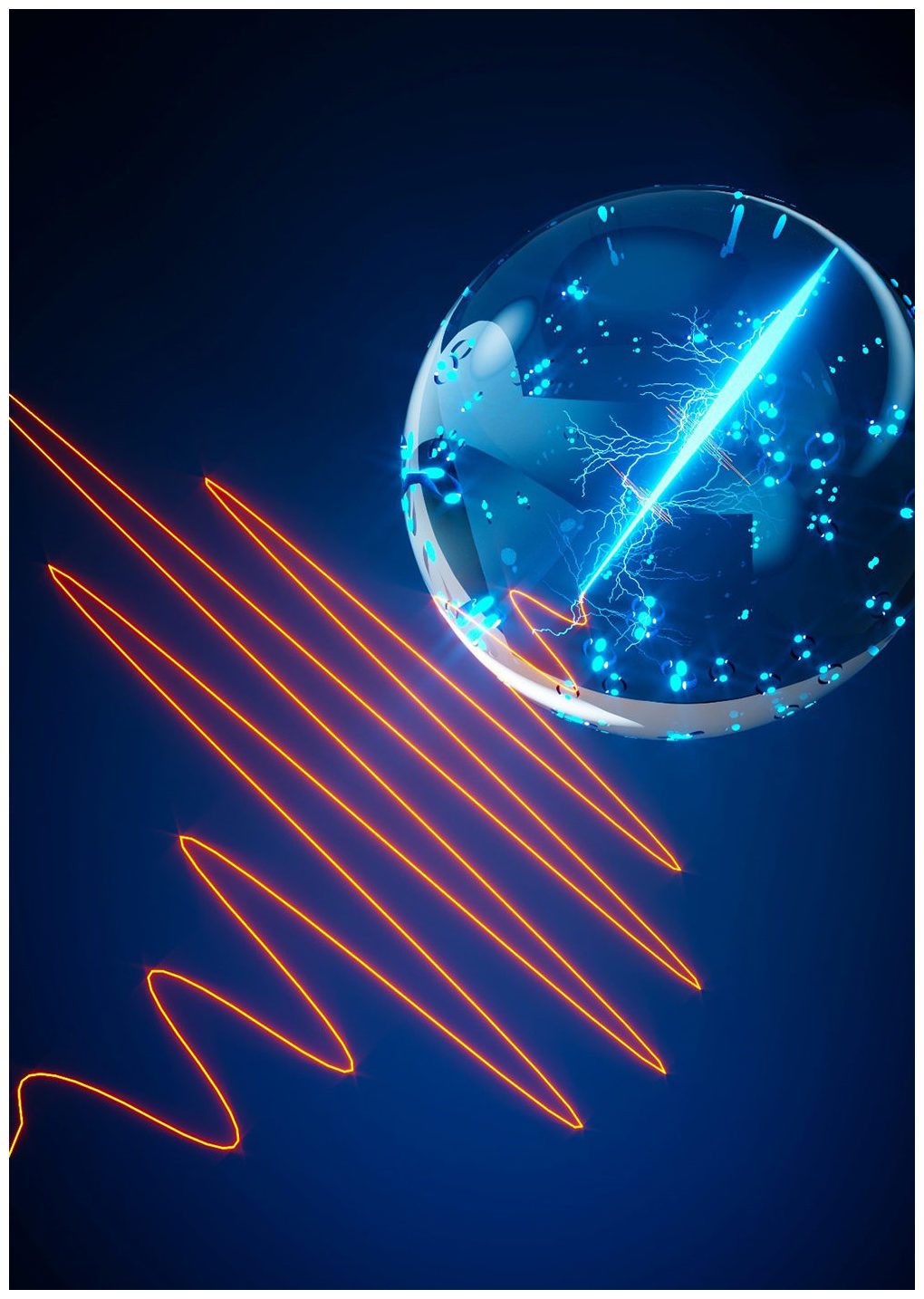
© Image courtesy of Jigang WangJigang Wang and his collaborators have demonstrated light-induced acceleration of supercurrents, which could enable practical applications of quantum mechanics such as computing, sensing and communicating.
AMES, Iowa - Jigang Wang patiently explained his latest discovery in quantum control that could lead to superfast computing based on quantum mechanics:
He mentioned light-induced superconductivity without energy gap. He brought up forbidden supercurrent quantum beats. And he mentioned terahertz-speed symmetry breaking.Then he backed up and clarified all that. After all, the quantum world of matter and energy at terahertz and nanometer scales - trillions of cycles per second and billionths of meters - is still a mystery to most of us.
"I like to study quantum control of superconductivity exceeding the gigahertz, or billions of cycles per second, bottleneck in current state-of-the-art quantum computation applications," said Wang, a professor of
physics and astronomy at Iowa State University whose research has been supported by the
Army Research Office. "We're using terahertz light as a control knob to accelerate supercurrents."
Superconductivity is the movement of electricity through certain materials without resistance. It typically occurs at very, very cold temperatures. Think -400 Fahrenheit for "high-temperature" superconductors.
Terahertz light is light at very, very high frequencies. Think trillions of cycles per second. It's essentially extremely strong and powerful microwave bursts firing at very short time frames.
Wang and a team of researchers demonstrated such light can be used to control some of the essential quantum properties of superconducting states, including macroscopic supercurrent flowing, broken symmetry and accessing certain very high frequency quantum oscillations thought to be forbidden by symmetry.
It all sounds esoteric and strange. But it could have very practical applications.




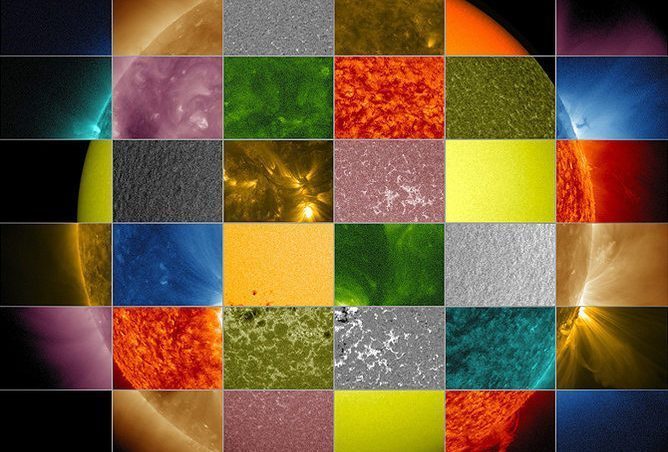












Comment: As is the cyclical and fluctuating nature of our planet's climate, warm spells can be expected to follow periods of cold, and sometimes they can even punctuate ice ages - historical records show bumper harvests occurred during previous minimums. However, what is probably most critical to our era is that, as we enter this grand solar minimum and all its associated turmoil, coupled with how poorly prepared our planet is, the 300 years of warming, which many of us will unlikely be alive to see, may be welcoming a drastically different planet to that which entered the minimum.
Also, while Zharkova's model can account for the cycles our planet undergoes, there are other factors that aren't included in her model, such as the rise of fireball activity and the influence of our star's theorized twin, which, at some point in the future, could radically affect her calculations:
- Professor Valentina Zharkova explains and confirms why a "Super" Grand Solar Minimum is upon us
- Sott Exclusive: Nemesis, not 'Nibiru' - Clarifying mainstream reports about 'a large ninth planet' that periodically sends comets our way
- Planet-X, Comets and Earth Changes by J.M. McCanney
For more, check out SOTT radio's: Behind the Headlines: Earth changes in an electric universe: Is climate change really man-made?