
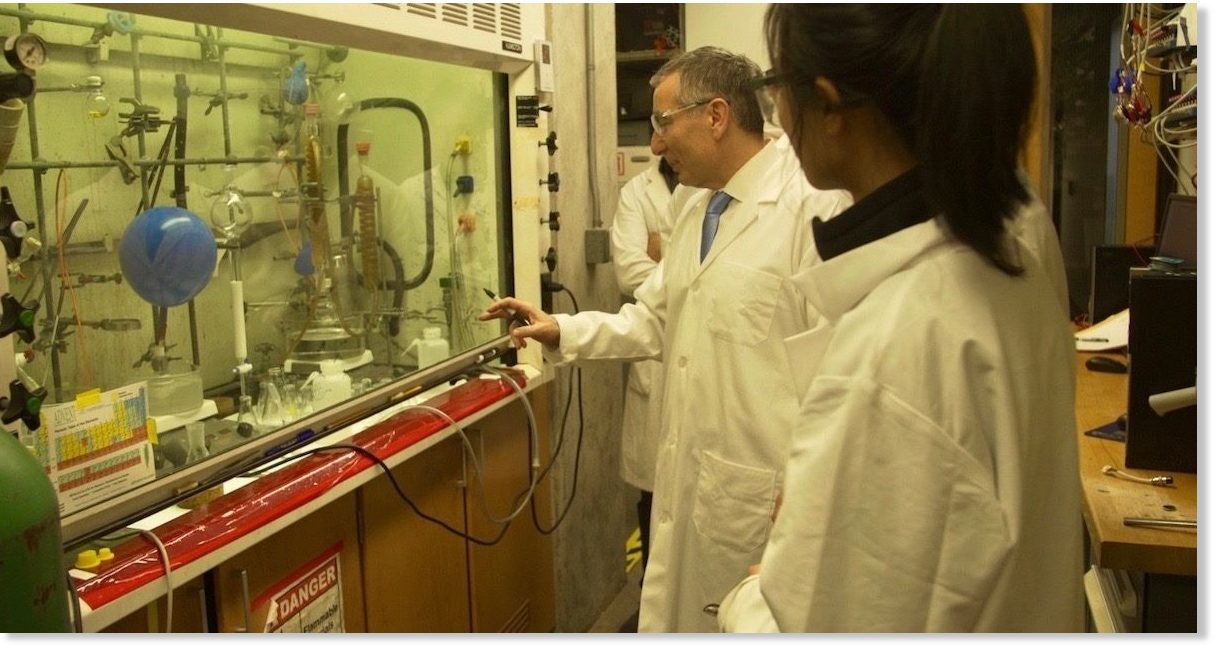
James Tour, Rice University, in a scene from Episode 5 of Science Uprising.
The origin of life is the deepest mystery imaginable and it sounds like scientists have it all figured out. Or just about. The new episode of Science Uprising, "Origin of Life: Intelligence Required," firebombs that persistent and influential myth, advanced by scientists themselves and their media helpers. It does so in just seven devastating minutes.
"We See the Human Soul"
It's crucial to materialism to believe that blind, natural processes alone could have blundered about and generated life from dumb chemical predecessors. Whether it happened on our planet or another, all the wonders of the first living cell must have come into existence with no need for intelligent design. Any hint to the contrary threatens to topple a whole of way of thinking about human beings and about all life, that denies any reality beyond the material. "We are not materialists," says the masked narrator of Episode 5, "We see the human soul":















Comment: See also:
- Why Darwinism Is Wrong, Dead Wrong - Part 1: Intelligent Design and Information
- Darwinism, Creationism... How About Neither?
- New paper confirms trilobite explosion during Cambrian - appeared out of nowhere with no visible ancestors
- Darwin, we've got a problem: Reverse speciation and environmentalists playing god
- Jumping genes: Cross species transfer has driven evolution
- New species of bat-wing dinosaur discovered - 'Shatters' evolutionary ideas of flight in birds
And check out SOTT radio's: