
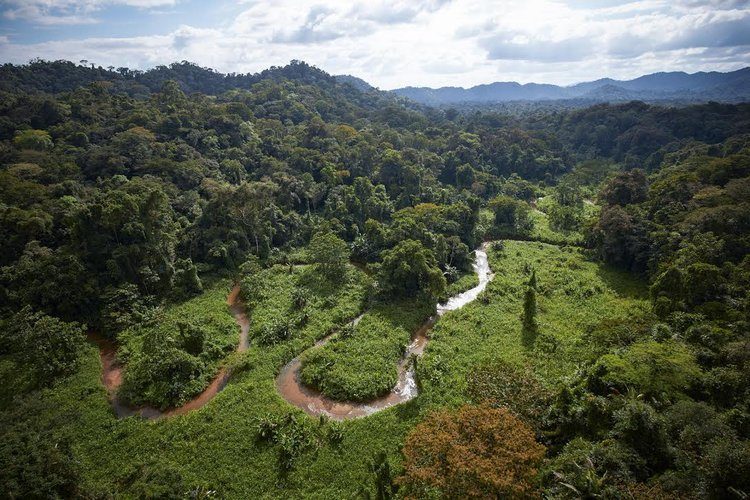
Rainforest, Honduras
The conservation team spent three weeks exploring an ancient settlement, known as the "Lost City of the Monkey God" or "White City", in the Mosquitia rainforest and found a diverse hub of wildlife, including hundreds of species of butterflies, bats and reptiles.
Scientists also rediscovered three species that were thought to be no longer living in Honduras: the pale-faced bat, the False Tree Coral Snake and a tiger beetle which had only been recorded in Nicaragua and was believed to be extinct.
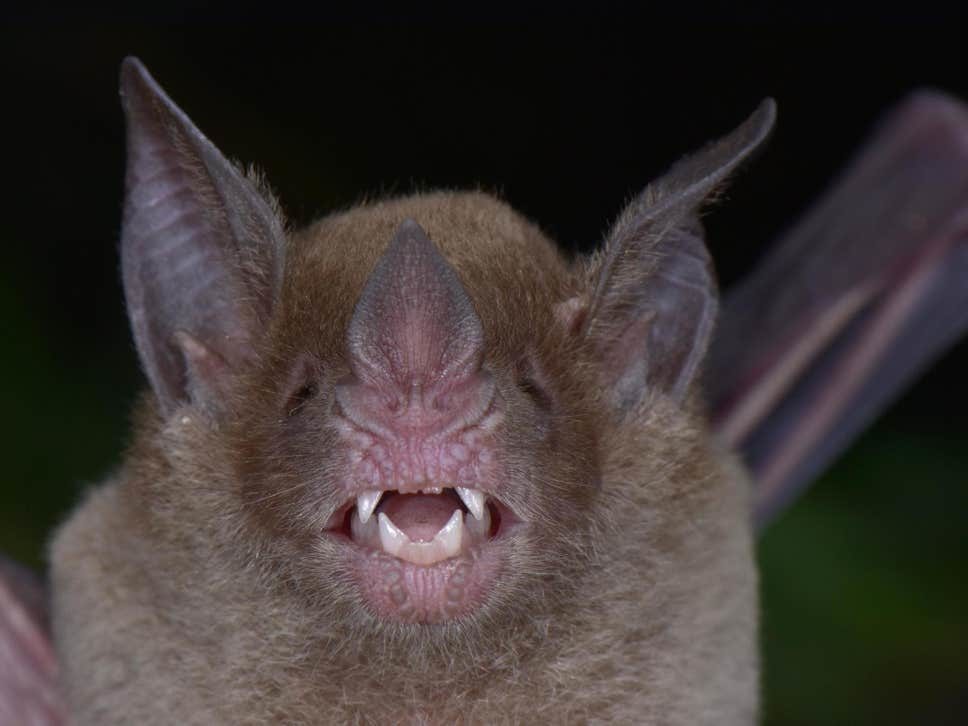
© Trond LarsenThe pale-faced bat was one of many endangered species discovered by scientists exploring an ancient settlement
"The 'White City' is one of the few areas remaining in Central America where ecological and evolutionary processes remain intact," he added.
The RAP also discovered 22 species that have never been recorded in Honduras before, such as the endangered Great Green Macaw, and a livebearing fish that researchers believe is new to science.
In total, scientists discovered 246 species of butterflies and moths, 30 species of bats, and 57 species of amphibians and reptiles.
Mr Larsen said the diversity of the area's wildlife made it a high priority for conservation.
"One of the main reasons we found such high species richness and abundance of threatened and wide-ranging species (e.g., peccaries) is that the forests around the White City remain pristine, unlike much of the region," he said.
"This makes the area a high conservation priority for maintaining the broader landscape connectivity that is essential for the long-term persistence of biodiversity through Central America."
Explorers have searched for decades to find the White City, which is thought to have been home to an ancient civilisation in the pre-Columbian era.
Due to the lack of infrastructure in the region, scientists had to be flown in by helicopter and guarded by armed soldiers to protect them from drug traffickers and predators in the area.
Mr Larsen said the biggest threat to the region was illegal deforestation for cattle ranching, despite the "lost city" being officially protected by Honduras' president in 2015.
Dr John Polisar, a member of the RAP expedition team, called for strong protection to allow the newly-discovered wildlife to thrive.
"We have been doing field work in the indigenous territories of La Moskitia for 14 years, and this site stood out as being simply gorgeous," he said.
"Because of its presently intact forests and fauna the area is of exceptionally high conservation value. It merits energetic and vigilant protection so its beauty and wildlife persist into the future."




Comment: There's no denying that life on our planet is under strain right now and that it's undergoing many shifts, including extinction level events, but there does appear to be a trend of declaring extinctions far too prematurely:
- World's biggest bee feared extinct found alive on island in Indonesia
- Extinct flower rediscovered in Hawaii, via drones
- Super-colony of 1.5 Million Adélie penguins discovered on Danger islands, Antarctica
- Nunatsiavut wildlife manager says polar bear numbers "very, very healthy" - Inuit hunters agree
- Bird that went extinct 136,000 years ago comes 'back from the dead' after evolving again
- Darwin, we've got a problem: Reverse speciation and environmentalists playing god
See also: