Science & TechnologyS

Info

Does the universe spin too?

Spinning Universe
© ShutterstockIs the universe a spinner?
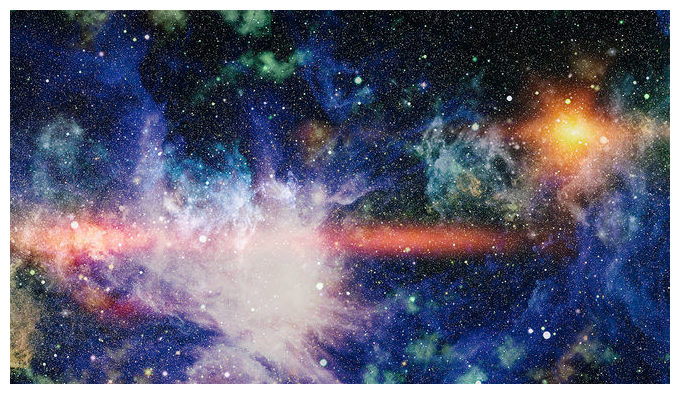
If you look around space, you'll notice a lot of things โ€” the planets, stars, moons, even the galaxy itself โ€” have one thing in common: they're spinning. So, is the universe spinning, too?

This mystery is one that cosmologists have been acutely studying, because it's one that can tell us about the fundamental nature of the universe.

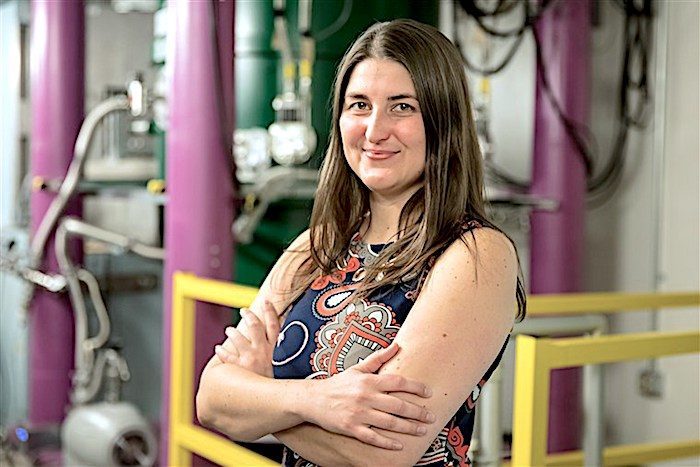
"It's a very abstract question, as is most of cosmology, but those of us who study cosmology think it's a way to study fundamental physics," said Tess Jaffe, an astrophysicist at the University of Maryland and an assistant research scientist at NASA's Goddard Space Flight Center. "There are certain things we cannot test in a laboratory on Earth, so we use the universe and the geometry of the universe, which could tell us something about fundamental physics."

Scientists, in thinking about the universe's fundamental nature, started out by assuming that the universe is not rotating and is isotropic, meaning it looks the same in all directions. This assumption is consistent with Einstein's equations, but isn't required by them. From this thinking, scientists built a standard of cosmological model that describes the universe.

"This [assumption] is really encoded in the way we carry out our calculations, the way we analyze our data, in the way we do a lot of things," Daniela Saadeh, a research fellow in the School of Physics and Astronomy at the University of Nottingham in the United Kingdom, told Live Science. "But you have to test it. You can't just hope for the best."

Mars

China's Mars rover will launch in 2020, seeks signs of life and potential for livable human conditions

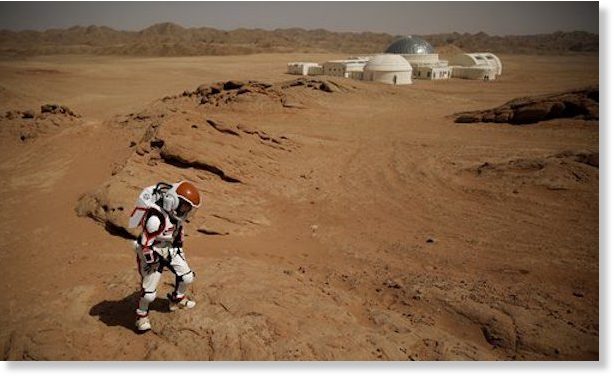
A mock astronaut walks in the Gobi Desert
© VCGA mock astronaut walks in the Gobi Desert near the C-Space Project Mars simulation base outside Jinchang, Northwest China's Gansu Province, in April, 2018.
Mission shows country has 'innovative spirit' to overcome challenges

Chinese scientists on Sunday announced that China will launch its first mission to Mars in 2020 and the construction of its rover has been completed.

The mission includes orbiting, landing and roving the Martian surface, an unprecedented achievement that shows China's innovative spirit in space exploration and courage to face great challenges, according to Chinese space experts.

The probe's primary mission is to detect signs of life on Mars, Ouyang Ziyuan, chief scientist of China's lunar exploration plan, said at a conference on satellite and space, held in Rizhao, East China's Shandong Province from Friday to Sunday.

The mission will also examine whether the planet has the potential to be transformed in some way in the future to make it livable for humans, the 21st Century Business Herald, reported on Sunday quoted Ouyang as saying.

The Chinese rover will examine the Red Planet's atmosphere, landscape, geological and magnetic characteristics, which could provide clues to the origin and evolution of Mars and the solar system, the newspaper reported.

Frog

Evolution, mutations, and "fooling the laymen": New episode of 'Science Uprising'

Michael Behe
© Evoluton News/screenshotMichael Behe in Science Uprising, Episode 6, "Mutations: Failure to Invent."
In a lecture, Phillip Johnson cited physicist Richard Feynman on a scientist's obligation to be honest โ€” not only with himself or in other scientific contexts but, not one bit less, when speaking to the lay public. "You should not fool the laymen when you're talking as a scientist." That such a thing would need to be said is itself revealing. What's more, Feynman insisted, you should "bend over backwards to show how you may be wrong."

The comments are taken from a Commencement address by Feynman in 1974 at Caltech. Johnson, a founding father of modern intelligent design theory, was so moved by this that he said "I wish it could be set to music."

As far as I know it hasn't been set to music. But the idea is a major theme in the new Science Uprising series. Scientists fool themselves and they fool non-scientists, not about dry technical details with no special significance, but about matters that bear on huge, life-altering world picture issues. One example is the role of mutations in evolution. That is the topic of Episode 6 of Science Uprising, "Mutations: Failure to Invent." It's out now; see it here:

Comment: Michael Behe has been a proponent of intelligent design since 1996 with the publication of Darwin's Black Box, in which he outlines his journey from a supporter of evolution as is is taught in the mainstream, to confronting the evidence that logically refute it.


Satellite

Russia's future Moon base will use 'local resources' & 3D-printing - Roscosmos

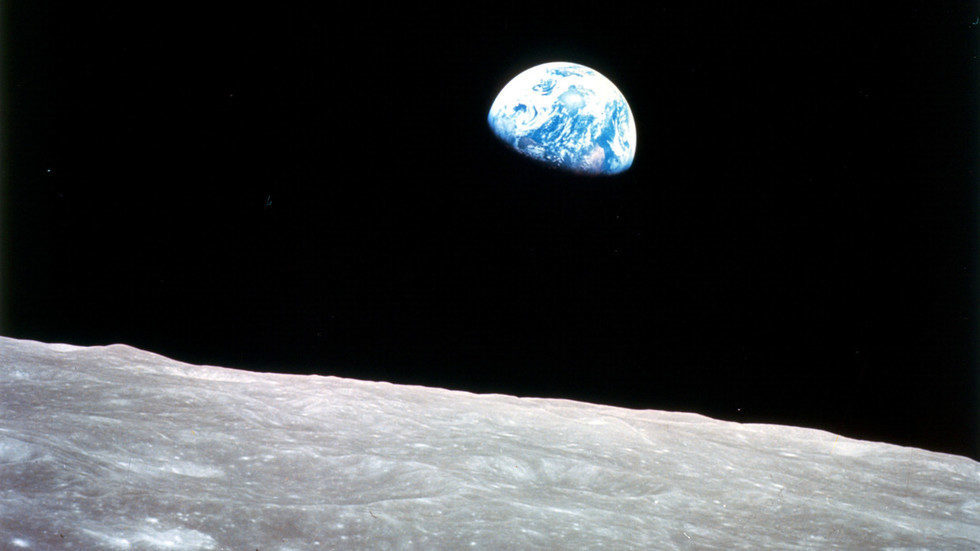
View of Earth from  Moon
© NASA
Russia's future compound on the Moon will operate on "local resources" and feature 3D-printed facilities allowing large standing crews to be housed and supported, Roscosmos space agency revealed.

Russia's ambitions to set up a base on the Moon are no secret, but little is known about what the facilities would look like. On Sunday, Roscosmos shed some light on the issue, saying that lunar construction projects will start after a series of shorter manned missions.

"Large-size compounds will be installed using local resources and additive technologies," the space agency said, referring to one of the newest 3D-printing methods.

Comment: See also:


Bulb

Part-matter, part-light: Newly discovered 'hybrid particles' open doors to exciting new tech

light
© Globallookpress.com
Every type of atom in the universe has a unique fingerprint: It only absorbs or emits light at the particular energies that match the allowed orbits of its electrons. That fingerprint enables scientists to identify an atom wherever it is found. A hydrogen atom in outer space absorbs light at the same energies as one on Earth.

While physicists have learned how electric and magnetic fields can manipulate this fingerprint, the number of features that make it up usually remains constant. In work published July 3 in the journal Nature, University of Chicago researchers challenged this paradigm by shaking electrons with lasers to create "doppelganger" features at new energies โ€” a breakthrough that lets scientists create hybrid particles which are part-atom and part-light, with a wide variety of new behaviors.

The research is part of a greater effort in Assoc. Prof. Jonathan Simon's lab to break down the walls between matter and light, in order to investigate their fundamental properties. In addition to learning about how materials behave at the quantum level, this work could one day help create more powerful computers or virtually "unhackable" quantum communications.

Cloud Precipitation

Winter monsoons became stronger during geomagnetic reversal 780,000 years ago

monsoon changes
© Owen Shieh, University of HawaiiNew evidence suggests that high-energy particles from space known as galactic cosmic rays affect the Earth's climate by increasing cloud cover, causing an "umbrella effect."
When galactic cosmic rays increased during the Earth's last geomagnetic reversal transition 780,000 years ago, the umbrella effect of low-cloud cover led to high atmospheric pressure in Siberia, causing the East Asian winter monsoon to become stronger. This is evidence that galactic cosmic rays influence changes in the Earth's climate. The findings were made by a research team led by Professor Masayuki Hyodo (Research Center for Inland Seas, Kobe University) and published on June 28 in the online edition of Scientific Reports.

The Svensmark Effect is a hypothesis that galactic cosmic rays induce low cloud formation and influence the Earth's climate. Tests based on recent meteorological observation data only show minute changes in the amounts of galactic cosmic rays and cloud cover, making it hard to prove this theory. However, during the last geomagnetic reversal transition, when the amount of galactic cosmic rays increased dramatically, there was also a large increase in cloud cover, so it should be possible to detect the impact of cosmic rays on climate at a higher sensitivity.

Comment: With the wandering poles, a significant weakening of Earth's magnetic field and cosmic rays rising for the fourth consecutive year, scientists are predicting that a geomagnetic shift is in process, at the same time we're seeing more extreme weather events, as well as an overall drop in temperatures around the globe, along with a variety of other unusual phenomena. Also check out SOTT radio's: Behind the Headlines: Earth changes in an electric universe: Is climate change really man-made?


Galaxy

Another mysterious deep space signal traced to the other side of the universe

Owens Valley Array
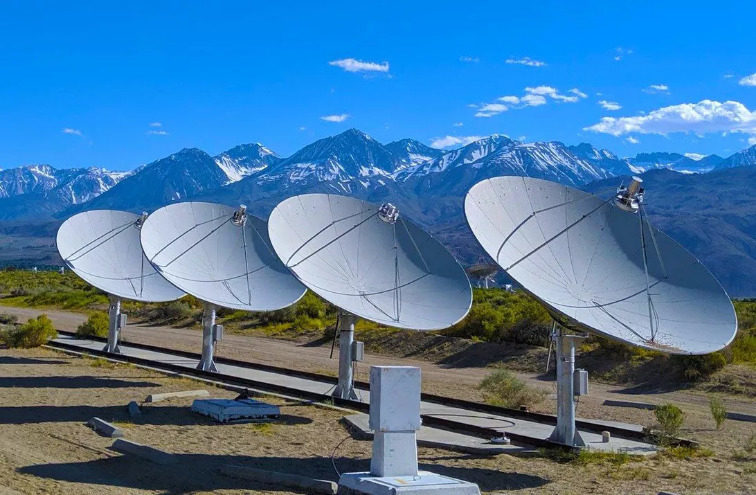
© Caltech/OVRO/G. HallinanThe Owens Valley Array in California's Sierra Nevada mountains.
Since 2007, astronomers have been finding very brief, powerful signals from across the cosmos in observations gathered by radio telescopes. In the past week, researchers pinpointed the location of a non-repeating signal for the first time, and two days later, another group announced they'd discovered nine more. The sources of these so-called "fast radio bursts" remains a mystery, but recently researchers have been honing their ability to locate their origins.

On Tuesday, a team using CalTech's Owens Valley Radio Observatory near Bishop, California, reported that it managed to capture a new, non-repeating signal dubbed FRB 190523 and trace it back to a galaxy nearly 8 billion light-years away.

A number of possible explanations for what causes FRBs have been proposed, ranging from powerful neutron stars to extraterrestrial intelligence.

An accelerated article preview of the OVRO discovery was published online in the journal Nature, less than a week after an Australian team working with the Australian Square Kilometre Array Pathfinder announced it had also traced a non-repeating burst back to its source galaxy, some 4 billion light-years away.

Comment: So what's with the sudden surge in activity? It's notable that there has been an uptick in various kinds of activity throughout our own solar system: Cosmic climate change: Is the cause of all this extreme weather to be found in outer space?

See also:


Better Earth

Ancient tree to reveal secrets of Earth's polar reversal

ancient tree new zealand
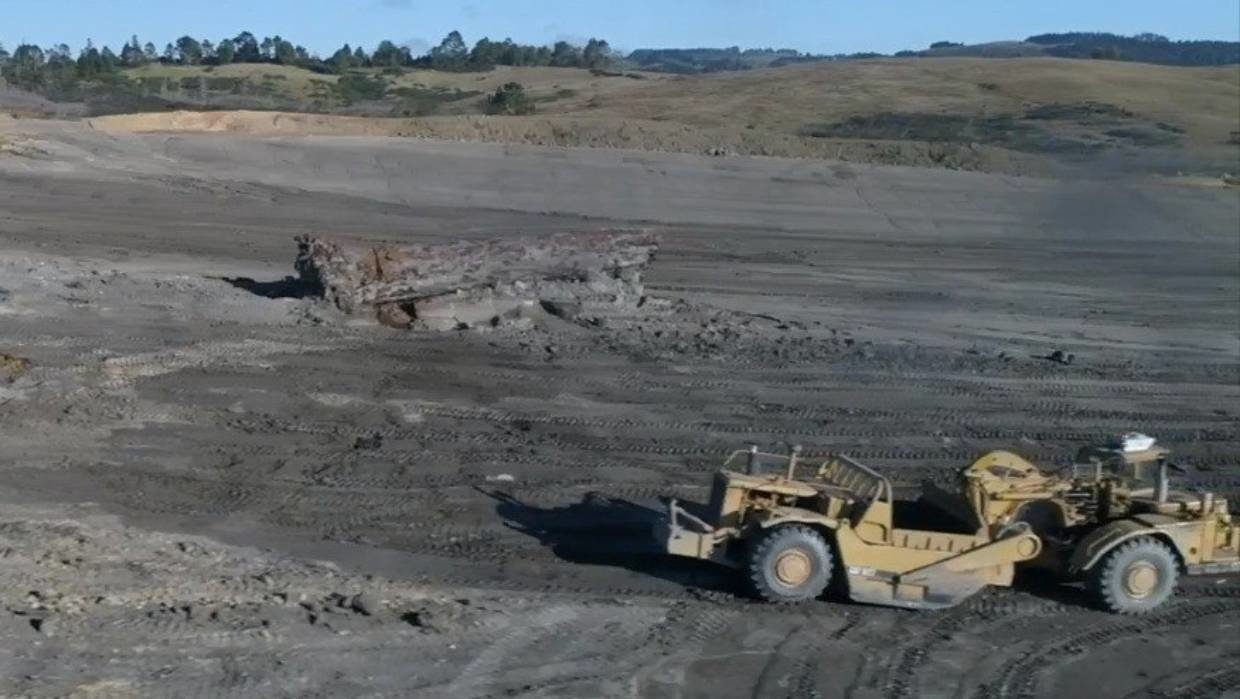
The ancient kauri tree was uncovered during excavations at Ngฤwhฤ for a geothermal power plant expansion.
A team of international scientists believe they have found the answers to the mysteries of Earth's last polar reversal in the tree rings of an ancient kauri.

The 20 metre-long kauri log could map out what to expect during a geomagnetic reversal - a change in the planet's magnetic field - including its impact on climate change and solar radiation.

The kauri, measuring a massive 2.5m in diameter, is one of the oldest trees ever found.

The ancient kauri tree was uncovered during excavations at Ngฤwhฤ for a geothermal power plant expansion.

Comment: All signs point to significant changes in Earth's magnetic field are happening now and that a shift of some kind appears to be coming in the near future so information on what we can expect could be invaluable:


Bacon

Searching for a mirror universe? Scientists say it could be sitting right in front of you!

Mirrorverse
© Gianni Dominici/Flickr/CC by-NC-SA 2.0
If the "mirrorverse" exists, upcoming experiments involving subatomic particles could reveal it.

At Oak Ridge National Laboratory in eastern Tennessee, physicist Leah Broussard is trying to open a portal to a parallel universe. She calls it an "oscillation" that would lead her to "mirror matter," but the idea is fundamentally the same. In a series of experiments she plans to run at Oak Ridge this summer, Broussard will send a beam of subatomic particles down a 50-foot tunnel, past a powerful magnet and into an impenetrable wall. If the setup is just right โ€” and if the universe cooperates โ€” some of those particles will transform into mirror-image versions of themselves, allowing them to tunnel right through the wall. And if that happens, Broussard will have uncovered the first evidence of a mirror world right alongside our own.

"It's pretty wacky," Broussard says of her mind-bending exploration.

The mirror world, assuming it exists, would have its own laws of mirror-physics and its own mirror-history. You wouldn't find a mirror version of yourself there (and no evil Spock with a goatee โ€” sorry "Star Trek" fans). But current theory allows that you might find mirror atoms and mirror rocks, maybe even mirror planets and stars. Collectively, they could form an entire shadow world, just as real as our own but almost completely cut off from us.
Leah Broussard
© Genevieve Martin/Oak Ridge National Laboratory/U.S. Dept. of EnergyLeah Broussard studies subatomic particles at Oak Ridge National Laboratory, where she will be searching for mirror matter this summer.

Info

Nerve surgery by Australian surgeons restores movement in paralysed hands

Nerve Transfers
© imran kadir photography / Getty imagesNerve transfers allow direct reanimation of paralysed muscles.
Australian surgeons have restored arm and hand movement to patients with tetraplegia - paralysis of both upper and lower limbs - using a technique that connects healthy nerves with injured nerves to restore power in paralysed muscles.

Two years after surgery, and following intensive physical therapy, the patients were able to reach their arm out in front of them and open their hand to pick up and manipulate objects as well as propel their wheelchair and transfer into bed or a car.

They can now perform everyday tasks independently, including feeding themselves, brushing teeth and hair, writing, and using tools and electronic devices.

Details are published in a paper in the journal The Lancet.

While it was only a small study, the researchers have seen enough to suggest nerve transfers could achieve similar functional improvements to traditional tendon transfers, with the benefit of smaller incisions and shorter immobilisation times after surgery.

"For people with tetraplegia, improvement in hand function is the single most important goal," says research leader Natasha van Zyl, from Austin Health in Melbourne.