Science & TechnologyS


Better Earth

Ancient tree to reveal secrets of Earth's polar reversal

ancient tree new zealand
The ancient kauri tree was uncovered during excavations at Ngāwhā for a geothermal power plant expansion.
A team of international scientists believe they have found the answers to the mysteries of Earth's last polar reversal in the tree rings of an ancient kauri.

The 20 metre-long kauri log could map out what to expect during a geomagnetic reversal - a change in the planet's magnetic field - including its impact on climate change and solar radiation.

The kauri, measuring a massive 2.5m in diameter, is one of the oldest trees ever found.

The ancient kauri tree was uncovered during excavations at Ngāwhā for a geothermal power plant expansion.

Comment: All signs point to significant changes in Earth's magnetic field are happening now and that a shift of some kind appears to be coming in the near future so information on what we can expect could be invaluable:


Bacon

Searching for a mirror universe? Scientists say it could be sitting right in front of you!

Mirrorverse
© Gianni Dominici/Flickr/CC by-NC-SA 2.0
If the "mirrorverse" exists, upcoming experiments involving subatomic particles could reveal it.

At Oak Ridge National Laboratory in eastern Tennessee, physicist Leah Broussard is trying to open a portal to a parallel universe. She calls it an "oscillation" that would lead her to "mirror matter," but the idea is fundamentally the same. In a series of experiments she plans to run at Oak Ridge this summer, Broussard will send a beam of subatomic particles down a 50-foot tunnel, past a powerful magnet and into an impenetrable wall. If the setup is just right — and if the universe cooperates — some of those particles will transform into mirror-image versions of themselves, allowing them to tunnel right through the wall. And if that happens, Broussard will have uncovered the first evidence of a mirror world right alongside our own.

"It's pretty wacky," Broussard says of her mind-bending exploration.

The mirror world, assuming it exists, would have its own laws of mirror-physics and its own mirror-history. You wouldn't find a mirror version of yourself there (and no evil Spock with a goatee — sorry "Star Trek" fans). But current theory allows that you might find mirror atoms and mirror rocks, maybe even mirror planets and stars. Collectively, they could form an entire shadow world, just as real as our own but almost completely cut off from us.
Leah Broussard
© Genevieve Martin/Oak Ridge National Laboratory/U.S. Dept. of EnergyLeah Broussard studies subatomic particles at Oak Ridge National Laboratory, where she will be searching for mirror matter this summer.

Info

Nerve surgery by Australian surgeons restores movement in paralysed hands

Nerve Transfers
© imran kadir photography / Getty imagesNerve transfers allow direct reanimation of paralysed muscles.
Australian surgeons have restored arm and hand movement to patients with tetraplegia - paralysis of both upper and lower limbs - using a technique that connects healthy nerves with injured nerves to restore power in paralysed muscles.

Two years after surgery, and following intensive physical therapy, the patients were able to reach their arm out in front of them and open their hand to pick up and manipulate objects as well as propel their wheelchair and transfer into bed or a car.

They can now perform everyday tasks independently, including feeding themselves, brushing teeth and hair, writing, and using tools and electronic devices.

Details are published in a paper in the journal The Lancet.

While it was only a small study, the researchers have seen enough to suggest nerve transfers could achieve similar functional improvements to traditional tendon transfers, with the benefit of smaller incisions and shorter immobilisation times after surgery.

"For people with tetraplegia, improvement in hand function is the single most important goal," says research leader Natasha van Zyl, from Austin Health in Melbourne.

Microscope 2

If you have this gene you could have schizophrenia, 18-year-long study finds

dna strands
© Public Domain Pictures
Scientists have identified a gene they say is directly linked to schizophrenia in an important development after 18 years of extensive brain and genetic research.

A team of scientists from Australia and India studied the DNA of over 3,000 Indians in a quest to find the causes of schizophrenia and potential treatments. They discovered that people with the condition were more likely to have a gene variation called NAPRT1, which encodes an enzyme involved in vitamin B3 metabolism.

"We were also able to find this gene in a large genomic dataset of schizophrenia patients with European ancestry,"said Bryan Mowry from the University of Queensland.

Info

'Development in full swing': Russian Helicopters plans to enter air taxi market

VRT 500 helicopter
© russianhelicopters.aeroVRT 500 helicopter
As air taxi services promise to become an everyday reality soon, Russian Helicopters says it is also 'seriously' considering entering the market.

The company's chief executive Andrei Boginsky told TASS: "We are interested in this segment. Furthermore, we have opened a tender of developments and startups on the topic of air mobility and integration of helicopters with the urban environment, being ready to consider interesting projects."

According to Boginsky, the firm plans to convert its light single-engine VRT-500 helicopter to an air taxi.

Sun

Professor Zharkova's Grand Solar Minimum 2020 - 2055 paper accepted by Nature - 300 years of warming from 2370

sun solar
© NASA/SDO/Goddard Space Flight Center
Professor Valentina Zharkova's full paper released June 24 entitled, 'Oscillations of the Baseline of Solar Magnetic Field and Solar Irradiance on a Millennial Timescale' has been accepted for publishing in Nature. It confirms a Grand Solar Minimum from 2020 to 2055, as all four magnetic fields of the sun go out of phase, while now also suggesting centuries of natural warming post-Minima.

Zharkova's team's expanded 'double dynamo' calculations match-up almost perfectly with the timelines of past Grand Minimas: the Maunder Minimum (1645-1715), Wolf minimum (1300-1350), Oort minimum (1000-1050), Homer minimum (800-900 BC); as well as with the past Grand Maximas: the Medieval Warm Period (900-1200), the Roman Warm Period (400-150 BC), and so on.

Now, following the well-documented super Grand Solar Minimum cycle (2020-2055), and coming somewhat as a surprise, Zharkova's analysis goes on to suggest the sun will then enter a 300+ year spell of increased-activity, actually warming the earth at a rate of 0.5C (0.9F) per century, running until the next GSM cycle (2370-2415).

Comment: As is the cyclical and fluctuating nature of our planet's climate, warm spells can be expected to follow periods of cold, and sometimes they can even punctuate ice ages - historical records show bumper harvests occurred during previous minimums. However, what is probably most critical to our era is that, as we enter this grand solar minimum and all its associated turmoil, coupled with how poorly prepared our planet is, the 300 years of warming, which many of us will unlikely be alive to see, may be welcoming a drastically different planet to that which entered the minimum.

Also, while Zharkova's model can account for the cycles our planet undergoes, there are other factors that aren't included in her model, such as the rise of fireball activity and the influence of our star's theorized twin, which, at some point in the future, could radically affect her calculations: For more, check out SOTT radio's: Behind the Headlines: Earth changes in an electric universe: Is climate change really man-made?


Microscope 2

The world's smallest MRI machine just captured the magnetic field of a single atom

single atom MRI
© Wilke et al., Nature Physics, 2019
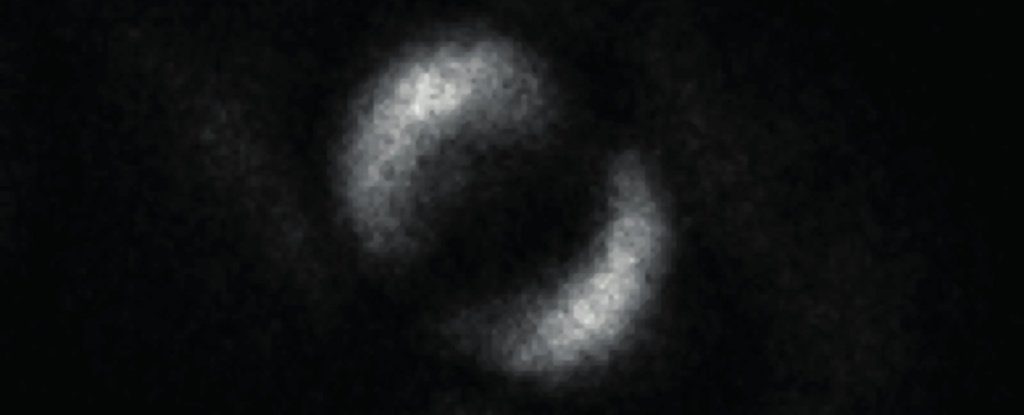
Using a new technique, scientists have performed the world's smallest magnetic resonance imaging to capture the magnetic fields of single atoms. It's an incredible breakthrough that could improve quantum research, as well as our understanding of the Universe on subatomic scales.

"I am very excited about these results," said physicist Andreas Heinrich of the Institute for Basic Sciences in Seoul. "It is certainly a milestone in our field and has very promising implications for future research."

You're probably most familiar with magnetic resonance imaging, or MRI, as a method used to image internal body structures in medicine. An MRI machine uses highly powerful magnets to induce a strong magnetic field around the body, forcing the spin of the protons in the nuclei of your body's hydrogen atoms to align with the magnetic field, all without producing side-effects.

Comment: See also:


Ice Cube

Scientists to freeze themselves in Arctic ice for an unprecedented year-long study

Research ship in the Arctic ice
© Youtube/Alfred Wegener Institute, Helmholtz Centre for Polar and Marine Research
Scientists from 17 countries are embarking on an ambitious and unprecedented voyage to the Arctic where they will let their ship become frozen in the ice for a year so that they can study climate change as they drift around.

The team will embark on the $158 million expedition in September, and will anchor the German icebreaker RV Polarstern to a large piece of ice in the Arctic Ocean and wait for the sea to freeze around them. After trapping themselves in the thick ice, they will brave the dropping temperatures as they hurry to build temporary winter research camps on the ice and carry out experiments as the ice drifts towards the North Pole.
Arctic ice chart
© MOSAiC
The ship will be packed with supplies and scientific equipment, but the team will be isolated, with any emergency evacuation almost impossible. Temperatures can drop to -50°C (-58°F), and the polar night, when the Sun doesn't rise over the horizon, will last 150 days. The team plans to build a fence around their camps that will sound an alarm if any polar bears come too close, and at least six people will be assigned to "polar bear watch."

Comment: Let's hope they are prepared:


Laptop

Light waves could enable ultrafast quantum computing

Super Currents
© Image courtesy of Jigang WangJigang Wang and his collaborators have demonstrated light-induced acceleration of supercurrents, which could enable practical applications of quantum mechanics such as computing, sensing and communicating.
AMES, Iowa - Jigang Wang patiently explained his latest discovery in quantum control that could lead to superfast computing based on quantum mechanics: He mentioned light-induced superconductivity without energy gap. He brought up forbidden supercurrent quantum beats. And he mentioned terahertz-speed symmetry breaking.

Then he backed up and clarified all that. After all, the quantum world of matter and energy at terahertz and nanometer scales - trillions of cycles per second and billionths of meters - is still a mystery to most of us.

"I like to study quantum control of superconductivity exceeding the gigahertz, or billions of cycles per second, bottleneck in current state-of-the-art quantum computation applications," said Wang, a professor of physics and astronomy at Iowa State University whose research has been supported by the Army Research Office. "We're using terahertz light as a control knob to accelerate supercurrents."

Superconductivity is the movement of electricity through certain materials without resistance. It typically occurs at very, very cold temperatures. Think -400 Fahrenheit for "high-temperature" superconductors.

Terahertz light is light at very, very high frequencies. Think trillions of cycles per second. It's essentially extremely strong and powerful microwave bursts firing at very short time frames.

Wang and a team of researchers demonstrated such light can be used to control some of the essential quantum properties of superconducting states, including macroscopic supercurrent flowing, broken symmetry and accessing certain very high frequency quantum oscillations thought to be forbidden by symmetry.

It all sounds esoteric and strange. But it could have very practical applications.

Chalkboard

Student solves a centuries-old physics problem that baffled Newton, the Wasserman-Wolf

colored glass spheres
© Creativ Studio Heinemann via Global Look Press
Scientific luminaries like Isaac Newton could only create temporary solutions to the centuries-old problem of 'spherical aberration' but one Mexican student has finally solved it - while preparing his breakfast.

"I remember one morning I was making myself a slice of bread with Nutella and suddenly I said, 'Holy crap! It's there!'" Rafael González from the Institute of Technology in Monterrey, Mexico told his university paper.

"I went to my room, I started programming, it resolved and I jumped for joy with excitement."

Comment: More information from Mr. Gonzalez's disclosure article:
Has it happened to you that, when you look through a photographic camera, a telescope, binoculars or a microscope, you see the images blurred or without sharpness? It is probably not that the lens is dirty or out of focus, but that it is an optical phenomenon called spherical aberration.

Aberration is a defect of the optical systems, which cause the image formed by a lens to be blurred or distorted, and the nature of the distortion depends on the type of aberration.
wasserman wolf problem optics
At the top there is a representation of a perfect lens without spherical aberrations: all incoming rays focus on the focal point. The lower example shows a real lens with spherical surfaces, which produces a spherical aberration: the different rays are not found after the lens at a focal point.
An optical imaging system that has an aberration will produce an image without sharpness. This is where the manufacturers of optical instruments must correct the devices to compensate for the aberration.

Spherical aberration is a type of optical aberration found in optical systems that use spherical surfaces, such as cameras, telescopes, binoculars, microscopes, and so on. The lenses and curved mirrors of these devices are generally made with surfaces that are spherical, because this shape is easier to form than the non-spherical curved surfaces. The rays of light that strike an off-center spherical surface are refracted or reflected more or less than those that impact near the center. This deviation reduces the quality of the images produced by the optical equipment.

Figure 1. At the top there is a representation of a perfect lens without spherical aberrations: all incoming rays focus on the focal point. The lower example shows a real lens with spherical surfaces, which produces a spherical aberration: the different rays are not found after the lens at a focal point.

The solution to the problem of spherical aberration (established by Wasserman-Wolf in 1949)

An aspheric lens is a lens whose surfaces are not a portion of a sphere, but have a freer form, for example, the lens of a photographic camera.

An aspheric lens can reduce or eliminate spherical aberration and also reduce other optical aberrations such as astigmatism, compared to a simple spherical lens. A single aspheric lens can often replace a much more complex multi-lens system. The resulting device is smaller and lighter, and sometimes cheaper than the design of multiple lenses.

In the design of optical systems, the aspheric surface aims to strongly reduce spherical aberration. Many authors proposed a design of lenses with two aspherical surfaces to correct the spherical aberration, but all the solutions are numerical in nature.

The problem of the design of a lens without spherical aberration is also known as the problem of Wasserman-Wolf, postulated by Wasserman and Wolf in 1949 in an article published in the Royal Society Proceedings, which explains the problem in a technical way, but does not give an analytical solution.

In a scientific paper called "General formula for bi-aspheric singlet lensdesign free of spherical aberration", which we recently published in the Applied Optics magazine