Science & TechnologyS


HAL9000

Machine learning acquiring capability to automatically translate long-lost languages

ancient greek script
© Don Lloyd | FlickrAncient scripts are starting to give up their secrets
Some languages that have never been deciphered could be the next ones to get the machine translation treatment.

In 1886, the British archaeologist Arthur Evans came across an ancient stone bearing a curious set of inscriptions in an unknown language. The stone came from the Mediterranean island of Crete, and Evans immediately traveled there to hunt for more evidence. He quickly found numerous stones and tablets bearing similar scripts and dated them from around 1400 BCE.

That made the inscription one of the earliest forms of writing ever discovered. Evans argued that its linear form was clearly derived from rudely scratched line pictures belonging to the infancy of art, thereby establishing its importance in the history of linguistics.

He and others later determined that the stones and tablets were written in two different scripts. The oldest, called Linear A, dates from between 1800 and 1400 BCE, when the island was dominated by the Bronze Age Minoan civilization.

Heart

Pentagon's new laser tech identifies heartbeat signatures at a distance

laser heartbeat
© Indiatimes.com
The Jetson prototype can pick up on a unique cardiac signature from 200 meters away, even through clothes.

Everyone's heart is different. Like the iris or fingerprint, our unique cardiac signature can be used as a way to tell us apart. Crucially, it can be done from a distance.

It's that last point that has intrigued US Special Forces. Other long-range biometric techniques include gait analysis, which identifies someone by the way he or she walks. This method was supposedly used to identify an infamous ISIS terrorist before a drone strike. But gaits, like faces, are not necessarily distinctive. An individual's cardiac signature is unique, though, and unlike faces or gait, it remains constant and cannot be altered or disguised.

Long-range detection

A new device, developed for the Pentagon after US Special Forces requested it, can identify people without seeing their face: instead it detects their unique cardiac signature with an infrared laser. While it works at 200 meters (219 yards), longer distances could be possible with a better laser. "I don't want to say you could do it from space," says Steward Remaly, of the Pentagon's Combatting Terrorism Technical Support Office, "but longer ranges should be possible."

Bullseye

Groundbreaking study: Scientists use CRISPR to eliminate HIV DNA in mice

CRISPR thing
© Pixabay/mwooten
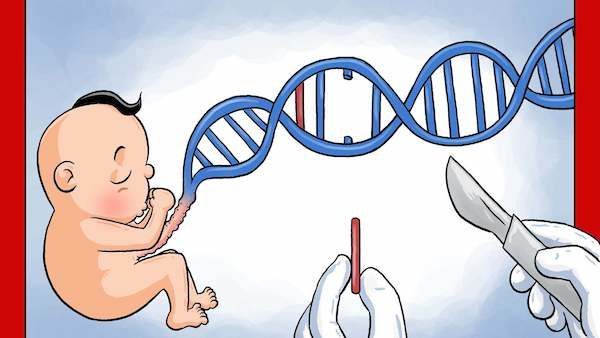
A group of scientists have, for the first time, eliminated HIV DNA from the genomes of living animals, in what is being described as a critical step towards developing a cure for the AIDS virus.

The groundbreaking study, published in the journal Nature Communications, revealed that treatment to suppress HIV replication coupled with gene editing therapy can eliminate HIV from infected cells and organs.

Current HIV treatment focuses on the life-long use of antiretroviral therapy (ART), which suppresses HIV replication but does not eliminate the virus. Dr Kamel Khalili, a senior investigator of the study, had found in previous work that by using the gene editing CRISPR-Cas9 technology, large fragments of HIV DNA could be removed from infected cells.

Oil Well

Chinese scientists develop new material for cleaning up oil spills

Oil spill
© Sioux County Sheriff’s Office / Facebook
The search for ever-better materials to soak up oil from water has recently added a new member to this highly specialized and highly sough-after family: Chinese scientists have invented a honeycomb-style polypropylene material that can soak up oil from water more cheaply and efficiently than some popular established methods, and do it in an environmentally friendly way.

The material according to a press release, is essentially foam with a rough surface and a tubular structure modeled on honeycombs. This structure allows water to flow freely through the tubes while oil gets caught and absorbed in seconds, the researchers from Ningbo Institute of Materials Technology said.

Bug

Cockroaches developing 'cross-resistance' to bug sprays

german cockroach
© Ana Marina Lopez TorresGerman cockroach
Controlling them will become 'almost impossible'

Cockroaches are developing a resistance to insecticides used in exterminators' bug spray and may soon be "almost impossible" to control with chemicals alone, scientists warn.

New research recently published by Purdue University in West Lafayette, Indiana, has suggested that a strain of German cockroach — Blattella germanica L. — will only become more difficult to eliminate as future generations are becoming increasingly immune to human efforts of population control.

Such control is very necessary, scientists said, because the pests are often a threat to human health. They can spread bacteria and the feces they produce trigger allergies and asthma in adults and children.

Nuke

Killing nuclear will kill your 'green economy'

nuclear power plant
© Global Look Press / S. Ziese
The German government vowed to shut down nuclear energy by 2022. Germany is getting half of its energy needs from alternative sources: atomic 13 percent, solar 9 percent, wind 25 percent, and hydro power 5 percent. While carbon generator sources are: biomass 8 percent, gas 9 percent, hard coal 10 percent, brown coal 20 percent. Critics said and are saying that transitioning to alternate sources while, at the same time, phasing out atomic energy is too ambitious. I don't approve of this euphemistic term "ambitious," I think the word deranged is more fitting.

Eight years ago, the German chancellor Angela Merkel, in wake of the Fukushima situation, announced that she would phase out nuclear energy by 2022. Wind and solar power was promised to replace that fall in output, but here's a word the pushers of radiophobia never mention - STORAGE. If you phase out nuclear, then what's going to happen when the sun doesn't shine and the wind doesn't blow? That loss has to be replaced in the grid and the German Government, allegedly against fossil fuels and pro-green, plugged the gap with [dirty] coal, burning more and more of it. Even with 100 percent green energy generation, a country is still left seriously vulnerable to nature's whim if it didn't invest or invest sufficiently in diversification and storage capacity, to get batteries to feed the grid while the wind and the clouds aren't favorable.

How can prudent and rational voices be heard when faced with so much 'green' propaganda? The most recent example being the crud from HBO on Chernobyl, the purpose of which is to conveniently promote radiophobia, given the historical moment facing the world today on this question. This weekend, hundreds of protesters in North Rhine Westphalia broke through a police line to demonstrate against the mining of brown coal. Note that nobody has a plan for people working in the coal sector. Nobody is interested in their livelihood or their communities. Nobody is giving them a better deal to replace their current profession.

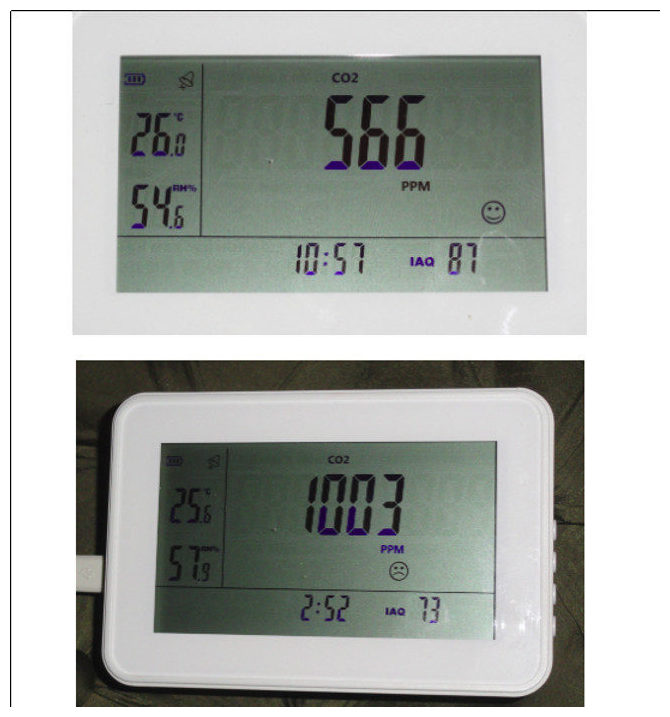
Comment: The hysteria around 'global warming' and CO2 may be just as ill-placed, but that doesn't change the fact that nuclear is still the best option. It's cheaper, cleaner, and has the added advantage of solving the non-existent problem of 'excess' CO2. In other words, it's something that both sides of the debate can support, for different reasons. Everyone wins. See also:


Microscope 1

Spores in space: Mold can withstand radiation doses that would kill a human

Penicillium mold
© David Gregory & Debbie Marshall, CC BYA Penicillium mold is producing chains of spores in this scanning electron micrograph image
Scientists zapped mold spores in a laboratory and concluded that two types of fungus could survive a journey to the moon or Mars.

There are both positive and negative implications about this news, according to a recent statement by the American Geophysical Union (AGU). AGU coordinated the 2019 Astrobiology Science Conference in Seattle, where lead researcher microbiologist Marta Cortesão, a doctoral student at the German Aerospace Center (DLR), will present her research on the mold today (June 28).

Having fungus among us in space could be a plus. Mold can be used to produce compounds in antibiotics, for example, and space medicine could come in handy. But the results of the new research also raise concerns, Cortesão said in the AGU statement, because the fungi withstood radiation exposure 200 times the dose that would kill a human.

Wolf

Arctic fox that traveled over 2,000 miles in a mere 76 days from Norway to Canada leaves scientists speechless

wolf
© Universal Images Group Editorial/ FILE PHOTO
Despite its tender age, an Arctic fox has made headlines, broken records and baffled scientists who tracked its blistering 2,176-mile trek from Norway's Svalbard islands to Canada in a mere 76 days.

While 15-year-old Cori 'Coco' Gauff's Wimbledon win over Venus Williams was undoubtedly impressive, this one-year-old Arctic fox may have made the most impressive athletic debut of the year, occasionally clocking nearly 100 miles a day during its epic intercontinental journey.

Equipped with a GPS tracking band by the Norwegian Polar Institute, researchers were already impressed when the fox reached Greenland 21 days after its release on March 26, 2018. But the little critter was only getting started, eventually crossing into Canada's Ellesmere less than two months later. With an astounding average pace of 28.5 miles per day, no fox has ever been recorded traveling that far, that fast before.

Microscope 2

Genealogy sites have helped identify suspects. Now they've helped convict one

geneology snapshot murder suspect
© Snohomish County Sheriff's Office, via Associated PressParabon, a forensic consulting firm, generated this composite sketch of the suspect using crime-scene DNA.

A new forensic technique sailed through its first test in court, leading to a guilty verdict. But beyond the courtroom, a battle over privacy is intensifying.


It has been used to identify more than 40 murder and rape suspects in cases as much as a half-century old. It has led to guilty pleas and confessions, including in one case where another man was convicted of the crime.

Genetic genealogy — in which DNA samples are used to find relatives of suspects, and eventually the suspects themselves — has redefined the cutting edge of forensic science, solving the type of cases that haunt detectives most: the killing of a schoolteacher 27 years ago, an assault on a 71-year-old church organ player, the rape and murder of dozens of California residents by a man who became known as the Golden State Killer.

Comment: As we move into the strange new world of DNA and genetics, the moral implications, particularly in regards to privacy, become murky. No one is going to object to perpetrators of heinous crimes being brought to justice, but what are the rest of us giving up in order to achieve that goal?

See also:


Info

A new radioactive model of ancient rocks suggest lost continents for early Earth

A 4 Ga record of granitic heat production
© Science Direct
A new radioactivity model of Earth's ancient rocks calls into question current models for the formation of Earth's continental crust, suggesting continents may have risen out of the sea much earlier than previously thought but were destroyed, leaving little trace.

Scientists at the University of Adelaide have published two studies on a model of rock radioactivity over billions of years which found that the Earth's continental crust may have been thicker, much earlier than current models suggest, with continents possibly present as far back as four billion years.

"We use this model to understand the evolving processes from early Earth to the present, and suggest that the survival of the early crust was dependent on the amount of radioactivity in the rocks - not random chance," says Dr Derrick Hasterok, from the University of Adelaide's Department of Earth Sciences and Mawson Centre for Geoscience.

"If our model proves to be correct, it may require revision to many aspects of our understanding of the Earth's chemical and physical evolution, including the rate of growth of the continents and possibly even the onset of plate tectonics."

Dr Hasterok and his PhD student Matthew Gard compiled 75,800 geochemical samples of igneous rocks (such as granite) with estimated ages of formation from around the continents. They estimated radioactivity in these rocks today and constructed a model of average radioactivity from four billion years ago to the present.