
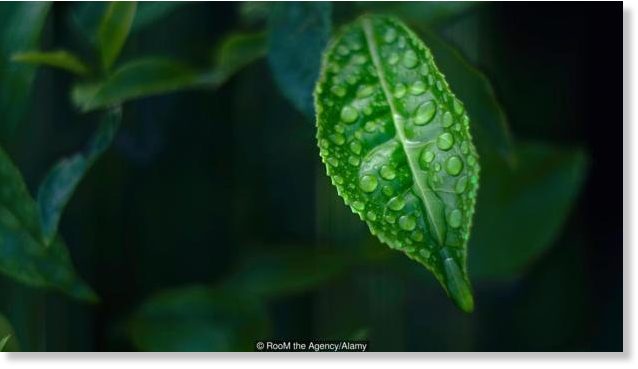
© RooM the Agency/Alamy
The finding could mean the evolution of photosynthesis needs a rethink, turning traditional ideas on their head.
Photosynthesis is the ability to use the Sun's energy to produce sugars via chemical reactions. Plants, algae, and some bacteria today perform 'oxygenic' photosynthesis, which splits water into oxygen and hydrogen to power the process, releasing oxygen as a waste product.
Some bacteria instead perform 'anoxygenic' photosynthesis, a version that uses molecules other than water to power the process and does not release oxygen.
Scientists have always assumed that anoxygenic photosynthesis is more 'primitive', and that oxygenic photosynthesis evolved from it. Under this view, anoxygenic photosynthesis emerged about 3.5 billion years ago and oxygenic photosynthesis evolved a billion years later.
However, by analysing structures inside an ancient type of bacteria, Imperial College London researchers have suggested that a key step in oxygenic photosynthesis may have already been possible a billion years before commonly thought.













Comment: Whatever its precursors - if any - photosynthesis most likely arrived as a package deal. No "evolution by random mutation and natural selection" necessary. See: