Science & TechnologyS


Fish

Newly discovered pocket-sized shark squirts glowing clouds from glands

pocket shark
© Mark Grace/National Oceanic Atmospheric Administration National Marine Fisheries Service Southeast Fisheries Science Center via AP, FileFILE - A 5.5-inch long rare pocket shark. A pocket-sized pocket shark found in the Gulf of Mexico has turned out to be a new species, and one that squirts little glowing clouds into the ocean.
A pocket-sized pocket shark found in the Gulf of Mexico has turned out to be a new species.

And the mysterious pouches that it's named for, up near its front fins? Scientists say they squirt little glowing clouds into the ocean.

Researchers from around the Gulf and in New York have named the species the American pocket shark, or Mollisquama (mah-lihs-KWAH-muh) mississippiensis (MISS-ih-sip-ee-EHN-sis).

It's only the third out of more than 500 known shark species that may squirt luminous liquid, said R. Dean Grubbs, a Florida State University scientist who was not involved in the research. He said the other two are the previously known pocket shark and the taillight shark , which has a similar gland near its tail.

Comment: See also:


Info

The 1,000th California condor has hatched in a victory for the species that nearly went extinct

A rare and endangered California condor flies through Marble Gorge, east of Grand Canyon National Park March 22, 2007 west of Page, Arizona.
© David McNewA rare and endangered California condor flies through Marble Gorge, east of Grand Canyon National Park March 22, 2007 west of Page, Arizona.
The California condor once tip-toed dangerously close to extinction, with only 22 left in the wild in 1982.

Now, the rebounding species is marking a millenary milestone.

In a victory for conservation, wildlife officials recently announced that the 1,000th California condor chick has hatched more than 30 years after efforts began to recover the critically endangered species.

The chick hatched in May at Zion National Park in southwest Utah, park officials said earlier in July.

Eye 1

'Anonymous' data might not be so anonymous, study shows

phone
We've all done it: When signing up for an account online, we've clicked "I agree" to have our data sold to third parties. It will be anonymized, we're assured, and only a small percentage of data will be made available to others.

But how secure can we be that our personal data can't be traced back to us? That's the central question that a team of researchers at Université catholique de Louvain in Belgium and Imperial College London sought to answer.

The conclusion is — "not very."

Using machine learning, the researchers developed a system to estimate the likelihood that a specific person could be re-identified from an anonymized data set containing demographic characteristics. The researchers' model suggests that over 99% of Americans could be correctly re-identified from any dataset using 15 demographic attributes, including age, gender and marital status.

Butterfly

Bird embryos communicate with each other from inside unhatched eggs

eggs
© (Duarte Frade/iNaturalist, CC-BY)Yellow-legged gull eggs.
Unhatched bird embryos can not only hear the warning calls of adult birds - they can communicate that information to their unhatched brothers and sisters sharing the same nest, remaining safely tucked away in their shells until it is safe to hatch.

It is a finding that reveals how birds can adapt to their environment even before birth, since, unlike placental mammals, their physiology can no longer be influenced by changes in their mother's body after the egg is laid.

In particular, a team of researchers exposed unhatched yellow-legged gull (Larus michahellis) eggs to cues that indicated high predation risk. Not only did the unhatched embryos communicate these cues to unexposed nestmates, they emerged from their eggs exhibiting much more cautious behaviour than the control group.

Comment: Isn't the intelligence of nature amazing? Also check out SOTT radio's:


Fireball 2

Glass 'pearls' point to meteorite strike near Florida 2 million years ago

clam glass
© Mike Meyer/Meteoritics and Planetary ScienceA pair of microtektites found inside ancient clam shells.
Since their discovery 13 years ago, scientists have puzzled over the origin of tiny glass beads found inside ancient clam shells. New evidence suggests they're microtektites — a byproduct of meteorite impacts — marking the first time these celestial remnants have been found hiding in old clam shells.

Ancient clam shells uncovered at a Sarasota County quarry in Florida are the unexpected repositories of microtektites, according to new research published in Meteoritics and Planetary Science. The research is still incomplete, but the discovery points to a previously unknown meteorite strike (or strikes) off the coast of Florida some 2 million to 3 million years ago.

"This is the first report of microtektites in Florida and one of only a few findings of space debris found in the state," Mike Meyer, lead author of the new study and a researcher at Harrisburg University of Science and Technology, told Gizmodo. "These spheres may also help us date the shell beds they were found in as we don't have a precise age for them."

Comment: Spherules have also been found at many other sites providing evidence that impact events have occurred much more recently than that noted above:


Telescope

Astronomers have found a rare kilometer-wide asteroid with the shortest year known

The orbit of asteroid 2019 LF6
The orbit of asteroid 2019 LF6 (white) falls entirely within the orbit of Earth (blue).
A massive asteroid has eluded astronomers because of its unusual orbit -- until now.

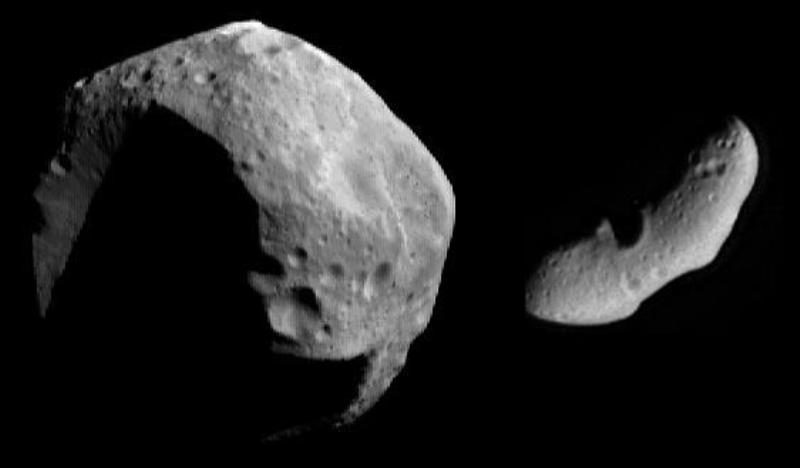
Astronomers have spotted 2019 LF6, which is about a kilometer wide and boasts the shortest "year" of any known asteroid, circling the sun about every 151 days, according to the California Institute of Technology.

This rare rocky body is one of only 20 known Atira asteroids, those whose orbits fall entirely within that of the Earth.

"You don't find kilometer-size asteroids very often these days," said Quanzhi Ye, a postdoctoral scholar at Caltech who discovered 2019 LF6 via the Zwicky Transient Facility, a camera at the school's Palomar Observatory that scans the sky for objects. "Thirty years ago, people started organizing methodical asteroid searches, finding larger objects first, but now that most of them have been found, the bigger ones are rare birds."

It's difficult to spot the asteroids because astronomers only have about 20 to 30 minutes before or after sunset to find them, Ye said.

"LF6 is very unusual both in orbit and in size -- its unique orbit explains why such a large asteroid eluded several decades of careful searches," Ye said.

Toys

Stuff no one asked for: P&G launching 'smart diapers' with help from Google

lumi smart diapers
© Courtesy of P&GThe Lumi by Pampers monitoring system, which P&G claims is the world’s first all-in-one connected care system, will be available for purchase this fall.
Procter & Gamble Co. worked with a subsidiary of Google to develop a baby monitoring system that alerts parents via a smartphone app if a Pampers diaper needs changing.

The app also will enable parents to keep an eye on a baby via a Logitech video camera installed in a nursery, according to the Cincinnati-based maker of consumer goods (NYSE: PG).

The high-definition, wide-angle monitor includes night vision and two-way audio. It also tracks room temperature and humidity.

Comment: From Robert F. Kennedy Jr.:

It's unsurprising that a company like Google, very well-versed in spying on people for the purpose of hoovering up personal data, would help with the development of every helicopter parent's dream product - an efficient way of knowing your infant's every last act down to it's simple bodily functions. Apparently, despite millennia of child rearing, humans have been missing out on vital information about their infants that only digital diapers can provide. It's the product you didn't know you desperately needed!

See also:


Galaxy

Ring-like formations discovered around lakes on Titan

titan lakes
Some lakes on Titan have ring-like shapes around them, and scientists are trying to find out how they formed. Understanding how they formed may tell us something about how the entire region they're in, including the lakes, formed. The ring-shaped features are found around pools and lakes at Titan's polar regions.

Thanks to the Cassini spacecraft, which spent 13 years studying Saturn and its moons, we know that the frigid moon Titan is an intriguing place. Cassini showed us that Titan has about 650 lakes and seas in its polar regions. We also know that about 300 of them have liquid ethane and methane in them, though they're not all full.

The bulk of the smaller lakes on Titan have sharp edges and flat floors. They can reach depths of 600 meters and they have narrow outer rims about 1 km wide.

Comment: See also:


Cell Phone

A newly discovered neural pathway processes acute light to affect sleep

Phone at night
© notallowedto.com
Different pathways process long-term circadian rhythms and short-term exposure to light

While this acute burst of light does make it more difficult to fall back to sleep, a new Northwestern University study reports that it won't interfere with the body's overall circadian rhythms.

For the first time, researchers directly tested how short pulses of light are processed by the brain to affect sleep. They discovered that separate areas of the brain are responsible for short pulses versus long-term exposure to light. This finding challenges the widely accepted, long-held belief that all light information is relayed through the brain's suprachiasmatic nucleus (SCN), which synchronizes the body's sleep/wake cycles.

"Prior to the widespread use of electricity, our exposure to light and darkness occurred in a very predictable pattern," said Northwestern's Tiffany Schmidt, who led the study. "But light has become very cheap. We all have smartphones, and their screens are very bright. We're all getting exposed to light at the wrong times of day. It's becoming more important to understand how these different types of light information are relayed to the brain."

Sun

Could Giant Solar Farms make fuel and help solve climate change? Not likely!

Giant Solar Panels
Millions of solar panels clustered together to form an island could convert carbon dioxide in seawater into methanol, which can fuel airplanes and trucks, according to new research from Norway and Switzerland and published in the Proceedings of the National Academy of Sciences journal, PNAS, as NBC News reported. The floating islands could drastically reduce greenhouse gas emissions and dependence on fossil fuels.

The paper argues that the technology exists to build the floating methanol islands on a large scale in areas of the ocean free from large waves and extreme weather. Areas of the ocean off the coasts of South America, North Australia, the Arabian Gulf and Southeast Asia are particularly suitable for mooring these islands.

Comment: Here-in lies part of the rub when it comes to initiatives to combat climate change - you can't control it. When looking at the work of astrophysicist Valentina Zharkova, she shows a direct correlation between activity on the surface of the sun and temperature on Earth. According to her research, we are heading into a Grand Solar Minimum where the Sun will go dormant. This is going to effect the entire solar system, and more than man-made CO2 emissions, needs to be taken into account when devising plans to deal with and adapt to upcoming changes on the planet.