
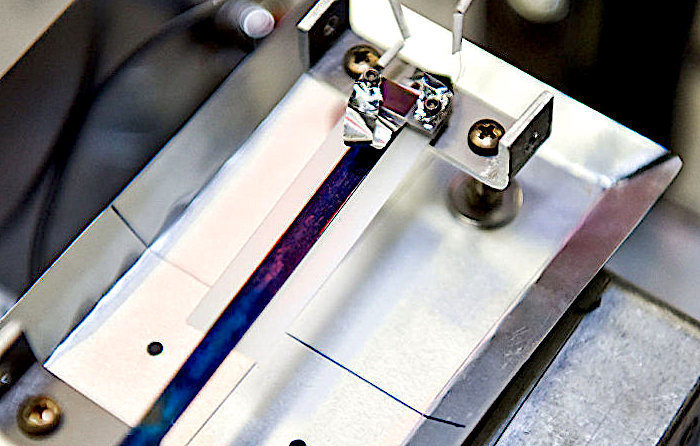
© MISISPiezoelectric element in a sensor
Scientists at the Russian National University of Science and Technology MISIS together with their colleagues from the South Ural State University and the National Academy of Sciences of Belarus have devised new, exceptionally promising materials that may be used to create the cutting-edge data storage devices and sensors. The research has been published in the prestigious scientific journal Composites Part B: Engineering.
The experiment conducted by Russian physicists has resulted in the development of ceramic composites, in other words, materials consisting of several components that boast curious properties. They may simultaneously exert control of the magnetic and electric fields, which will enable to process information in a quicker mode, create new data storage devices for larger bulks of information that will be more efficiently protected from hackers, new detectors and sensors, all the way to other more reliable and accurate microelectronic devices that do not have to be plugged into a power supply.

















Comment: